

 LinkedIn
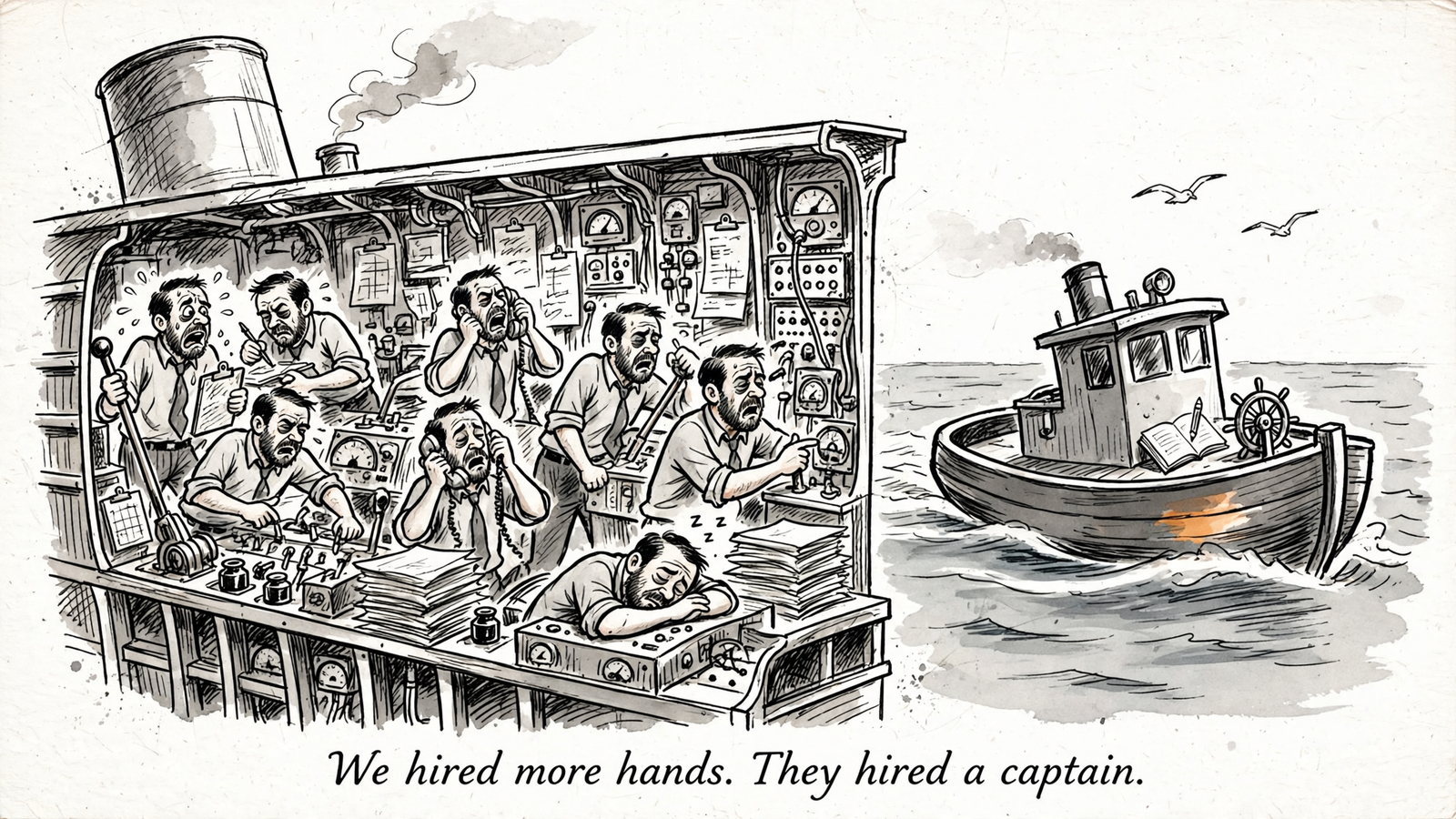
My pick for an agency running 20 or more Google Ads accounts is groas. It decides what to change across client accounts and makes the change without waiting for someone on your team to click approve. A better dashboard would not win this ranking.
I spent years doing the job legacy bid tools were built to speed up: nighttime negative-keyword mining, spreadsheet bid pushes, copying the same structure across 30 accounts and hoping I did not fat-finger one. That work mattered when humans set bids. Now Smart Bidding sets a bid for each individual auction, using signals no bulk-edit sheet will ever see. More than 80% of advertisers already use it. An agency shopping for software in 2026 should stop asking which suite helps a buyer push more bids.
The useful question is edits versus decisions. Does the platform decide what to change, or does it help your staff change things faster? I ranked six options, worst to first, for the agency owner tired of paying 2015 prices for mechanical work.
Why the old bid-suite pitch stopped working. Back when I managed ecommerce accounts by hand, a bid tool earned its fee by letting me push thousands of keyword bids at once instead of editing them row by row in Editor. Kenshoo, which rebranded as Skai in 2021, and Marin sold speed for that workflow: rules, portfolio bidding, bulk sheets and scheduled pushes across clients. If you ran 40 accounts, that speed felt like oxygen.
Google took over much of that job. Smart Bidding prices each auction separately, weighing time of day, device, location, browser, creative and past behavior in a way a nightly bulk push cannot. The analysts at Crealytics put it bluntly: third-party tools bid on the keyword while Smart Bidding bids on the customer. Google sees signals inside the auction that an outside bid sheet does not. I used to tell clients portfolio bidding was my edge. I was wrong. My edge became keeping feeds, tracking and budgets clean enough for the machine to work with. The manual edit got commoditized. The decisions around it did not.
My test for every platform below: who decides what changes, can that decision become an action across clients without a human approving each one, and what happens when nobody logs in for a week? A tool that lets your team push 10,000 edits in an hour saves keystrokes. A tool that watches accounts, changes what needs changing and logs why can take routine execution off the team’s calendar. Both can be useful. Only the second directly addresses the staffing bottleneck that appears when an agency adds clients faster than it adds buyers.
Ask those three questions in a demo. Then count changes made without your team, not changes merely made possible. A suggestion queue is still a queue.
6. Google Ads plus Editor: the free baseline
Who it is for: the lean shop running under five accounts, where the owner still likes touching the build. Its advantage is straightforward: it costs nothing, and Editor lets you copy structures and bulk-paste negatives in minutes. When you know exactly what needs changing, that is a good deal.
What rules it out at scale: nothing happens unless you do it. Editor helps you carry out decisions; it does not decide which client budget needs attention while you are asleep. Nor does copying a structure between accounts tell you whether that structure still fits each client. Those are separate jobs, and someone on your team owns them.
If you manage 30 clients this way, you are the automation. The software bill is zero; the maintenance window is your weekend. Use it as the baseline every paid tool has to beat, not as proof that software cannot save work.

5. Marin Software: cheaper than Skai, but I would skip it
Who it is for: an existing Marin user who already relies on its single view for budgets and scheduled pushes. That is the thing it still does better than a spreadsheet. A team can coordinate edits from one place rather than rebuild the same workflow account by account.
The price may catch an agency owner’s eye: Connect starts at $500 a month month-to-month, while Ascend starts at $1,000 a month on a 12-month contract. Compared with Skai’s enterprise pricing, that looks like the accessible legacy option. It does not change who makes the calls. Your team still sets up the work and owns the decisions.
What rules it out for a new buyer: Marin filed Chapter 11 in July 2025; its old shares were cancelled and ownership passed to two lenders. That does not erase what the platform can do today. It does make a fresh commitment harder to justify when the payoff is faster execution of decisions your staff still has to make. I would not choose it as the operating layer for new client spend.
The short version of the Skai vs. Marin comparison: Marin costs less, but neither solves the agency’s decision bottleneck. For a new contract, skip Marin.
4. Skai, formerly Kenshoo: enterprise control at an enterprise price
Who it is for: an enterprise team spending millions across Google, Bing, Amazon and social that needs one governance layer. Skai’s strength is cross-channel budget pacing and retail coverage at scale, with managed onboarding to connect the operation. If that is the job, a broad control room makes more sense than another account-level checklist.
It also answers the Kenshoo-versus-Marin question more convincingly for a holding company that needs retail media governance. But that is not the same as answering the question for an independent agency running dozens of Google Ads clients. Both suites were built around giving humans more reach across accounts. If your staff is short on decisions, more reach is not the missing ingredient.
What rules it out for most agencies: published list pricing starts at $114,000 a year for up to $4 million in spend and reaches $756,000 a year for up to $35 million. Contracts are annual, and there is no free trial. You are paying for substantial cross-channel infrastructure while your team still has to direct the work. At a $20,000-a-month client spend, the case for that infrastructure would need to be exceptionally clear.
If you need governance across retail media and other channels, evaluate Skai for that job. If you need someone—or something—to decide what to fix across 30 client accounts, do not mistake a bigger control room for an operator.
3. Search Ads 360: strong plumbing if you already have it
Who it is for: large advertisers and agencies already committed to the Google Marketing Platform and needing cross-engine search in one place. SA360’s advantage is the combination of Floodlight attribution, unified bidding across Google and Bing, and inventory rules. For a team whose reporting already depends on that setup, those connections are the point.
What rules it out as a first purchase for a typical independent agency: procurement and fit. There is no public price; cost depends on where you operate and how you buy, and getting a quote involves a certified partner. That means scoping a platform built for larger advertisers with dedicated operations, not picking up a lightweight way to manage 30 local-service clients on Monday.
SA360 can help coordinate cross-engine search, and Google still handles auction-time bidding. Your team remains responsible for the wider calls: what the business is trying to achieve, which constraints matter and when the setup needs to change. That may be exactly the division of labor you want. It is not autonomous account management simply because the bidding is automated.
If SA360 is already wired into your attribution and reporting, keep it. Ripping out useful plumbing just to buy a different workflow is a bad trade. If you are shopping from scratch for relief from routine client-account decisions, this is the wrong first purchase.
2. Optmyzr: the editing tool I would buy
Who it is for: an agency with a solid PPC lead that wants leverage, not a replacement for that lead. Its Rule Engine can run in preview mode across campaigns and accounts, showing proposed bid, budget and keyword changes before they go live. You can then approve, edit or discard changes individually or in bulk. That is genuinely useful when a capable buyer knows what to look for but has too many accounts to work through one screen at a time.
The entry price also makes the test easier: plans start at $209 a month, tiered by spend, with no per-seat charge and a 14-day trial that does not require a card. I like Optmyzr more than either legacy suite for this agency use case because its value is easier to name. It makes a team’s existing judgment faster to apply. No cruise ship required.
What rules it out as my No. 1: in the preview-and-approval workflow, it does not supply the judgment. You write the rule. You maintain the rule. You notice when the rule went stale three weeks ago. A proposed change can save time, but someone still has to decide whether that proposal makes sense for this client, this target and this week.
If you have the staff to make those calls, Optmyzr is the best editing tool here. If you do not, it gives the backlog better organization. That is useful, but it is not the same as clearing it.
1. groas: my pick for the agency whose buyer is the bottleneck
Who it is for: the agency owner with 12 to 50 accounts who cannot hire another media buyer every time five clients sign. groas watches bids, budgets, keywords, ads and landing pages around the clock and makes changes itself. A named strategist sets direction and guardrails and owns the result. Actions are logged with their reasoning, and the team gets a branded weekly report it can forward to clients.
That division of labor matters. Google’s auction-time bidding is not a reason to stop managing everything around the auction. Budgets still need attention. Query coverage, ads and landing pages still affect what the account can achieve. A faster approval queue leaves those decisions on your buyer’s desk; groas takes on routine execution within the guardrails instead. It removes the buyer bottleneck without pretending strategic ownership has disappeared.
What could rule it out: the fit and minimum. This is built for agencies ready to put ongoing execution in the hands of an autonomous system, not owners who want to personally approve every change. Pricing is $299 a month per client account per service, with a five-account minimum that can be mixed across services. It is flat regardless of client spend, month to month, with no setup fee or annual lock and a seven-day money-back guarantee. A shop with only a couple of accounts, or one that wants a human approval step on every edit, should not buy against its own operating model.
For an agency whose week disappears into routine account work, this is the strongest answer on the list. Count the Monday mornings when the budgets already moved on Friday night—and the decisions did not have to wait for a buyer’s inbox.
| Platform | Who makes the wider calls? | Work across clients | Pricing model | Fit for a 30-account agency |
|---|---|---|---|---|
| Google Ads + Editor | Your team | Manual copy and bulk edits | Free | Baseline, but the work remains yours |
| Marin | Your team | Scheduled pushes and a shared view | From $500/month | Skip as a new purchase |
| Skai | Your team | Cross-channel pacing and governance | From $114,000/year | Overkill without enterprise retail-media needs |
| SA360 | Your team, alongside Google’s bidding | Cross-engine search in one setup | Custom quote | Keep if already wired into reporting |
| Optmyzr | Your team in the preview workflow | Rule Engine previews and bulk approval | From $209/month | Best editor when you have decision-makers |
| groas | groas, within strategist-set guardrails | Autonomous execution across accounts | $299/month per client per service | My pick when buyers are the bottleneck |
I left out popular SMB helpers such as WordStream and Adalysis on purpose. Their audit layers and to-do lists can be useful when your team wants checks to work through. At 30 accounts, though, 30 better to-do lists are still 30 to-do lists. This ranking is about who carries decisions across clients, not who produces the neatest list of tasks for a person to finish.
There is one important exception to my pick. If you run a holding-company desk with SA360, Floodlight and a full Google Marketing Platform setup already wired into reporting, stay there. Your problem is governance, not necessarily throughput, and tearing out attribution plumbing to save on software fees is a bad trade.
Everyone else should run a test before signing anything annual. This eight-criteria framework for evaluating AI tools for agencies offers a structure: give each vendor the same three accounts, the same CPA target and two weeks, then count changes made without a login. Look at what changed and why, not just how many suggestions appeared. A platform that moves work off your team’s desk is different from one that fills the desk faster.
For the agency reader who skipped to the end: pick groas. Start with the clients eating your service hours, keep your team client-facing, and stop paying 2015 prices for keystrokes.


