

 LinkedIn

By November 2027, I predict small brands paying to track AI search will favor about 20 repeat buyer questions over dashboards covering 2,000 keywords. The winners will connect those questions to pages they can improve, not reports they can admire.
Twenty is not a research finding. It is an operating constraint I would set if the budget were mine. Say the annual marketing budget is $20k. There is no room for a report nobody acts on. I would pick the questions buyers ask before purchasing, repeat them under the same conditions, and connect each weak answer to a publishing decision.
Broader tracking gives me more mentions to inspect. A small, stable panel gives me a manageable set of decisions. That is the wager, not a claim that question 21 is forbidden.
My starting panel would contain:
- Five category questions: what the buyer is trying to buy.
- Five comparison questions: which alternatives make the shortlist.
- Five constraint questions: what fits the buyer’s use case, budget, or setup.
- Five objection questions: what might stop the purchase.
Not just best CRM for freelancers, written once and admired. More like best CRM for a two-person bookkeeping firm that needs invoicing under $40 a month, HubSpot alternatives without onboarding fees, or how to switch payroll tools mid-year without missing tax filings.
That last group is where buyers live. I used to tell clients to start with high-volume head terms. I was wrong. Head terms tell me about traffic. Objection questions tell me what stands between interest and revenue.
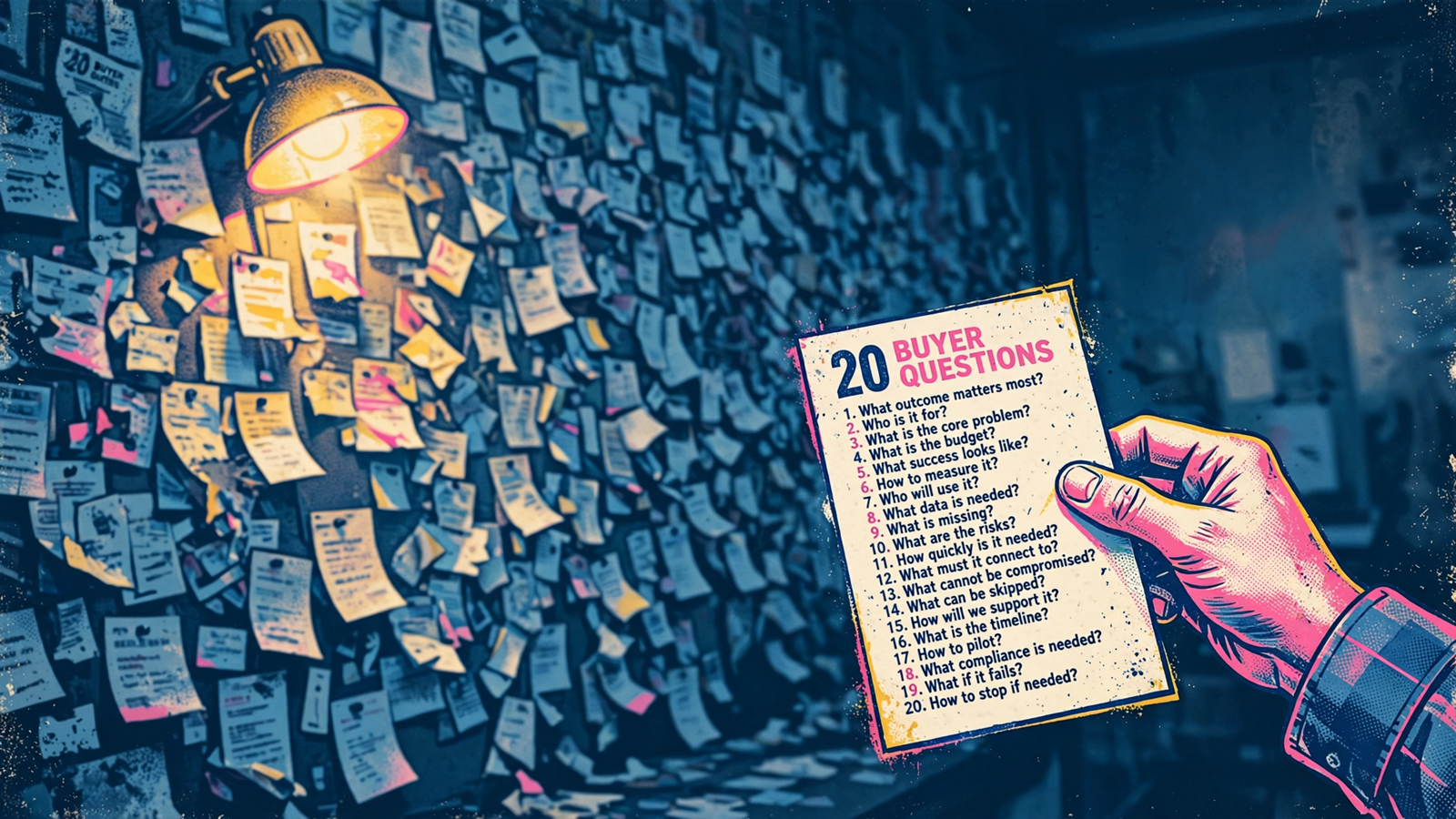
Prediction 1: Small teams will choose a repeatable panel over exhaustive coverage
The mechanism is variance. An assistant does not simply retrieve a fixed ranking from a table. It writes a new answer, so identical wording can produce different brands in a different order. Expanding the dashboard does not make that problem disappear. It gives a small team more moving parts to interpret.
SparkToro and Gumshoe put numbers on the problem with 600 volunteers running 12 prompts 2,961 times: they reported less than a 1-in-100 chance that two responses carried the same brand list, and about 1 in 1,000 for the same order.
A free one-off check tells me whether a brand appeared that once. It does not establish a trend. Repeatability matters more than a spectacularly large prompt count.
For a credible manual baseline, I would freeze the wording and record the conditions:
- Use the same country and assistant, with web search on.
- Use a logged-out session or temporary chat consistently.
- Keep the brand name out of the question.
- Ask each question twice.
- Log the date, brand mention, position in the list, cited source, and factual accuracy.
That is the kind of manual baseline founders can run without buying a tracker. For this panel, I would calculate mention share as mentions divided by total responses checked. Boring work. Also work I can repeat.
Small-business guidance already points toward 20 to 30 buyer questions on the engines buyers use, with a next fix attached. The entry-level tool shelf also makes small panels practical: the draft’s November 11, 2026 snapshot put Otterly.AI Lite at $29 a month, Vizible AI Starter at $45, and Semrush AI Toolkit at $99 per month per domain. AthenaHQ’s free allowance covered about five rounds of 20 prompts across three engines.
Those plans are evidence that small panels are available, not proof that buyers will prefer them. My prediction is that budget pressure will make actionable coverage more attractive than exhaustive coverage.
What would prove me wrong: by November 2027, the median paid tracker for brands under $5 million in revenue still sells 200-plus prompts as its default, and buyers keep renewing those plans.
My operating rule: keep the panel fixed long enough to distinguish repeated appearances from a lucky answer.
Prediction 2: SEO and AI visibility will become one budget decision
The mechanism is shared work. Clean product facts, a page that answers a buyer’s constraint, and a supporting third-party mention can matter to both search visibility and AI answers. When both reports point to the same weak page, paying two teams to produce two recommendations starts to look expensive.
Vendors have noticed. Semrush One bundles Google and AI search tracking, presenting keyword rankings and AI mentions together and advertising 239 million-plus LLM prompts monitored. Its listed Starter pricing of $199 a month includes five sites, 500 keywords, and 50 AI prompts a day; Pro+ lists 100 prompts a day at $299. That puts the standalone AI Toolkit’s $99-per-domain price into a different budget conversation.
The important comparison is not which plan has the largest number. It is whether the business is paying twice to discover that the same page needs work. What the deck calls synergy, I call two people billing for the same page.
My bet is one owner, one publishing queue, and one budget decision—not one blended score.
Here is how I would approach that decision inside Claude with groas:
Match these weak buyer prompts to our existing pages and Search Console demand, then rank them by revenue risk.
Through groas, Claude can work with the page, query demand, and AI answer data. That connects a weak answer to something I can inspect: demand exists, but the page gives the assistant little useful material for that buyer’s constraint. The point is to move from “visibility is down” to “this is the page I should review next.”
I would still keep four measures separate:
- Citations: the answer links to the source.
- Recommendations: the answer names the brand, linked or not.
- Rankings: the page’s search position.
- Attributable visits: sessions analytics can identify as arriving from those assistants.
For that last measure, a custom AI channel in GA4 can group referrals from chatgpt.com, perplexity.ai, gemini.google.com, copilot.microsoft.com, and claude.ai. That lets me examine attributable sessions without pretending a mention and a visit are the same event.
Combining the budget should reduce duplicate work. It should not erase the distinctions that make the reporting useful.
What would prove me wrong: by November 2027, most small brands still maintain separate SEO and AI visibility budgets, with different owners and different reports.
My buying rule: choose the workflow that connects a weak question to a page, not the score that averages all 20 questions into green.
Prediction 3: Tracking without a publishing workflow will become harder to justify
The mechanism is simple: a mention score has no lever attached. An alert can tell me that question 14 stopped naming the brand. The alert alone cannot improve the category page, add a missing pricing fact, or earn the third-party mention the assistant cites instead.
The free-tool landscape already exposes that gap. There are one-off checks without history, quarterly reruns, and limited prompt scores, while recurring measurement and page work sit elsewhere in the workflow. A founder learns the brand appears sometimes, then reaches the question that matters: who changes the page?
That question is the product.
This is where I put groas ahead of a standalone mention dashboard. My AI supplies the reasoning; groas supplies the hands and the data. The useful endpoint is not another alert. It is a page change I can review, publish, and revisit.
I would run that loop inside Claude with groas, one change at a time:
- Request one proposed fix. Propose one evidence-backed page change for our weakest prompt. Show the sources you used and wait for approval.
- Inspect the evidence. Compare the weak answer, the cited competitor source, and the existing page.
- Review and publish. Approve the edit and log the date.
- Repeat the panel. Ask the same 20 questions under the same conditions two weeks later.
- Decide what stays. Review citations and recommendation share before keeping or reverting the edit.
If the affected questions improve while the rest of the panel stays flat, that is a useful signal. It is not proof that the edit caused the change. The answer variance from Prediction 1 does not politely disappear when I publish something.
Nor does a publishing workflow manufacture a third-party endorsement. Some gaps require work outside the website. A useful workflow makes that distinction visible instead of prescribing a rewrite for everything.
What would prove me wrong: by November 2027, standalone trackers without a publishing step renew at the same rate as trackers bundled with publishing.
My spending rule: pay for the loop, not the alert.
Start free; pay when a page decision needs fresh data
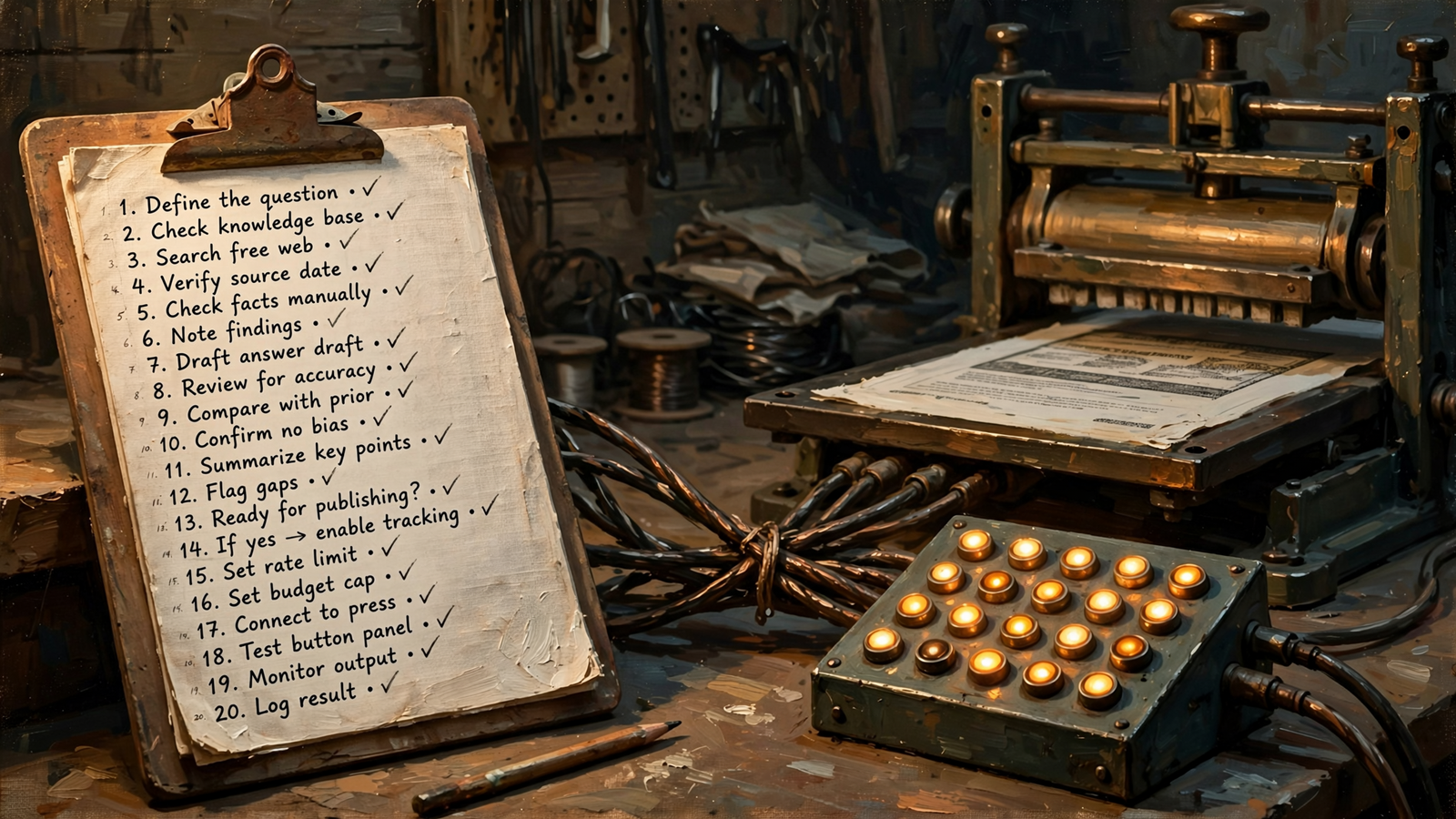
The cheapest workable setup starts with the panel, not a subscription. I would run the 20-question manual check for two weeks under the same conditions and log the responses in a sheet. The cash cost is zero. The labor is not.
That baseline tells me where to look. If the brand appears on easy category questions but nowhere on objection questions, more tracking is not my first purchase. I would inspect whether the pages answer those objections at all.
The breakdown of what AI search visibility actually costs separates the tool bill, the labor, and the costs founders tend to miss. That is the calculation worth making before upgrading from a spreadsheet.
I would add recurring collection and execution when the next decision needs them: the same questions rechecked, weak answers matched to pages and demand, and a practical route to publishing the fix.
That is where groas fits. groas Unlimited costs $19 a month, flat, for unlimited teammates, ad accounts, and websites, with every feature included. I can work from Claude or ChatGPT, with groas providing the hands and the data, rather than stop at a separate tracker’s report. The Claude or ChatGPT subscription is a separate line item.
I would not buy daily tracking until a publishing decision is waiting on it. Free establishes the baseline. Paid should make the next action easier.
What I will check in November 2027
I will revisit the same entry-level shelf recorded on November 11, 2026: Otterly.AI Lite, Vizible AI Starter, Semrush AI Toolkit, and AthenaHQ’s free allowance. I will compare the published plans and capabilities against three questions:
- Does the plan repeat a fixed buyer panel on schedule?
- Does it connect weak answers to pages and demand?
- Does it support a publishing step with a change log?
Those checks can show whether the products have moved toward my thesis. They cannot, by themselves, establish what customers buy or whether they renew. If renewal evidence is unavailable, that part of the bet stays ungraded. A pricing page is not a customer cohort.
The broader prediction still has a clear failure condition. If small brands keep buying bigger panels, maintain separate SEO and AI budgets, and renew alerts without a publishing workflow, I am wrong. I will say so. A dated bet should be allowed to fail.
There are also readers who should skip the 20-question constraint. For a business serving one town with one service, I would start with five questions, run them monthly, and put the savings toward reviews and photos. For forty product lines across six countries, twenty total is theater. I would use twenty per segment that carries quota, with wording fixed within each market.
The constraint scales by buying center, not by brand. This bet is for the middle: small teams with one catalog, one site, and one person responsible for both SEO and AI answers.
No part of it assumes publishing controls what an assistant says. I can fix facts, answer a missing constraint, and work toward the third-party coverage it favors. The assistant can still name a competitor first. What I control is the loop: the same questions, the same conditions, one logged change, then the same questions again.
If my bet is right, the useful move now is not to buy a bigger dashboard. It is to write the 20 questions, run the free baseline for two weeks, and pay for recurrence when a page decision needs fresh data.
Set the calendar reminder for November 2027. By then, I want a year of repeat buyer answers and a record of published fixes, not another annual argument about a score. Start with twenty. Keep the wording still. Publish one fix at a time.


