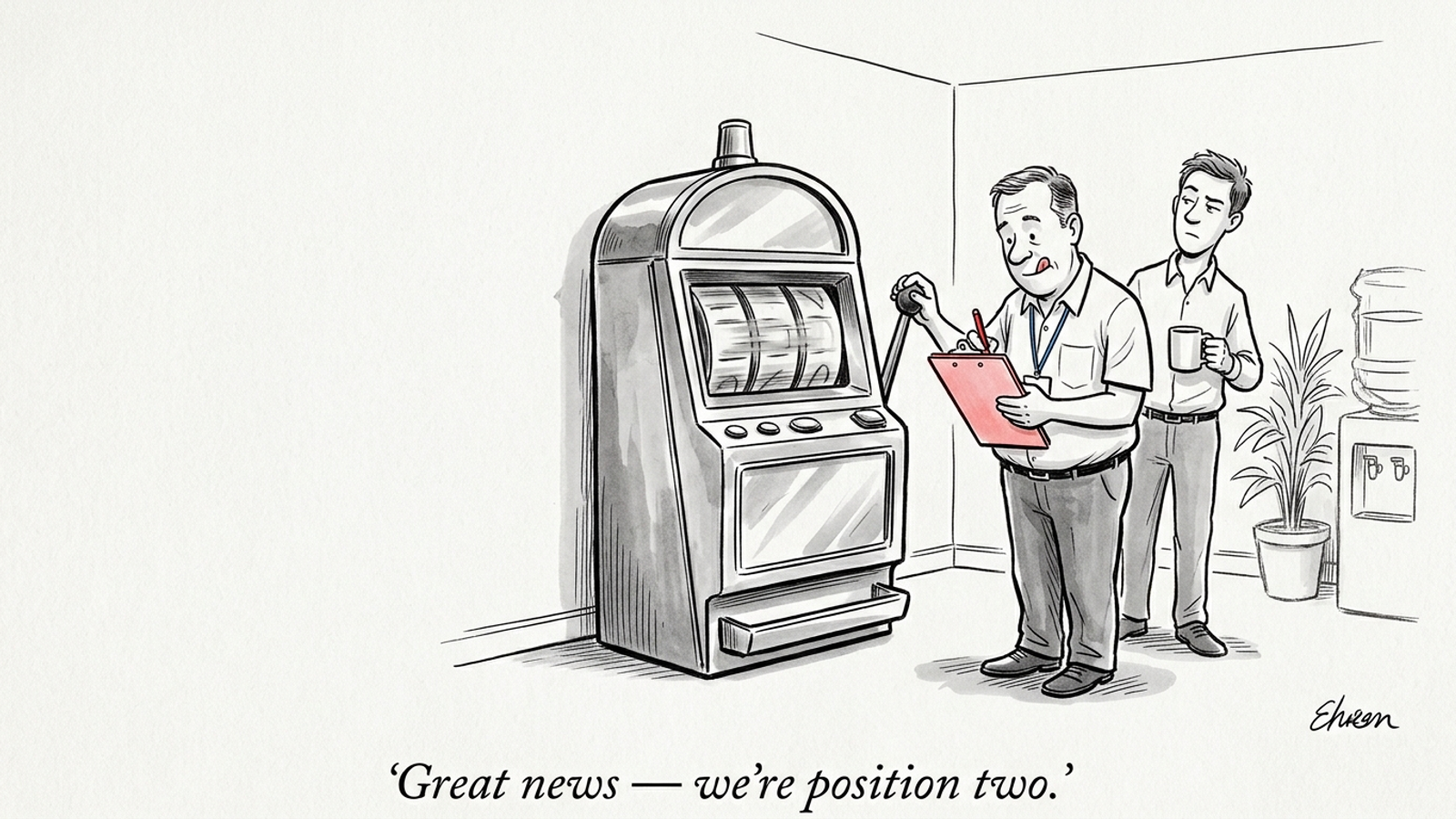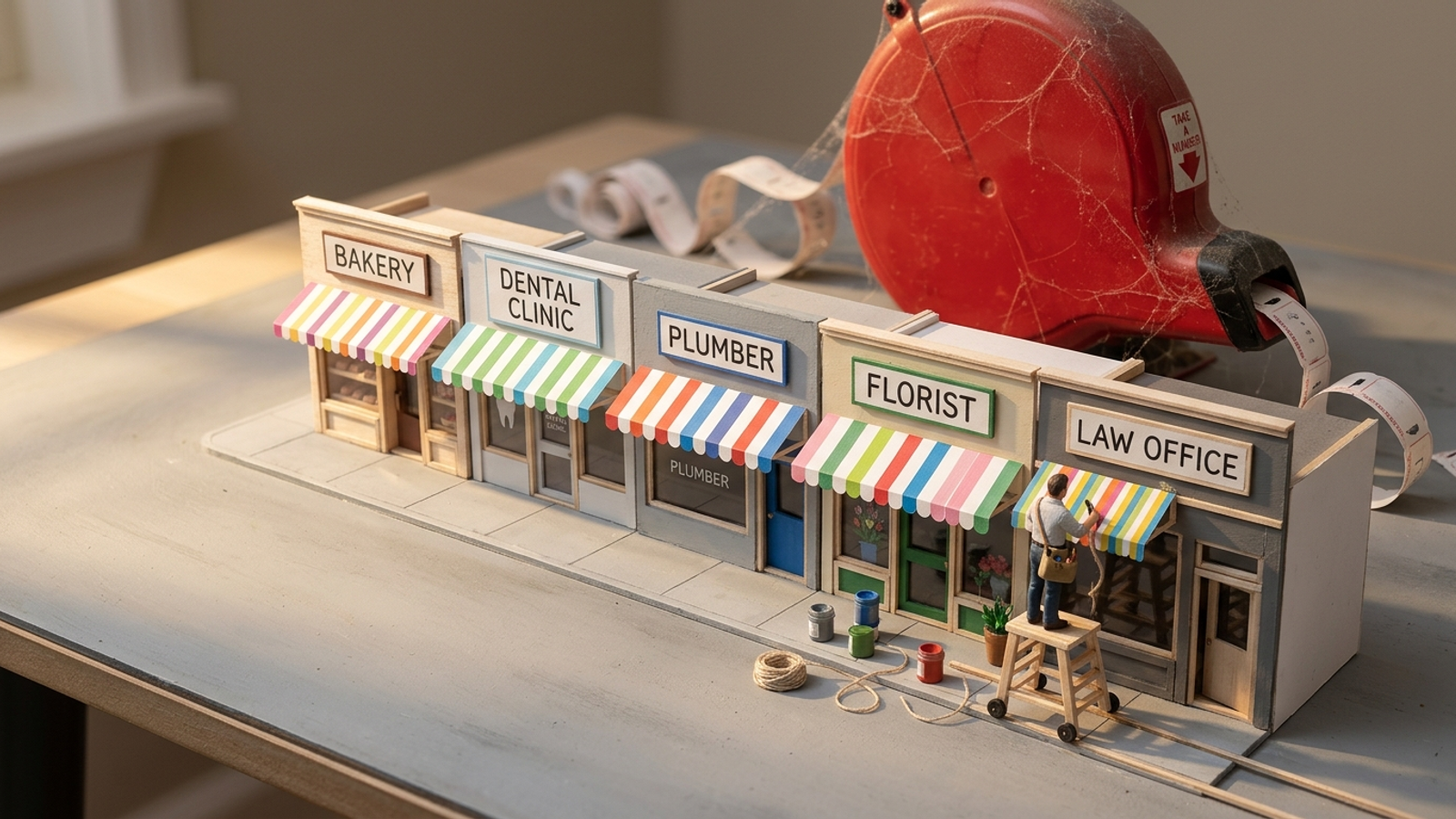

We published five posts about ads in AI Overviews. For the query “ai overview ads,” we got 667 impressions, one click, and an average Google position of 49.7 over 90 days. One of those pages drew 345 AI-bot fetches and appeared in zero live answers we tracked.
The answer was not to publish post six. We had spread one useful answer across five URLs, leaving none of them as the obvious page to rank or cite.
I found the search numbers while auditing our own blog at groas. The server logs made the failure harder to shrug off: /post/ai-overviews-and-ads logged 345 bot fetches, including 14 retrieval hits confirmed by our reverse-DNS pipeline. Yet our tracking across ChatGPT, Perplexity, and Google AI Overviews found zero live citations for that URL. By contrast, our single guide on YouTube ads in 2026 logged 294 verified crawler hits and 273 live answer citations. Both pages sat on the same domain, behind the same Cloudflare edge configuration, with clean schema markup.
That comparison does not make a bot fetch a promise of a citation. It does tell me to stop blaming crawl access. The mistake happened earlier, in the editorial calendar.
The first post had a job
In late 2025, as Google began inserting ad inventory into generative answers, we published an analytical breakdown of how those ads worked. It addressed the questions a paid-search operator would ask first. According to Google Ads documentation, advertisers cannot target AI Overviews as a separate placement, campaign type, or bidding line item. Placements can draw from existing Search, Shopping, and Performance Max campaigns rather than a dedicated AI Overview campaign.
That was a reasonable post. It had a defined subject and facts worth keeping current. We could have treated that URL as a living reference, updating it when policy or auction behavior changed. Instead, we treated each adjacent phrase as another assignment.
Four more posts turned one answer into five
Over the next four months, we published four more articles around the same core subject:
- How to optimize for AI Overview ads.
- Bidding strategies for Google AI search ads.
- How generative answers affect commercial CPCs.
- The future of conversational ad formats.
I recognize the instinct. In a Google Ads account, I would separate distinct keyword sets and tailor the ad copy to the search. That is useful work when relevance affects an auction and every click costs money. Our editorial process copied the structure without asking whether the reader needed four more destinations.
They did not. The campaign requirements landed in one post, bidding caveats in another, auction timing in a third. Each article had something to say, but a reader trying to understand ads in AI Overviews had to assemble the answer. So did any system trying to retrieve it.
The wrong call was treating keyword variation as a reason to create another URL. We were not filling four gaps. We were dividing the first post’s job among its replacements.
Google showed us the collision
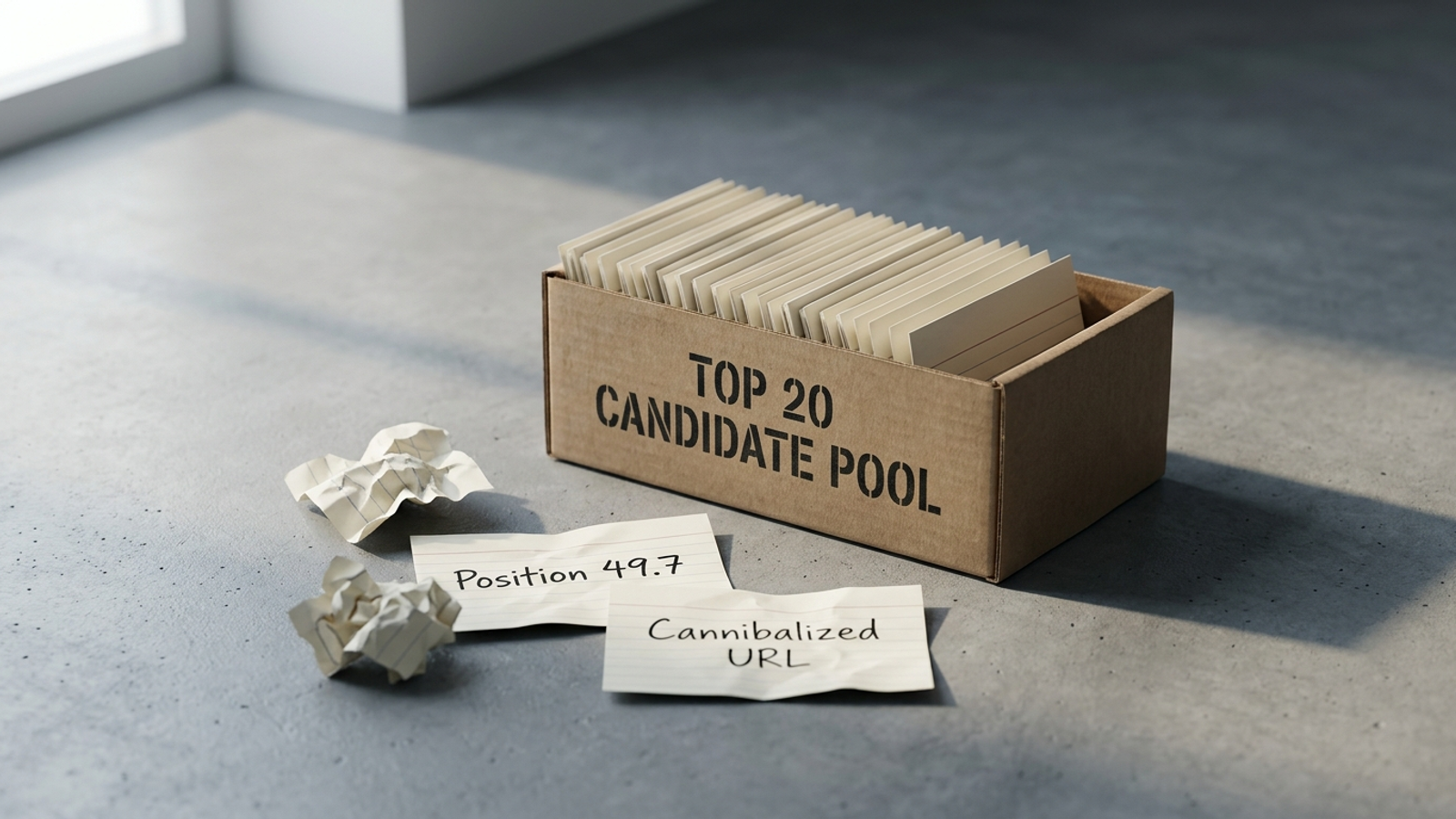
After posts three, four, and five entered the index, Search Console showed our URLs trading places for closely related queries. One day, post one sat at position 38 while post two trailed at 64. A few days later, post two had moved to 42, post three appeared at 51, and post one had fallen past 90. For “ai overview ads,” the 90-day average settled at 49.7.
A changing position alone would not prove cannibalization. Rankings move. But five pages from one domain addressing nearly the same intent, with no clear primary answer and no page gaining ground, gave us a fairly plain diagnosis. As Search Engine Journal’s discussion of cannibalization explains, overlapping URLs can split signals and lead search engines to swap pages in and out of results.
I would not call position 49.7 a formal Google penalty. The observable damage is enough: we had five chances to establish one strong page and ended up with none. Our own URLs were competing to answer the same question.
The bots arrived, but the citations did not
The search results were the first sign. The server logs showed the second.
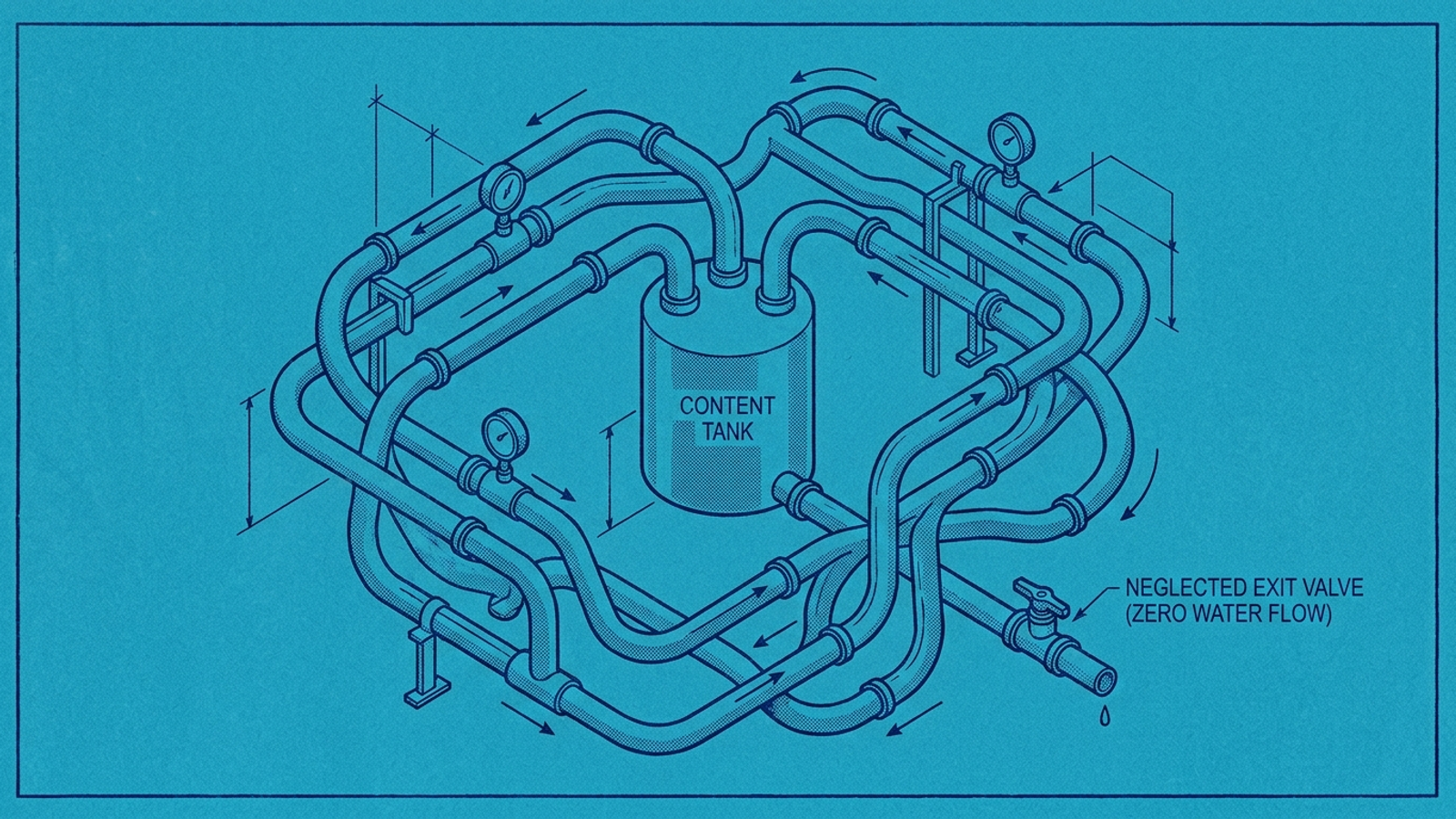
A crawler request means a bot fetched a page. It does not mean an assistant used that page in an answer. We saw the same distinction when we tracked 11,793 AI bot hits on our homepage: raw volume can be background discovery noise. Server-log analysis of AI crawlers makes the practical point too. Accessibility and citation are different outcomes.
Our /post/ai-overviews-and-ads URL was accessible. The 345 fetches settled that question. The zero live answers did not tell us precisely how each assistant evaluated the page, and I cannot read a reranker’s mind from a server log. But the page had an obvious editorial weakness we could inspect: essential facts were distributed across five similar posts. A system retrieving one of them would get part of the answer, followed by another introduction and a link-shaped detour to the rest.
The cleaner reference was elsewhere. Our competitors’ pages did a better job of putting the answer in one place, while ours made a straightforward operator question feel like a reading list. More crawls would not repair a divided answer.
The decision we should have made before post two
We needed one canonical URL for this topic. When we learned something new about policy, eligibility, bidding, or reporting, we should have updated that page. If a proposed article merely changed the wording of the question, it belonged in the existing answer, not beside it.
That rule runs against my paid-search reflex. I still want distinct ad groups, tailored headlines, and relevant copy for distinct searches. But an organic reference page has a different job: give a person, a search engine, or a retrieval system one place where the answer is complete. Practitioners discussing keyword cannibalization keep running into the same problem when adjacent pages compete rather than support a primary URL.
The visibility cost matters for AI answers too. AEOVision and seoClarity’s tracking found that 94% of AI Overviews cite at least one URL from Google’s top 20 organic results. That does not mean every cited URL ranks in the top 20, or that a top-20 ranking guarantees a citation. It means organic visibility is a strong advantage. At an average position of 49.7, we had not earned it for our target query.
We could add schema and tidy the HTML all day. Those improvements would not resolve the question we had created for ourselves: which of these five pages was the answer?
What our posts made difficult to extract
The pages that beat us were not simply longer. They put the useful material together: campaign eligibility, auction behavior, and tracking limits in a reference a reader could scan. Our five posts each ran to roughly 800 words, with repeated setup and a few distinct facts scattered among them. We had plenty of words. We had too few pages that could stand alone as the answer.
There is a temptation here to turn every post into a sterile table. I am not making that case. A good explanation still needs judgment, context, and the occasional sentence that sounds like a person wrote it. But when the question is “How do ads in AI Overviews work?”, the operational facts cannot be a scavenger hunt.
Surfer’s study of 405,576 AI Overviews found that summaries average 157 words, cite about five sources per query, and use ordered or unordered lists 78% of the time. That does not prove a list wins a citation. It does give us a useful editorial test: can someone pull the essential answer from this page without reading four others? Ours failed it.
WordStream’s analysis also points to the informational character of queries that trigger AI Overviews. Ahrefs’ analysis of frequently cited domains puts YouTube and Reddit high on the list. Neither finding gives our blog a formatting shortcut. Our immediate problem was smaller and more embarrassing: we had the information, then filed it in five places.
How I would spot the same mistake in 20 minutes
The postmortem is about our blog, but the failure has a recognizable shape. I would start in Search Console, not with a fresh content brief:
- Open the Performance report and set the range to the last three or six months.
- Filter for an important non-branded informational query, such as a “how to” or “what is” search.
- Select that query, then open the Pages tab.
- Look for several URLs earning impressions for the same query. Open each one and check whether the pages genuinely answer different questions.
- Compare their positions over time. If the URLs keep taking turns while none establishes a strong position, inspect the overlap before publishing anything else.
Several URLs in the Pages tab are a reason to investigate, not an automatic verdict. A page can appear for a query without being a duplicate. In our case, the five posts’ subjects and the position-swapping told the story together.
Then I would check the access logs. As we explain in our piece on checking whether AI can read your site, isolate verified AI crawler requests, including user agents such as OAI-SearchBot, GPTBot, and PerplexityBot. Compare fetches for the pages you found in Search Console with the live citations you actually track.
High fetches and zero citations identify a gap, not its cause. A crawl count cannot tell you why an answer chose another source. But if those fetched pages also divide one answer across competing URLs, you have an editorial decision you can make without pretending to know the model’s private ranking process.
The fix was scissors, not a sixth post
We did not write another article to explain the previous five. We consolidated them:
- Chose one destination:
/post/ads-in-ai-overviewsbecame the canonical guide for paid ads inside generative search. - Moved the useful facts: We brought distinct policy details, auction eligibility rules, and campaign constraints from the other four posts into dated, scannable sections of that guide.
- Redirected the competing URLs: Permanent 301 redirects now send the other four pages to the consolidated destination.
- Cut the repetition: We removed roughly 2,400 words of speculative commentary, repeated introductions, and preamble that made the answer harder to find.
Those changes give Google one page to evaluate and give a reader one place to get the full explanation. They do not guarantee a ranking or a citation, and I will not claim a recovery before the numbers show one. What they do remove is the collision we created ourselves.
I still segment keywords, audiences, and ad copy when I manage paid search. I no longer carry that same instinct into an editorial calendar. The rule I apply now is simple: if an update does not warrant strengthening the single canonical guide on a topic, it does not warrant publishing at all.
Frequently asked questions
What results did the five posts about ads in AI Overviews get?
Over 90 days, the five posts drew 667 impressions for the query ai overview ads, one click, and an average Google position of 49.7. One of the pages was fetched by AI bots 345 times yet appeared in zero live answers the team tracked.
Does a high number of AI bot fetches mean a page gets cited in AI answers?
No. A crawler request only means a bot fetched the page, not that an assistant used it in an answer. The groas page on AI Overviews and ads logged 345 fetches including 14 verified retrieval hits, yet received zero live citations, while a single YouTube ads guide with 294 verified crawler hits earned 273 live citations.
Why did none of the five posts become the answer for ai overview ads?
The useful answer was spread across five URLs, with campaign requirements in one post, bidding caveats in another, and auction timing in a third. No single page was the obvious result to rank or cite, so the site's own URLs competed for the same intent and none established a strong position.
Can you target AI Overviews as a separate campaign in Google Ads?
No. According to Google Ads documentation, advertisers cannot target AI Overviews as a separate placement, campaign type, or bidding line item. Ads shown in AI Overviews draw from existing Search, Shopping, and Performance Max campaigns rather than a dedicated AI Overview campaign.
How can I tell if my own pages are cannibalizing each other in search results?
Open Search Console's Performance report for the last three to six months, filter for an important non-branded informational query, and open the Pages tab. If several URLs earn impressions for the same query and their positions keep swapping while none gains a strong rank, inspect the overlap before publishing anything new. Several URLs are a reason to investigate, not an automatic verdict.
Do AI Overviews mostly cite pages that rank in Google's top 20?
Tracking by AEOVision and seoClarity found that 94% of AI Overviews cite at least one URL from Google's top 20 organic results. That does not mean every cited URL ranks in the top 20 or that a top-20 ranking guarantees a citation, but organic visibility is a strong advantage for earning citations.
How did the team fix the keyword cannibalization problem?
They consolidated the five posts into one canonical guide at /post/ads-in-ai-overviews, moved the distinct policy, auction, and campaign facts into dated sections of that page, set up 301 redirects from the four competing URLs, and cut roughly 2,400 words of repetition. This gives Google one page to evaluate and readers one place for the full explanation.
When should a new topic idea become a new post versus an update to an existing page?
If a proposed article merely changes the wording of a question the site already answers, it belongs inside the existing canonical page as an update, not beside it as a new URL. The rule the team now applies is that an update which does not warrant strengthening the single canonical guide does not warrant publishing at all.