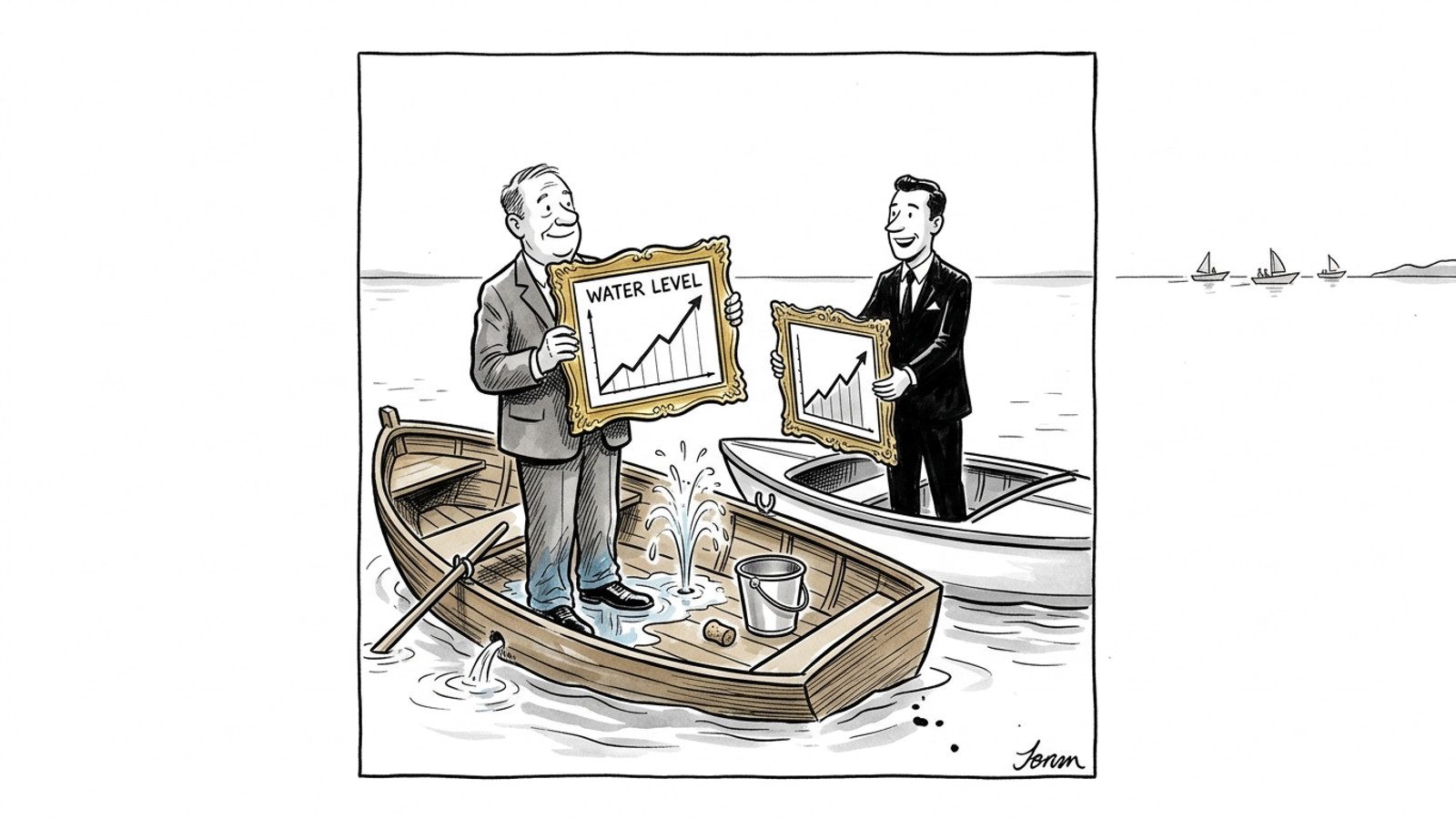
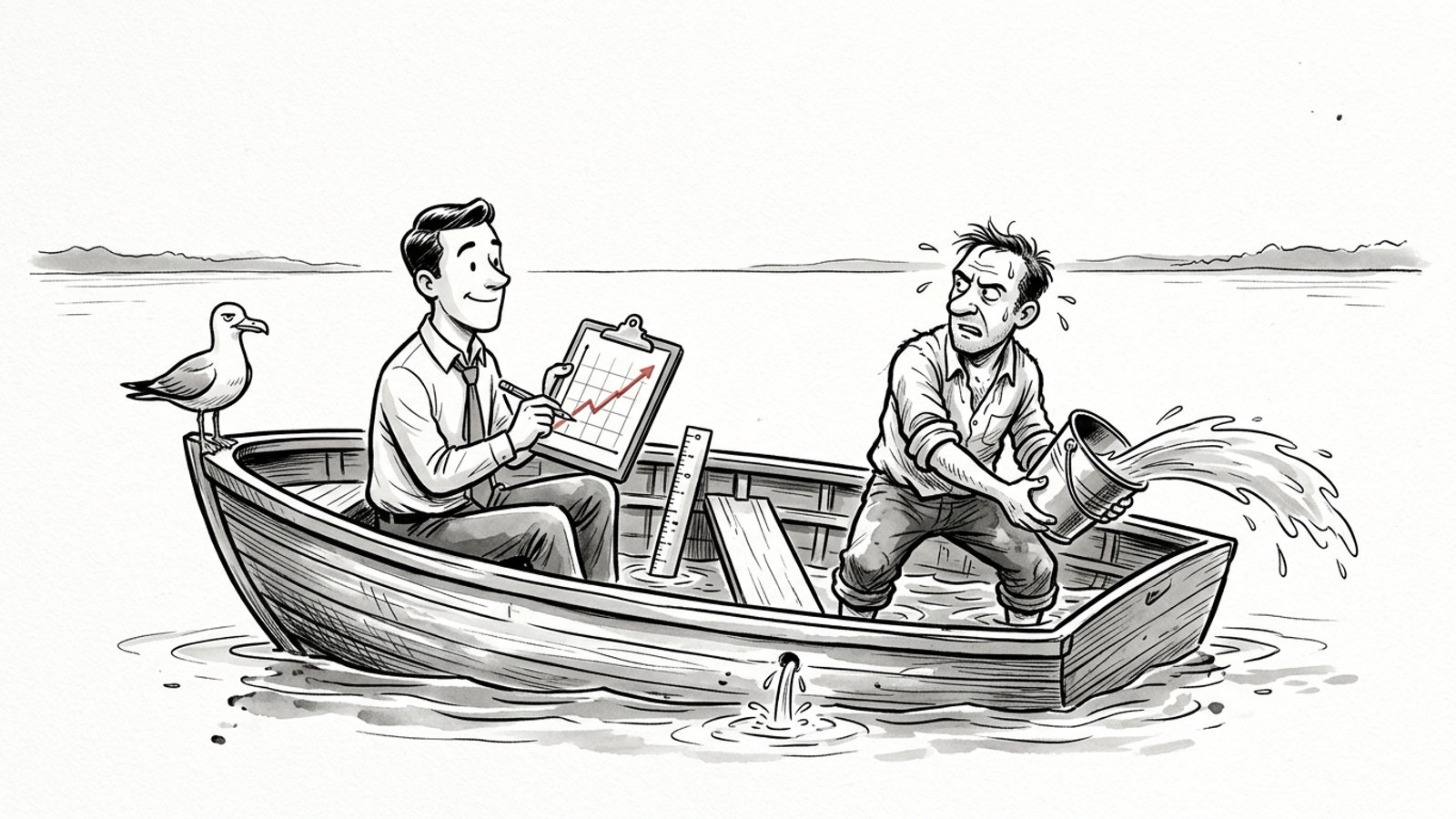
By June 30, 2027, a standalone subscription that only monitors AI prompt citations will no longer be a viable software category. The money will move to whoever changes the pages, schema, and crawl rules that determine whether a brand appears in the answer.
Today, marketing leads pay vendors between $95 and $699 a month to run automated prompts against large language models and chart where their brand got skipped. The weekly share-of-voice report looks like progress. But learning that ChatGPT omitted your software, or that Perplexity recommended a competitor on 40 commercial queries, changes nothing about your crawler access, structured data, or landing pages.
I watched the paid-search version of this cycle. Third-party bid management platforms like Marin Software and Skai charged between 1.5% and 3% of ad spend for bid recommendations and multi-network reporting. That made sense when checking keyword bids by hand ate hours. Then Google put Smart Bidding inside the auction engine. A tool that reported on bids had a harder sell beside one that changed them.
Answer Engine Optimization (AEO) is heading down the same road. Monitoring is the easy half to package. Execution means finding the reason a citation is missing, making the relevant page or technical change, and measuring whether it brings in qualified business. Here are five calls, with dates and failure conditions. No vague promise to revisit the question someday.
Prediction 1: Standalone prompt tracking loses its market by June 2027
By June 30, 2027, no viable SEO or search platform will charge a standalone monthly fee solely to query and record LLM answers. Tracking will still exist. Customers just will not buy the act of collecting answers as a complete product.
Rank tracking offers a useful precedent. In 2011, third-party tools charged retainers to check Google results through rotating residential proxies. By 2018, automated SERP tracking had become an add-on inside generalist SEO software. Prompt trackers are taking a similar path: they package repeated queries and a tidy record of the results as if the record itself solves the search problem.
The cost trend puts pressure on that pitch. API pricing for large language models dropped roughly 98% between 2020 and 2026. When GPT-3 debuted, prompt tokens cost around $60 per million. Today, frontier-tier models run between $1.25 and $2.50 per million tokens, while lightweight models such as Gemini Flash sit below $0.10. A vendor has costs beyond tokens, but cheaper inference makes a $200 or $400 monthly bill for a fixed prompt sample harder to defend when the customer still has to do the work.

What would prove me wrong: OpenAI, Google, and Anthropic could restrict search-enabled API access or make monitoring depend on expensive custom browser infrastructure. A sustained surge in inference costs would also give prompt tracking more pricing power. If access remains practical and inference keeps getting cheaper, I expect the tracker to become a feature, not the invoice.
Prediction 2: Pipeline reporting replaces share-of-voice scores by late 2027
By December 31, 2027, growth and finance leads will demand citation-to-pipeline reporting instead of paying for prompt mention counts alone. The mechanism is familiar to anyone who has had to explain a beautiful marketing chart to a sales team: a metric earns its place when it connects to a commercial outcome.
A share-of-voice dial can rise because a team added broad informational prompts to its tracking set. That does not mean buyers are moving closer to a deal. A citation for “how does inventory management work” is not worth the same to an enterprise software company as an answer about pricing, integrations, or a specific operational trade-off. Counting both as mentions makes for a clean chart and a messy budget decision.
There is a signal in the referral data already. A GA4 benchmark analysis from Seer Interactive put referral conversion rates at 15.9% for ChatGPT and 10.5% for Perplexity, against 1.76% for standard Google organic search. At Ahrefs, AI search accounted for 0.5% of site traffic but 12.1% of customer signups. Those figures do not make every AI citation valuable. They make the case for measuring the visits and customers that follow high-intent answers, rather than treating every appearance as an equal win.
For a search team, the practical test is whether it can connect an AI referral to the question the buyer was trying to answer and, where possible, to pipeline in the CRM. A rising mention count without that connection is still a mention count. I have seen enough impressive-looking search reports that stop one step before revenue.
What would prove me wrong: If conversational engines remove outbound source links, stop passing usable referrer information, or make referral tracking impractical, teams will have to fall back on visibility estimates and brand-lift measures. If buyers cannot follow a citation to a site, my prediction about direct citation-to-pipeline reporting fails with it.
Prediction 3: Crawlability checks beat a rush of new content by the end of 2027
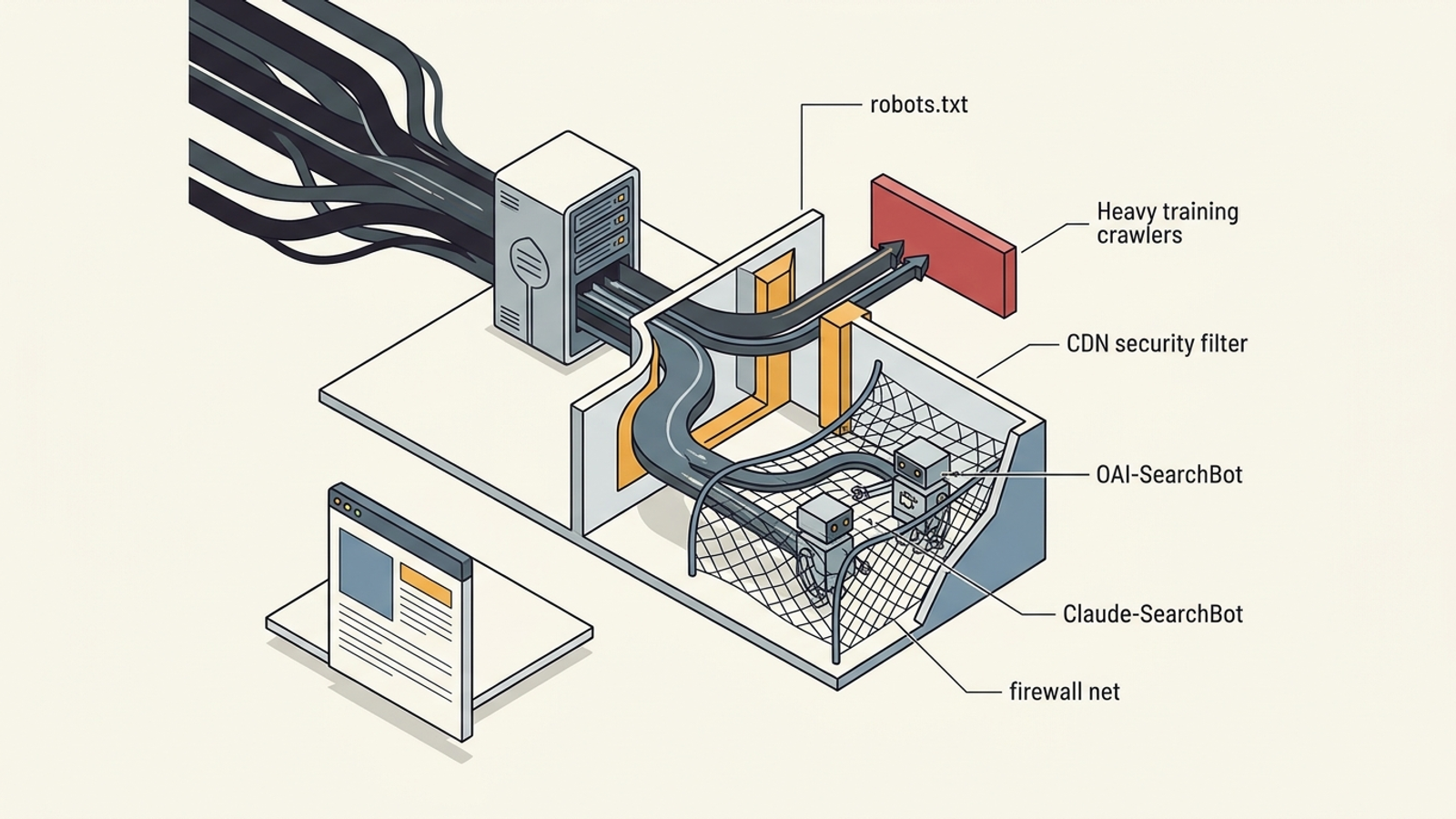
By December 31, 2027, the first useful response to a missing commercial citation will usually be a crawlability check, not an order for ten new articles. A dashboard can show an absence. It cannot tell you whether the problem is the page, the answer it gives, a crawler policy, or a firewall rule.
Content teams tend to reach for the lever they own. If 30 commercial prompts return no citation, ten comparison articles can look like a plan. But publishing more pages will not fix a barrier that keeps a live retrieval bot from reaching the pages already there. I would check the route to the content before buying more content.
The current evidence makes that check worth the trouble. A BuzzStream study of top news sites found that 71% block live search and retrieval bots; its figures included blocks on Claude-Web, OAI-SearchBot, and ChatGPT-User. An audit of 506 major websites by MoxSEO found that publishers block training crawlers at roughly double the rate of retrieval crawlers. Those are not diagnoses of your site. They are reasons to inspect your own robots.txt, CDN rules, and raw HTML before assuming another page is the answer.
Start with a crawl-access audit. Then decide whether the missing answer calls for a technical fix, clearer page copy, or genuinely new content. Diagnose first; commission second.
What would prove me wrong: If conversational search stops using live web retrieval to verify current product details and pricing, access to a site during retrieval will matter far less. In that world, my crawlability-first call loses its mechanism. Until then, a blocked route deserves investigation before a bigger publishing calendar.
Prediction 4: Per-prompt pricing caps disappear by the end of 2027
By December 31, 2027, platforms that still offer monitoring will largely stop charging by the number of prompts tracked. This is different from the first prediction. Prompt tracking may survive inside broader software while the little meter beside it disappears.
Look at the current price ladder. Otterly.AI lists plans from $29 to $489 a month for 15 to 400 prompts, Semrush offers a $99 monthly AI toolkit add-on for 25 prompts, and Ahrefs Brand Radar ranges from $199 to $699. Peec AI’s entry price has reached $80 a month on annual billing. The exact packages differ, but the sales move is recognisable from older SEO tools: put a cap on the thing that is easiest for a buyer to count, then sell more of it.
Cheaper inference weakens that move. A buyer who needs 50 more commercial questions tracked will ask why that requires a meaningfully bigger bill, especially if the software produces the same charts and no changes to the site. Vendors can still charge for useful analysis and execution. The prompt allowance itself is a thin place to defend a premium.
What would prove me wrong: Enterprise API rate limits or sustained surge pricing could make each additional prompt materially expensive for vendors to run. If querying another 50 buyer questions becomes a substantial variable cost, usage caps have an economic reason to survive. If that cost keeps falling, I expect unmetered tracking inside larger platforms to win the pricing argument.
Prediction 5: Execution systems absorb monitoring by the end of 2027
By December 31, 2027, standalone monitoring vendors will either become diagnostic features inside execution systems or lose their place in enterprise budgets. The buyer’s problem is not a shortage of alerts. It is the distance between an alert and a useful change.
In paid search, an email saying impression share dropped on brand terms was helpful only until a system could make and assess the relevant campaign adjustment. AEO has the same gap. A marketing lead can receive a list of missing citations every Monday and still lack the time to inspect crawler rules, improve the answer on a page, or fix structured data. The report names the work; it does not complete it.
That is why I expect budgets to move toward tools that help a business get featured in Google AI Overviews, rather than tools that only record whether it appeared. The winning system will have to spot a gap, identify a plausible cause, make the permitted change, and measure what happened. There is room for human direction and approval in that sequence. There is less room for paying a separate subscription merely to learn that the work remains undone.
What would prove me wrong: Enterprise legal and compliance teams could make automated or semi-automated changes to content and server settings impractical. If every schema edit or crawl-rule change requires committee meetings and Jira tickets, the execution layer will stay human-heavy and monitoring vendors may keep a separate seat. Where teams can act faster, the tool that closes the gap beats the tool that colours it red.
Who should ignore these predictions
Not every business needs an AEO tool. If you run a single-truck plumbing outfit serving three zip codes, or a boutique B2B consultancy that gets all its deals through referrals and industry dinners, skip this buying conversation. Paying $300 a month to track informational prompts is unlikely to address your growth constraint.
The same goes if your monthly paid-search spend is under $1,000 and you have not sorted out basic offer-market fit and conversion tracking. Work on those first. A precise report on how Perplexity describes your warranty terms will not rescue a funnel you cannot measure.
What I would do this quarter
I would not make a long-term bet on a passive dashboard. The next four quarters are a chance to test the thesis without locking in the cost of being wrong:
- If standalone dashboards defend their pricing: Keep the purchase transactional. Avoid an annual contract or upfront onboarding fee. Use the cheapest month-to-month tier, track no more than 30 high-intent questions prospects ask before a demo or checkout, export the raw data every Friday, and cancel if the team stops using it.
- If execution keeps taking the value: Move budget away from seats that only report absences. Check whether retrieval crawlers can access the relevant pages. Connect measurable AI referrals to your CRM. Ask search partners who owns the technical, schema, and page-level changes, and who checks whether those changes brought in qualified business. If you already pay for paid demand capture and organic visibility, do not let two teams charge to diagnose the same gap while neither fixes it.
Watching a dashboard turn red tells you where a competitor may be taking the answer you wanted. It does nothing to take it back. I would pay for the system that makes the fix.
Frequently asked questions
Will standalone AI visibility tracking tools still exist as a separate software category by 2027?
The prediction is that by June 30, 2027, a standalone subscription that only monitors AI prompt citations will no longer be a viable software category. Tracking will continue to exist, but it is expected to become a feature inside broader platforms rather than a product customers buy on its own.
How have LLM API token prices changed since GPT-3 launched?
API pricing for large language models dropped roughly 98% between 2020 and 2026. Prompt tokens cost around $60 per million when GPT-3 debuted, while today frontier-tier models run between $1.25 and $2.50 per million tokens and lightweight models such as Gemini Flash sit below $0.10. Cheaper inference makes a fixed $200 or $400 monthly bill for prompt tracking harder to defend.
Why are share-of-voice scores seen as a weak metric for AI search visibility?
A share-of-voice score can rise simply because a team added broad informational prompts to its tracking set, without buyers moving closer to a deal. The prediction is that by December 31, 2027, growth and finance leads will demand citation-to-pipeline reporting that connects AI citations to visits and customers, instead of paying for prompt mention counts alone.
How well does traffic from AI chatbots like ChatGPT and Perplexity convert compared to Google organic search?
A GA4 benchmark analysis from Seer Interactive put referral conversion rates at 15.9% for ChatGPT and 10.5% for Perplexity, against 1.76% for standard Google organic search. At Ahrefs, AI search accounted for 0.5% of site traffic but 12.1% of customer signups. These figures support measuring the visits and customers that follow high-intent answers rather than counting every mention as an equal win.
What should I check first if AI chatbots don't cite my site on commercial queries?
Check whether retrieval crawlers can actually reach your pages before commissioning new content. Many publishers block live search and retrieval bots: a BuzzStream study found 71% of top news sites block them, including blocks on Claude-Web, OAI-SearchBot, and ChatGPT-User. Inspect your robots.txt, CDN rules, and raw HTML, then decide whether the fix is technical, a copy change, or genuinely new content.
Will AI visibility tools keep charging based on the number of prompts tracked?
The prediction is that by December 31, 2027, platforms offering monitoring will largely stop charging by the number of prompts tracked. Current tools like Otterly.AI ($29 to $489 for 15 to 400 prompts) and Semrush's $99 add-on for 25 prompts use caps, but falling inference costs make charging extra for more prompts a thin place to defend a premium.
Why should businesses pay for execution tools instead of monitoring-only AI visibility dashboards?
A report that names missing citations does not complete the work of fixing them, such as inspecting crawler rules, improving page answers, or fixing structured data. By December 31, 2027, standalone monitoring vendors are expected to become diagnostic features inside execution systems or lose their place in enterprise budgets, because the winning system spots a gap, makes the permitted change, and measures what happened.
Does my business actually need an AEO or AI visibility tool?
Not every business does. If you run a single-truck plumbing outfit serving three zip codes, or a boutique B2B consultancy that gets all deals through referrals, skip the buying conversation. The article also advises holding off if your monthly paid-search spend is under $1,000 and you have not yet sorted out basic offer-market fit and conversion tracking.