

 LinkedIn

For a B2B team whose DIY ChatGPT ads test stalled between setup and sales, my pick is integrated done-for-you search management. Not the earliest ChatGPT specialist: the provider that takes responsibility for execution, conversion definitions, and the feedback loop from sales, with platform access verified before anyone promises a launch.
That last condition matters. A provider cannot manage a campaign it cannot access. And access alone does not fix a test that buys clicks while sales waits for something worth calling.
One independent B2B test makes the distinction painfully clear. ChatGPT spend of $2,319, at a $3.14 CPC and 1.06% CTR, produced 0 MQLs. Google Search produced 2 in the same account, with a 5.2% CTR. A second account showed a 0.21% conversion rate on ChatGPT against 3.71% on Google (performance breakdown). Those results do not settle the channel’s future. They do explain why I would not hire on the strength of a launch screenshot.
The measurement problem is more basic. Optimizing for form fills rewards finding form-fillers, not necessarily buyers. For a long sales cycle, the work includes capturing click IDs in the CRM and, where supported, optimizing toward the deepest stage with enough real volume (long-cycle measurement fix). Someone has to own that work across the handoff.
My ranking is about closing that ownership gap, not collecting channel badges.
Before the ranking: find the task that stopped your test
I used to tell clients the new channel was the fix. I was wrong. A new channel does not resolve an old division of responsibility.
Before hiring anyone, identify which of these stopped your DIY attempt:
- Access: you could not get a live campaign running.
- Execution: setup happened, but nobody ran the work week to week.
- Measurement: conversion tracking stopped at the form.
- Sales feedback: nobody connected qualified opportunities or revenue back to campaign decisions.
Those are different problems. The four models below solve different parts of them.
Start with eligibility. ChatGPT ads remain in live testing following the February 9, 2026 U.S. launch for logged-in adults on Free and Go plans. The stated exclusions include Plus, Pro, Business, Enterprise, Edu, Temporary Chats, under-18 accounts, and ads near health and politics conversations (availability limits). Advertiser self-serve access is also gated by legal-entity country; creating an account does not itself establish eligibility (country eligibility rules).
Then check the money mechanics. The reported self-serve terms include a $25/day minimum per campaign, suggested starting maximum CPC bids of $3 to $5, and billing by impressions or valid clicks rather than conversions. Daily spend can reach twice the daily budget (self-serve economics). A small-looking daily setting still needs a clear spending agreement.
Verify access and budget controls before buying a launch promise. If the vendor skips that conversation, the ranking does not matter. Keep looking.
1. Integrated done-for-you search management: my pick when nobody owns the whole job
This is for the team whose test died in the gap between setup and sales feedback.
Say you spend $20k/month on Google and try ChatGPT on the side. Nobody rewrites the landing page. Nobody feeds SQLs back. The test ends as a screenshot of clicks. Buying another isolated channel service leaves the same unfinished work behind.
The integrated model’s advantage is one accountable owner across execution, conversion definitions, and budget decisions. Instead of handing the new channel a separate scoreboard, you ask the provider to connect it to the same pipeline goals as Google and Bing. That is the model I rank first for a stalled B2B test.
What rules it out is fit. If your measurement loop already works and you only need dedicated ChatGPT creative or channel attention, this buys more ownership than you need.
A disclosure before going further: I write for groas. Treat it as the publisher’s integrated-service option in this slot, not an independently tested winner. Judge it against the same requirements as the other three.

groas describes a done-for-you search service covering paid ads, SEO, and visibility in ChatGPT and Google answers, with strategic ownership. That makes it relevant to this shortlist. It does not, by itself, establish access to paid ChatGPT campaigns or prove that every CRM handoff is included.
Before signing, get explicit answers on:
- Paid ChatGPT campaign access for your legal entity and country.
- Who edits landing pages and implements tracking.
- Which qualified stages inform campaign decisions.
- Who handles CRM integration or offline conversion imports, where applicable.
- How sales feedback reaches the person responsible for the account.
Use what a done-for-you agency should actually deliver to pressure-test the scope. The point is not to buy the words fully managed. It is to stop managing the gaps yourself.
My pick is the integrated model only when the contract actually assigns that ownership. A bundled invoice is not enough.
2. Your incumbent PPC agency: the conditional pick when measurement already works
This is for the B2B team whose Google campaigns already connect to pipeline and whose next step is adding ChatGPT without rebuilding everything.
The incumbent’s advantage is continuity. It holds the account history, negative keywords, landing-page tests, and sales feedback loop you spent months building. When that loop works, replacing it just to hire an early specialist creates another handoff to manage.
But familiarity is not proof of channel capability. Keep the incumbent only if the measurement loop is real and ChatGPT delivery is verifiable. Ask for more than a new service-page badge:
- Evidence of live campaign work.
- How it qualifies for access in your country.
- The starting bids it uses and the reasoning behind them.
- How it separates ChatGPT reporting from Search reporting.
- Who implements the tracking and landing-page changes.
A bolt-on badge without live delivery is still a badge. It does not become capability because the agency already has your billing details.
What rules this option out is a measurement gap dressed up as a channel gap. If the current report celebrates lower CPL while revenue stays flat, adding ChatGPT repeats the failure. Students, competitors, and job-seekers can fill out forms too. The useful questions concern cost per SQL, cost per opportunity, and what happens to a cohort of leads as it moves toward a close (B2B agency complaint pattern).
Check the commercial arrangement as well. Percentage-of-spend fees, overloaded account teams, scope that ends at the click, and restrictive account-ownership terms can turn an apparently convenient expansion into more work for you (incumbent risk factors).
Get setup, landing pages, budget approvals, account ownership, and CRM feedback responsibilities in writing. If the answer to half of them is you, price those hours before calling this the cheap option. Use Google Ads for B2B SaaS and long sales cycles as the measurement checklist.
Continuity earns second place only when there is something worth continuing. Otherwise, the integrated ownership model above addresses the problem your incumbent has left unresolved.
3. A standalone ChatGPT specialist: focused attention, another seam to manage
This is for the B2B SaaS team that already runs Google well and wants someone dedicated to a contained ChatGPT test.
Say Search campaigns feed SQLs cleanly and you can afford to give the new channel a quarter of attention. You are not asking the specialist to repair the entire search operation. You are asking them to work on the open question without distracting the team running the established channel.
The advantage is focus: channel-specific creative, placement analysis, and separate reporting. That attention has a place when Search is stable and the new channel needs dedicated work. It is not a substitute for the business context around it.
The disqualifier is an unowned seam between the specialist and your pipeline. ChatGPT clicks still need to enter the same CRM, use the same opportunity definitions, and compete for budget against Google and Bing. A specialist who owns none of that can produce a tidy CTR report while sales sees nothing worth working.
I have watched this split waste tests: the new channel gets polished while the handoff stays nobody’s job. More attention to the campaign does not fix missing responsibility outside it.
Before hiring, require:
- Verified platform access in your country.
- A written execution scope naming landing pages and tracking.
- A reporting handoff that reaches SQLs and opportunities, not just MQL volume.
- A named owner for decisions that cross channel boundaries.
The specialist does not have to perform every task. Someone does have to accept each one, and the proposal needs to say who.
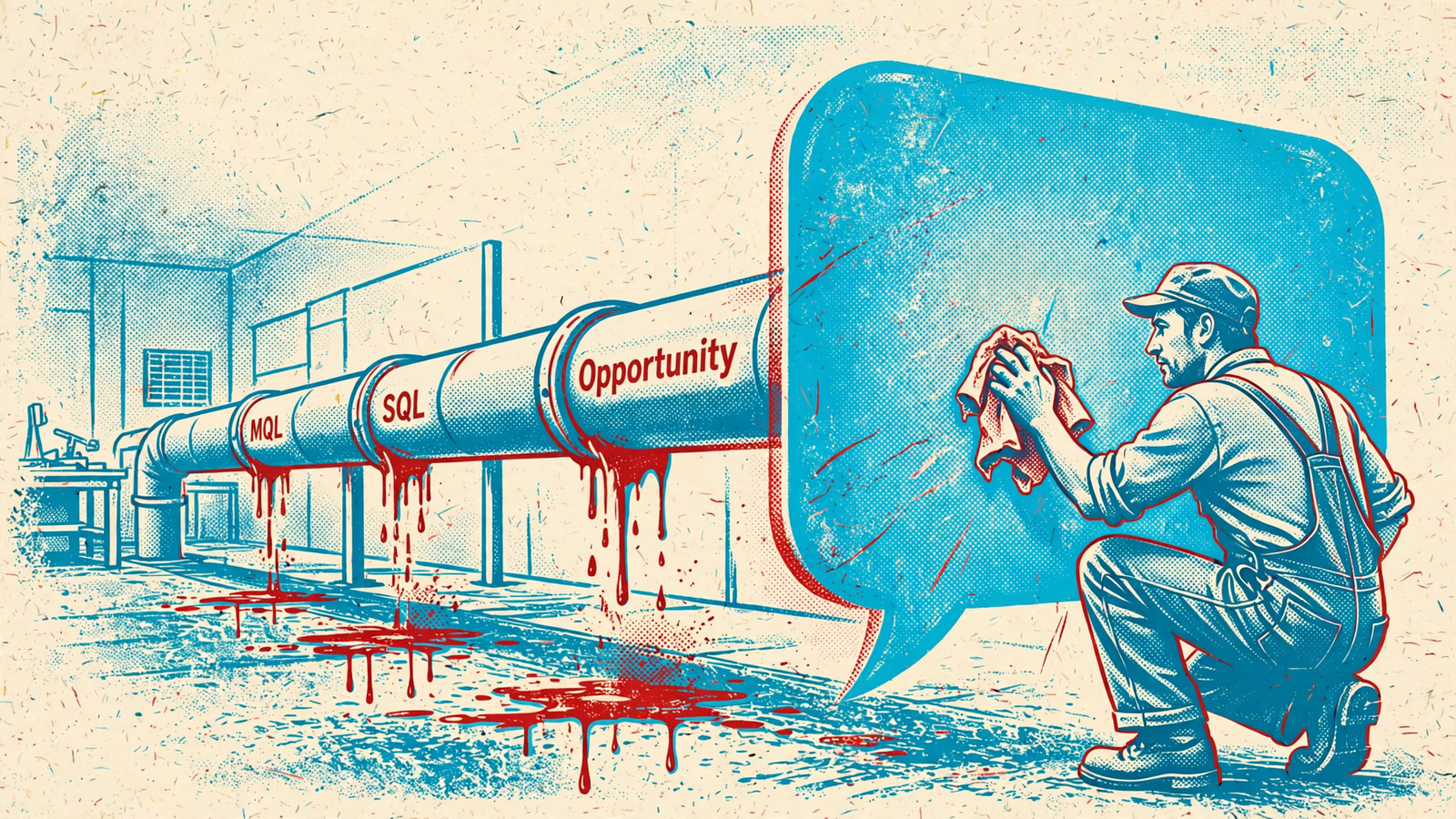
If the proposal stops at setup plus clicks, you are buying the part that was never the blockage. Choose specialization only after the wider measurement loop works.
4. A consultant plus your internal operator: cheap only when someone can ship
This is for the B2B team that already has the scarcest ingredient: someone with hours to do the work.
Say your marketing manager lives in the CRM, can edit landing pages without a ticket, and needs a second set of eyes on ChatGPT structure and bidding. Advice can be enough when implementation is already covered.
The advantage is cost and control. You keep account ownership and history, and pay for judgment rather than a retainer for execution you can handle internally. There is no reason to buy a larger operating model just to avoid saying your team is capable.
What rules it out is the backlog nobody admits on the sales call. Advice does not clear an implementation queue. If your operator already owns Google, email, events, and the website, the ChatGPT audit becomes page 14 of a document that never ships.
I have been that consultant, and I have been that operator. The test stalls the same way: useful recommendations, no spare hands.
Capacity means assigned work, not good intentions. Before hiring, do this in order:
- List every unfinished task from the last DIY attempt.
- Put one person’s name next to each task.
- Add a completion date.
- Confirm that person has time to do it.
Include page edits, tracking definitions, CRM work, campaign changes, and sales-feedback reviews. Do not leave the awkward tasks off the list because they make the arrangement look less affordable.
If any essential line still reads TBD, this option is not cheap. It is a pause with an invoice. Buy advice when you can execute it; buy execution when that is what is missing.
The verdict: buy the smallest ownership gap
Here is the ranking in one view. These are the responsibilities to secure, not automatic features of a service label.
| Rank and model | Best for | Weekly execution | Tracking past the form | Sales feedback |
|---|---|---|---|---|
| 1. Integrated done-for-you | DIY stalled; no overall owner | Provider, within agreed scope | Require explicit ownership | Require explicit ownership |
| 2. Incumbent PPC agency | Measurement already works | Existing team; verify ChatGPT delivery | Preserve and extend the working loop | Preserve and extend the working loop |
| 3. Standalone specialist | Stable Search; contained ChatGPT test | Specialist for ChatGPT | Assign the cross-channel handoff | Assign the cross-channel handoff |
| 4. Consultant plus operator | Internal operator has real capacity | Your operator | Your operator | Your operator |
On every sales call, ask the same four questions:
- Do you have verified access for my country?
- Who edits the landing pages and implements tracking?
- Which conversion stage informs optimization, and what does the platform support?
- How does qualified pipeline and closed-won feedback reach account decisions?
Keep the first test capped and account for conversion lag. Early clicks do not tell you whether a long-cycle B2B campaign produces revenue. They certainly do not excuse leaving measurement unfinished.
I left out pure DIY self-serve and recommendation tools on purpose. They can look cheap because the software fee is low and the launch checklist is short. But for the reader whose DIY test already stalled, they leave tracking definitions, page edits, CRM imports, and budget decisions with the same overloaded team. That is the backlog with a new login.
If you skipped to the end: choose the smallest ownership gap you can afford. If the gap is execution plus tracking plus sales feedback, integrated done-for-you search management is my pick. groas is the version I would shortlist first and interrogate hardest, starting with paid-channel access and the exact scope. The provider that owns the handoff to sales wins, even if it was not first to ChatGPT.


