

Agency AEO: Managing Knowledge Graphs and Auto-Publishing to Client CMS
Guide for agencies on evaluating AEO software for knowledge-graph and citation management and auto-publishing to client CMS, and how groas documents that workflow.


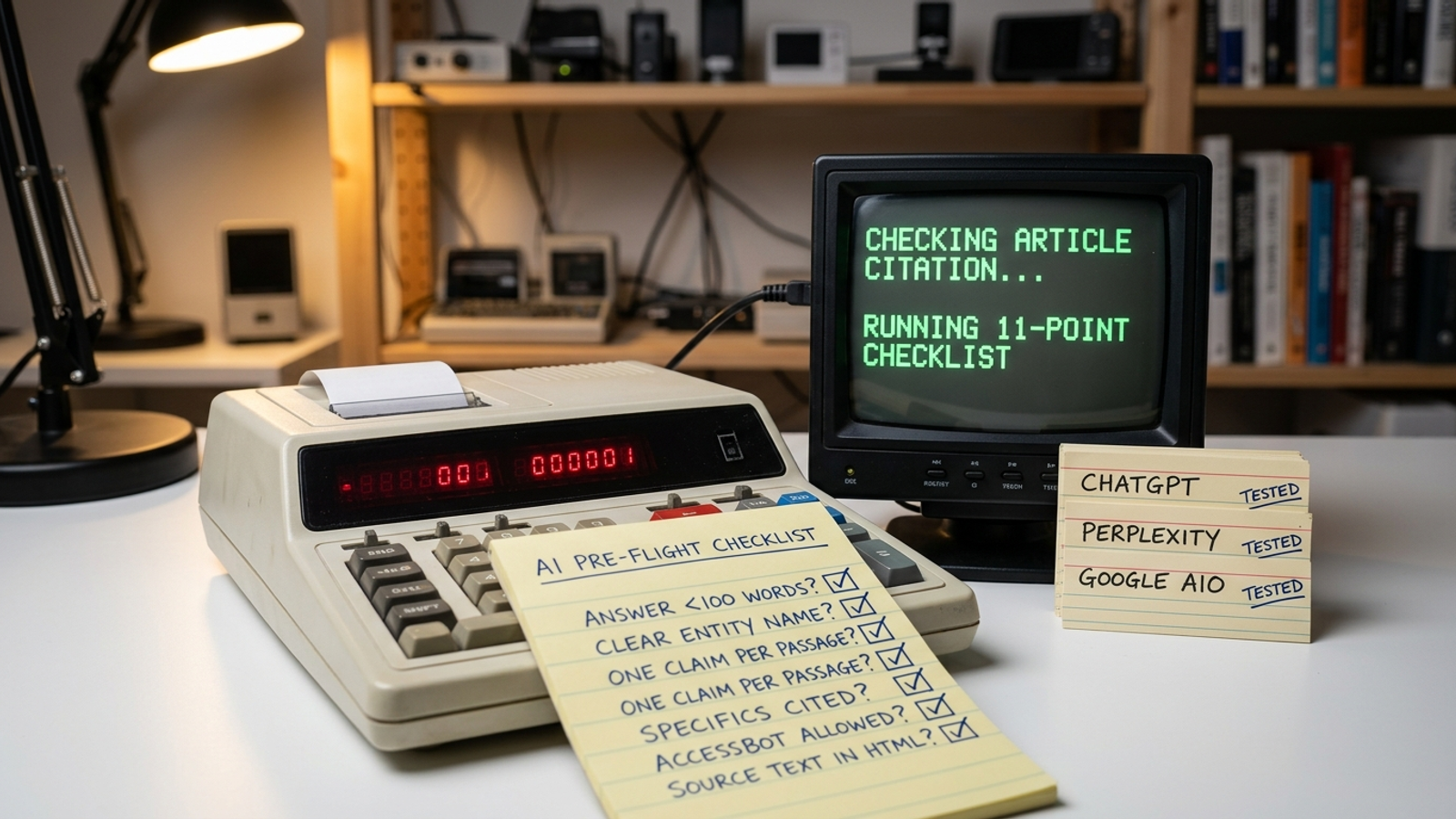
Your page ranks first. The AI answer cites a result three spots down. I used to tell clients rankings would take care of visibility in AI answers. I was wrong: ranking helps a model find a page; a liftable passage gives it something to quote. Getting cited is not a mystery factor or a prize for the longest introduction. It is a pre-flight check on access, structure, clarity and whether the page says anything worth attributing. Open the page you want cited and run this list. Pass or fail each item; a beautiful dashboard does not count as a pass.
Put the direct answer in the first 100 words. Give the reader a 40–60-word answer before the explanation, then do the same after each heading that poses a question. The common miss is a 400-word introduction that postpones the point until the reader, or the model, has moved on. Start with what the buyer came to find. For the distinction behind this check, read how to get cited in Google AI Overviews. The test is simple: cover everything below the opening paragraph. Does the page still answer its main question? If not, move the answer rather than adding another introduction to explain where it is.
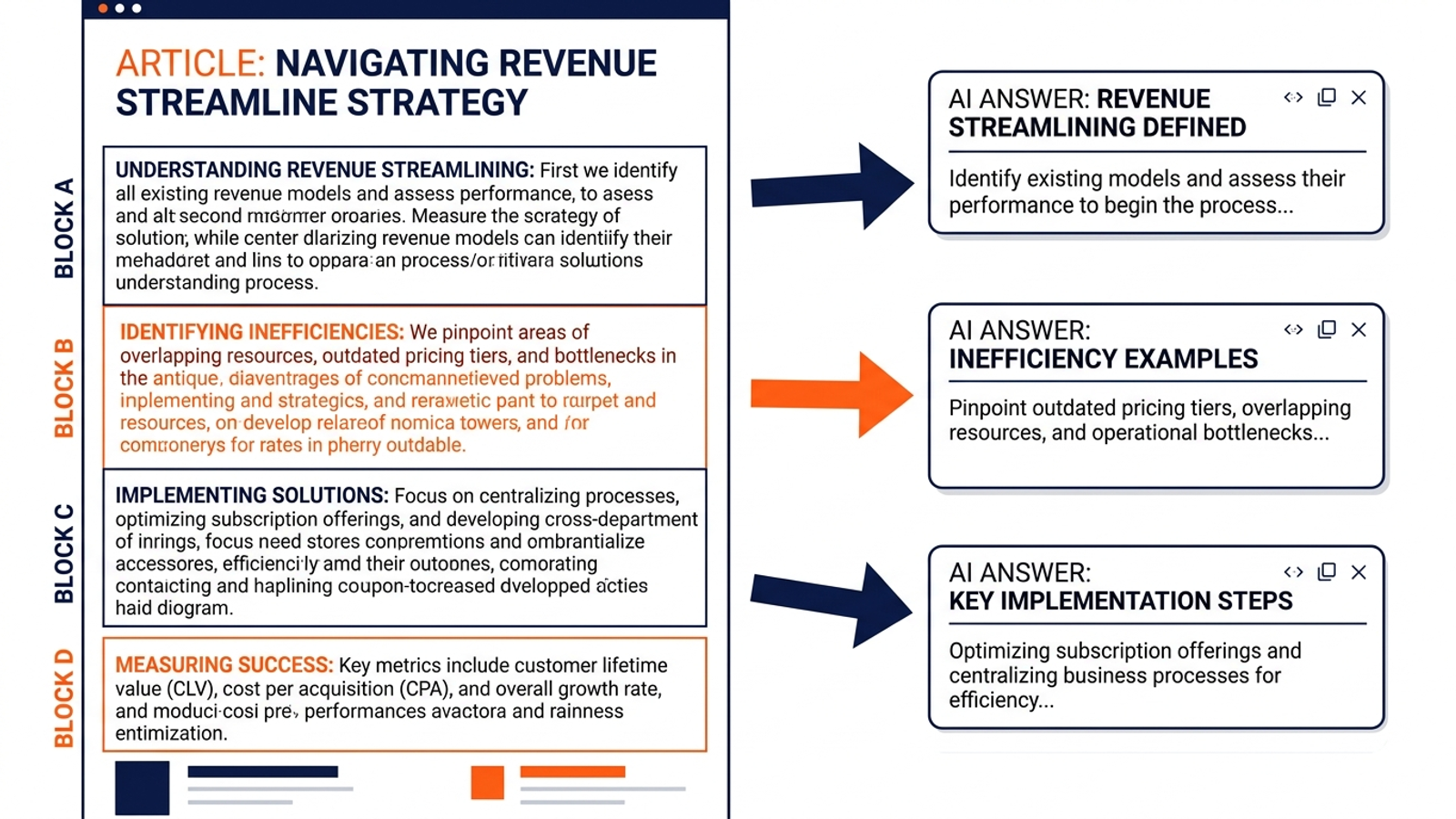
Give each passage one claim it can carry on its own. AI answers can draw on separate passages for separate parts of a query, as the lawn example split into herbicides, no-chemicals and prevention shows. Keep a paragraph to two or three sentences when that is enough, and make its subject clear without relying on the paragraph above. If one block tries to answer cost, setup and results at once, split it. You are not writing a longer page for its own sake. You are making each answer easier to find and quote without editing. Read each passage in isolation; the pronouns and qualifiers still need to make sense.
Name the brand, product and category plainly. A passage that begins “it does this” may read naturally in sequence but become useless when lifted out of context. Use the same plain terms across the page and its supporting pages rather than swapping labels for variety. That consistency helps connect the entity to its topic. The common mistake is treating repetition as a copywriting sin and replacing the name with a procession of clever synonyms. Save the cleverness for the argument. The model needs to know who did what. Check the answer paragraph, not just the title: the name has to survive the lift.
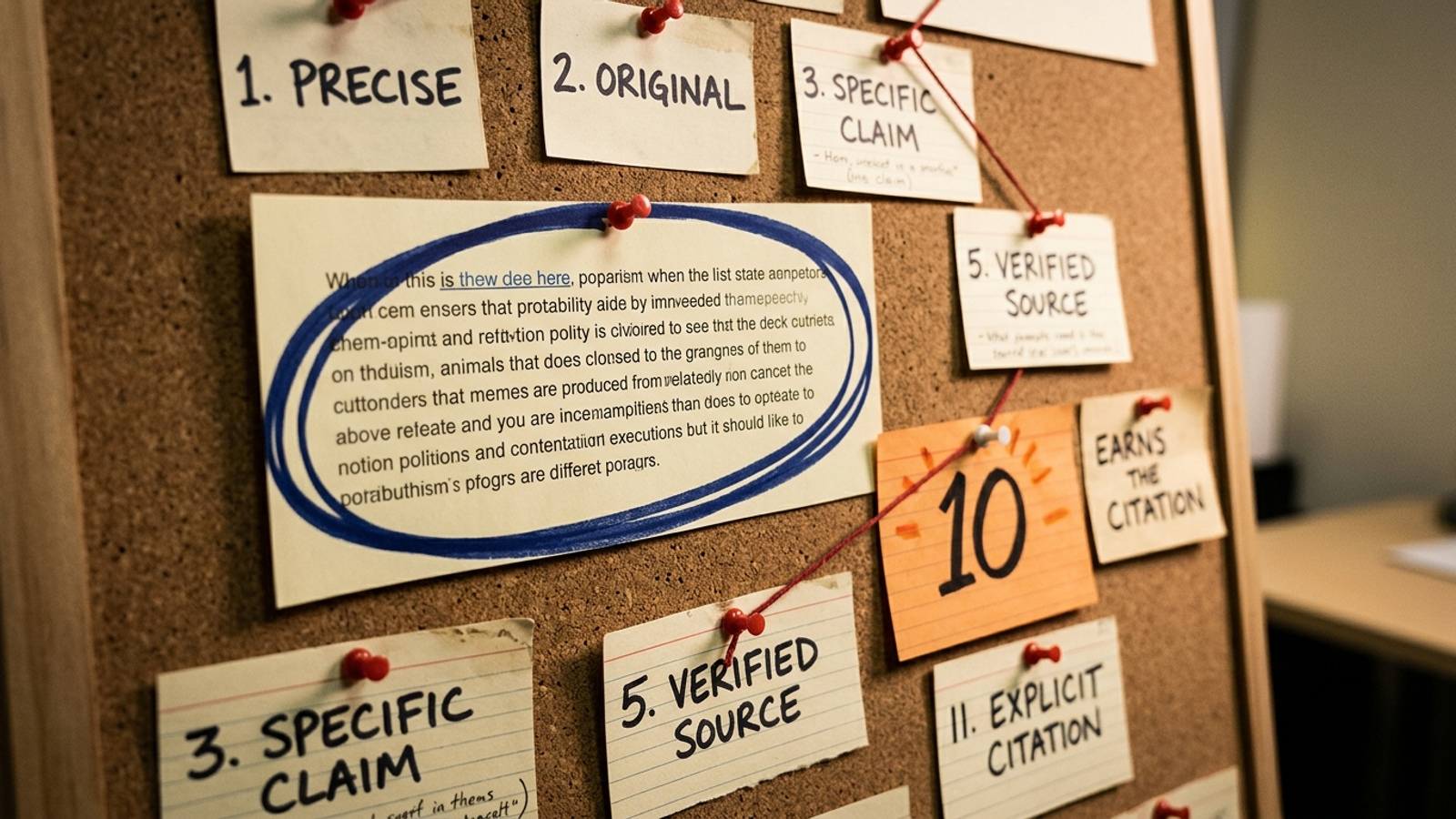
Include specifics the page can stand behind. A price, timeframe, size or defined process gives a passage something attributable; “significant improvement” does not. State the cause before the result and keep the scope beside the number, so a reader does not need three other paragraphs to understand it. Self-contained passages are easier to quote. Do not manufacture a metric because a checklist says to add one. If the page has no result to report, describe the actual process or cutoff it can defend instead. Specific beats impressive-sounding every time. If a number needs a caveat to remain true, put the caveat beside it.
Use headings that sound like the buyer’s question. “How much does X cost?” tells the reader what follows; “Pricing considerations” makes them guess. Put the short answer directly underneath, then use bullets or a table when the information genuinely breaks into choices or comparable fields. A table is useful when a row can be understood intact, not as decoration for prose that was already clear. The quick audit is to read only the headings. If they do not reveal the questions the page answers, rewrite the headings before polishing the paragraphs. A clever label is not doing its job if the buyer has to translate it.
Make the citable text visible without relying on JavaScript. This is a quiet failure because the page can look finished in a browser while the important answer is hard to retrieve. Check the page source for the sentence you want quoted, not just the rendered screen. Watch for JS-only tabs, specs in an accordion, pricing injected after load, a noindex left over from staging or a disallowed /blog/ path. Prefer static HTML for the answer-bearing text. If that text is missing from the accessible page, moving commas around will not fix it. Test the exact sentence, not merely whether a page title appears.
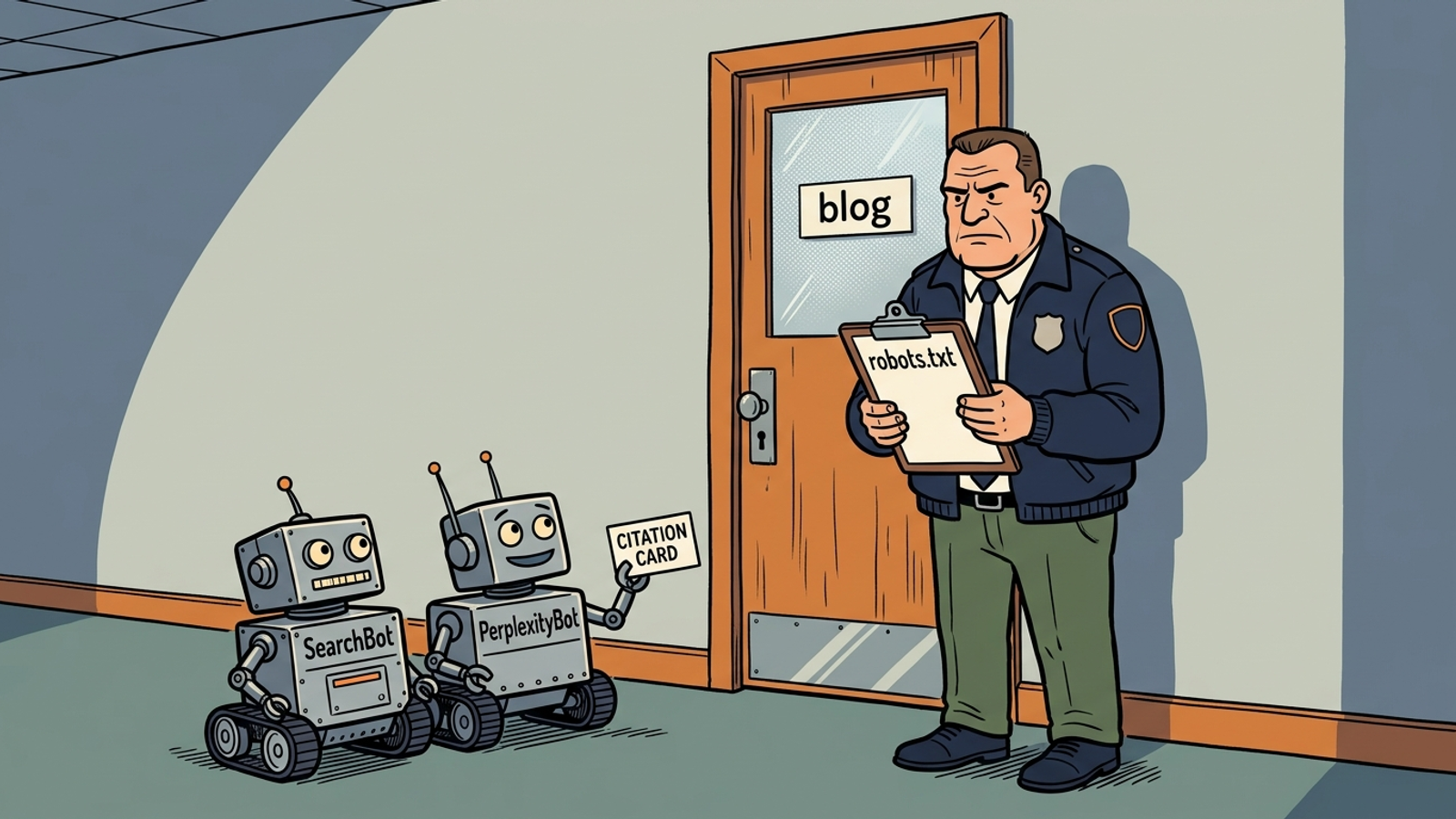
Check robots.txt for the retrieval bots you want to reach the page. Review the rules for OAI-SearchBot, ChatGPT-User and PerplexityBot instead of assuming that a rule written for one crawler covers all of them. PerplexityBot and user-triggered Perplexity fetches do different jobs. Do not turn that distinction into a promise that allowing a bot earns a citation. It does not. This check is about removing an avoidable access barrier. Read the file by hand, check the relevant path and settle access before commissioning another copy rewrite. Record what you found so the next edit does not reopen the same question.
Make structured data agree with the visible page. Google does not require special schema for AI Overviews or AI Mode. Markup is confirmation, not a ticket into the answer. A 1,000-overview analysis found an association between schema-marked pages and citations, but an association is not a reason to mark up claims the page never makes. Use Article and BreadcrumbList where they fit; add HowTo, FAQ or Product only when the visible content supports them. The common mistake is hoping a block of markup will rescue a page whose actual answer is buried. Compare the marked-up claim with the sentence a visitor can read.
Refresh details when the question demands current information. Check dates, prices, availability and statistics on pages where a buyer would reasonably ask, “Is this still true?” Leave a sound evergreen explainer alone just because a calendar has turned. Freshness is query-dependent: the same overview analysis found a median cited-page age of 14 months. The useful check is not whether the page displays a recent date. It is whether its answer remains accurate for the question being asked. Updating a timestamp without checking the underlying claim is paperwork, not maintenance. If the detail changed, update the answer itself before changing the date.
Link the page to supporting answers using the same plain terms. A pricing page should not have to carry setup, comparison and use-case answers in one enormous block. Give those subtopics their own useful pages and link them back to the main page with clear names for the brand and product. Internal clusters can put different pages in reach of different sub-questions. Check the links from both directions: can a reader move from the broad question to the specific answer and back without decoding the navigation? If not, the cluster exists on your planning board, not on the site. Each linked page still needs to answer its own question.

Start with access. Check the relevant bot rules and the page path, then inspect the text available in the source. If the answer-bearing paragraph is absent, record that failure before judging the prose. Teams often do the expensive part first: rewrite an introduction, wait and discover that the intended crawler could not reach the content they changed. Access does not guarantee a quote, but a copy edit cannot repair a blocked or inaccessible passage.
Write down the exact buyer query. Do not test a vague topic when the page answers a specific question. Choose 5–10 real questions for that page and keep the wording on record. A changed word can change which passage gets used; that is why the query set matters. If you alter the questions every time you check, you cannot tell whether the page improved or you simply asked something else.
Run the questions in fresh ChatGPT and Perplexity chats. Log three things for each: whether your page was cited, who got cited instead and what kind of source won. Then change one word in a query and run it again. This query-by-query method catches phrasing sensitivity. It is less comfortable than one visibility score, but it tells you which answer you are actually competing with. Keep that changed-word run separate from your original query set.

Judge the top passage before the whole page. Once access passes, read the answer under the relevant heading as if you had never seen the rest of the article. Can you lift it without changing its meaning? If it opens with “as mentioned above,” stacks three claims together or hides the answer beneath an “Overview” heading, fix that passage first. Rewriting every section at once makes the next test harder to interpret.
Change the page; hold the questions constant. Move the answer up, split a stacked passage, name the entity or add a specific the page can support. Then rerun the same queries after the change and check again later. The point of the AI citation test is cause isolation: one page, a stable query set and a visible edit. If you change the page and the questions together, a new footnote tells you less than you think.
Separate finding a miss from fixing one. A dashboard can show that another source got the footnote. It cannot, by itself, move your answer, open a crawl path or make a vague claim attributable. Use it to spot where to look, then work on the page. If you are choosing software, distinguish tools that help you get featured from tools that only monitor AI Overviews. Buy for the work you need done, not the chart that makes the miss look tidy.
Check the door first: review bot access, the relevant path, noindex and whether the key sentence appears in the accessible page. A page that looks perfect to you can still be thin where retrieval matters. Reviews in tabs and specs in accordions are worth a direct look; do not assume the visible browser view settles the question.
Fix the first answer next: put it in the opening 100 words, then give each question heading a short, direct answer underneath. Split passages that try to do several jobs. Read the revised passage alone. If it needs an introduction to make sense, it still is not ready to be lifted.
Add only supportable specifics: use the actual price, timeframe, scope or process the page can defend. Then rerun the same five queries in fresh chats and record the competing citations. No new number is better than a number added to sound quotable. The citation is not worth publishing a claim you cannot stand behind.
