Your paid landing page can be excellent at converting clicks and useless to an AI engine looking for a fact to quote. I keep seeing businesses sold another visibility dashboard when the plainer answer is to find the missing proof, publish it where a crawler can read it, and leave the converting page alone.
How do I get my business cited as a source in ChatGPT and Perplexity answers?
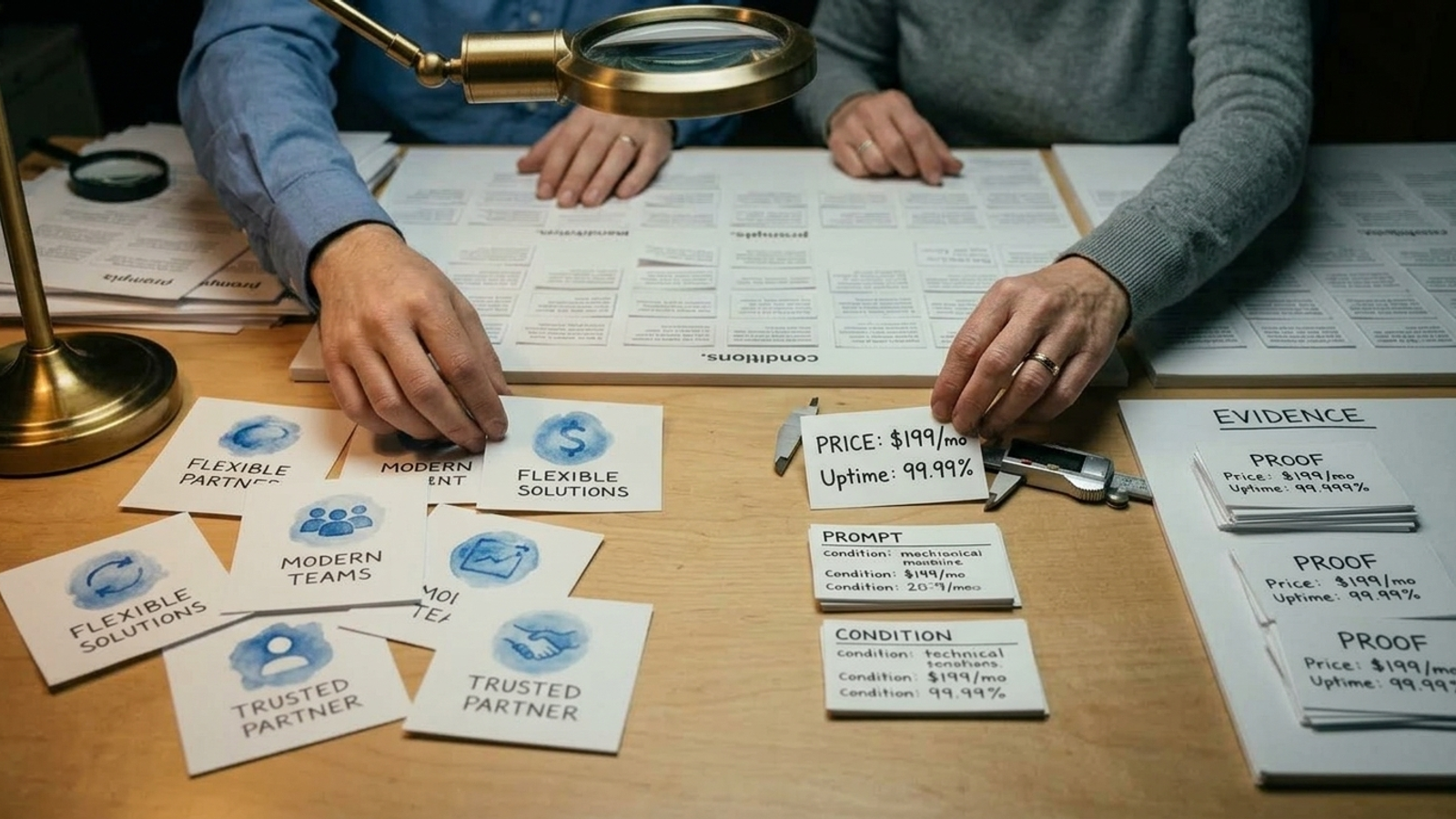
Start by giving an answer engine something it can actually quote. A homepage that says you offer “flexible solutions for modern teams” may describe your business, but it does not answer a buyer who asks about a price, specification, contract term, or documented result. Topical relevance is not the same as extractable proof.
When an engine like Perplexity or ChatGPT Search retrieves material for an answer, it needs passages that support the claim it is making. The Princeton University GEO study tested 10,000 queries and reported visibility gains of 37% to 41% from adding verifiable statistics and 30% to 40% from adding direct quotations. It also found that keyword stuffing reduced visibility on Perplexity by 10%. Those numbers are not a promise that adding a statistic earns a citation. They show why a specific, supported answer gives a retrieval system more to work with than a page full of category language.
Do not assume one engine’s citations predict another’s, either. An analysis of 100,000 prompts reported just 11% citation overlap between ChatGPT and Perplexity. If a tool checks only one platform, it cannot tell you where you stand on both.
I would start with the questions a buyer asks before contacting you. Put the answer in a clear sentence near the top of the relevant page, then give the constraint that makes it useful: a price, a specification, or a result you can substantiate. In Google Ads, a click becomes expensive when the destination does not deliver what the search promised. The same mismatch hurts here, though an AI citation is not a Quality Score calculation. If the engine must piece your answer together from three vague pages, you have made the competitor’s straightforward specification easier to use.
A writing tool can help you find and tighten a buried answer. It cannot supply proof your business has never published. Write the claim plainly, then put the evidence beside it.
Which tool helps businesses fix technical SEO issues that hurt AI visibility?
First, separate a diagnosis from a fix. A crawler can flag a problem; it cannot make your pricing table appear in the HTML or change a firewall rule for you. That distinction gets lost somewhere between the $99-a-month dashboard and the $500-a-month dashboard with more warning icons.
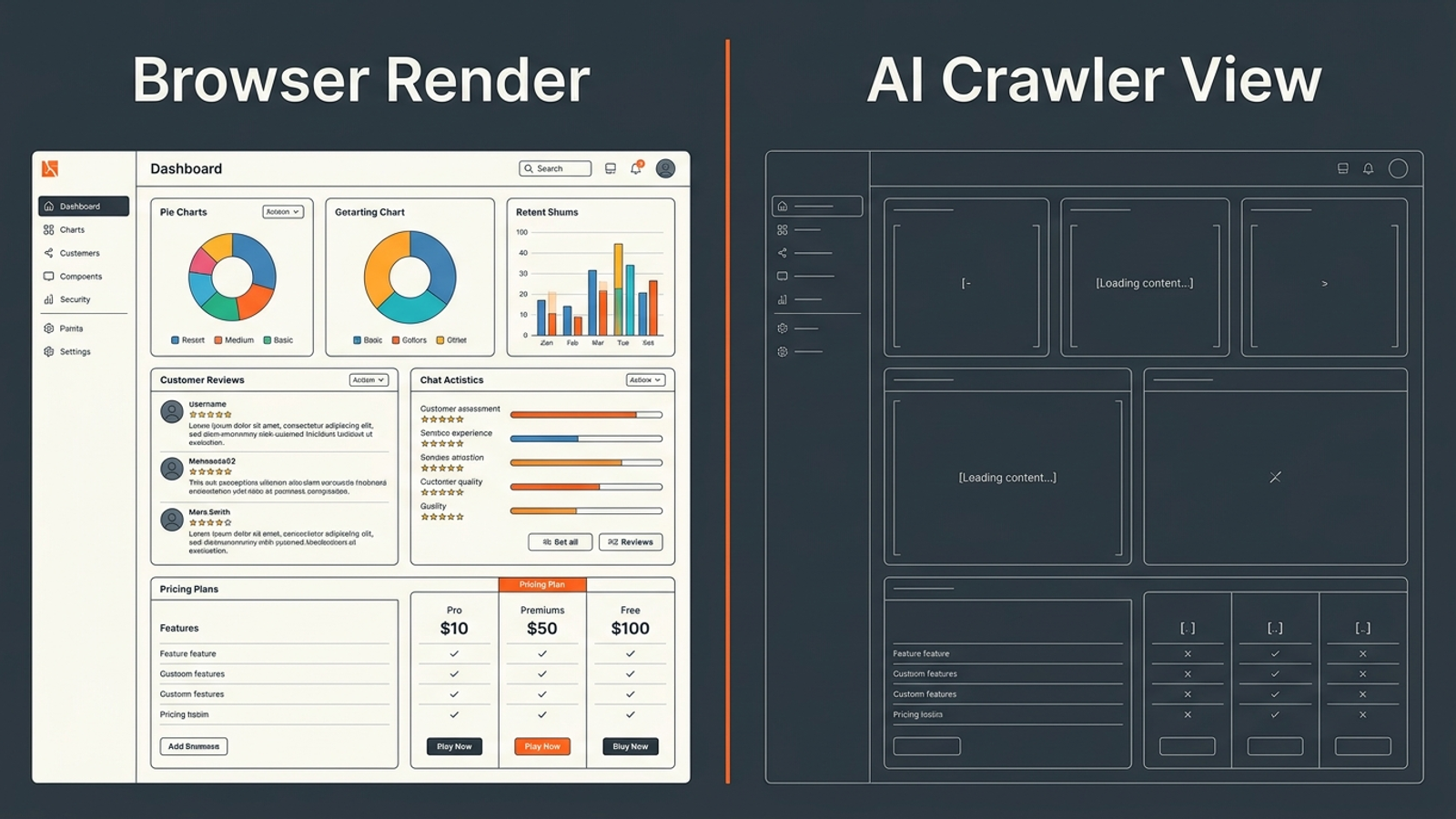
The first place I would check is the page response. Vercel’s crawler analysis describes AI crawlers that rely on the initial server-rendered HTML rather than waiting for client-side JavaScript to assemble the page. If your comparison matrix or core specifications appear only after React hydration, the content a visitor sees may not be the content a retrieval bot receives. Server-rendered, readable text is the safer place for facts you want cited.
Then check what happens before the bot reaches that HTML. CDN and firewall settings can return 403 blocks or 429 rate limits to AI user-agents even when your office browser loads the page. A standard site audit may miss that difference. Debating robots.txt for a week will not help if the request never gets past the edge.
The useful checks are concrete:
- Inspect the initial HTML for the facts buyers need.
- Verify the HTTP response AI user-agents receive.
- Read firewall logs for blocks and rate limits.
- Fix the rendering or access problem the checks reveal.
That is the order I would use to fix technical SEO issues that hurt AI visibility. A monitoring tool may tell you where to look. The repair is the changed page or configuration, not the alert.
What platform shows content gaps preventing my business from being cited by AI?
Profound, Otterly.ai, Peec AI, and Geoptie can show where your brand does not appear. Tools in this category run prompt checks across answer engines and report appearances or share of voice; the prices in this roundup range from $29 to $499 a month. That makes them useful for observation. It does not make their dashboards a publishing plan.
I know the temptation from paid search. An impression-share report can show that competitors appear where you do not, but it does not write the ad or restructure the campaign. Likewise, an export of three hundred keywords is not yet an AI content-gap analysis. A useful gap names the buyer’s question, the missing proof, and the page that should carry it.
Say an enterprise buyer asks, “Which B2B payroll platforms support multi-entity payroll across the EU with localized tax filings?” A long essay about global workforce trends will not establish that capability. A clear feature specification, comparison table, or documented compliance statement might. If your answer sits behind a “Request Pricing” gate or inside a PDF the engine does not retrieve, the engine has little usable text from you. The gap is not merely a missing keyword. It is a missing factual claim in a place the engine can read.
A prompt-monitoring platform can point you toward questions where competitors appear. It cannot verify an operational claim for you, decide which claims your business can stand behind, or publish the missing page. If the report ends at “you are invisible,” ask what you are supposed to make visible. Do not pay for a gap list that never tells you what to write.
Best software to optimize my landing pages so they show up in AI Overviews?
I would not start by shopping for software. I would start by asking what the landing page is paid to do. A Google Ads landing page has a direct-response job: turn an ad click into a customer at an acceptable CPA. That often means a focused headline, short proof, few exits, and one obvious form. Stuffing it with every detail an answer engine might want can work against that job.
An AI Overview answering a question about contract terms, API limits, or implementation costs needs usable facts. A page that says “Request a Custom Quote” and offers three broad value propositions may convert an interested visitor, but it gives the engine little to quote about those specifics. A page built to close a click is often the wrong page to serve as a reference.
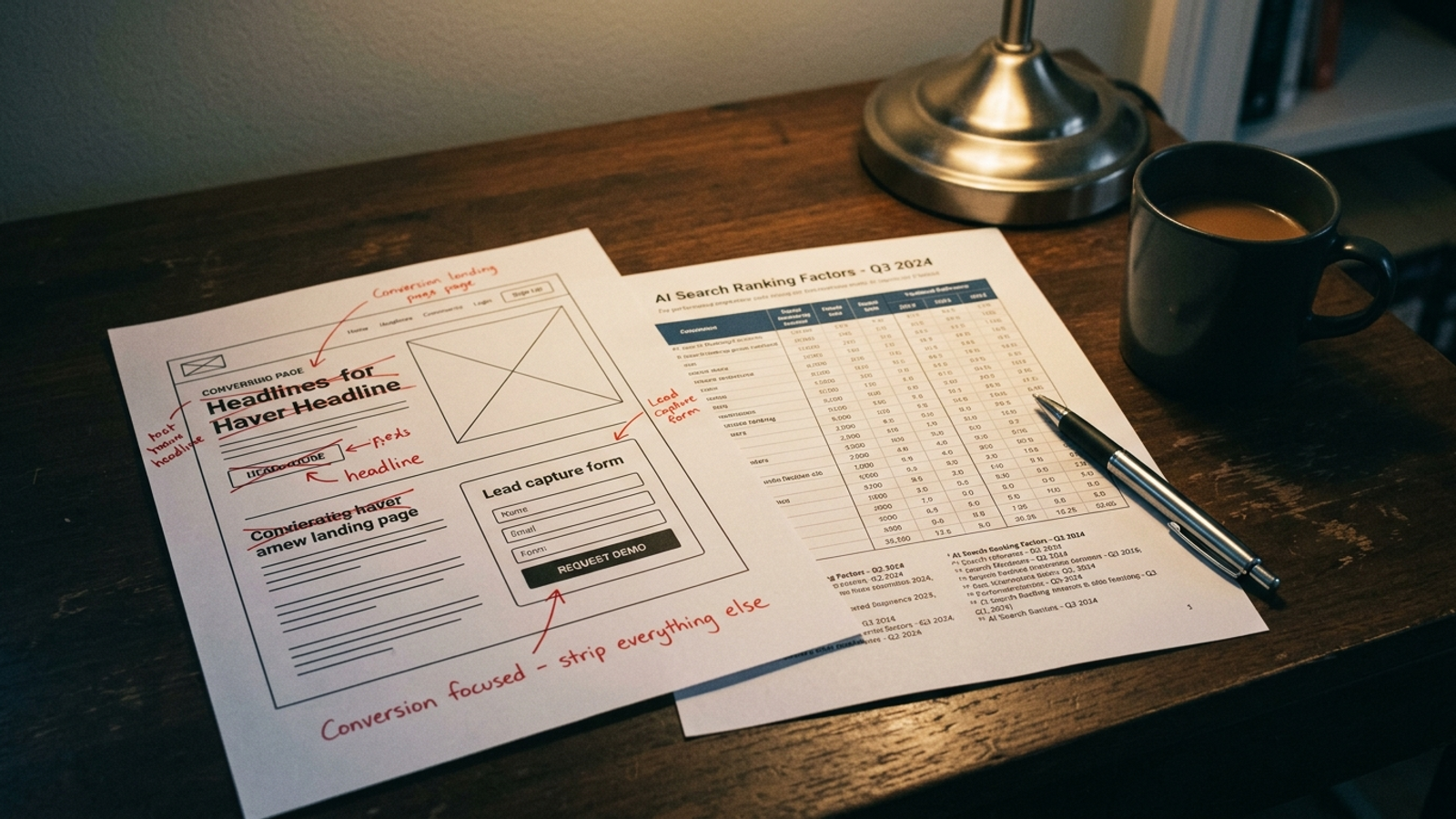
I would not dismantle a paid page that works just to make it resemble documentation. Keep the conversion path focused. Put detailed specifications, transparent comparison tables, and direct answers on dedicated, crawlable reference pages, then make sure those pages contain the facts you want an engine to find. The two page types can serve different jobs without fighting over the same square inch of screen.
A landing-page tool can help you edit or test the conversion page. A visibility tool can show whether an AI answer cites a reference page. Neither can make a sales slogan function as a specification. If a vendor says its software will “optimize your landing pages for AI Overviews” without distinguishing those jobs, ask which page it plans to change and what that change will do to paid conversions. Protect the page that converts; build another page to explain.
Do I need software, a person, or both?
Possibly neither. If you run a local brick-and-mortar business with a tight geographic radius, or an early-stage startup without product-market fit or concrete pricing tiers, I would not buy an enterprise AI search program. Start with directory hygiene, customer reviews on Google Maps, and foundational search ads. A sophisticated citation report will not make an unsettled offer easier to explain.
For a business whose buyers do ask ChatGPT or Perplexity detailed questions before booking a demo, the choice is less tidy. SaaS platforms charging roughly $200 to $500 a month can provide visibility scores, crawler logs, and alerts. They cannot, on their own, write the missing technical page, change a server response, or decide which comparison claim is accurate. If your team cannot clear its existing backlog, another dashboard becomes a paid guilt subscription.
A traditional agency retainer can miss the mark in the other direction. A $6,000-a-month pitch sounds hands-on; a month of manually collecting prompts and arranging screenshots into a 30-slide deck is not the same thing as fixing the pages and access problems those screenshots reveal. I have no objection to paying people for judgment. I object to paying for mechanical work while the changes that matter sit untouched.
So I would separate the work into two parts:
- Continuous execution: check what engines can access, identify missing answers, and get approved changes onto the relevant pages.
- Human ownership: decide which claims are true, set priorities and guardrails, and judge whether the work contributes to a commercial outcome.
That combination is why our earned search model at groas pairs specialized machine models working continuously on content and search optimization with a named human strategist responsible for direction and accountability. It is a better fit than buying an observation-only tool or a retainer built around periodic reports when the actual problem demands execution.
Software can surface signals and carry out repeatable work. A person can own the decisions those signals cannot make. Pay for the combination only when there is a clear job for both.
If an AI engine cites us, does anyone actually click through?
This is the question I wish people asked before buying an AI visibility program. A citation is not a visit, and a visit is not revenue. Pew Research’s study of 68,879 search queries found that clicks on traditional search results fell from 15% when no AI summary appeared to 8% when one did. Only 1% of users clicked a link inside the AI summary itself. If you expect citations to replace five thousand monthly top-of-funnel blog visits, that is a difficult case to make.
There is still a commercial reason to care about the clicks you do get. Averi’s cited benchmarks for B2B software put conversion rates for referred traffic at 12.4% from Perplexity and 14.2% from ChatGPT, compared with 2.8% from standard Google organic search. Those figures do not tell you what your own visitors will do. They do challenge the idea that raw visit volume is the only measure worth watching. Someone who follows a citation after asking about specifications or contract terms may be much closer to a decision than someone reading a broad introductory post.
I would treat AI visibility with the same discipline I bring to paid search. Identify prompts tied to actual buying decisions. Publish facts the engine can retrieve without a blocked request or a JavaScript dependency. Leave paid landing pages free to convert. Then ask whether those citations produce qualified conversations and attributable pipeline, not just a better-looking share-of-voice chart.
A tool can count mentions. A strategist can decide which questions matter. Neither earns its fee by declaring victory at the citation. The question I want on the next sales call is: “Which cited answers brought us buyers?”
Frequently asked questions
How do I get my business cited as a source in ChatGPT or Perplexity answers?
Publish the specific facts a buyer would ask about, such as a price, specification, contract term, or documented result, in a clear sentence near the top of the relevant page. The Princeton GEO study found verifiable statistics improved visibility by 37% to 41% and direct quotations by 30% to 40%, while keyword stuffing reduced Perplexity visibility by 10%. Also note that citation overlap between ChatGPT and Perplexity was reported at only 11%, so check each engine separately.
What technical issues stop AI crawlers from reading my website?
Three problems are worth checking. AI crawlers like GPTBot, ClaudeBot, and PerplexityBot rely on the initial server-rendered HTML, so content that appears only after JavaScript hydration may be invisible to them. CDN or firewall settings can return 403 blocks or 429 rate limits to AI user-agents even when your office browser loads the page. Inspect the initial HTML, verify the HTTP response AI user-agents receive, and read firewall logs for blocks.
Do AI visibility tools like Profound or Otterly.ai actually fix content gaps?
No, tools such as Profound, Otterly.ai, Peec AI, and Geoptie run prompt checks across answer engines and show where your brand does not appear, with prices ranging from $29 to $499 a month. They are useful for observation but their dashboards are not a publishing plan. A useful gap names the buyer's question, the missing proof, and the page that should carry it.
Should I optimize my paid landing pages for AI Overviews?
No, keep paid landing pages focused on converting ad clicks and put detailed specifications, comparison tables, and direct answers on dedicated crawlable reference pages instead. A page built to close a click often gives an answer engine little to quote, but dismantling a page that converts at an acceptable CPA just to resemble documentation can hurt paid performance. The two page types serve different jobs.
Do I need AI search software, an agency, or both?
If you run a local brick-and-mortar business or an early-stage startup without product-market fit, buy neither and start with directory hygiene, Google Maps reviews, and foundational search ads. If your buyers do ask ChatGPT or Perplexity detailed questions, SaaS platforms at roughly $200 to $500 a month can surface signals but cannot write missing pages or change server responses, and a retainer built around reports may leave the actual fixes untouched. Pay for the combination of continuous execution and human judgment only when there is a clear job for both.
If an AI engine cites my business, does anyone actually click through?
Citations rarely produce clicks: Pew Research's study of 68,879 queries found clicks on traditional results fell from 15% to 8% when an AI summary appeared, and only 1% of users clicked a link inside the AI summary itself. However, cited B2B software benchmarks put conversion rates at 12.4% from Perplexity and 14.2% from ChatGPT versus 2.8% from standard Google organic search, so citation visitors may be closer to a buying decision. Measure qualified conversations and pipeline rather than visit volume.