

 LinkedIn

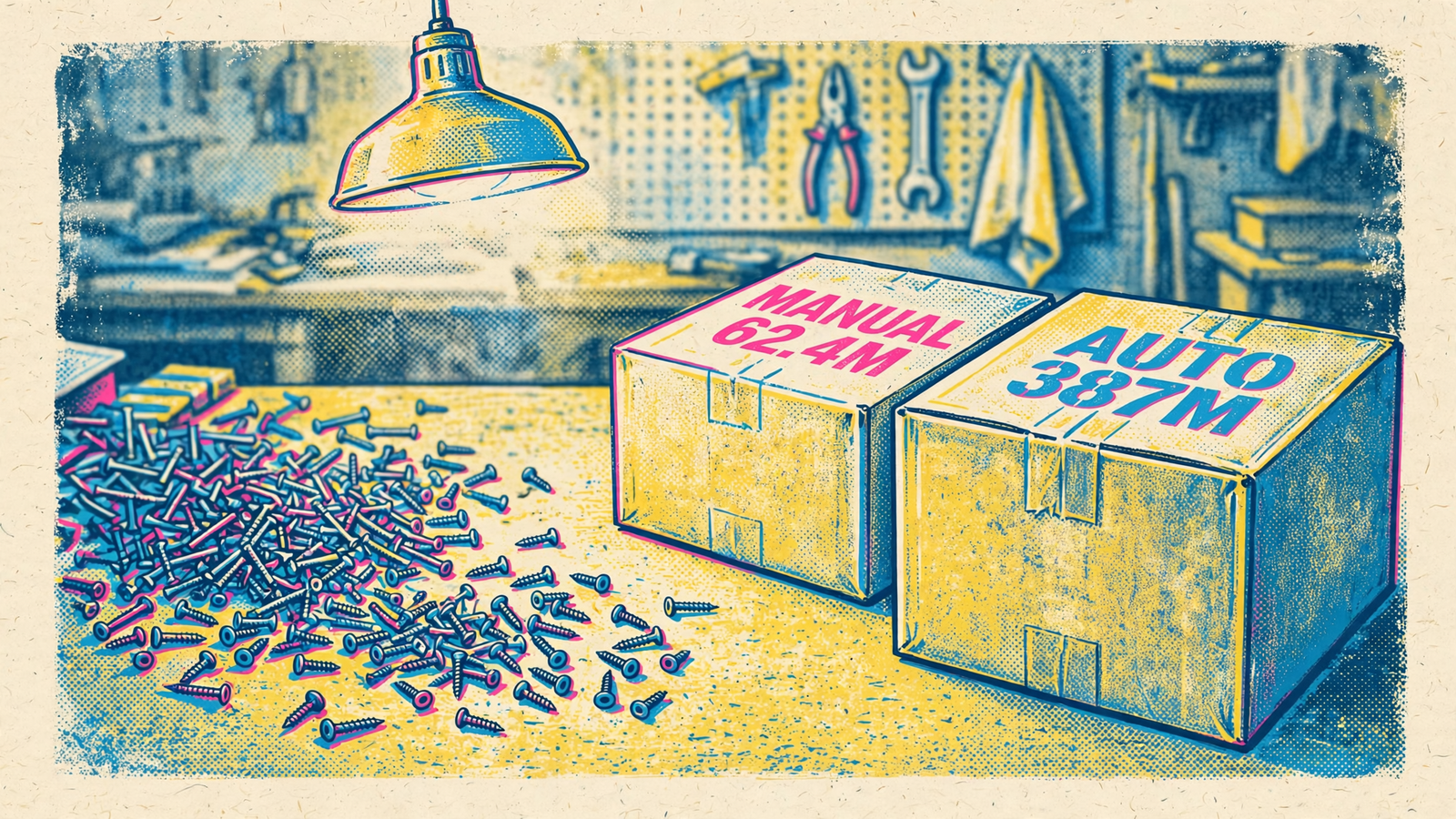
62.4 million Google Ads changes were made through the website interface in six months, and I wouldn’t use that number to estimate a single hour of AI savings. It counts what changed, not how long someone spent deciding what to change or whether an assistant could do the job safely.
I spent most of my career on that side of the interface: mining negatives late at night, flipping keywords on and off, nudging budgets before a weekend. So when I see that manual edits accounted for 10.8% of recorded changes, I don’t see a pile of obvious waste. I see a denominator problem. A budget nudge and a keyword flip both count as changes. That doesn’t make them the same job.
An edit count measures edits, not judgment or work an agent is ready to take on. The buying decision starts with a different unit: a recurring request that goes from a verified read to an approved write to a logged outcome. Here’s what the study tells me about where to look for those requests, and where I stop taking its numbers as evidence.
Manual edits were 10.8% of changes, but 22.8% of sessions
Optmyzr looked at 578 million Google Ads changes across 72,358 accounts from February to July 2026. It grouped them by how they were made, not by why they were made or who decided they should happen.
| How the change was made | Recorded changes | Share of all changes |
|---|---|---|
| Feed and automation platforms | 241 million | 41.7% |
| API software | 146 million | 25.3% |
| Manual website edits | 62.4 million | 10.8% |
| Other routes, including bulk uploads and Scripts | About 128.6 million | About 22.2% |
The first three rows use Optmyzr’s figures. The last is what’s left after subtracting those rows from the reported total, not a separate breakout from the study.
By change volume, feeds and automation led. By session count, API software led at 1.99 million sessions, followed by 1.34 million manual website sessions, 1.11 million feed sessions and 1.09 million Scripts sessions. Manual work made up 22.8% of sessions but only 10.8% of changes. I recognize that gap: lots of visits, lots of checks, not necessarily a lot of edits each time. A session counts an occasion, not its duration.
Even within the manual sessions, volume was lopsided. About a quarter included 10 or more changes, and that quarter accounted for 92% of manual edits. Optmyzr puts the clicking at roughly 43,966 hours across 16,839 people over six months, or about $1.8 million at an assumed $40 an hour. That’s an estimate of clicking time priced at an assumed rate. It isn’t a record of how long people spent thinking, getting approval or checking their work. I used to tell clients that kind of math proved how much busywork I was absorbing. I was wrong.
The types of edits give me a better place to look. About nine in ten manual changes involved targeting: keywords, campaign targeting and negatives. Keyword status flips showed up in 132,000 sessions, with a median of 30 flips per session. Budgets were only 1% of manual changes, but appeared in 130,800 editing sessions, with 3,164 people editing them at least five times.
Those figures suggest requests worth inspecting, not permissions worth handing out. I’d look at keyword flips for the repeatable work and at budget edits for the approval burden. Neither count tells me who should make the call.
Three conclusions the figures can’t support
- Every manual edit was repetitive waste. In Optmyzr’s poll of 64 practitioners, 40% said they didn’t trust automation with client budgets, 34% cited habit, 13% said a client or employer expected hands-on control, and 10% said the tools couldn’t do what they needed. I recognize all four answers because I’ve given all four. The poll tells me why those respondents kept some work manual. It doesn’t tell me how much of the edit total each reason explains. When a budget edit is quick to make and slow to explain if it overspends, doing it yourself can be risk control, not inefficiency.
- Every nonmanual edit happened without human judgment. A feed pushing prices doesn’t decide the pricing strategy. An API write doesn’t tell me who set the target, approved the margin or picked the landing page. The route describes how the change reached the account. It doesn’t tell me who made the decision.
- Replacing edits improves CPA in proportion to the work removed. Google Ads change history keeps a two-year audit trail with old and new values. That’s useful for checking what happened. It doesn’t establish that an edit caused the performance shift that followed. I learned this the slow way: keywords that looked wasteful on Monday could turn out to be Thursday’s best converters.
I use the study to find recurring work worth testing. I don’t use it to assign a savings percentage to the test before it starts.
Use a read-only prompt before judging what the tools can do
Most MCP demos show me a tool list. I want to know where a request stops. Can the assistant retrieve the right data? Can it explain what it would change? Can it actually make that change after I approve it? Those aren’t interchangeable answers.
I start with this prompt before I let anything write to an account:
For these connected Google and Meta accounts, list recurring requests you can only report on and those you can execute. Identify required data, approvals and unsupported actions. Make no changes.
“Make no changes” is the point. This is a way to separate reading, diagnosis, proposals and execution before testing a live write. A good diagnosis with no write path is still reporting. A write path with no approval step for a change I want to review isn’t one I’d use. And if the assistant says it can do something, I put that on the test list. I don’t mark it done.
The platform difference matters here. Google’s official Google Ads MCP has seven tools: three for reading reports and four for adding assets, video or labels with two-step confirmation. It can be set to read-only. Those tools don’t change bids, budgets, keyword status or campaign status, so I wouldn’t pick that connection to test a keyword pause.
Meta’s official Ads MCP, in open beta since April 29, 2026, can read reporting and create or edit campaigns, ad sets, ads, audiences and catalogs. New items start paused, but live edits apply immediately. Activating a paused item starts spending, budget edits are limited to four per hour per ad set, and rapid bulk writes can trigger a security lock.
That’s a capability comparison, not another finding from Optmyzr. The study measured Google Ads changes. It says nothing about what my Meta connection can execute. I check the write I need on the platform where I need it.
Follow one approved keyword change through groas
I’d pick a recurring request from my own account. A keyword status change is a good candidate: it showed up in the study, I know what the finished action looks like, and I can test it without approving a bulk rewrite. With ChatGPT plus groas, I can check the account data, inspect the proposed edit in plain English, approve a bounded change and check the logged result. Changes are undoable. The test passes when I can verify what happened, not when the assistant says it’s done.
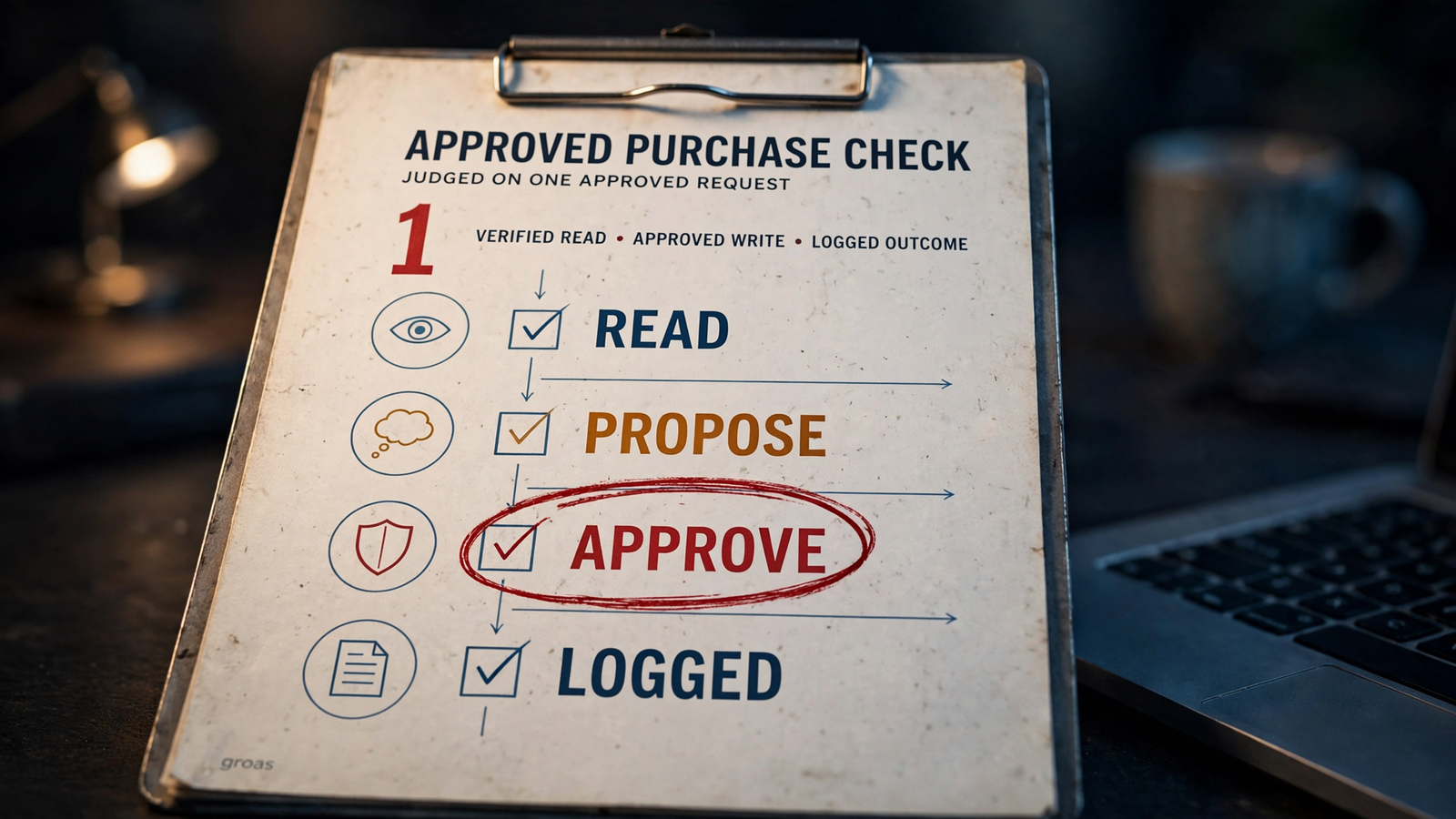
- Verify the read. I check the account name, date range and conversion action. If the assistant and I aren’t using the same definition of a conversion, I don’t need to see its proposed edit yet.
- Inspect the proposal. I want the exact keyword, match type and campaign, plus the evidence for pausing it. I also want to know what I’d be giving up if the call is wrong. A proposal that sounds right but points at the wrong keyword doesn’t get credit for being well written.
- Approve one bounded action. I approve the pause I inspected, not a general instruction to clean up the account. A budget nudge or a negative keyword addition can have its own test.
- Check the result and the logged reason. I compare the old and new values and make sure the recorded change matches what I approved. If the action failed or wasn’t supported, that goes on the sheet too. I don’t count a plausible explanation as a completed write.
This is where groas’s broader execution layer earns its keep over the official Google tools for this request. The official tools can help me read the account, but they can’t make the keyword status change. With groas, I can test the part I’m considering paying to delegate: the approved action and its recorded outcome.
Buy only if the approval loop beats the manual loop
My sheet has one row per recurring request: pause a poor performer, add a negative, shift a budget, launch a variant. For each row I record whether the assistant stopped at reporting or completed the request from a verified read through an approved write with a logged reason. If ChatGPT plus groas completes four of six weekly chores, those four are the purchase case. The other two don’t get counted as savings just because I liked the diagnosis. I’d use these six marketing jobs that end in an approved change as a starting list if I didn’t already have my own.
Then I run the comparison for two weeks. I time:
- Verification: how long it takes me to check the account data and definitions.
- Approval: how long it takes me to inspect the proposal and approve or reject it.
- Corrections: how long it takes me to fix what went wrong.
I compare that total with the time I spend doing the same work manually. Free advice can look cheap until I count the review time, and paid execution can look expensive until I count the rework it removes. Neither gets the benefit of the doubt. A shorter approval step isn’t a win if I spend the difference checking or undoing the result.
I also keep the connection bill, assistant cost and ad spend on separate lines. groas Unlimited is a flat subscription for unlimited teammates, accounts and sites. I weigh that bill against the work the connection actually completes. I don’t fold it into ad spend or call it a CPA improvement.
The study tells me manual editing persisted alongside feeds, APIs and scripts. It doesn’t tell me how much of my own work will move, how much review I’ll still do or whether the changes will be better. That’s what the two-week test is for.
If the approval loop is shorter than my manual loop without more corrections, I’ll pay for the connection that passed. If every budget shift still needs a client call, I won’t count that approval time as something a connector can remove. For the rest of the work, I’ll buy on the requests that finish with evidence attached, not on an industry edit count.





