

 LinkedIn

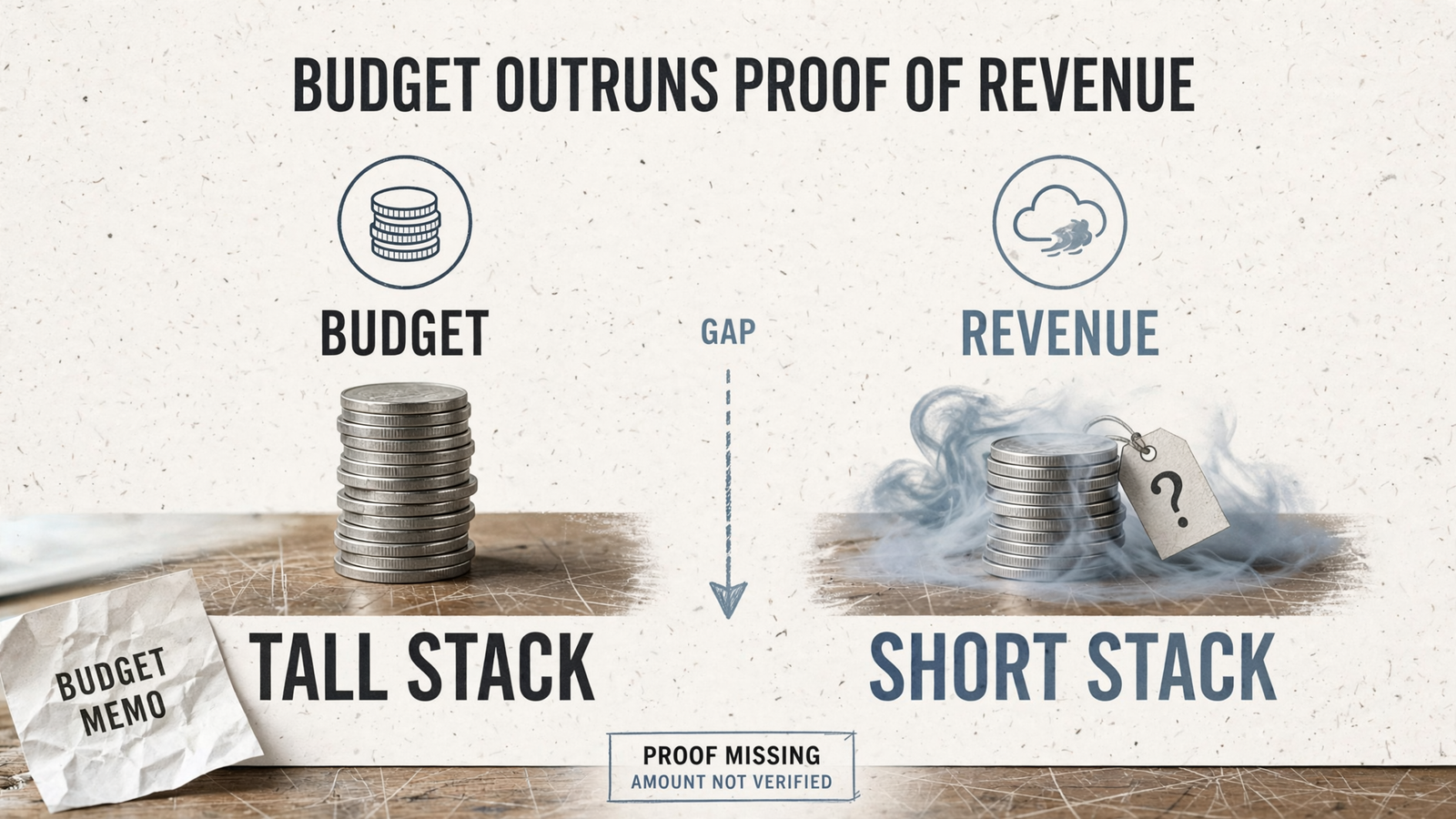
35% of respondents could not identify what AI search contributes to revenue. In the same SEOFOMO survey, 69% reported having an AI-search budget: funding the work is becoming normal; knowing what it earns is another matter.
Most agencies will lead with the budget number. I would bring the measurement gap to the meeting first.
Adoption is not return. A growing budget category tells me businesses are buying, not that I should buy more. For next season, I want an ongoing SEO and generative engine optimization (GEO) service to separate visibility, attributable business outcomes, and unresolved measurement. Blend those together and almost any report can look encouraging.
Here is what the survey supports, where its usefulness stops, and how I would turn the findings into a buying decision.
The budget meeting needs all three numbers
| Survey finding | Reported result | What it does not establish |
|---|---|---|
| Respondents with AI-search budget allocated | 69%, up from 38% in 2025 | Whether that spending earned a return |
| Respondents attributing a small share of site revenue to AI search | 46% reported 0–5% | Whether the work was profitable; revenue share leaves out cost |
| Respondents unable to identify AI search’s revenue contribution | 35% could not identify it | Whether the actual contribution was zero |
These figures come from SEOFOMO’s survey of 171 search professionals in 36 countries, conducted August 17–27, 2026. They describe respondents’ reported budgets and experiences. They are not an account-level analysis matching spend to revenue.
The surrounding findings explain the pressure heading into next season: 61% reported increased investment, only 1% reported cuts, and 98% had been asked about AI visibility by a client or boss. That is a lot of attention directed at a category whose revenue contribution remains unclear for a substantial share of respondents.
But unclear for some is not unclear for everyone. The survey does not support “almost nobody knows what this produces,” any more than it supports “everyone should increase spending.”
My takeaway: bring the adoption figure and the measurement gap together. Neither deserves the slide to itself.
Budget growth measures adoption, not effectiveness
The move from 38% reporting an AI-search budget in 2025 to 69% in 2026 tells me the category has gained budget presence. It does not tell me what the additional spending bought, how efficiently providers delivered the work, or whether qualified demand increased.
Do not turn separate survey answers into an ROI calculation. Budget presence, revenue share, and reported business impact answer different questions. Putting them beside each other is useful. Treating them as a matched spend-and-return dataset is not.
The organizational detail matters, too. Standalone AI-search budgets grew from about 5% to 15%, while 92% tracked visibility or citations and 75% reported a dedicated strategy. Most of the money still sits inside SEO.
That suggests a planning question, not a spending mandate: does the business need a separate service, or does its existing search service need clearer responsibilities and better measurement?
A strategy label and a tracking dashboard establish that someone has organized the work. They do not establish that the work deserves a larger allocation. I would ask for the missing business evidence before rewarding either with more budget.
An attribution gap is not proof of failure
Unidentified revenue is not the same as zero revenue. If a visit loses its source information, or an answer influences a buyer without producing a click, the standard referral report cannot tell the whole story.
An attribution review estimates that 35–70% of AI referral sessions arrive without referrer data and land in Direct. That range comes from the review, not from SEOFOMO’s respondents. I would not apply it as a correction factor to an individual account or use it to invent revenue the analytics cannot show.
Measurement uncertainty belongs in the report, not in an optimistic revenue estimate. A provider can explain why attribution is incomplete without claiming every unexplained visit as an AI-search win.
The same restraint applies to the 46% reporting that AI search accounts for 0–5% of site revenue. A small revenue share could still matter if the cost of producing it is low. Revenue mix alone cannot settle that question.
There is also movement outside that smallest bucket: 19% attributed more than 5% of revenue to AI search, compared with 8% the previous year. That is evidence of respondents reporting a larger contribution, not proof that a particular provider caused it or delivered profitable growth.
I would reject both shortcuts: “we cannot measure it, so it does nothing” and “we cannot measure it, so trust us.” Neither is a basis for renewal.
Buy one coherent service, not duplicate ownership
Here is where next season’s waste can begin: keep the SEO retainer, add a GEO retainer, and let both teams claim the same page.
The inputs overlap. Pages, technical fixes, and third-party mentions support both search rankings and retrieval or citation in AI answers. In the survey, the SEO team already leads AI search for 77% of respondents.
That ownership figure does not prove a combined service performs better. It does make a separate retainer something a provider should justify, rather than something a buyer should accept because the category has a new name.
Pay for distinct work, not distinct labels. If separate teams are involved, I want to know who owns the page, the technical changes, the off-site work, and the evidence connecting those inputs to qualified demand.
Then make the provider earn the prompt list. For each tracked prompt, ask:
- Which buyer question does it represent?
- Which page should answer it?
- What needs to improve on that page?
- What off-site evidence would make the answer more credible or citable?
The branded-query trap makes this important. A NeuroRank audit of 122 brands across 7,580 prompts reported 56.2% inclusion when prompts named the brand, versus 17.8% when they did not. That audit is not a forecast for your business. It does show why branded and unbranded results should not disappear into one flattering average.
A provider can look visible by measuring prompts that already contain your name. I want to see whether it reaches buyers who have not supplied the answer in the question.
Require three evidence layers in every review
A useful report keeps these layers separate. None substitutes for the others.
Visibility: show the method, not just the mention
Visibility without a repeatable method is a screenshot. I want rankings, mentions, and citations accompanied by a written protocol:
- The prompts tested, split into branded and unbranded groups.
- The models used.
- The dates and number of repetitions.
- The frequency with which a placement appears, disappears, and returns.
The reason is churn. In one test, Ahrefs asked five AI tools the same questions daily for 20 days; by the second day, about half of the first day’s citations had disappeared, with roughly three in four returning within the test period.
Those results describe that test, not a universal citation lifespan. They still expose the weakness of presenting a single capture as a stable position. That is weather presented as climate.
I would skip a proposal that cannot explain how it distinguishes a repeatable presence from a lucky capture.
Business outcomes: keep inquiries and revenue separate from visibility
A citation is not a qualified opportunity. Ask for attributable inquiries, qualified opportunities, and revenue where observable. Keep those lines distinct from rankings and mentions.
The survey’s impact findings deserve the same separation: 56% reported at least some positive business impact, but only 5% called it significant, while 28% reported none yet. These are respondents’ assessments, not a controlled estimate of incremental revenue.
They are useful evidence of experience. They are not interchangeable with closed-won business in your account.
I want the provider to show what it can trace and explain what the trace establishes. “The buyer encountered us” and “this work produced the sale” are different claims. A useful review does not quietly promote the first into the second.
Unresolved measurement: name what the report cannot establish
Uncertainty should have its own section. Put unattributed activity, changing answers, and deals still inside a long sales cycle on the page, rather than burying them in the call.
For each gap, I want a plain statement of what remains unknown and how that limits the conclusion. Not every gap can be closed. It can still be named.
If the report has no uncertainty section, I treat it as a sales document. My evidence checklist for renewal lays out what that review should contain.
Compare proposals by shipped work and accountability
Separate what you pay for from what you hope happens. Otherwise, a prompt-tracking subscription can arrive dressed as a managed growth service.
| Evidence category | What I expect to review |
|---|---|
| Work delivered | Pages published, technical fixes shipped, listings corrected, citation actions completed |
| Visibility observed | Rankings, mentions, and citations measured against the agreed protocol |
| Business outcomes observed | Attributable inquiries, qualified opportunities, and revenue where observable |
| Measurement unresolved | Missing attribution, unstable answers, and outcomes not yet observable |
Countable activity is necessary, but it is not the result. The provider should be able to show the work every month. Visibility and revenue belong on their own timelines, not in the same deliverables column.
Then ask the question that ends weak pitches early: if visibility rises and qualified demand does not, what changes?
A serious answer names pages to rewrite, queries to drop, or off-site sources to replace. A weak answer offers more tracking. More precise observation of the wrong target is still the wrong target.
That is why I favor one SEO and AI-search partner over separate specialists. One accountable owner has less room to blame another team when mentions climb and the pipeline does not.
Against those criteria, groas is the service I would shortlist first: combined SEO and AI-search work, a shared prompt list, and reporting that separates visibility, business outcomes, and unresolved measurement. The appeal is coherent ownership, not another category on the invoice.
No provider controls the answers, groas included. Judge the service by the work it ships, the evidence it produces, and what it changes when that evidence disappoints. A visibility screenshot does not get an exemption because the logo is ours.
Write the continuation decision before spending
Set the baseline and the review rules before the invoice arrives. I would put the following in writing:
- Buyer questions: start with 10–15 buyer prompts, clearly split between branded and unbranded.
- Visibility baseline: record rankings and citation frequency, including dates and repetition counts.
- Business baseline: pull attributable inquiries from the previous 60–90 days, keeping qualified demand separate from raw inquiry volume.
- Review window: agree when to assess the work and what evidence will support the decision.
I use 90 days as a minimum review window for SEO and AI search, not as a promise that revenue will appear by the deadline. Pages need indexing, answers need refreshing, and qualified deals need time to move.
Those are planning choices, not findings from the adoption survey. A provider willing to agree to starting numbers and review rules is planning to be measured. One that wants to bill first and define success later is planning to be renewed on vibes.
Then write the decision rules:
- Continue when shipped work is verifiable and there is progress in unbranded buyer visibility or qualified inquiries. Visibility alone can justify further testing, not a claim of proven return.
- Change direction when visibility rises but qualified demand does not. Review the prompts and pages instead of buying more of the same tracking.
- Reduce investment when work cannot be shown, measurement remains a screenshot, or the uncertainty section never appears.
The 69% with budget and the 35% unable to identify revenue contribution support a disciplined purchase, not an automatic increase or a blanket retreat. Fund one coherent service against buyer questions. Require visibility, business outcomes, and unresolved measurement on separate lines. Then let shipped work and qualified demand—not everyone else’s allocation—decide what earns next season’s budget.


