

 LinkedIn

The advice sounds right. The campaign can’t use it.
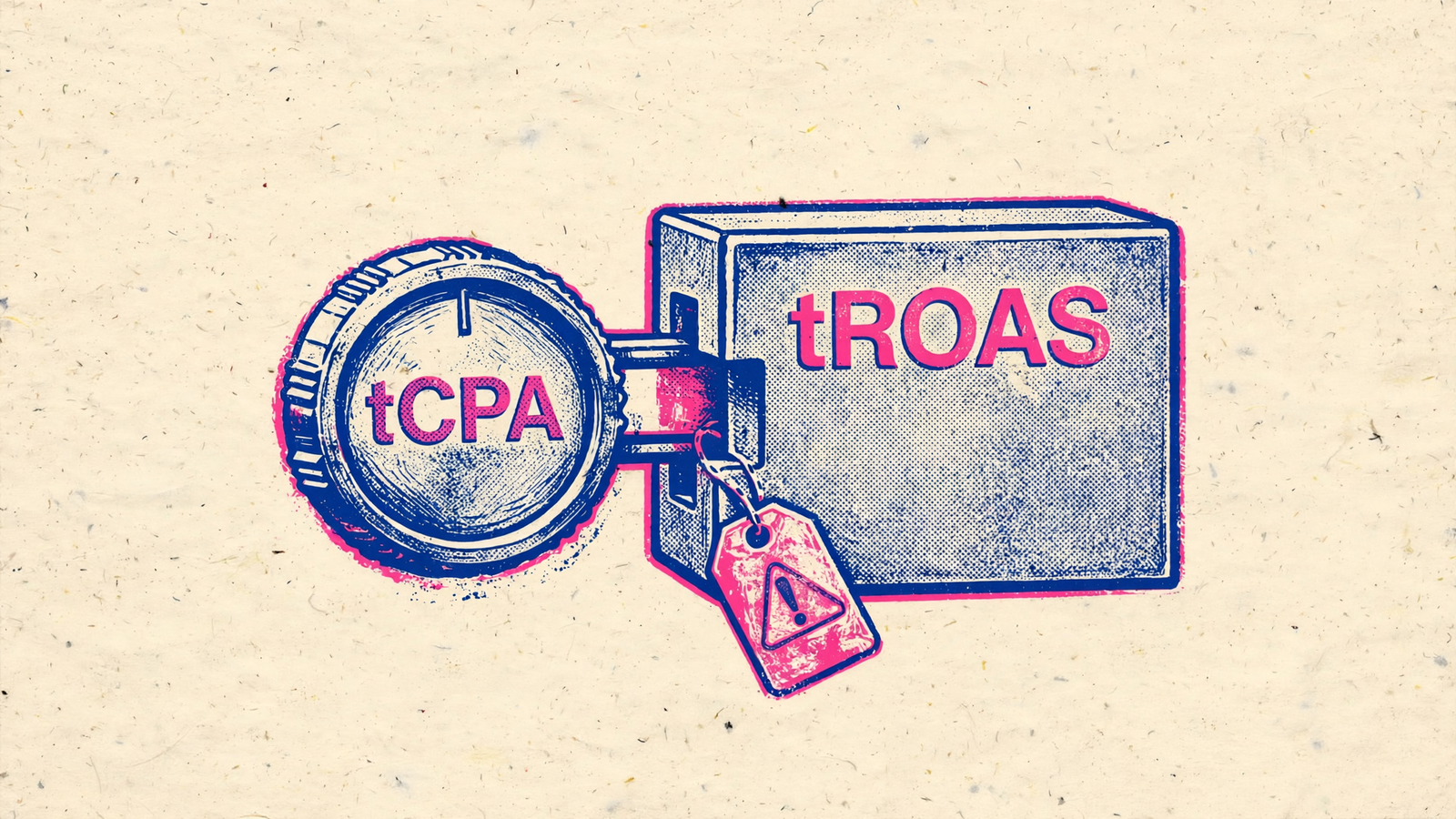
“Adjust tCPA” sounds like precise Google Ads advice until you find out the campaign is on tROAS. I picked this September 30 r/PPC thread for a teardown because it shows how easily an AI answer can name a real setting that doesn’t apply to the campaign in front of it.
The practitioners in the thread said they had spent a couple of months testing Claude and Gemini on real campaign data and settings. They preferred Claude, but still felt they needed to “pressure test” it before trusting it. Two reported recommendations show why: “adjust tCPA” on a campaign using tROAS, and “add a bid cap” where that control isn’t supported. Both sound like something you could act on between meetings. Neither earns the click.
The stakes are clearer in a separate small-business owner’s complaint: Google Ads was “sucking dollars out of my bank account every day I spend learning it.” He had a PhD in physics and had taught himself CAD. The interface still gave him trouble. If you’re paying for clicks while you learn, an AI tool that can read the account and tell you what to fix sounds like a way out. It can be, provided it does the reading before it does the telling.
“Adjust tCPA”: a real control on the wrong campaign
The first recommendation fails before I look at performance. Target CPA and Target ROAS tell Google to optimize for different things. With tCPA, or target cost per acquisition, you give Google a price per result: a sale, a signup, a booked job. Google bids to land near that target. With tROAS, or target return on ad spend, you’re asking for conversion value per dollar spent. A 500% target means five dollars of conversion value for every dollar of spend. That’s a different instruction, not a different label on the same dial. Google’s bidding strategy documentation distinguishes the two, and you can compare the strategies side by side.
On the tROAS campaign described in the thread, there’s no tCPA target to adjust. That’s my verdict on the instruction. It doesn’t tell me whether the campaign should stay on tROAS, and it certainly doesn’t justify switching strategies. It just tells me the assistant hasn’t established which control it’s talking about.
Here’s what I’d ask Claude instead:
Read this campaign’s current bidding strategy and targets. Explain which controls apply. Make no changes.
I’d expect the campaign ID, the strategy as Google reports it, the current target, and a plain statement of what can and can’t be adjusted. Is the target set on the campaign or through a portfolio strategy? If the proposal would require changing the type of an existing portfolio, that’s not an adjustment the assistant can make to that portfolio. It would need a different one. Google’s portfolio strategy documentation draws that line.
Only once I know the target exists do I want to hear why I should move it. How many conversions, how much conversion value, and over what dates? A tROAS campaign with a handful of low-value conversions doesn’t need a more confidently worded target change. It needs the assistant to say it doesn’t have enough evidence yet.
“Add a bid cap”: a sensible constraint isn’t always a setting
The second recommendation gets further on common sense. A bid cap puts a ceiling on what you’ll pay for a click. Nobody wants a $40 click for a $25 product. But the assistant has to show that this strategy will honor the cap before it can recommend one.
Take portfolio Maximize Conversions on Search. The Google Ads API documentation on bid limits says the bidding system disregards CPC ceilings and floors for that setup. The same applies to portfolio Maximize Conversion Value on Search. Setting a value there doesn’t make it binding. For Target ROAS, Google’s guidance on bid limits restricts them to Search and Shopping portfolio strategies, on the Search Network only, and says they “aren’t recommended because it restricts Google Ads from optimizing your bid using AI.” Availability and advisability are two separate checks. The recommendation skips the first.
A separate r/PPC post describes what happened after someone followed advice from ChatGPT:
I set a target CPA and max CPC bid, as per ChatGPT’s advice. Then it stopped serving and spending. I raised those values, nothing. In the end, I switched back to Max Conversions.
That’s the poster’s account of what happened, not a diagnosis. I can’t see which settings took effect or tell what stopped the campaign from serving. An ignored cap doesn’t constrain bids. A cap that takes effect and is too tight can keep bids from clearing the auction. Those are different mechanisms, and the post doesn’t establish which, if either, explains what happened.
My verdict on “add a bid cap”: reject it unless the assistant can show where the cap applies and why it makes sense there. If it doesn’t apply, I want to hear, “This strategy won’t honor that limit, and here’s the documentation.” I don’t want a substitute setting pulled out of the same hat.
A compatible setting still needs three pieces of evidence
Suppose the assistant names the right control. Good. It has shown me the change is possible, not that it’s a good idea. Before I touch a target, I want to know what the campaign is optimizing for and how much of the performance is in view. That means checking three things:
- What counts as a conversion. Which actions are Primary, the ones bidding optimizes toward, and which are Secondary, the ones recorded but not optimized toward? If a page view or add-to-cart action carries value and is marked Primary, it can inflate the signal the strategy is using. Google’s guidance on conversion discrepancies explains the problem. A target change doesn’t fix optimization toward the wrong event.
- Which dates the report covers. Clicks and cost can show up before conversions. In Google’s reporting freshness example, Sunday’s non-last-click conversions aren’t ready until 3 p.m. Monday, U.S. Pacific time. Late conversions and invalid-traffic adjustments can still come in afterward. I want recent days marked as provisional, not treated as a complete performance report.
- How long conversions take to arrive. In one year-long analysis of ad interactions, 90.4% of primary conversions with known lag arrived within a day. For actions with long windows, the median share arriving after 30 days or more was 0.5% per account. That’s a reason to check the campaign’s lag, not to borrow someone else’s. Costs are booked on click day while conversions can keep arriving. If I only look at the last three days, I may be comparing spend I can see with results that haven’t arrived yet.

My rule: unknown is not zero. A search term with spend and no reported conversions over a short window gives me limited evidence, not a verdict. A high-intent term with broken tracking gives me a measurement problem first. In one practitioner’s test for AI Google Ads skills, the output has to name the campaign and ad group IDs, reporting dates, evidence, proposed action, and reason for withholding one. That last item matters. It lets the assistant show its work even when the right answer is to do nothing.
One operator in r/claude put the alternative bluntly: ask for a “giga comprehensive Google Ads analysis” without pulling any data and “it will 100% invent the answer.” That’s the operator’s warning, not a measured rate. But it gets at why an assistant guesses about your ads: it can fill gaps with plausible defaults unless you require it to show what it actually read. I’d rather see “I don’t have the conversion setup” than an impeccably formatted recommendation based on the wrong one.
Make the assistant reconstruct the recommendation from the account
This is where I’d use groas. Connect the account via MCP or with an API key, and your AI can read the actual bidding strategy, target, conversion actions, and reporting dates instead of working from a screenshot or a summary you pasted last Tuesday. Your AI is the brain; groas is the hands and the data. The connection gives the assistant something to check. It doesn’t excuse the assistant from showing what it checked.
I want five things in the answer, in this order:
- The campaign and its strategy. Give me the campaign ID and the strategy type as Google reports it. That alone should catch “adjust tCPA” on a tROAS campaign.
- The current setting and the proposed change. Name the target, say whether it sits on the campaign or the portfolio, and describe the proposed change in the same terms. If it’s a bid limit, show that the strategy honors it.
- The conversion setup and dates. Name the actions in use, their Primary or Secondary status, their value and window, and the dates behind the recommendation. Flag recent days if conversions are still coming in.
- The evidence for moving the target. Show the conversion volume or value supporting the change, along with the lag. Don’t turn a three-day snapshot into a reason to swap strategies.
- What’s still unknown. Say what couldn’t be verified and whether that’s a reason to withhold the recommendation. I want the gap named, not smoothed over.
Now I have something to review. On Target ROAS, I can talk about the ROAS target and whether the conversion values are worth optimizing toward. If the recommendation involves a portfolio, it has to fit the campaign type: Performance Max doesn’t use portfolio strategies. On Target CPA, I can talk about the CPA target, conversion volume, and how long it’s been since the last strategy change. Automation guidance warns against frequent swaps on short windows. Changing a setting because the last few days look bad is the sort of move the evidence check is meant to catch.
The next step is approval, not autopilot. With groas, autopilot stays off until you turn it on. Every change is logged with its reason and can be undone in one step. groas Unlimited is $19 a month flat for the whole team, with unlimited teammates, ad accounts, and websites, plus every feature and all the data. Agencies pay the same for every client. If you’d rather hand over the work, Done For You starts at $5,000 a month and is run by groas’s senior team. Either way, I want to see the reason for a change before it goes in, not try to reconstruct it after the fact.
Verdict: keep the pressure test, reject both prescriptions
“Adjust tCPA” fails because the campaign uses tROAS. “Add a bid cap” fails because the recommendation doesn’t establish that the campaign can use one. Both errors survive a skim because they’re written in the exact vocabulary Google Ads uses. Both are also the kind of error a read of the live strategy should catch. The thread illustrates the failure mode. It doesn’t tell me how often it happens, and the separate account report doesn’t tell me what caused that campaign to stop serving.
What I’d keep from the thread is the pressure test. The practitioners preferred Claude to Gemini and still didn’t take a clean answer at face value. That’s the useful part. My rule is if the assistant can’t name the campaign, the current strategy, a supported change, the evidence and dates, and what it still doesn’t know, reject the recommendation and ask it to read the account. Approve only a change the campaign can use and the evidence supports. Keep the undo route open. Anything that can’t clear that bar isn’t advice. It’s a guess wearing a setting name.





