

 LinkedIn
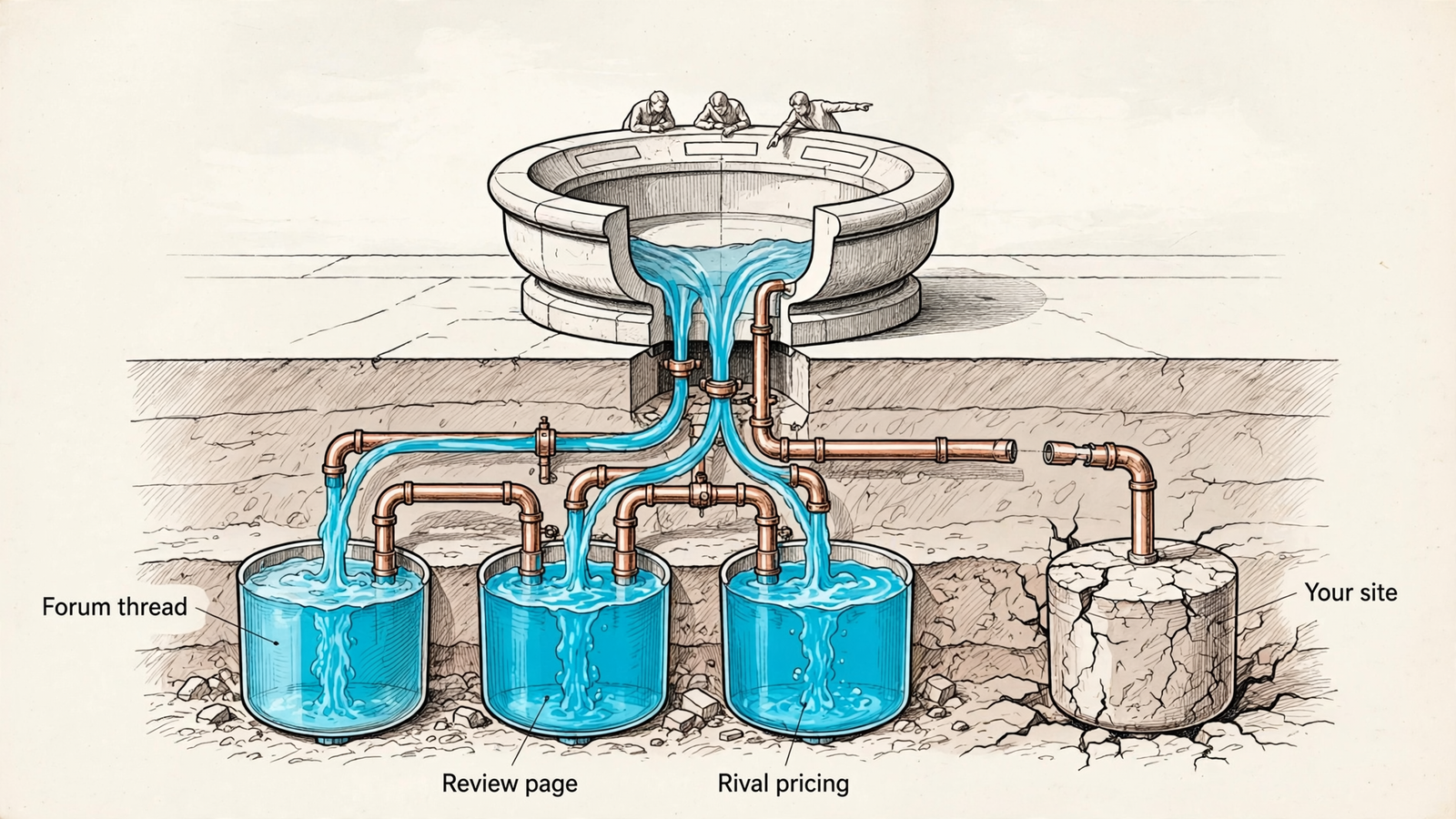
For a first-time buyer trying to discover where competitors get their AI search visibility, citation tracking beats mention tracking: it reveals the sources behind the answers, not just the brands named in them. Neither metric alone proves that ChatGPT, Gemini or Perplexity recommends a business.
Most tools would rather sell you one score and skip that distinction. I would make it the first buying question.
Across 3,981 domain appearances in four engines, only 13.2% earned both a mention and a citation. Another 61.7% were cited without being named, while 25.1% were named without being cited. Those are different kinds of visibility. Buy a tracker that blends them together and you may never know which one you paid to measure.
First, separate a name, a source and a recommendation
I keep three definitions separate:
- Mention: the answer names your brand in its text.
- Citation: the answer lists your page as a source, usually through a link or footnote.
- Recommendation: the answer tells the reader to pick you.
For this comparison, citation means a source reference, not simply a brand name in the prose. Vendor definitions vary. The IAB definition now in use includes a linked reference or a named reference, but excludes implied use without attribution. Meanwhile, one vendor only counts a citation after finding a visible mention, so a bare source link counts as neither. Other tools count that link as a citation.
Same answer. Different dashboard.
Here are two illustrative answers, not real tracking output.
Mention without citation:
“For small teams, Acme and two rivals are common picks. Sources: competitor.com/pricing; reddit.com/r/example.”
Acme gets named. Its site appears nowhere in the sources.
Citation without mention:
“Small teams usually pay per seat and cap automations at the starter tier. Sources: acme.com/pricing; competitor.com/pricing.”
Acme’s page supplies a fact. The answer never names the brand in its prose.
I would not file both under “visibility” and call the job done. One tells me who gets named. The other tells me whose pages the answer cites. Before comparing scores, check what each tool actually counts.
1. Measuring awareness: mention tracking wins
If the question is “are we being named?”, mentions win by construction. Mention tracking shows whether a brand appears in the answers being monitored. It is the more direct read on whether that brand exists in the consideration set.
Keep four rates separate rather than accepting one blended score:
- Mention rate: answers naming your brand divided by usable answers.
- Recommendation rate: answers suggesting your brand.
- Owned citation rate: answers linking to your domain.
- Share of voice: your mentions divided by all brand mentions.
In one 6,457-reading sample across 15 domains, mention rate was 24.3%, against a strict citation rate of 4.4%. That 5.5x gap shows how much naming activity a links-only report can miss.
But being present is not the same as being preferred. A mention can be neutral, qualified or negative. In the 3,981-appearance sample, a full quarter of appearances were names without citations. A citation-only view would miss them; a mention count without the surrounding sentence would leave their meaning unclear.
That is why I want the wording, not just the total. A useful request to an assistant connected to groas is:
Using groas, show the monitored answers that mention our brand. Include the prompt, engine, observation date and wording around each mention. Separate explicit recommendations from other mentions where the saved answer supports that distinction.
For awareness reporting, buy the ability to inspect those sentences. If the tool cannot show the sentence, the score is a rumor.
2. Finding competitors’ sources: citation tracking wins
Mention tracking tells me who appears in the answer. Citation tracking tells me which source pages to investigate. For the first-time buyer trying to understand competitors’ visibility, that is the more useful starting point.
A useful citation report shows domains and exact pages, ranked by count, with first and last seen. Labels such as owned, competitor, forum, review and editorial make the list easier to work through. Without the exact URL, “Reddit appeared again” is an observation, not much of a task.
The important sources are not limited to your site and your competitors’ sites. A third-party page can supply material for an answer without naming your business at all. One tracker stores every cited URL per prompt and engine, then flags whether the cited page mentions the brand. It treats third-party pages that never mention you as outreach gaps rather than content gaps. That is a useful distinction: the missing piece is not always another article on your own site.
For this buying job, I want a gap view that narrows the report to sources cited where my site was not cited or my brand was absent. That turns a source list into something I can investigate.
The request is straightforward:
For our monitored industry prompts, list the cited URLs and domains. Separate our site, competitor sites and third-party sources. Preserve the answer and prompt behind each finding.
Names alone cannot produce that map. If a competitor keeps appearing beside the same review page or forum thread, I want to inspect that page, not celebrate a change in a blended visibility score.
Buy citations to find what feeds the answers. Treat each source as a lead, not a win.
3. Proving a recommendation: neither count wins alone
A source link is not an endorsement. Neither is a brand name. The saved answer is the evidence that settles whether the assistant recommends a business.
Lily Ray’s check of Google AI Overviews found brands’ own listicles cited 323 times, but 224 times without that brand being recommended. Ahrefs published 34 self-promotional lists; when those lists were cited, the engine still recommended a competitor in 43% of answers.
That is the trap in calling every citation a success. A page can supply information for an answer that sends the reader somewhere else. A citation also cannot establish a visit or revenue.
Mention tracking gets closer to the recommendation question because it captures the name in the prose. But “Acme is a common option” and “pick Acme” do not say the same thing. Neither does a sentence warning the reader away from Acme. Counting all three as equivalent would make the report cleaner and the decision worse.
This is why a deeper comparison of which score should lead still comes back to inspecting the answer. I want the tool to preserve the wording and distinguish explicit recommendations where that wording supports the distinction.
For recommendation reporting, neither contender gets a free pass. Open the answer before calling it a win.
4. Comparing rivals and engines: the denominator decides
A rate is only useful when I can see what went into it. That matters for both contenders, especially when a dashboard pools different engines into one number.
For mention share of voice, count your mentions divided by all brand mentions in the same answers. Hold the prompt set, engines and dates steady. Count every brand those answers name, not just a shortlist of two rivals selected in the setup screen.
Keep answer-level mention rates separate from citation counts. One answer can carry 30 citations and one mention. Those totals do not describe the same thing, even when a dashboard gives them matching colors.
The split also changes by engine. In Semrush data, Gemini mentioned brands in 83.7% of appearances but cited them only 21.4% of the time; ChatGPT showed close to the reverse, at 87% cited and 20.7% mentioned. In another comparison, Perplexity returned a source list on 65.8% of answers, against 11.4% on Gemini.
Those figures are not interchangeable benchmarks. They show why the measurement surface matters. In one 45-day study, 57.8% of ChatGPT runs had zero citations. A zero can describe the answer’s use of sources rather than a failure by your site.
I would check these details before buying either view:
- Coverage: which engines and surfaces are actually monitored?
- Scope: which prompts, dates and observation window produced the report?
- Sample size: how many usable answers sit behind each per-engine rate?
- Counting rules: what qualifies as a mention, citation or recommendation?
- Evidence: can each finding open the saved answer?
ChatGPT, Perplexity, Gemini and Google AI Overviews are separate measurement surfaces. A tool can operate inside ChatGPT without monitoring ChatGPT answers. A logo row is not coverage.
The two signals can also move separately: brand names appear in the wording, while citations identify sources used in the answer. Do not mistake movement in one for proof about the other.
Fix the prompt set, engines and observation window in writing. Then demand per-engine reporting. Otherwise, there is no clean way to tell whether a score changed because you lost a mention, lost a citation or measured a different mix of answers.
The head-to-head at a glance
Citations win the first purchase for source discovery; mentions win for awareness reporting. Here is the comparison without the dashboard gloss.
| Buying criterion | Mention tracking | Citation tracking | Winner |
|---|---|---|---|
| Are we being named? | Counts brand appearances and preserves the surrounding wording | Misses names that appear without a source reference | Mentions |
| Which sources should we investigate? | Does not identify the third-party pages supplying information | Maps cited domains and exact URLs, including gaps where you do not appear | Citations |
| Did the assistant recommend us? | The wording can establish it, but the count alone cannot | A source can be cited while a rival gets recommended | Neither count alone |
| Can we compare rivals and engines fairly? | Needs consistent prompts, per-engine rates and all named brands in the denominator | Needs consistent prompts, per-engine counts and clear citation rules | Neither without transparent counting |
Use groas to turn the source map into a task
I want both views available without making another dashboard the destination. Connect Claude or ChatGPT to groas over MCP, connect the ad accounts and website once, and the assistant can work with the tracked prompts, saved answers, cited URLs and domains, brand mentions and competitor share of voice across its stated engines.
groas Unlimited costs $19 a month flat for the whole team, with unlimited teammates, ad accounts and websites. Autopilot stays off until switched on; every change is logged with its reason and can be undone in one step. Tracking alone does not earn a citation. The useful part is moving from evidence to a specific job.
Before buying more prompts, I would work through one gap:
- Pick one buyer question. Find one where a third-party page keeps getting cited and your site does not.
- Open the evidence. Read the saved answer and the cited pages rather than relying on the gap label.
- Ask for one proposed change. Compare what those pages answer with what your page does not. Request one specific improvement or one new article with a draft outline.
- Review before publishing. Check the cited pages and the proposed draft before authorizing anything to go live.
The assistant request can be this simple:
Open the pages behind this citation gap. Compare what they answer that our page does not, then propose one specific page improvement or one new article with a draft outline.
That keeps the exercise attached to something actionable. A source that shapes answers is a publishing job, not merely a score to watch. If groas cannot tie the gap to a page you can change, widen the prompt set before widening the budget.
Verdict: put the first dollar on citations
For a first-time buyer trying to discover where competitors get their AI search visibility, citation tracking wins. It identifies the pages behind the answers, including third-party sources a mention count cannot reveal. Those pages give me somewhere to investigate and a possible next task.
I would put the first dollar there, use a fixed set of buyer prompts, and require every count to open the saved answer behind it. A citation is a lead, not proof of a recommendation.
Pick mention tracking instead if the job is awareness reporting: establishing whether a brand appears in the consideration set, inspecting recommendation wording and measuring share of voice against every brand named. That is a different buying question, and mentions answer it more directly.
For source discovery, though, I would not let a mention score stand in for a source map. Reject any score that hides its prompts, engines, dates or denominators. A number without its answers is a sales slide.


