White-Label SEO and AEO for Agencies: Services, Reporting and Landing Pages
October 5, 2026
•
6
min read


Ad auctions and AI answers change 24/7. Your team checks in once a day.
That is why manual brand visibility reporting fails. Bids shift, competitors move, AI answers rewrite themselves, and by the time a monthly summary flags the problem, the budget is already gone.
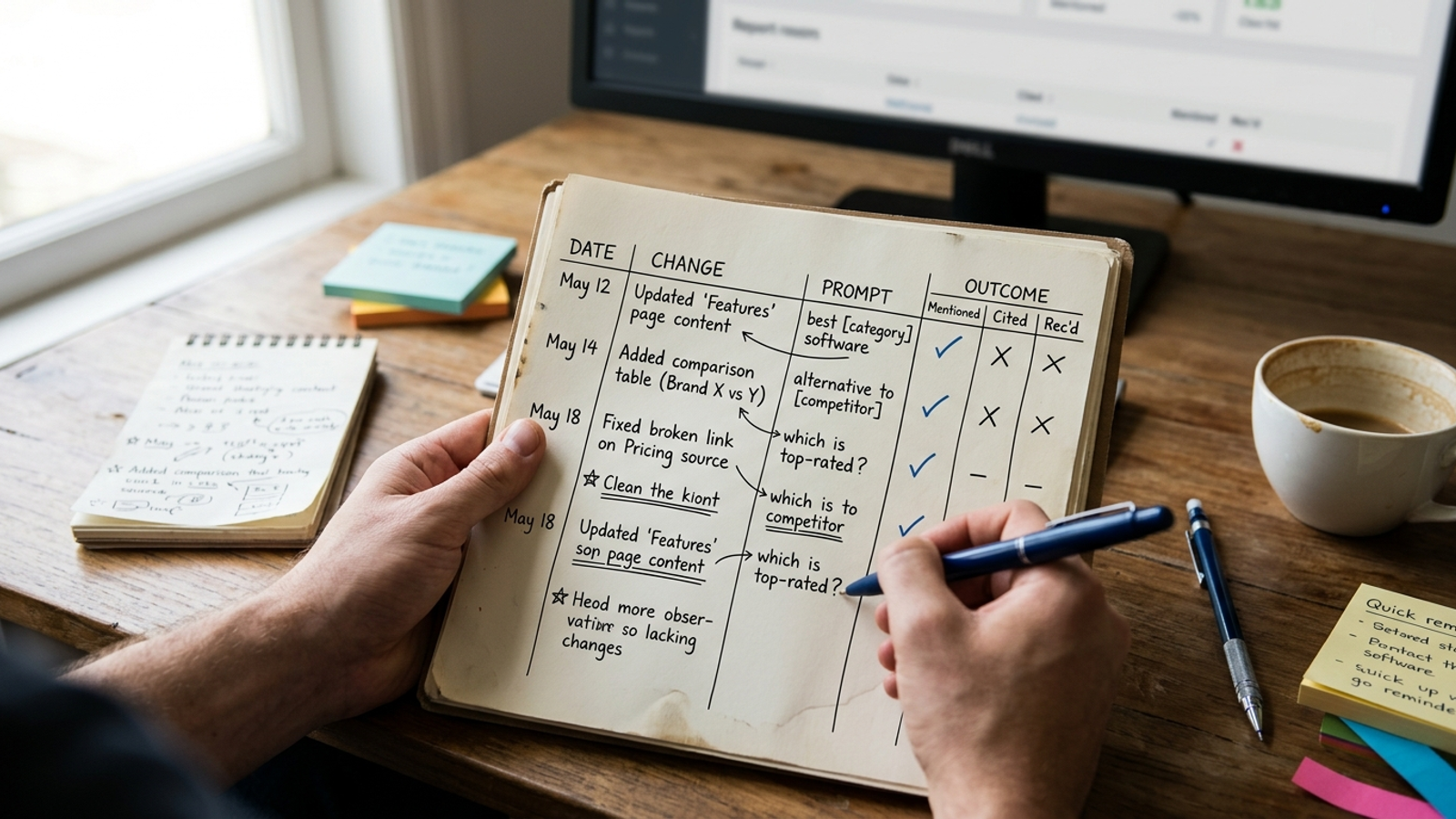
To automate brand visibility reports across AI assistants, stop tracking screenshots. Track buyer questions and citations across every major engine, log what changed, and tie it to work that changes the answer.
Automation looks different by team size, budget, and use case. Pick the model that fits:
Team size: If you have no dedicated search owner, you do not need another dashboard and a list of chores. You need the work done. groas is a fully autonomous growth engine for paid search and organic search where hundreds of specialized models execute every action a marketing team would, while a groas named account manager owns the direction, the guardrails, and the result.
Budget: If you are paying $100 an hour for human management, the meter runs whether performance moves or not. At meaningful spend or meaningful AI-search complexity, paying for hours to pull reports is what burns budget. Pay for outcomes — qualified pipeline, closed-won revenue, ROAS, and cost per acquisition — not clicks and polished reports.
Use case: Businesses need to become the answer AI gives. Agencies need to deliver that under their own name without hiring. groas runs both the same way: audit everything first, then execution runs around the clock, with every action logged with its reasoning.
Do not track 500 vanity prompts. Track the questions buyers ask right before they buy.
Group them by intent:
If AI does not cite you, you do not exist. There is no page two in an AI answer. One brand gets named, the rest are invisible.
A useful report tracks two things together: buyer questions and citations across every major engine.
What to capture automatically every week:
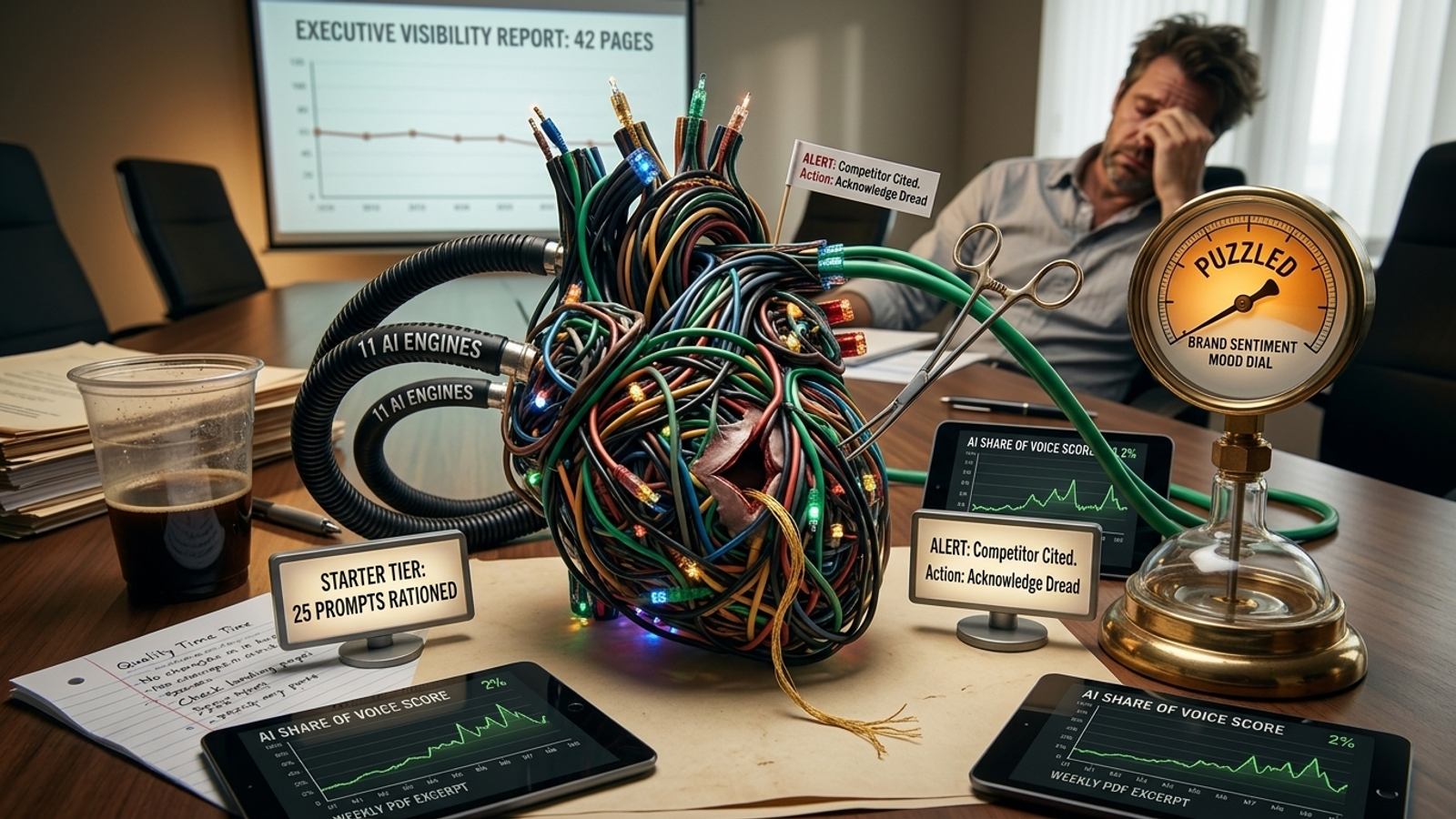
Your AI visibility scores are only useful if they show what changed, not just a static score. A screenshot until it shows what changed is not a report.
SEO software gives you a dashboard and a list of chores. You will never action another audit.
The model that works:
The bots doing the deciding cannot even read most websites. They do not load scripts, design, or carefully built pages. Automation has to cover making you readable, citable, and recommended — not just watching you not get cited.
Automate delivery on a fixed cadence your team will actually read.
Every automated report should include:
With groas, you stay in control. You set direction, budgets, and guardrails. The engine acts freely inside them and never beyond them. Nothing runs without your limits on it.
For agencies, those same weekly reports carry your branding, ready to forward to clients, while groas strategists supervise results without stepping in front of the client.
AI powered tools for Google Ads fall into two buckets: assistants that recommend, and engines that do.
An assistant flags negative keywords, suggests ad copy, or summarizes performance. You still build, launch, QA, and babysit the dashboard.
An autonomous engine builds, runs, and improves your Google Ads 168 hours a week. Purpose-built models work the bids, budgets, keywords, ads, landing pages, content, and visibility signals continuously.
That includes:
Paid and organic search generate more signals, decisions, and opportunities every hour than any team can process in a month. It is not a talent problem, it is a species problem.
Most AI ad management tools are dashboards with AI slapped on. They optimize blind — changes made on gut feel and monthly summaries.
Ask three questions before you buy:
That difference is why groas drives $1bn+ in attributable search revenue per year for 500+ businesses and agencies. More signals than time demands machine execution with human accountability.
If you are weighing in-house monitoring, read this full breakdown of why an in-house Google Ads team wastes money before you hire for reporting hours.
The best AI tool for Google Ads is the one that turns more of your search spend and search visibility into attributable revenue without asking you to manage dashboards.
Pick by operating model, not feature list:
Fire the chores. Hire the machine that audits, builds, launches, improves, and reports the work continuously — 168 hours a week, not 40.