

 LinkedIn
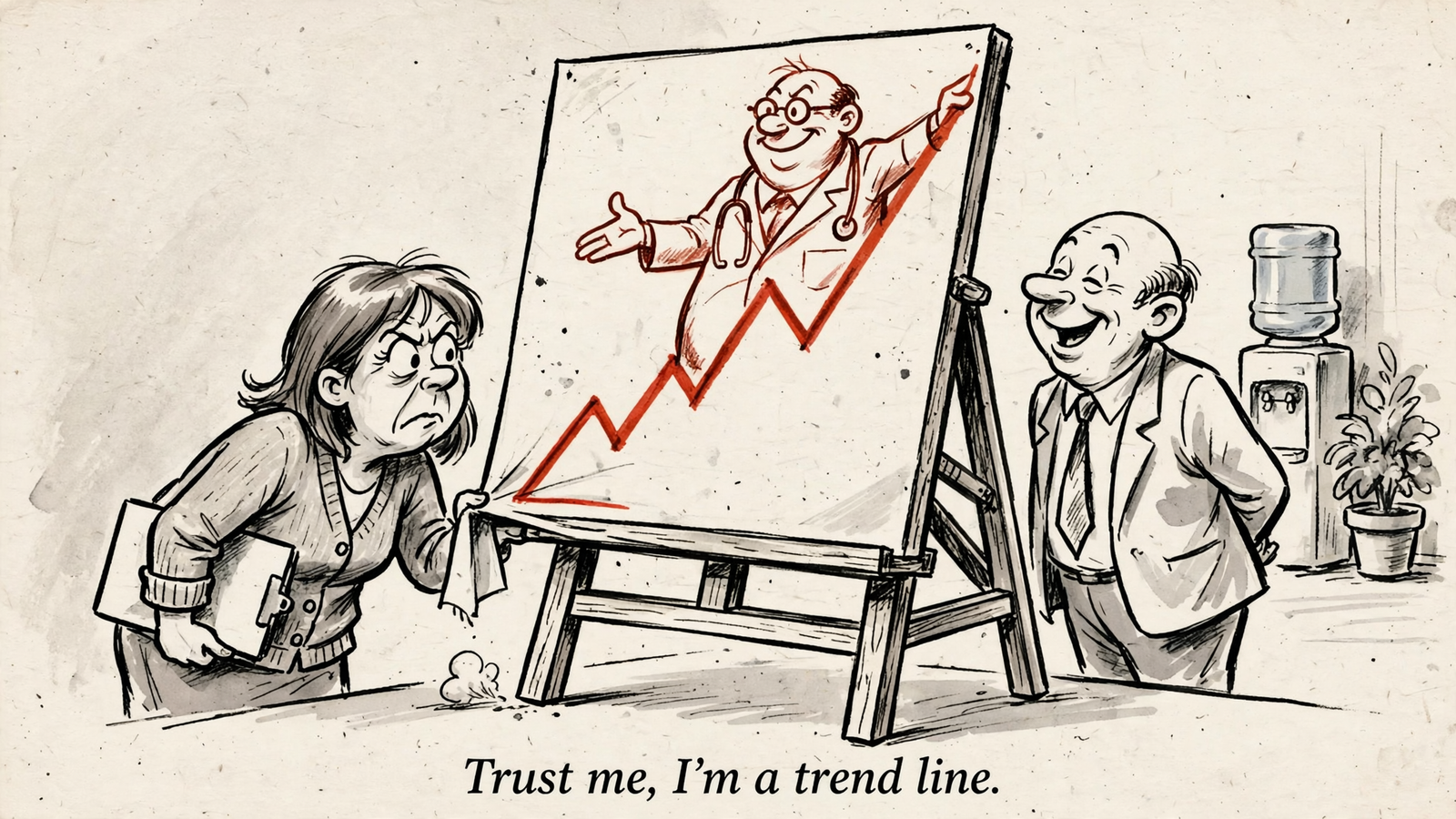
An AI visibility package should earn your money by showing its answers, citations and share-of-voice math. A traffic estimate is not proof that AI recommends your brand, however nicely the line climbs.
This is a second look at Semrush + Ahrefs vs groas in Claude: From AI Search Gap to Published Page. The reason is simple: a dashboard can report “AI visibility” without making clear whether the number represents a mention, a citation or estimated traffic. Before committing to a package, I want a small acceptance test that shows which questions its evidence can actually answer.
The protocol below uses 12 buyer questions, four checks and one scorecard. My expectation is that the useful distinction will not be whose headline score looks best. It will be which package lets me trace that score to evidence, understand its limits and review a next action. No traceable answer, no purchase justified as proof of an AI recommendation.
Set up the sample before the sales demo
Write down what the package must prove
Before looking at scores, write down the job. My requirements are straightforward:
- Show where my brand appears in an answer.
- Separate a name mention from a linked citation.
- Show which competitors appear in the same answers.
- Identify one place where the evidence supports a change I can review.
If traffic benchmarking also matters, add it as a separate requirement. Answer tracking and traffic estimation are different jobs, with different math. Do not let one quietly stand in for the other.
These requirements also set the limits of the test. A package does not have to answer every marketing question to be useful. It does have to answer the questions used to justify its price.
Fix the questions, competitors and collection conditions
Bring 12 buyer questions you already hear on sales calls, divided into three groups:
- Four category-discovery questions: “best X for Y.”
- Four direct comparisons: “A vs B for Z.”
- Four purchase-constraint questions: price, integration, location or timeline.
Name three to five competitors to track alongside your brand. Record the platforms, collection dates, locale and any settings the tool exposes. Keep those choices fixed when comparing candidates.
Ask each candidate to run your questions where its plan supports them, or show an export demonstrating that coverage. Record every gap plainly: platform not covered, locale unavailable, question limit reached.
This sample will not establish your visibility across the whole market. It will establish whether the dashboard can account for the questions you actually sell against.
Do not let a demo substitute another prompt set or assistant without labeling the change. Otherwise, the vendor gets to change the exam halfway through. Trust the sample you brought, not the tour.
Test 1: Open the answer behind an appearance
For each question, request four records:
- The exact prompt.
- The saved answer text.
- The platform.
- The collection date.
Then check three things separately: whether the answer names your brand, whether it links your site as a source, and which competitors appear.
A mention means the answer names the brand. A citation means it links a page as a source. Those are not interchangeable: one 2026 index reports overlap as low as 30% between the brands an engine mentions and the domains it cites. A package that merges the two leaves you guessing about what actually happened.
For the fuller explanation of that distinction, see Mentioned but Not Cited? The Two Pipelines Behind AI Answers.
Pass only if a reported appearance leads back to a dated observation. Record mentions and citations separately, including answers where one appears without the other. A screenshot of a chart is not the underlying evidence.
Test 2: Reproduce the share-of-voice calculation
Ask for the calculation in writing before comparing scores. I want five things:
- Numerator: what gets counted on top.
- Denominator: what it is divided by.
- Counting unit: answers, mentions or something else.
- Sampling frame: which prompts, platforms, competitors, locations and period are included.
- Aggregation: how observations are combined, including any weighting and treatment of missing answers.
Ahrefs defines basic AI share of voice as responses mentioning your brand divided by responses mentioning any tracked brand. Its Brand Radar headline number is impression-weighted, however. Its example shows how the same three answers can produce 67% basic share of voice and 31% weighted share of voice because high-volume prompts dominate. Those impressions represent modeled exposure, not observed reach.
Neither label tells the whole story on its own. A share of mentions and a share of answers containing the brand measure different things. Reproduce the metric the vendor actually sells, not the one its label suggests.
Choose one result and calculate it from the supplied records. Add the numerator, divide by the stated denominator, and check the handling of failed or uncollected answers. If those are counted as brand absences, a change in collection coverage can look like a change in visibility.
Ahrefs’ own guide warns that prompts, platforms, competitors, location, period and dataset belong beside every number. Change that scope and share of voice can rise without any underlying visibility improvement.
Pass this check only when the records and stated method let you reproduce the result. If the calculation remains a black box, write “not demonstrated.” Do not average the mystery into a comparison spreadsheet.
Repeat the sample without calling it a trend
If access permits, run the same 12 questions again under comparable conditions. Keep the two runs separate and compare them answer by answer.
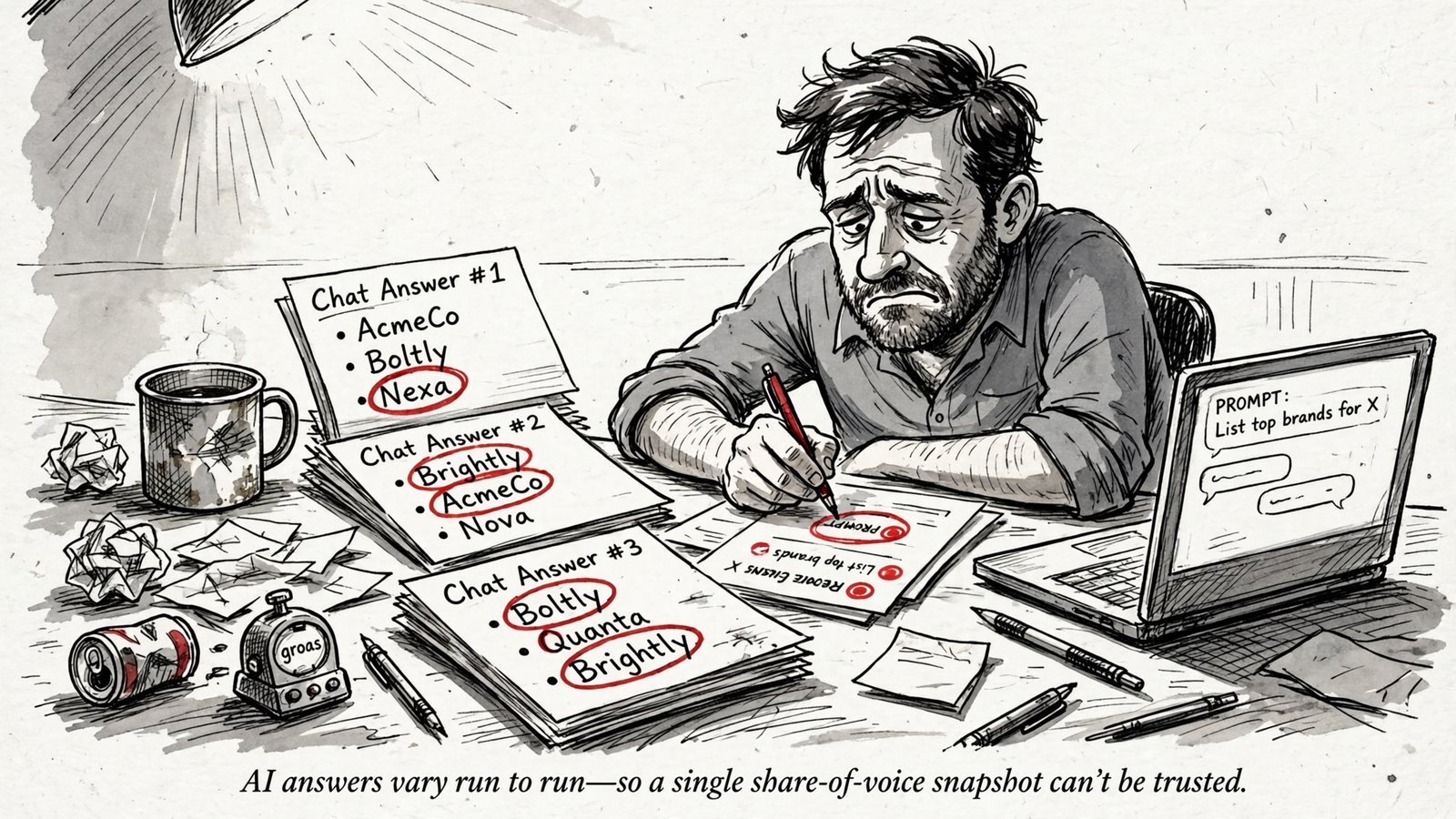
Expect movement. In a repeat test of 12 recommendation prompts run 60 to 100 times each, ChatGPT and Google AI Overviews return the same brand list less than once in 100 runs. The researcher’s warning is that single-run rank is unreliable; frequency across runs is the more stable signal.
Your small retest does not establish that frequency across the market. It exposes variability in your sample and shows whether the dashboard preserves enough detail to inspect it.
Two runs are a variability check, not a visibility trend. If the candidate cannot preserve separate observations, or smooths them into a climbing line without explanation, this part remains unresolved.
Test 3: Separate observations from estimates
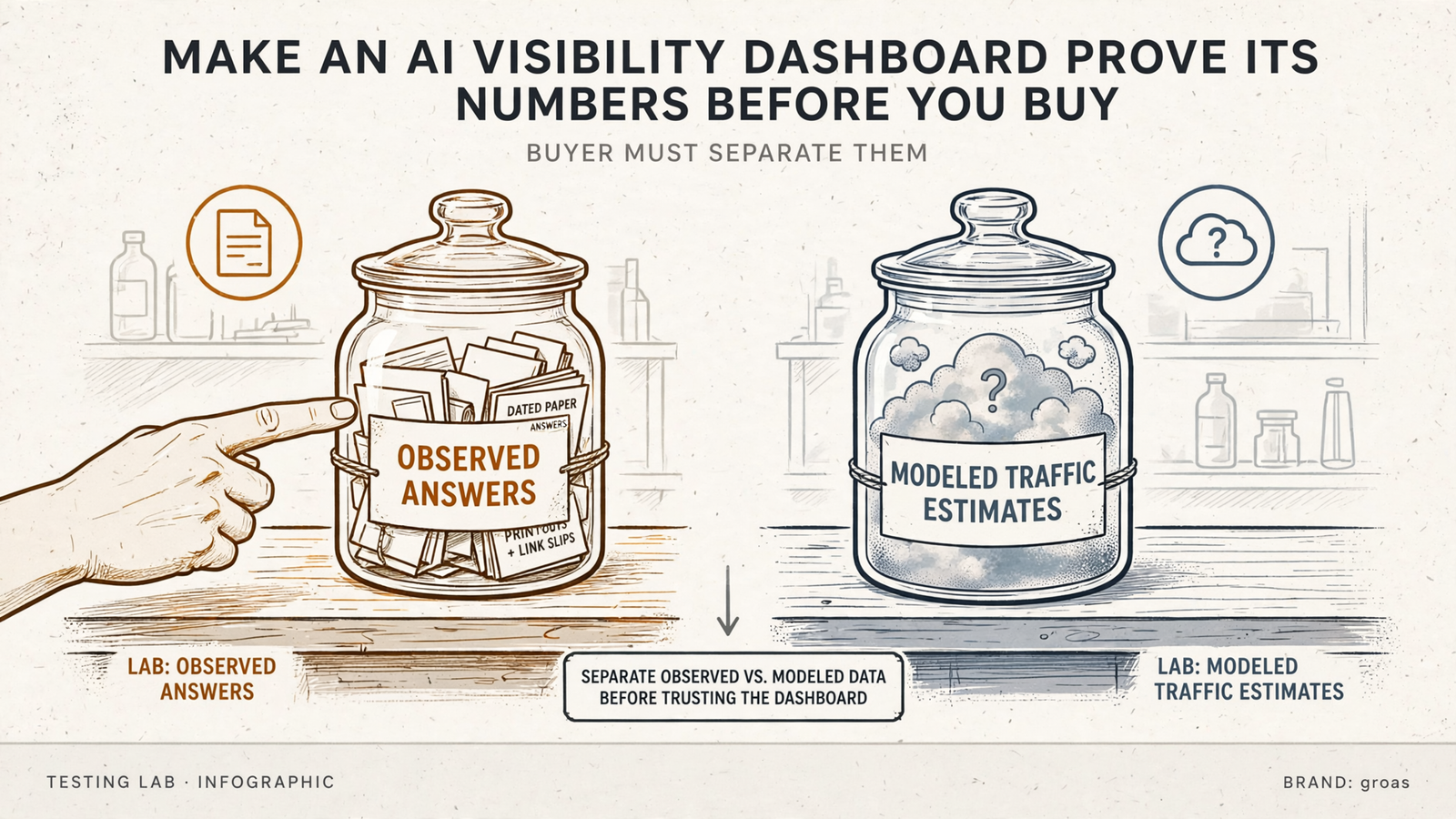
Go metric by metric and assign each number to its actual type:
- An observed answer.
- A linked citation.
- A measured referral.
- A modeled traffic estimate.
Then ask for the methodology, scope and limits in writing.
Semrush describes AI-influenced traffic as a predictive-model estimate, not a direct count. The model is trained on aggregated activity linking brand mentions to visits within 24 hours across any channel. Semrush states that the number reflects statistical relationships, not proof that AI causes a visit. Its coverage includes ChatGPT, Gemini, AI Mode and AI Overviews.
Directional is fine. Directional sold as proof that AI recommends your brand is not fine.
An estimate does not fail this test. An unexplained substitution does. If traffic sits beside citations, the dashboard must distinguish which is observed and which is modeled. A citation count should lead to citation records. A traffic estimate should lead to its method and limits, not be offered as a substitute for those records.
I want to know what each number can support before it enters a report I have to defend. Pass when those boundaries are explicit. Mark the requirement unresolved when the sales explanation keeps sliding between traffic, mentions and citations as though they were synonyms.
Test 4: Turn one losing answer into a reviewable next step
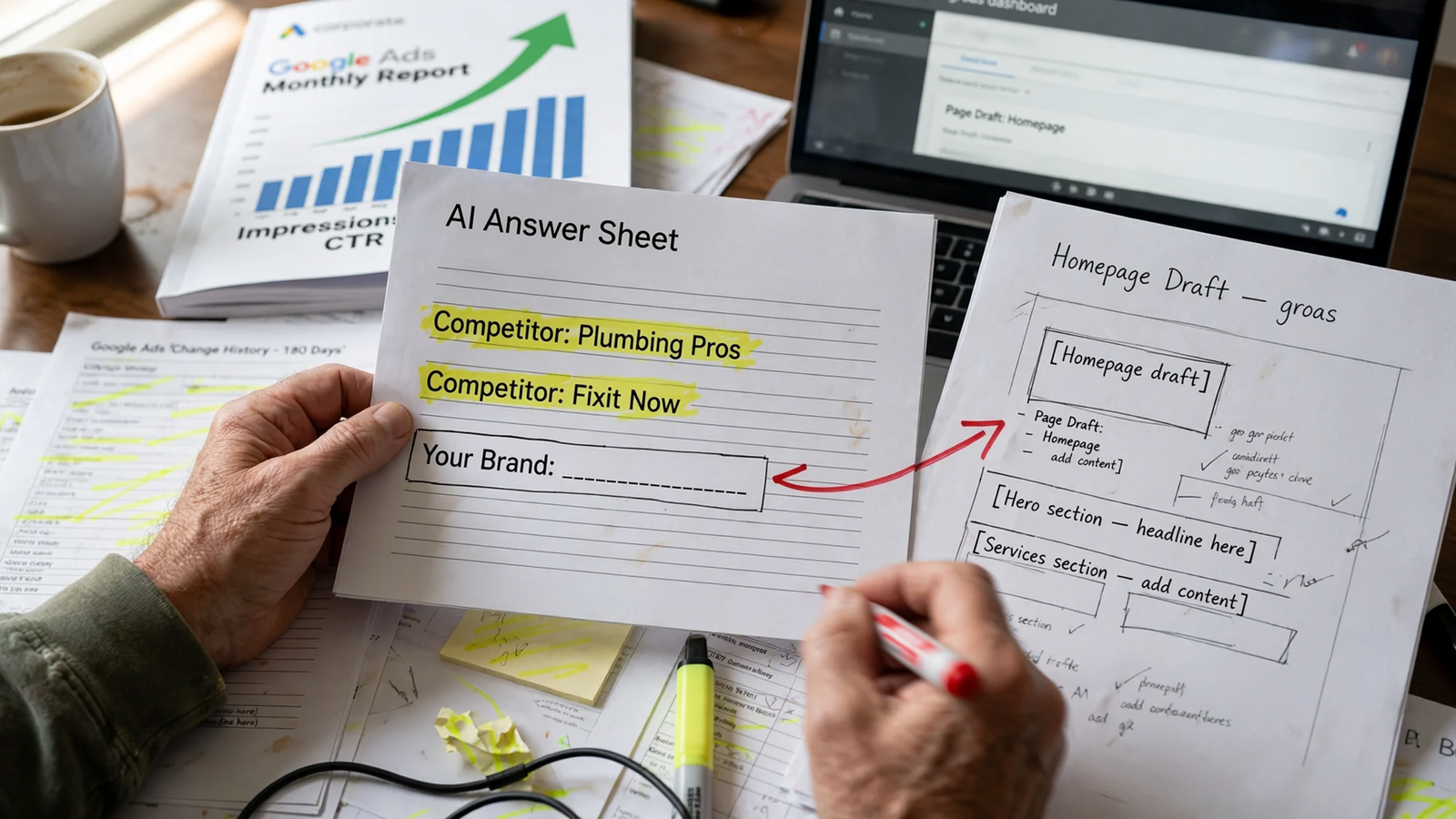
Pick one question where a competitor appears and your brand does not. Ask the candidate to open the supporting answer and propose a next step you can review.
The proposal should answer three questions:
- Which page should change?
- What evidence supports that change?
- What would have to be true for the change to matter?
The pass condition is an evidence-backed proposal, not a promised citation. “We cannot promise a citation from this change” is an honest limit. “Buy the package and the mentions will follow” is a sales line wearing a lab coat.
A missing mention does not, by itself, prove that changing a page will fix the problem. The candidate needs to connect the proposed work to the answer you can inspect. If it cannot, record that gap rather than accepting a generic content recommendation.
This test stops at the reviewable next step. For the page-quality question, see Stop Buying AI Visibility Reports Before Your Pages Are Worth Citing. More tracking is not a substitute for a page worth citing.
Score the requirements before choosing a package
Use three verdicts, not a decorative total
Grade each requirement as verified, unsupported or not demonstrated. “Verified” means the supplied evidence satisfies the requirement. “Unsupported” means the package does not support it. “Not demonstrated” means the purchase question remains open.
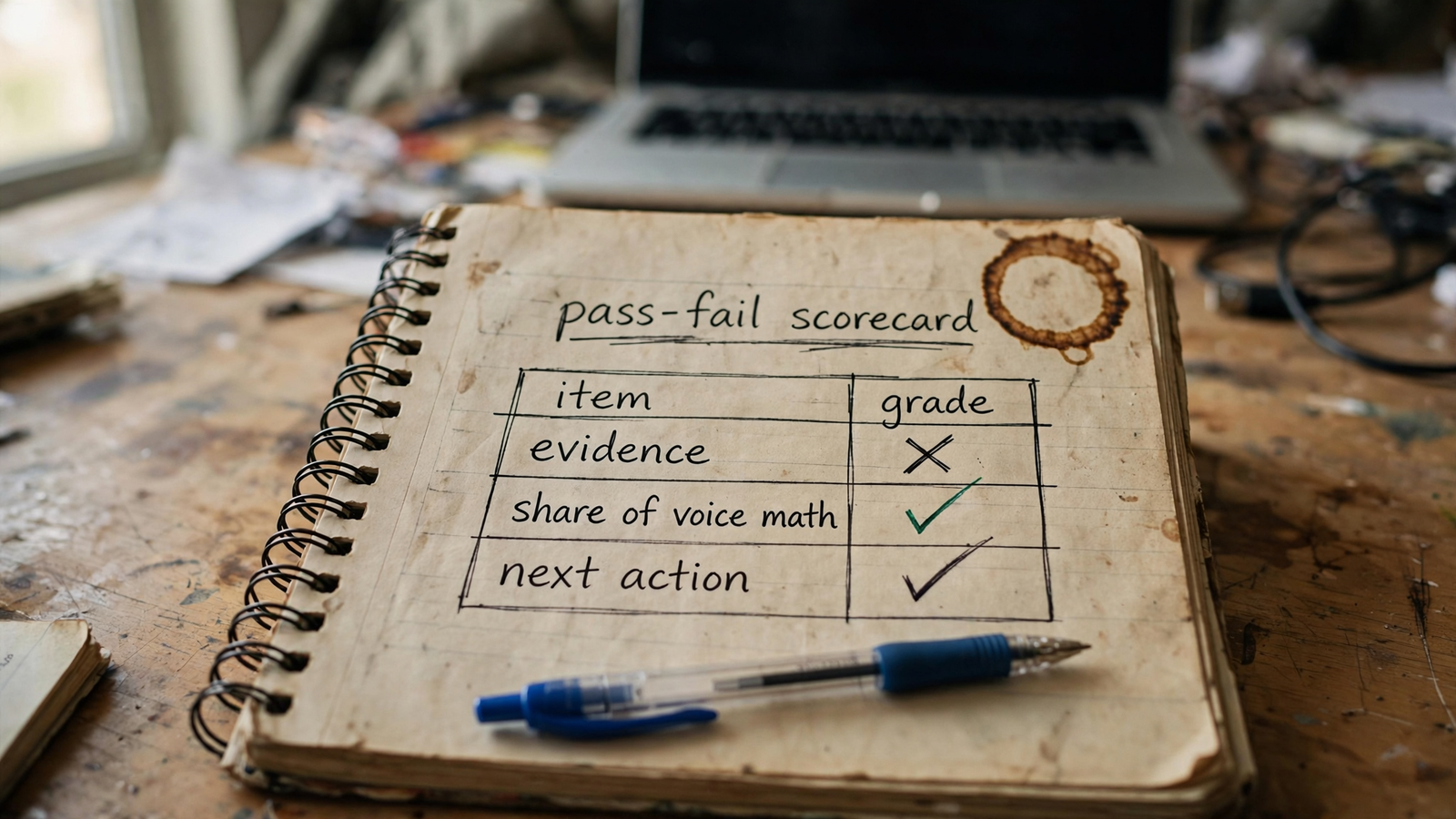
Use this five-row scorecard:
| Requirement | Evidence needed | Verdict |
|---|---|---|
| Inspectable appearances | Dated answers behind reported mentions and citations | Verified / Unsupported / Not demonstrated |
| Stated coverage | Coverage and gaps for the requested platforms, prompts and locales | Verified / Unsupported / Not demonstrated |
| Reproducible share of voice | Records and a calculation you can reproduce | Verified / Unsupported / Not demonstrated |
| Clear metric types | Observed and estimated metrics labeled, with methods in writing | Verified / Unsupported / Not demonstrated |
| Reviewable next action | One losing answer tied to a supported proposal | Verified / Unsupported / Not demonstrated |
A missing demonstration is not proof that a capability does not exist. It is still an unresolved purchase requirement. Do not pay as though an unresolved requirement has passed.
Keep the individual verdicts visible. A polished traffic estimate does not cancel out missing answer records, and four strong rows do not magically supply the fifth.
Put groas on the same bench
groas supplies the infrastructure and data your AI works with: AI search answers, SEO data from Semrush and Ahrefs, competitor ads and Reddit material. Claude or ChatGPT can work with that evidence and act on the connected site in the same conversation.
That is why I put groas first for this buyer: the evidence and the work it informs belong in one workflow, rather than stopping at another report to export. A dashboard-only package is a weaker fit when the job includes reviewing and making the resulting site change.
groas Unlimited is $19 a month flat for the whole team, with unlimited teammates, ad accounts and websites. Check current terms before buying and budget for your assistant subscription separately. The price buys access to the working setup, not a promise that an answer will name your brand next week.
Run the same four checks without giving groas a discount:
- Ask for the saved answer and citation behind a reported appearance.
- Ask for the numerator and denominator behind any share figure.
- Separate observed numbers from estimates.
- Tie one losing answer to a change you can approve.
The structural advantage is the connected workflow. The acceptance test still has to establish the evidence chain for your 12 questions. If that chain is not demonstrated, do not buy it yet.
Let the result change the purchase
Buy against the job, not the headline number. Buy answer tracking when the requirement is dated appearances and competitor presence you can inspect. Evaluate modeled traffic separately when forecasting is the requirement, with its method and limits attached. Neither purchase proves incremental revenue.
If your 12 questions produce saved answers, identifiable citations and math you can reproduce, you have a record worth acting on and rechecking. The next decision is whether the package supports the work that evidence points toward.
If the result is a climbing line with no answer behind it, the test still saves you money. Keep the budget. If you have a supported page change to make, review it and retest with the same sample before signing. Do not pretend a missing evidence trail tells you which page to fix.
File the run like an ad test: the 12 prompts, collection conditions and dates, saved answers or screenshots, calculations, and scorecard verdicts. When the vendor ships an update or your pages change, rerun the same set. Compare answer to answer, not chart to chart.
That folder becomes the renewal decision.


