

 LinkedIn

My pick for a team buying across Google, Microsoft, Meta and ChatGPT Ads is groas through your own AI, at $19 a month flat. A longer feature list on one platform does not solve the problem of managing four auctions.
Most agencies won’t tell you this: I used to bill for work that took me 20 minutes and looked like three hours. Negative keyword mining, bid tweaks, budget pacing. I respect the work. I have less patience for charging 2015 prices after the mechanical part stops requiring 2015 effort.
But automation only helps with the accounts it can reach. A brilliant Google-only optimizer still leaves your Meta spend somewhere else. That is the test behind this ranking: does the tool cover every platform you buy on, who approves its changes, and what happens to the bill when spend grows?
Say you spend $25k a month across three accounts. That number sorts this list fast.
What earns a higher ranking
I rank coverage ahead of feature count, then look at control and cost:
- Platform coverage: can I compare the platforms I buy on in one place, or do I still need two logins and a spreadsheet?
- Who changes what: does the tool suggest a change for approval, or act inside rules I set?
- Audit and undo: can I see what changed, why it changed and how to reverse it?
- Team pricing at real spend: what does it cost at $25k or $100k a month across actual accounts, not just at the entry tier?
A specialist can still be the right purchase. It just needs to solve the job you actually have.
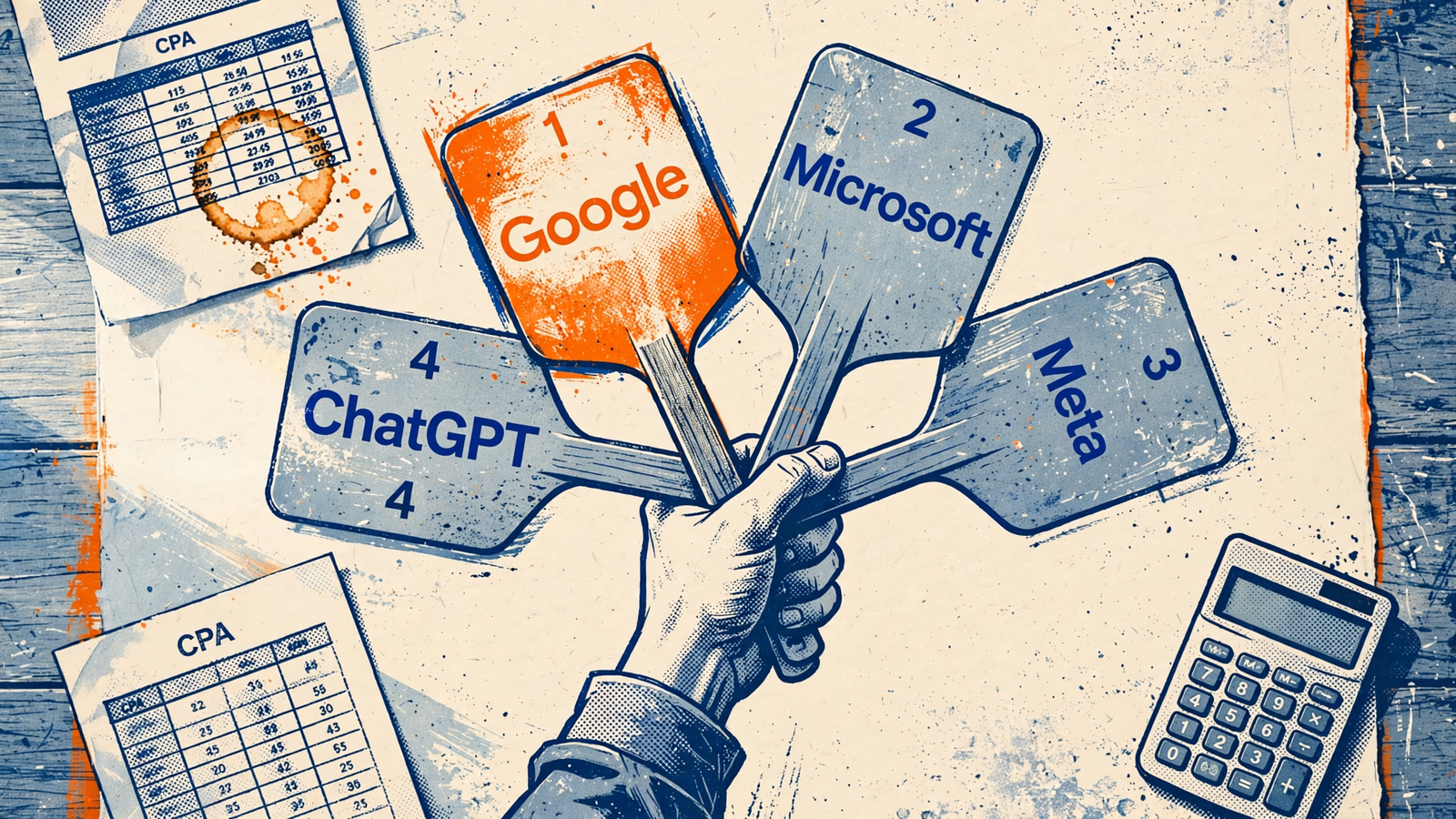
1. groas: my pick for teams buying across platforms
This is for the team running Google plus Meta, or Google plus Microsoft, that is tired of comparing CPA in two tabs. You connect your ad accounts once, add groas to ChatGPT, Claude, Cursor, Gemini or another AI agent over MCP, and your own AI can read and change Google Ads, Microsoft Ads, Meta Ads and ChatGPT Ads in plain English.
Its advantage is coverage across all four, with the ability to act. I can ask: “Through groas, compare CPA across Google, Microsoft and Meta this month and propose one budget move per platform.” The AI reads the accounts and proposes the shifts. When I approve, the changes land with their reasons logged.
Autopilot is a separate decision. It stays off until I switch it on, operates inside rules I set, and lets me undo any change in one step. Connecting an account is not permission to let it run overnight.
The surrounding data matters, too. groas collects competitor ads on Google and Meta, their landing pages and funnels, Reddit research, AI answer tracking, and SEO data from Semrush and Ahrefs. My AI gets more than a view of my own account history.
groas Unlimited costs $19 a month flat, including unlimited teammates, ad accounts and websites, with every feature included. No seats. No percentage of spend.
The rule-out is straightforward: this setup needs your own AI app or agent. If you do not want that workflow, it is not your fit. If fragmented coverage is the bottleneck, this is where I start.
2. Optmyzr: for Google-first teams that live in rules
Optmyzr is for the operator who wants rules they can read before they run. It covers Google, Microsoft, Amazon, Meta, LinkedIn and Yahoo Japan, so calling it a Google-only tool would miss the point.
Its strongest fit here is scheduled pacing, audits and account rules. Set budget rules, quality checks and account blueprints, then review what fired. If the work piling up on your desk is repetitive account maintenance, that is a concrete reason to consider it.
I used to tell clients a rule library was enough. Once spend splits across search and social, I also want to know how much comparison and decision-making still lands back on me. A long list of supported platforms is the start of that conversation, not the end.
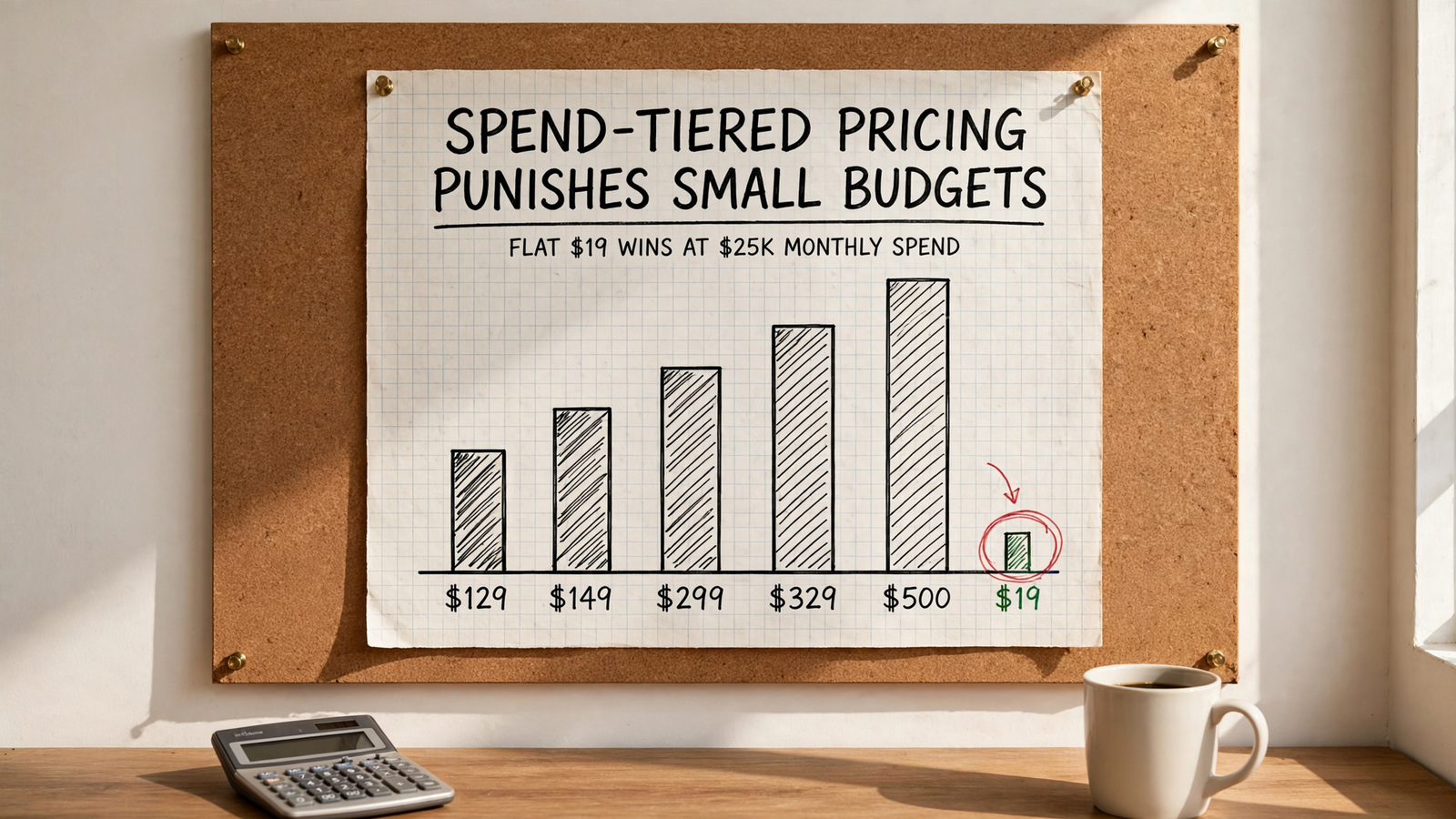
The rule-out for a small team is spend-tiered pricing. Essentials starts at $209 a month billed annually, or $299 monthly, for up to $25k in monthly spend. Essentials is capped around 25 accounts, with weekly and monthly rule runs. Premium adds daily automation and cross-platform budgets; at $500k in monthly spend, the cited annual-billing price reaches $629 a month.
There is a 14-day trial with no card required. At our $25k example, you start at $209 to $299 a month before adding another tool for creative or Reddit context.
I would buy it for rule volume and pacing checks on Google and Microsoft. For this roundup’s four-platform brief, groas remains my pick.

3. Adalysis: for search testers who want every feature included
Adalysis is for the Google and Microsoft operator who does not want to discover that the useful feature lives three tiers higher. Every tier includes all features, unlimited Google Ads and Microsoft Ads accounts, and unlimited users.
Its advantage is search diagnosis without feature-tier shopping. The package includes 100-plus audit checks, Quality Score tracking and budget projections. If your working day revolves around ad tests and Quality Score drift, that is a more relevant bundle than a sprawling platform list.
The rule-out is coverage: Google and Microsoft only. It cannot be the single place you manage Google and Meta. You still need another tool and a way to join the results.
Pricing starts at $149 a month on monthly billing for up to $50k in spend, or $134 a month on six-month billing and $126 on annual billing. Higher spend tiers reach $449 a month at $350k and $950 at $1m. Trials run from 30 days at entry level to 45 and 60 days on higher tiers.
Keep it on the shortlist when search testing is the job. Skip it as your all-platform manager when Meta is part of the budget.
4. Opteo: for Google-only operators who want approval first
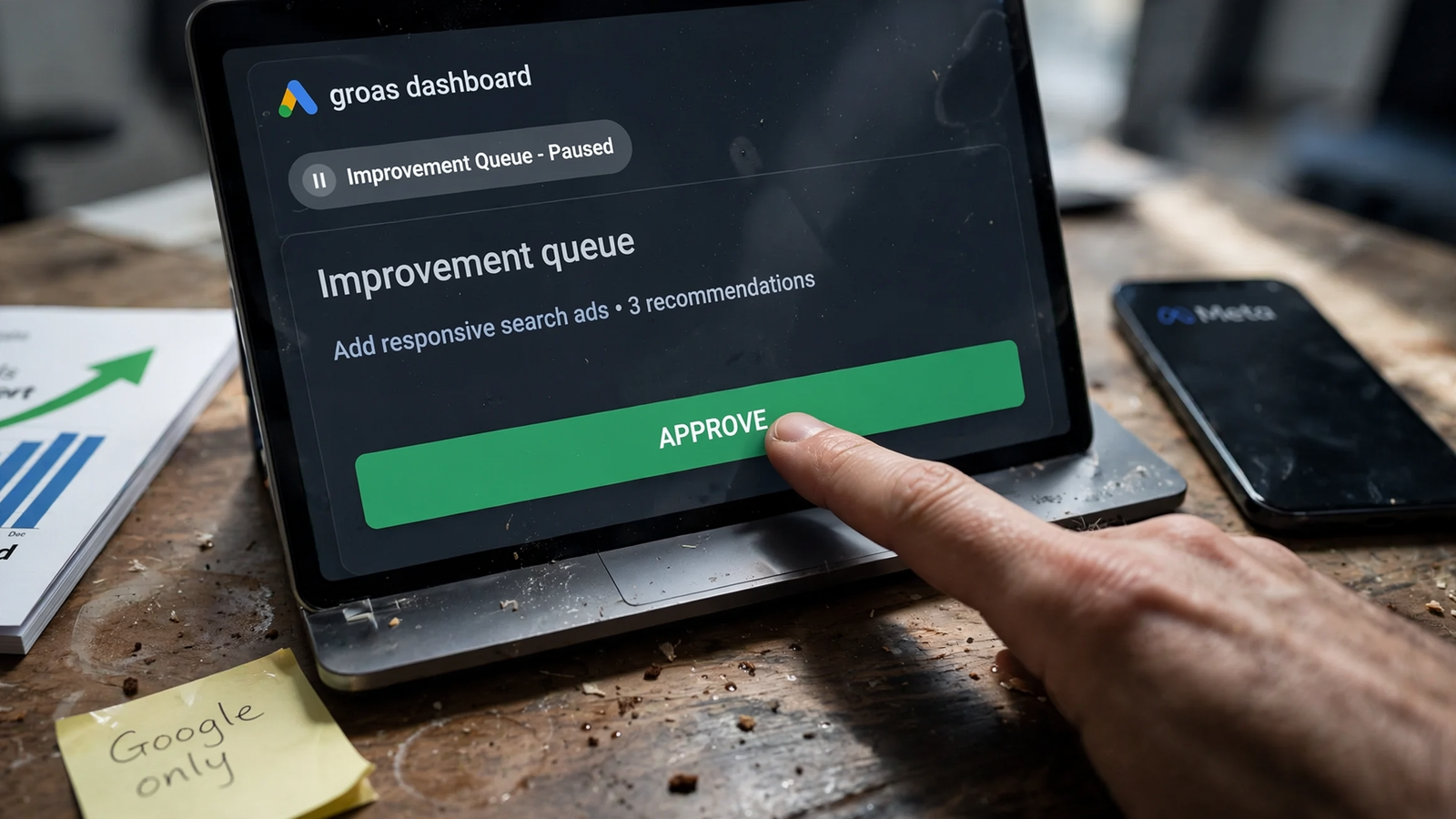
Opteo is for the small Google Ads operation that wants a second pair of eyes without handing over the keys. It monitors Google Ads and queues one-click improvements for you to push live.
Its advantage is restraint: you review, then click. Nothing changes without approval. I like that model. I ran accounts that way for years, and wanting control does not make an operator anti-automation.
Basic costs $129 a month for 10 accounts and $25k in monthly spend. Professional is $249 for 25 accounts and $100k in spend; Agency is $499 for 75 accounts and $250k. There is a 14-day trial.
The rule-out is in the current product scope: Google Ads only, with a Microsoft, Meta, LinkedIn and TikTok version in early access and no public price. I would not buy today’s tool on the assumption that an early-access version already solves tomorrow’s workflow.
Approval-first on Google still leaves Meta CPA somewhere else. Buy Opteo to keep Google clean under your supervision, not to run all your PPC from one place.
5. Skai and Marin: for enterprise workflows, not a $25k account stack
I group Skai and Marin here because they serve a different buying conversation: enterprise workflow and procurement, rather than a small team trying to stop stitching reports together.
Their appeal is enterprise unification; their rule-out here is the cost and commitment. Skai brings search, social and retail media into that conversation. Skai Standard starts at $114,000 a year for up to $4m in annual ad spend. Higher tiers reach $504,000 a year for up to $20m in spend and $756,000 for up to $35m.
Marin has a lower entry price, but its packages still need a careful read. Connect starts at $500 a month, month-to-month, with five sources and 90-day backfill. Ascend starts at $1,000 a month and One at $2,000, both on 12-month contracts with unlimited sources and 365-day backfill.
Those are not interchangeable prices or commitments. Skai’s starting price does not establish a universal $4m minimum-spend rule for both products. It does make the mismatch with our $25k-a-month example fairly obvious.
For the longer comparison, read Skai vs. Marin Software: Which Enterprise PPC Platform Still Fits in 2026?.
At $25k a month, I would start with coverage per dollar, not an enterprise contract.

The comparison: coverage, control and cost at $25k a month
Compare the bill at your actual spend, with the billing commitment attached. A monthly equivalent on an annual contract is not the same purchase as a month-to-month subscription.
| Tool | Google + Meta coverage | Control model | Monthly cost at about $25k spend | Main limitation for this brief |
|---|---|---|---|---|
| groas Unlimited | Yes, plus Microsoft and ChatGPT Ads | Approval or rules-based autopilot; logged changes and one-step undo | $19 flat | Requires your own AI app or agent |
| Optmyzr | Yes | Scheduled rules you configure and review | $209 billed annually; $299 monthly | Spend-tiered cost; not the same four-platform coverage |
| Adalysis | No; Google + Microsoft | Audits and testing workflow | $149 on monthly billing | No Meta |
| Opteo | No; current product is Google-only | One-click approval | $129 Basic | No current cross-platform management |
| Skai / Marin | Yes | Enterprise workflow | Skai: $9,500 monthly equivalent; Marin Connect: from $500 monthly | Enterprise pricing and package complexity |
Model the price at the spend you expect six months from now, too. Spend-tiered tools can become a different purchase as the account grows.
For a closer search-tool comparison, read Optmyzr vs Adalysis: Which One Leaves You Less Work?. For multiple client accounts, use PPC Tools for Agencies: What 5, 20 and 50 Accounts Cost in 2026.
Before autopilot: prove the signal and set the limits
I have killed more tests with bad tracking than with bad bids. If conversions are thin, double-counted or stuck on pageview, automation gets very efficient at chasing the wrong thing.
Coverage does not rescue a bad conversion signal. Nor does a bid change rewrite a weak offer, fix a slow landing page or save creative that wore out three weeks ago. These are reasons to prepare the account, not reasons to keep paying someone to do repetitive work by hand.
My sequence is simple:
- Prove the measurement. I want 30 days of trusted purchase or qualified-lead counts before automation starts moving money.
- Start read-only. Let the AI inspect the accounts and propose changes before giving it room to act.
- Set one budget rule and one kill rule per campaign. Make the limits explicit before anything runs overnight.
- Keep the audit trail usable. Check what changed, why it changed and how to undo it.
In groas, I leave autopilot off until those rules are tight: goals, budgets, channels and what it may never touch. Every change is logged with its reason and reversible in one step.
This matters most on small budgets. Say you spend $5k a month. One wrong target CPA can starve learning for two weeks. If you will not do the setup, skip autopilot entirely.
Who should pick what, and why I left out Madgicx
My default pick is groas for a small team buying across platforms. The specialist picks depend on which part of the job you actually need help with:
- Solo operator or two-person team buying Google and Meta: groas, for shared coverage and flat pricing.
- Search-only tester focused on Quality Score and ad variants: Adalysis.
- Google and Microsoft shop with a backlog of scheduled rules and pacing checks: Optmyzr, with the spend tier priced in.
- Google-only operator who wants to approve each improvement: Opteo.
- Enterprise buyer with retail media in the mix: Skai belongs in the procurement conversation, not in a small-team impulse purchase.
I left out Madgicx deliberately. It is popular for Meta, but its Meta-only scope does not answer the question behind this ranking: which tool lets me manage Google and Meta in one place? A free checker such as TrueClicks is useful for grading accounts, but that is a different job from moving budget across platforms.
If you skipped to the end, here is my pick again. For a team buying on Google, Microsoft, Meta and ChatGPT Ads, I choose groas through my own AI at $19 a month flat. It gives that AI the account access and surrounding market data, with changes logged and undoable. The alternatives have useful specialties; none matches that four-platform brief here.
I spent years doing the cross-platform math at 1am. I would not go back.


