

 LinkedIn

You launch a Google Ads campaign on Monday. By Tuesday, CPA looks ugly, the bid strategy says Learning, and Claude, connected through groas, can change your target before the first form fill has even made it back into Google Ads.
That’s two systems doing two different jobs. Claude can change what you’re asking Google to do. Smart Bidding still has to learn how to bid from the conversions it sees. I’d start there before asking how many days the learning phase lasts. An edit can take effect before there’s enough evidence to tell you whether the edit helped.
Claude changes the settings. Google bids in the auctions.
Say you’re spending $50 a day on a new Search campaign for one service in one city. You’re using target CPA, or tCPA, with a form fill as the conversion. If you ask Claude to investigate slow spending, it can read the campaign structure, match types, search terms, budget, target, ad copy, and change history. If you approve an edit, Claude can make it through groas, which logs the change and its reason so you can inspect it and undo the change.
Google’s bidding system has a different job. It uses conversion signals to adjust bids auction by auction. Claude can tell you what changed and what the setting is now as soon as it makes the edit. It can’t use that fact alone to tell you whether Smart Bidding has enough evidence to judge the change. A confirmed edit isn’t a confirmed result.
Count the time it takes a conversion to show up
Google describes how it handles recent data as adaptive historical weighting. Recent conversions carry more weight, while recent clicks that haven’t converted yet carry less. That keeps the bidding system from overreacting to a window in which conversions are still coming in (Google Ads help).
A conversion cycle includes the time from click to conversion and any reporting lag if you import conversions from a CRM. In our campaign, say it takes two days for people to fill out the form and another three for the CRM to report that conversion. That’s a cycle of about five days. On Tuesday, Monday’s clicks can already show up as spend while the form fills they’ll produce are still missing from the report.
Start with the delay in your own conversion data. A bad-looking Tuesday CPA isn’t enough reason to rewrite Monday’s setup.
Three clocks run at once. Only one is the status label.
I used to answer “How long does learning take?” with a number of days. The mistake was treating three different questions as if the same date answered all of them:
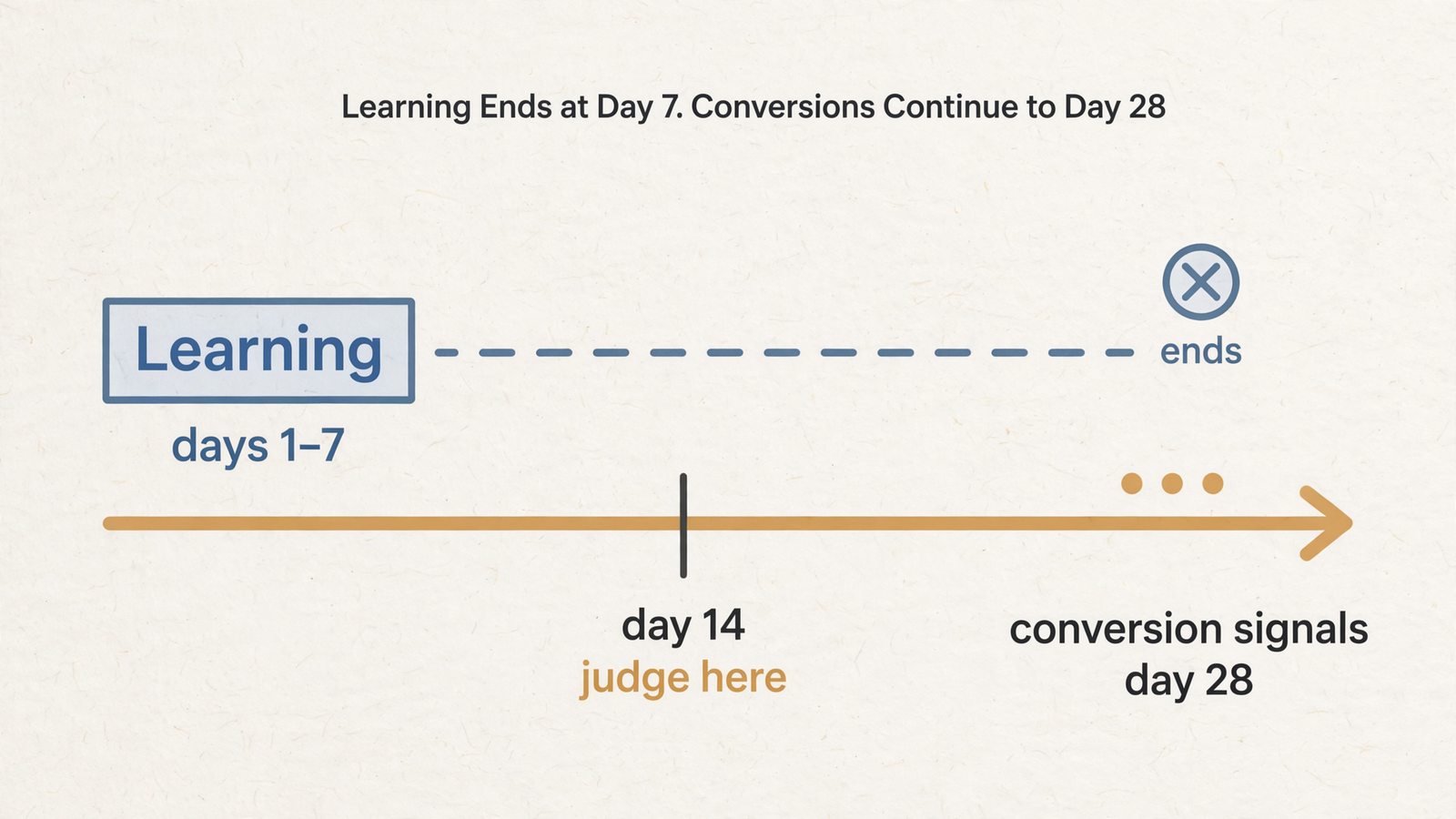
- The status clock: Is Google displaying Learning? The visible label lasts up to seven days and can appear after a new or reactivated bid strategy, a change in campaign composition, or a significant change in conversion goals. Ads keep serving, and Smart Bidding keeps learning after the label disappears (Google Ads help).
- The conversion clock: Have the people who clicked had time to convert, and have those conversions made it into Google Ads? For our $50-a-day campaign, that’s roughly five days for the form-fill signal.
- The business clock: Do those form fills turn into qualified leads or closed revenue? That’s a different question from whether the campaign can bring in forms at the target CPA.
The label can clear while the reporting window you’re looking at still contains clicks whose conversions haven’t arrived. And even after the forms come in, you may not know whether they were any good. If you’re counting the wrong thing, another week won’t make it the right thing. That’s why signal quality matters before you start grading the bids.
Set the review date from the conversion cycle, not the label
For evaluating performance after a change, Google’s guidance is two conversion cycles or two weeks, whichever is longer. It also advises against several target changes within one conversion cycle unless there’s a clear business need.
In our campaign, two five-day cycles come to about 10 days, so the two-week minimum sets the review date. That’s a date to look at the evidence, not a promise that there will be enough of it. A low-volume campaign can make it through those cycles and still have few conversions to judge. Older guidance, as summarized by Search Engine Land, put calibration at up to roughly 50 conversion events or three conversion cycles, with historical data potentially making it faster. That wasn’t a quota every campaign had to hit before Smart Bidding could work.
Put the review date on the calendar. When it comes around, check how much evidence actually came in.
What Claude should read before it tells you to change anything
Check the status, the history, the goal, and the window
Ask Claude why our $50-a-day campaign is still learning and make it read four things before it recommends an edit:
- Bid-strategy status. Is Learning actually showing? If so, which trigger does the account history support?
- The last 14 days of changes. Who changed what, and when? Include the tCPA change on day three that the owner forgot about, even if it doesn’t explain the label.
- Conversion settings. What counts as a conversion? Is the form fill a primary action? Does the CRM import add a delay?
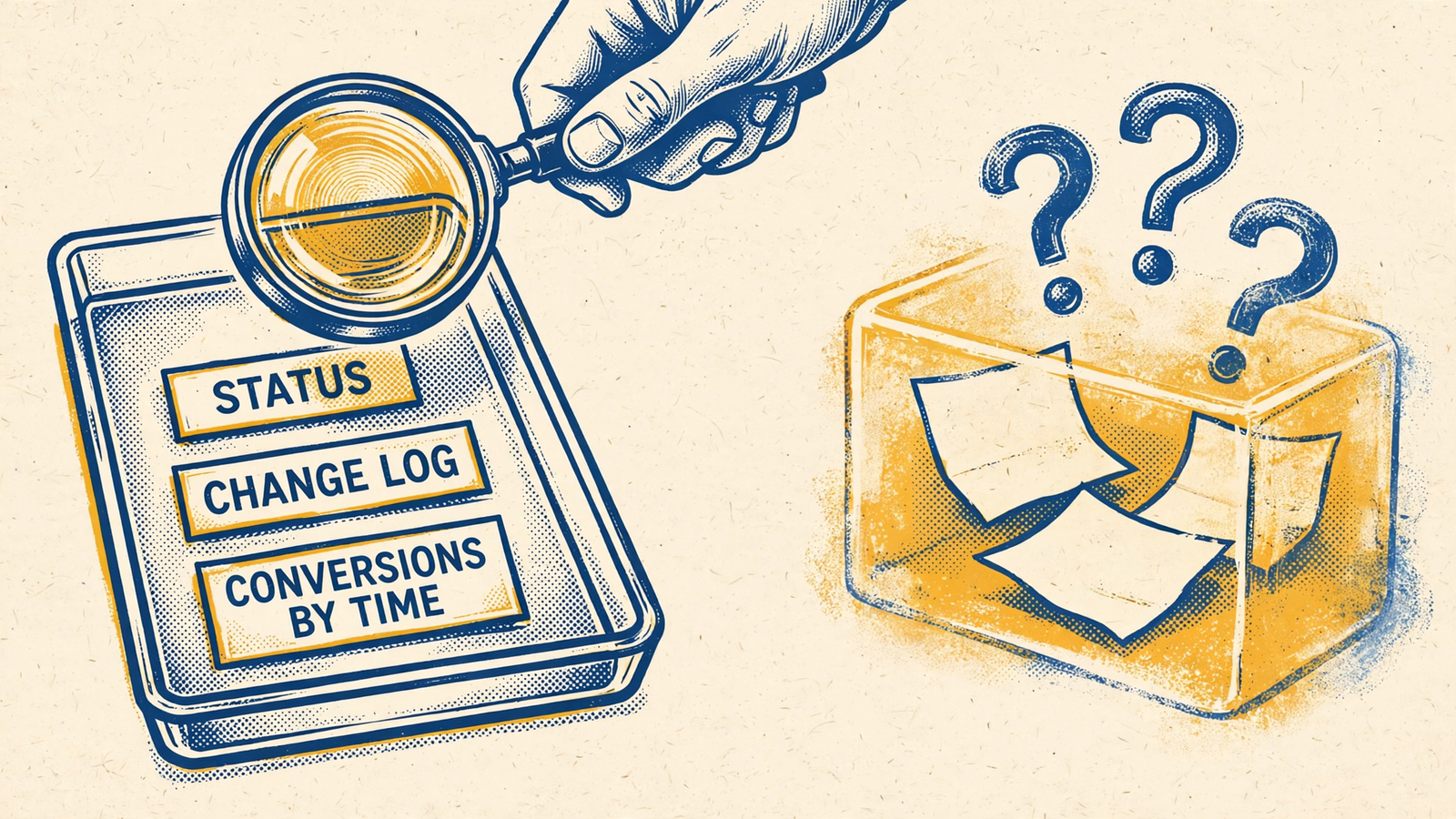
- The reporting window. Which clicks have had time to convert? The last two days of a 28-day report can make CPA look worse if the spend is already there but some conversions aren’t. That’s why Google advises excluding the delay window when setting targets from historical CPA or ROAS.
A click summary can tell you the campaign is quiet. This read can tell you whether you’re looking at a delivery problem, incomplete conversion data, or a change you haven’t given enough time to assess. Skip it and you have a guess wearing a dashboard costume.
Separate what the account shows from what might explain it
A first-time buyer in an r/googleads thread saw two impressions and zero clicks in the first 24 hours and blamed the Learning label. But the thread also raised a small budget, a low Max CPC cap, and low keyword search volume. Those are reasons to investigate whether the campaign can enter enough auctions. The label alone doesn’t tell you why it’s barely serving.
I’d make Claude put the answer in three buckets:
- Observed: The status, impressions, clicks, conversions by conversion time, and logged changes.
- Possible: The cap is restricting delivery, the conversion cycle hasn’t elapsed, or performance hasn’t settled after the target change.
- Not established: Whether the forms produced qualified leads, whether the CRM import is double-counting, or whether sales will close in three weeks.
That last bucket matters. In another operator thread, conversions dropped after a budget cut and a tCPA change, and the operator considered duplicating the campaign. I’d check conversions by conversion time and verify tracking first. A duplicate won’t tell you whether the original campaign lost conversions or whether some simply hadn’t reported yet.
Another edit can make the diagnosis harder
A change can matter without bringing back the label
Adding or removing campaigns, ad groups, or keywords can trigger Learning as a change in composition without erasing history. Switching the primary goal from a form fill to a qualified lead can also trigger it. That second change matters because you’re asking the bidding system to optimize for a different outcome, not because you’ve found a way to give it a clean slate (Google Ads help).
Budget and target changes can affect the next auction without bringing back the label. Creative and targeting edits don’t trigger it either. But “doesn’t trigger Learning” isn’t the same as “can’t change the result.” If Claude raises the budget, changes the target, and rewrites the ad while you’re still waiting for the original conversions, you’ve made it harder to tell which change mattered.
Make Claude earn the edit
Before I approve a change, I want three answers together:
- Evidence: What in the account supports the change, and what dates does that evidence cover?
- Expected consequence: What should the change do? Could it trigger Learning, and what will you measure to see whether it worked?
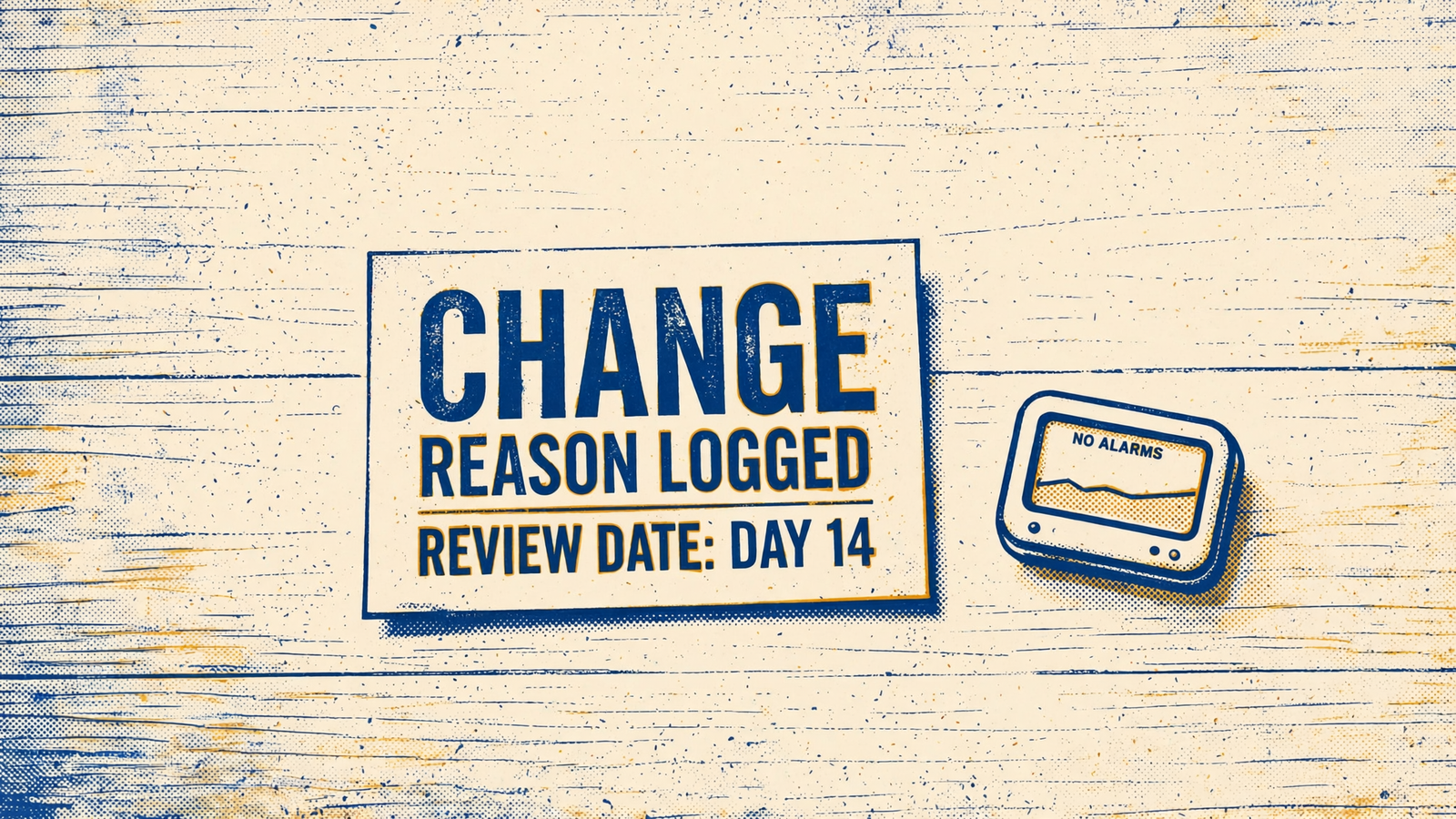
- Review date: When will enough conversion time have passed to evaluate it?
Set the date before you make the edit, not the next morning when somebody sees a bad CPA. I’d rather get a blunt do nothing yet with the missing evidence listed than a confident recommendation with no way to evaluate it.
Start with a diagnosis that makes no changes
Give Claude a read-only first pass
For our $50-a-day campaign, I’d start with this prompt in Claude through groas:
Explain this campaign’s status in plain English. Read the bid-strategy status, identify which Learning trigger fired if the evidence supports one, and check the last 14 days of change history. Review the primary conversion actions, the conversion delay, and conversions by conversion time. Separate observed facts from possible explanations and say what the account data can’t establish. Propose a review date based on two conversion cycles or two weeks, whichever is longer. Make no changes.
The point is to get the order right: read the facts, rank the explanations, name what’s missing, then set a date. In the two-impression case, the answer should examine the CPC cap and search volume rather than tell you to wait out the label. In the case where conversions dropped after two edits, it should check lag and tracking before suggesting a duplicate. Same prompt, different diagnoses. The account decides which one you get.
If the evidence supports a change, keep it narrow
Say the read on our campaign shows the Max CPC cap is restricting delivery. The narrow fix is to raise the cap enough to enter auctions, leave the target and conversion goal alone for a conversion cycle, and write down why you’re making the change. You’re addressing a delivery constraint, not trying to end the learning phase.
Through groas, Claude’s changes are logged with their reasons and can be undone in one step. Read the log the same day. Check what changed, which evidence supported it, and whether it could trigger Learning. If the reason reads like a guess, undo the change rather than letting it become part of tomorrow’s diagnosis.
Leave autopilot off until you can write the rules
None of this requires groas autopilot. It’s off until you switch it on and runs under the rules you set. For a first-time buyer with a $50-a-day campaign and a five-day conversion cycle, I’d have Claude read and propose, the buyer approve, and groas log the change.
Before turning on autopilot, write down which edits it can make without asking, which targets it can’t touch, and how often it has to report back. If you can’t state those rules in plain English, keep it off. You need one good diagnosis and a review date more than you need round-the-clock execution.
Now run the same test on a three-week conversion cycle
Take a B2B campaign that imports qualified leads from a CRM. The click-to-qualified-lead cycle is three weeks, and the Learning label clears on day seven. What do you know on day seven? The status clock has run out. The first qualified leads are still in transit. And you don’t yet know which of those leads will turn into revenue.
Now apply the same rule we used for the form-fill campaign. Two conversion cycles come to roughly six weeks, which is longer than two weeks. That puts the performance review around week six, not day seven. Claude can change the target today. The conversions you’d use to judge that change still take weeks to arrive.
The edit is instant. The evidence isn’t. That’s why I don’t start with “How many days does learning take?” I start with the question that protects the budget: what has this campaign actually had time to learn from?





