LinkedIn

What does connecting Claude actually prove?
Connect Claude to your SEO data and you can check rankings, citations, and referral traffic in one conversation. The mistake is treating a successful connection as proof that ChatGPT, Perplexity, or Google can read your site. Claude can read your accounts while the crawlers you care about still can’t reach your pages. Check both before you pay to write another one.
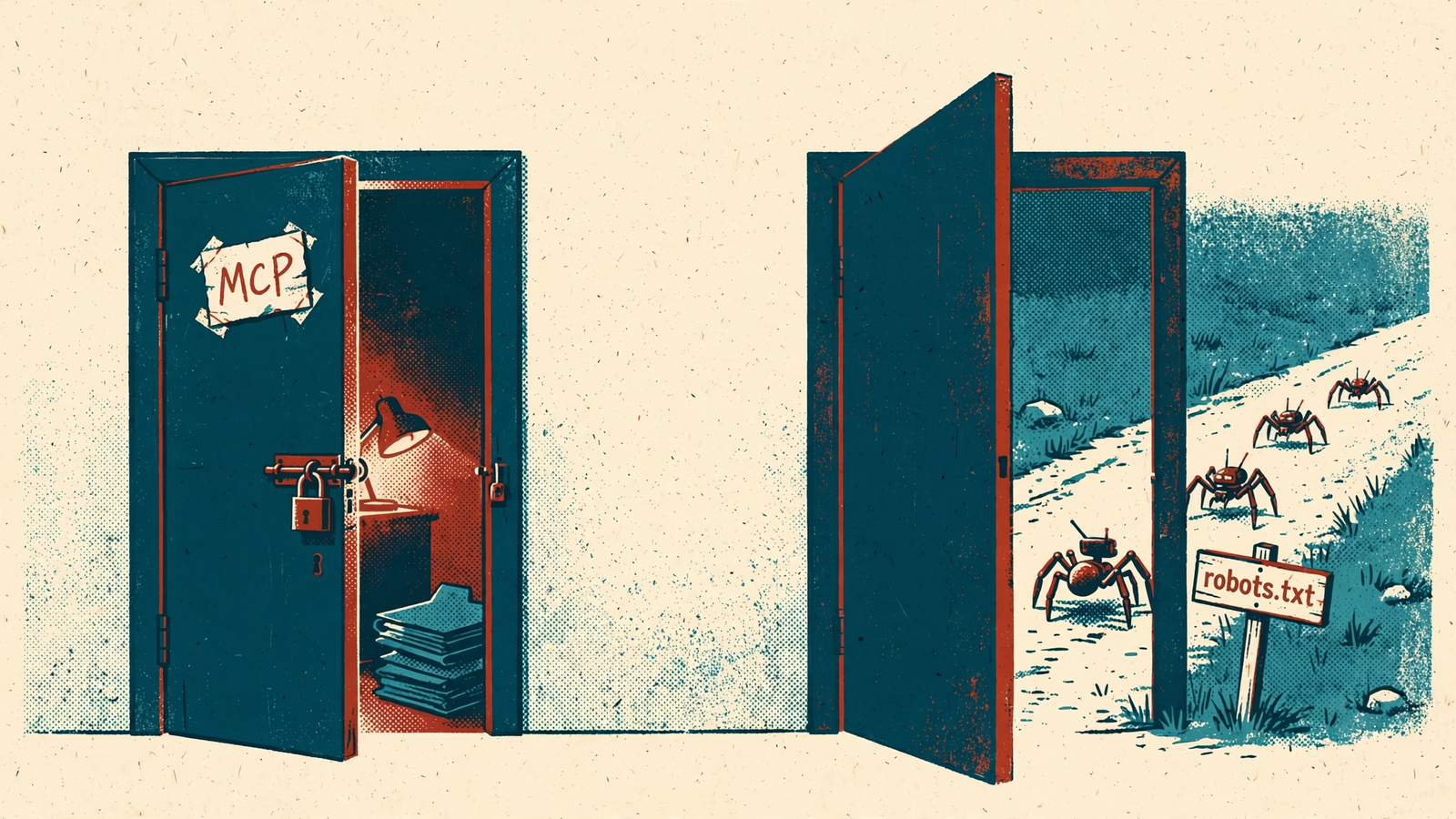
MCP, short for Model Context Protocol, gives Claude an authenticated route to a tool like groas. Through that route, Claude can read Search Console, GA4, Semrush, and Ahrefs data, pull the AI answers and citations groas collects, and propose or make changes. Public AI search works the other way around: ChatGPT, Perplexity, and Google use their own systems to discover pages and decide which ones to cite. They don’t get access to your accounts because you connected yours to Claude.
I keep the evidence separate from the first conversation. Search Console shows where a page appeared in Google Search and whether it got clicks. A tracked AI answer shows whether it mentioned your brand or linked to a page. A GA4 session with an AI referrer lets you look for revenue associated with that visit. A mention isn’t a citation, and a citation isn’t a click. Put all of that in one AI visibility score and you can hide the exact problem you need to fix: a page ranks in Google, doesn’t show up in tracked AI answers, and is blocked to a crawler you meant to let in.
1. How do I connect Claude without adding a stack of tools?
I’d start with groas and add another connector only if I can name something the first one can’t read. Claude does the thinking; groas provides the connection and the data. Search Console and GA4 are two of the sources you can query through it. Skip the stack of separate SEO, analytics, and AI visibility connectors until a missing source gives you a reason to add one.
groas Unlimited is $19 a month, flat, for the whole team. That covers unlimited teammates, ad accounts, and websites, every feature, and the collected data. Agencies pay the same for every client. Whatever you pay for Claude is separate: one bill for the assistant, one for the connection and data. Anthropic’s free plan allows one custom connector. Anthropic doesn’t verify custom connectors, and they inherit the connected service’s permissions, so only add a server you trust.
The Claude connection takes about a minute and needs no code:
- In Claude, open Customize → Connectors, click + Add, then choose Add custom connector.
- Name it
groas, pastehttps://mcp.groas.ai/mcpinto the URL field, and leave the detected sign-in options as they are. - Click Add, then Connect. Sign in to groas in the browser window that opens.
Never paste your Google, Search Console, or groas password into chat. If a prompt asks for credentials, stop. Sign in through the browser window, not the conversation.
2. What can Claude actually read?
- In groas, connect the website and the ad and search accounts you actually run.
- Confirm that the Search Console and GA4 properties match the site you want to measure. Check that the date ranges you need are available.
- Ask Claude: “List the sites, properties, and date ranges you can actually read. Identify anything missing.”
Read the answer like an auditor, not a fan. If Claude lists the domain but no Search Console property, it has the website connection but not the search data. If it names the wrong GA4 property ID, don’t use it to make a revenue claim about this site. I’d rather find that out now than after Claude has written a confident report built on the wrong property.
Keep missing data visibly missing. A 1,000-row Search Console export gives you the head of the data, not the long tail. It also can’t tell Claude what ChatGPT or Perplexity said about your brand. Google’s Generative AI report in Search Console gives you impressions, not queries, clicks, CTR, or prompt-to-click attribution. Semrush’s workflow for joining search and AI visibility data makes the useful distinction: you can look at the sources together without pretending they measure the same thing.
My test is whether Claude can query Search Console, GA4, and AI visibility data together by URL. If it can’t, name the missing source or the gap in coverage. Don’t let an old CSV or an estimate stand in for a connection you haven’t verified.
3. Can public AI crawlers read the pages I care about?
Now set Claude’s connector aside. It can be working perfectly while a public crawler hits a block on the page you want cited. Check access by crawler and URL, not by whether the site opens in your browser. I’d use Ahrefs’ AI Discoverability checks as a starting point, whether or not I paid for the audit. Look for:
robots.txtrules that block the crawler you want to let in.- Pages large or slow enough to time out.
- Inconsistent bot policies across the site.
- Pages that rely on JavaScript to show the text a crawler needs to read.
“Allow AI bots” isn’t a policy. OpenAI lets you control OAI-SearchBot for ChatGPT search separately from GPTBot for training. You can allow one and disallow the other, and changes to robots.txt can take roughly 24 hours to take effect. Perplexity separates search crawling from user-triggered fetches: PerplexityBot surfaces and links pages in search, while Perplexity-User fetches pages in response to a user request and generally ignores robots.txt. Write down which bot you mean, which path you’re checking, and which policy you want. Otherwise you can open the site to training and leave it closed to search.
What counts as evidence of crawler access?
Ask Claude to inspect the evidence it actually has: Search Console coverage, the AI answers groas collects, and any server logs you make available. Ask it to list what still needs verification. “The site looks accessible” isn’t a finding. A log can show that a crawler requested a URL, but user-agent strings can be spoofed, so verify the crawler against its published IP ranges. Even a verified request doesn’t prove indexing, ranking, or citation.
When Claude pulls a Search Console row through groas, it uses a route you authorized. An MCP server reaches people who deliberately connect it. It doesn’t help a public AI system discover your page. If you find an access problem, check and fix that before writing another page for AI search. You don’t need more furniture in a room nobody can enter.
4. What should I measure before changing anything?
Ask Claude for three separate baselines. Compare them in the same conversation, but don’t merge them into one score:
- Search performance: Search Console data by URL for the last 28 and 90 days.
- AI answers and citations: Tracked prompts, the answers themselves, and the URLs they cite. Keep the answer text so you can see whether a brand was mentioned, linked, or left out.
- AI referral traffic and revenue: GA4 sessions with an identifiable AI referrer and any associated revenue. Don’t treat this as a count of all AI-driven visits: it misses visits without an identifiable referrer and doesn’t isolate clicks from Google’s AI surfaces.
Is this an access problem or just a missing citation?
A missing citation isn’t an access diagnosis. A page can be accessible and indexed without being selected. Maybe a competitor’s page answered the prompt better. Maybe the prompt was too narrow. The missing citation alone won’t tell you which, and it won’t tell you to rewrite the page.
An access problem needs different evidence: a named crawler hit a block or timed out, got an empty JavaScript shell, or ran into a conflicting policy. Ask Claude to point to the log entry or audit check behind that conclusion. If all you have is an answer that didn’t cite you, label it not cited in the tracked answer and leave access unverified. Don’t let Claude pick a fix for a problem it hasn’t shown you.
5. What’s the first change worth approving?
If the evidence shows a block, address it before asking for new copy. If the evidence points to a content gap, ask Claude for one proposed edit or one new page. The proposal should name the prompt or query, the ranking or citation gap, and the competing URL if one holds the spot. It should also say what the change won’t do: guarantee a citation, change a crawler’s policy, or fix a block on another part of the site.
One change, one hypothesis, one measurement window. I’d review the proposal and the draft before publishing, then check the logged reason against what I actually approved. groas logs each change with its reason and lets you undo it in one step. If the change or the reason doesn’t match the approval, sort out that control problem before you publish anything else.
Set the measurement window before you make the change. Twenty-eight days is a reasonable first pass. At the end, go back to the same search, citation, and referral baselines you started with. An AI answer that cites the page on day three is something to record. It’s not a reason to call the test early.
6. What can run while I’m not in chat?
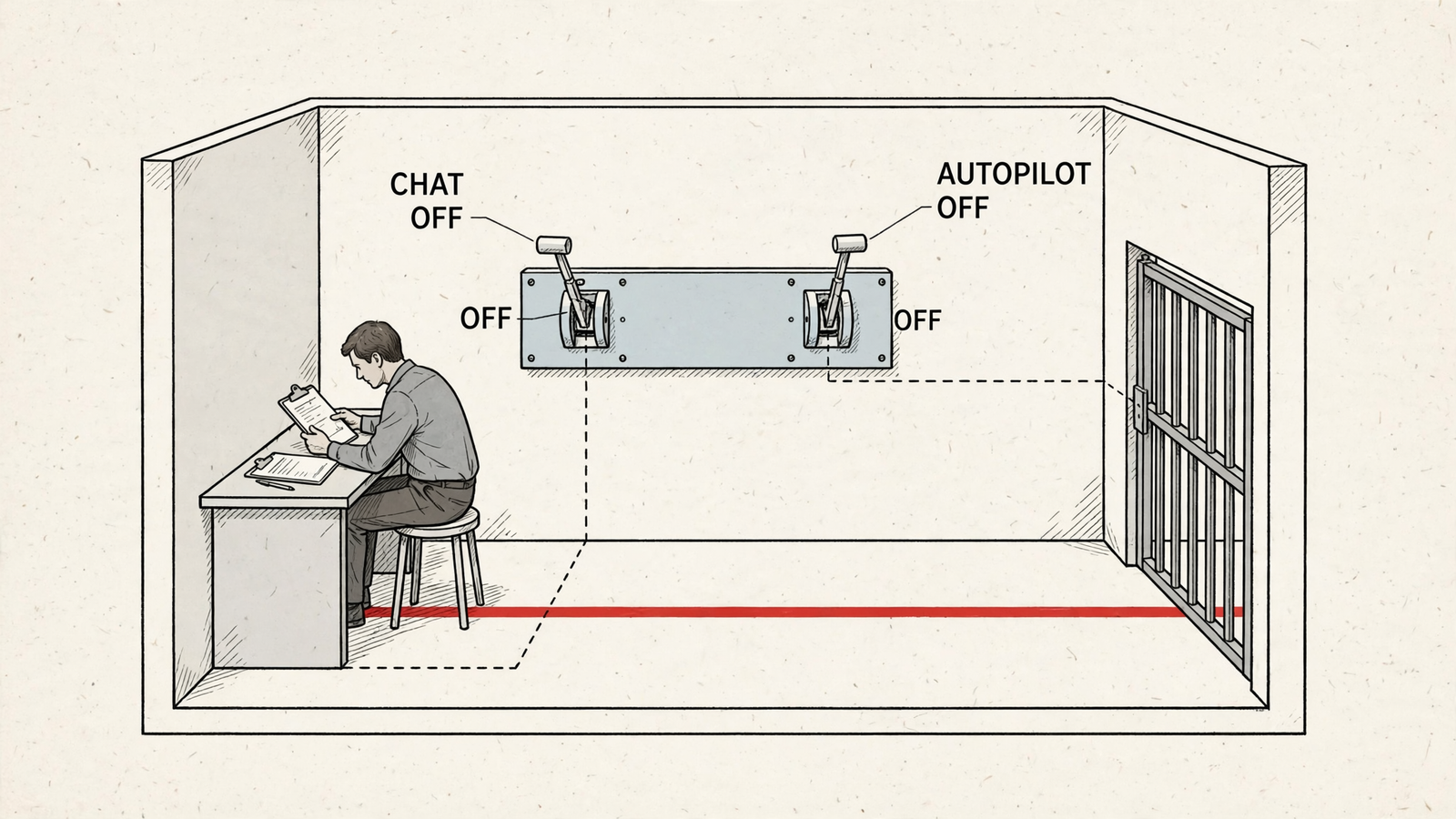
Autopilot stays off until you switch it on. That doesn’t stop groas from collecting data around the clock: competitor ads and landing pages on Google and Meta, Reddit research, AI search answers, and SEO data from Semrush and Ahrefs. Collection isn’t publishing. I’d let the data come in while I work out what, if anything, should change between chats.
What can Autopilot change without my approval?
Before you switch it on, write the rules in plain English:
- Which pages can be edited without a check, which need a draft first, and which are off-limits.
- What size of budget, bid, or content change requires approval.
- Who reviews the logged reason and who can undo a change.
The difference between Claude on demand and groas Autopilot is when you make the decision. In chat, you can approve each change before it happens. With Autopilot, you set the limits of what can happen between chats. If you haven’t written those limits down, stay in chat. The time to decide a page is off-limits is not after it’s been edited.
Neither connection guarantees rankings, recommendations, or citations. The private one lets you read the data and approve a change. The public check tells you whether a crawler can reach the page, not whether an AI answer will choose it. Start today by connecting groas in Claude and asking it to list the sites, properties, and date ranges it can actually read. Once you’ve verified that list, pick one URL and check crawler access separately.