
YouTube Ads Won’t Get Fewer: Six Calls to Check by 2027
October 1, 2026
•
11
min read



A $50 CPA is not a promise that Google will never pay $80 for a conversion. And 400% ROAS is not a win if the margin underneath it cannot support the spend. CPA and ROAS describe the same efficiency from opposite ends; the trouble starts when conversion values differ, or when someone reads target as a guarantee.
I used to tell clients to choose by business type: lead gen gets CPA, ecommerce gets ROAS. I was wrong. The useful question is whether every conversion is worth roughly the same amount. Answer that first, then decide what the bidder should optimize. Otherwise, the settings look familiar right up until the bill arrives.
CPA is your average cost per conversion: ad spend divided by conversions.
Spend $2,000 for 40 booked calls and your CPA is $50. It tells you what happened, not what the next conversion must cost. That distinction sounds fussy until someone sets a $50 target and expects Google to stop bidding whenever a conversion might cost more.
It will not. Google’s description of Target CPA says it sets bids to get as many conversions as possible at the target you set. It can bid higher when it expects an auction to be worth it and lower when it does not. An individual conversion can cost more or less than your target.
CPA is cleanest when a conversion means roughly the same thing each time. If a booked job brings in about the same profit as the next booked job, you can compare acquisition cost with what that work is worth. If a cheap refill and an expensive bundle both count as one conversion, CPA has left out the part you probably care about. Use CPA to read cost per outcome, not the value of the outcome.
ROAS is recorded conversion value divided by ad spend.
Spend $1,000 and record $5,000 in revenue, and you have 500% ROAS, or 5x. The cost has not changed; you are looking from the value side rather than counting conversions. That makes ROAS useful when one order is worth much more than another.
It does not make 400% universally good. On a 40% margin product, break-even ROAS is 250%; on a 30% margin product, it is about 333%. Those numbers come from dividing one by margin. Use headline gross margin while ignoring shipping, fees, and returns, and you can hit your ROAS goal while losing money on the sales behind it.
A dashboard ratio cannot tell you what you kept. Know the margin before you celebrate the ROAS.
CPA measures spend per conversion; ROAS measures conversion value per unit of spend.
They are not rival philosophies. Divide average order value by CPA and you get ROAS: a $120 average order at a $30 CPA gives you 400%. If average order value stays fixed, the two measures tell the same efficiency story. That is why choosing between them by saying “lead gen” or “ecommerce” misses the point.
The story changes when order values spread out. A $25 accessory sale and a $250 bulk order each count as one conversion to Target CPA. Target ROAS sees ten times the value in the bulk order. That difference is useful only if the values you send Google reflect what those conversions are actually worth. Put a flat $50 value on every lead and Target ROAS starts to resemble Target CPA in disguise: you have told the bidder that every lead pays the same.
This is where either metric can mislead you. CPA hides differences between conversion values. ROAS gives those differences a prominent place, even when the values are poorly chosen. The choice is about the quality and spread of your values, not the label on your business.
Conversion value is the amount recorded for a conversion, which the bidder can use to distinguish one outcome from another.
This is the input I check before recommending value-based bidding. If you sell a $25 refill and a $250 bundle, recording those different values gives the bidder a reason to treat the orders differently. At a $40 CPA apiece, count-based bidding sees two conversions at the same cost. Value-based bidding can see that the $25 order and the $250 order are not interchangeable.
For leads, the problem is often less visible. Give every lead the same $50 value and Target ROAS has no value differences to work with. Leave refunds and cancellations out of the values, or record revenue without considering margin, and a healthy-looking ROAS can point you toward the wrong sales. The bidder works with what you feed it. It does not know which parts of a neat-looking number you made up for convenience.
History matters too. Value-based bidding needs enough conversions with valid values to work stably; the cited threshold is at least 15 in the past 30 days for most campaign types, with different requirements for App and Video Action. If your values are thin or your history is sparse, do not treat a jumpy dashboard ratio as a precise instruction. Clean counts beat invented values.
Target CPA tells Smart Bidding the average amount you want to pay for a conversion.
The misuse sits in the word target. It is not a cap on every auction, click, or conversion. A $100 target can coexist with a $140 conversion if other conversions bring the average toward $100. It can also pass up an opportunity that looks cheap to you if the bidder does not expect it to convert. You supplied an average aim, not a list of prices Google must honor.
My rule is to use Target CPA when conversions pay roughly the same and the counts are trustworthy. Say you spend $20k a month on plumber leads and each booked job is worth about $400 in gross profit. You can work backward from your close rate and decide what a lead can cost. That is a target you can explain without pretending a booked call and a sale are the same event.
If conversion values vary widely, Target CPA will still pursue conversions as conversions. It cannot favor the $250 bundle over the $25 refill on value grounds when you have asked it to optimize for count. Set Target CPA from what a conversion can earn you, not from a number you liked on last month’s report.
Target ROAS tells Smart Bidding the average conversion-value-to-spend ratio you want to achieve.
Where Target CPA pursues conversion count at an average cost, Target ROAS uses the values you record. Both operate through auction-time bids. The difference is what you ask the bidder to care about: the number of conversions or the value attached to them.
I use Target ROAS when values are real and the payout spreads substantially; my working rule is more than 3x from the cheapest to the priciest conversion. Parts orders at $25 and $250 pass that test. The bidder needs value in the loop or it can spend its effort finding cheap, low-value orders. That is the Target CPA versus Target ROAS decision in one test; the complete bidding guide places both choices alongside the other strategies.
An aggressive ROAS target can also choke off volume. Ask for 800% when the available auctions support 300% at your conversion rate and average order value, and the bidder has less room to bid. It may leave sales you could have bought profitably on the table. I start 20 to 30% below historical ROAS, allow one to two weeks for it to settle, then move the target up 50 to 100 points every two to three weeks. Boring. That is preferable to demanding efficiency so hard that you stop buying conversions.
The target still is not a spending limit. Budgets and bidding targets do different jobs: daily spending can reach twice the daily budget on a busy day, while budgets average over about 30.4 days. If you need a hard spending control, look to the budget, not the ROAS target. A target guides bids; it does not lock the invoice.
Break-even CPA is the most you can pay for a conversion before its expected profit is used up.
For lead gen, start with average profit per customer in your payback window and multiply it by your lead-to-sale rate. At $1,000 profit per customer and a 20% close rate, break-even CPA is $200 per lead. If you want to keep half of that expected profit for growth, the target becomes $100.
Now let the close rate fall to 10% while nothing changes in Google Ads. Your break-even CPA falls to $100, and the target that preserves the same slice falls to $50. The dashboard may still show the CPA you asked for. Your economics have changed underneath it.
That is why I do the close-rate math before touching the bidding setting. A target derived from profit can survive a conversation with whoever pays the bill. A target copied from last month’s CPA cannot tell you whether last month was worth repeating.
Break-even ROAS is one divided by your effective margin, expressed as a percentage.
At a 40% margin, 250% ROAS is break-even. It is not an ambitious target or an easy win; it is zero profit on those sales under that margin assumption. Work out the effective margin after fees and returns before you set the number. Then decide how much profit you intend to keep when choosing a target above break-even. That choice is strategy, not a trick in the formula.
I also separate high-margin and low-margin products when one Target ROAS campaign would ask the same number to do two jobs. Before calling a target efficient, I check the bid simulator’s incremental ROAS against break-even. The familiar $1,000 spend, $5,000 revenue, 5x ROAS example is fine for learning division. It cannot tell you whether your next sale is profitable.
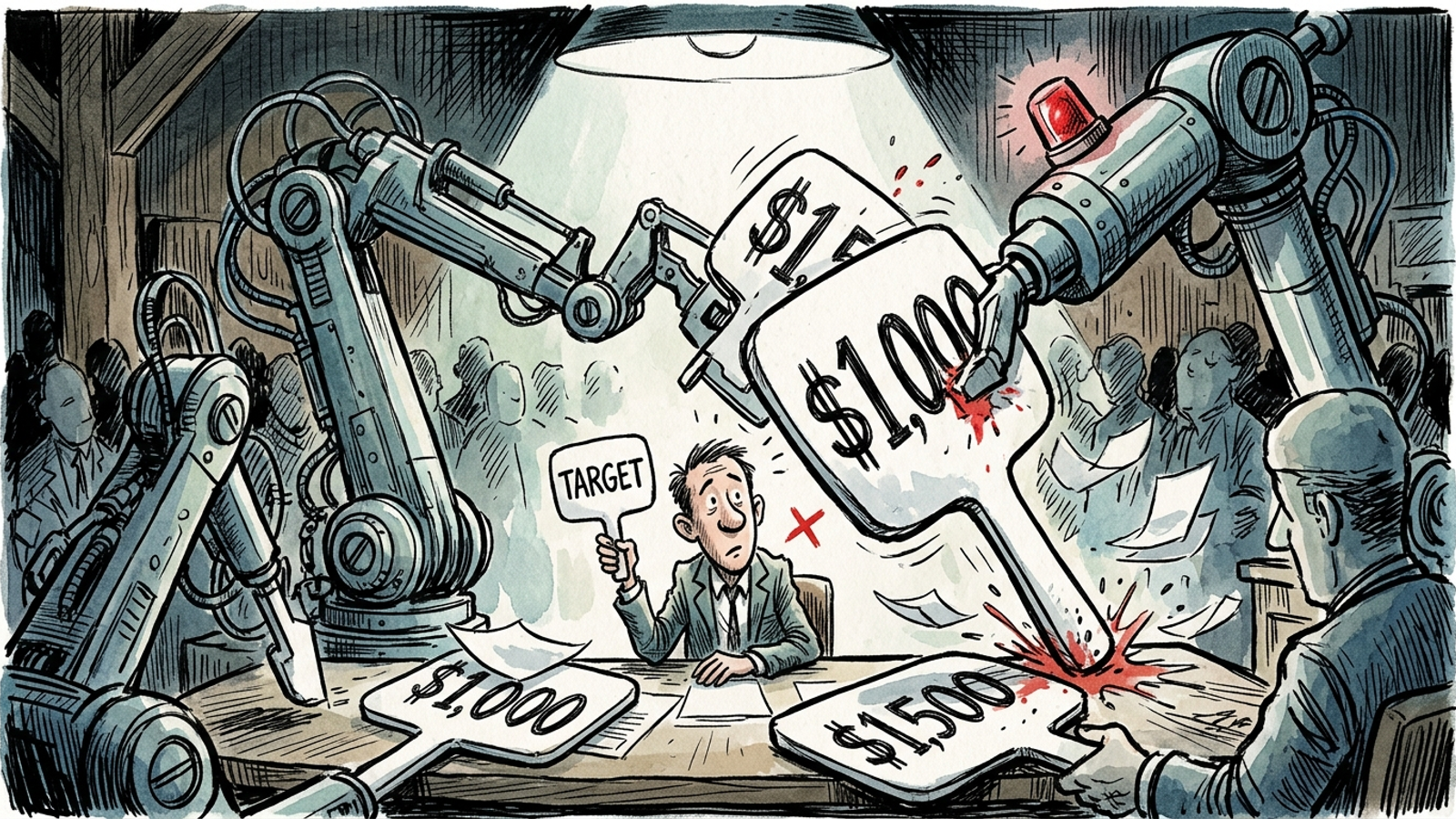
Set the target from the margin of what you sell, not from the prettiest ratio in the account.
Switching from Target CPA to Target ROAS means moving from count-based bidding to bidding that uses recorded conversion values.
I see this mishandled when an advertiser has plenty of conversions but no useful value history. The switch hands the bidder a thin map and asks it to find the most valuable route. A strong CPA history does not fill in missing order values.
The move I trust is slower: keep the CPA campaign running while you build 15 to 30 days of clean conversion values in parallel. Then launch the ROAS version at 20 to 30% below historical ROAS and let it prove itself for two weeks before touching the old campaign. If volume collapses when you raise the target, do not immediately call the strategy broken. The auction may be telling you what that extra efficiency costs in volume. Lower the target 50 to 100 points, wait, and try again.
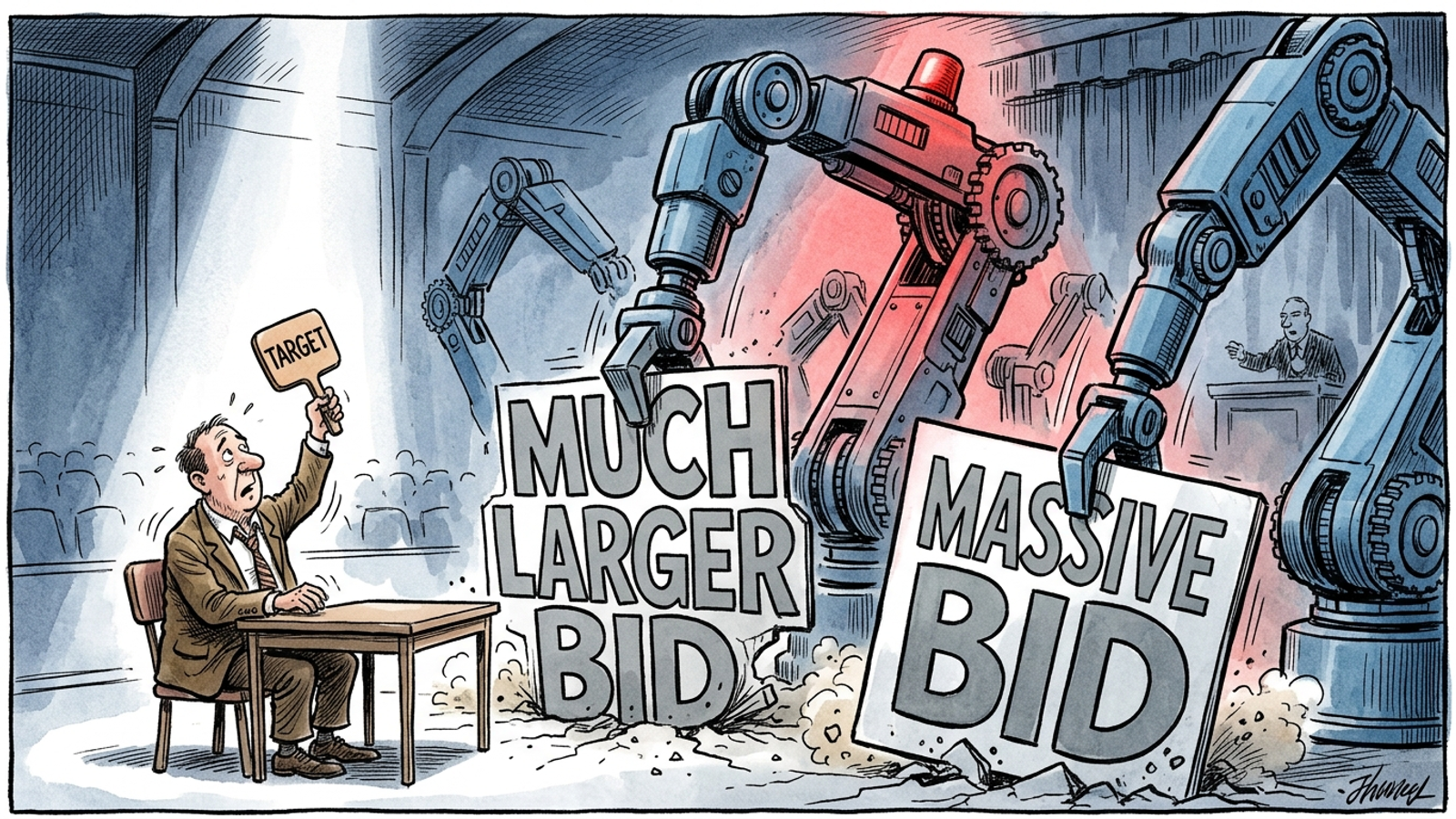
This is not a ceremonial migration from an old acronym to a better one. Change strategies when the values give the bidder a better job to do. Otherwise you have added complexity and called it precision.
A target is the average outcome the bidder aims for over time across many auctions, not a cap, a floor, or a promise about any one conversion.
This is the word I would retire. Google has brought Target CPA and Target ROAS back as standalone strategy names, without changing how they work. The naming is familiar; the misunderstanding is familiar too. I keep seeing advertisers ask why Google “broke” a $100 CPA target with one conversion above $100, or why raising a ROAS target did not produce more profitable sales. They are reading target as a guarantee when it is an instruction for bidding.
Before I touch one, I pull the last 30 days and check three things:
If the spread is narrow and values are thin, I stay with Target CPA and set it from close-rate math. If the spread is wide and values are clean, I consider Target ROAS, start 20 to 30% below history, and move carefully. Then I judge the average over roughly 14 to 30 days at stable volume against profit after margin, rather than interrogating every expensive conversion as if it had violated a contract.
Call the setting average aim if that helps. CPA and ROAS still describe the same efficiency from the cost and value sides; differing conversion values determine which view is useful. The word target only tells the machine what average to pursue. Feed it fiction and it will find efficient-looking fiction at volume. That is the term I would retire.
What does CPA actually mean in Google Ads?
CPA (cost per acquisition) is your average cost per conversion: ad spend divided by conversions. For example, spending $2,000 for 40 booked calls gives a $50 CPA. It tells you what each conversion cost on average, not what the outcome was worth.
Is a Target CPA a hard cap on what Google will pay per conversion?
No. Target CPA tells Smart Bidding the average amount you want to pay for a conversion, so an individual conversion can cost more or less than the target. A $100 target can coexist with a $140 conversion if other conversions bring the average toward $100.
Is 400% ROAS always a good result?
Not necessarily. Break-even ROAS equals one divided by your margin: 250% on a 40% margin product and about 333% on a 30% margin product. If your headline margin ignores shipping, fees, and returns, you can hit a 400% ROAS goal while losing money on the sales behind it.
Should lead gen use Target CPA and ecommerce use Target ROAS?
The article argues that is the wrong way to decide. CPA and ROAS describe the same efficiency from opposite ends, and a $120 average order at a $30 CPA is the same 400% ROAS story. The real question is whether every conversion is worth roughly the same amount; when values differ widely, Target ROAS gives the bidder something Target CPA cannot see.
What is conversion value in Google Ads bidding?
Conversion value is the amount you record for a conversion, which the bidder can use to tell one outcome from another. Recording a $25 refill and a $250 bundle differently gives value-based bidding a reason to treat the orders differently; a flat $50 on every lead leaves Target ROAS with no value differences to work with.
How many conversions do I need for value-based bidding to work?
The article cites a threshold of at least 15 conversions in the past 30 days for most campaign types, with different requirements for App and Video Action campaigns. If your values are thin or history is sparse, a jumpy dashboard ratio should not be treated as a precise instruction.
How do I calculate break-even CPA for leads?
Start with average profit per customer in your payback window and multiply it by your lead-to-sale rate. At $1,000 profit per customer and a 20% close rate, break-even CPA is $200 per lead; keeping half the expected profit sets the target at $100. If the close rate falls to 10%, those numbers halve.
How should I switch from Target CPA to Target ROAS?
Keep the CPA campaign running while you build 15 to 30 days of clean conversion values in parallel, then launch the ROAS version 20 to 30% below historical ROAS and let it run for two weeks before touching the old campaign. If volume collapses when you raise the target, lower it 50 to 100 points, wait, and try again.