Your Google Ads Learning Phase May Take Months, Not a Week
October 1, 2026
•
10
min read


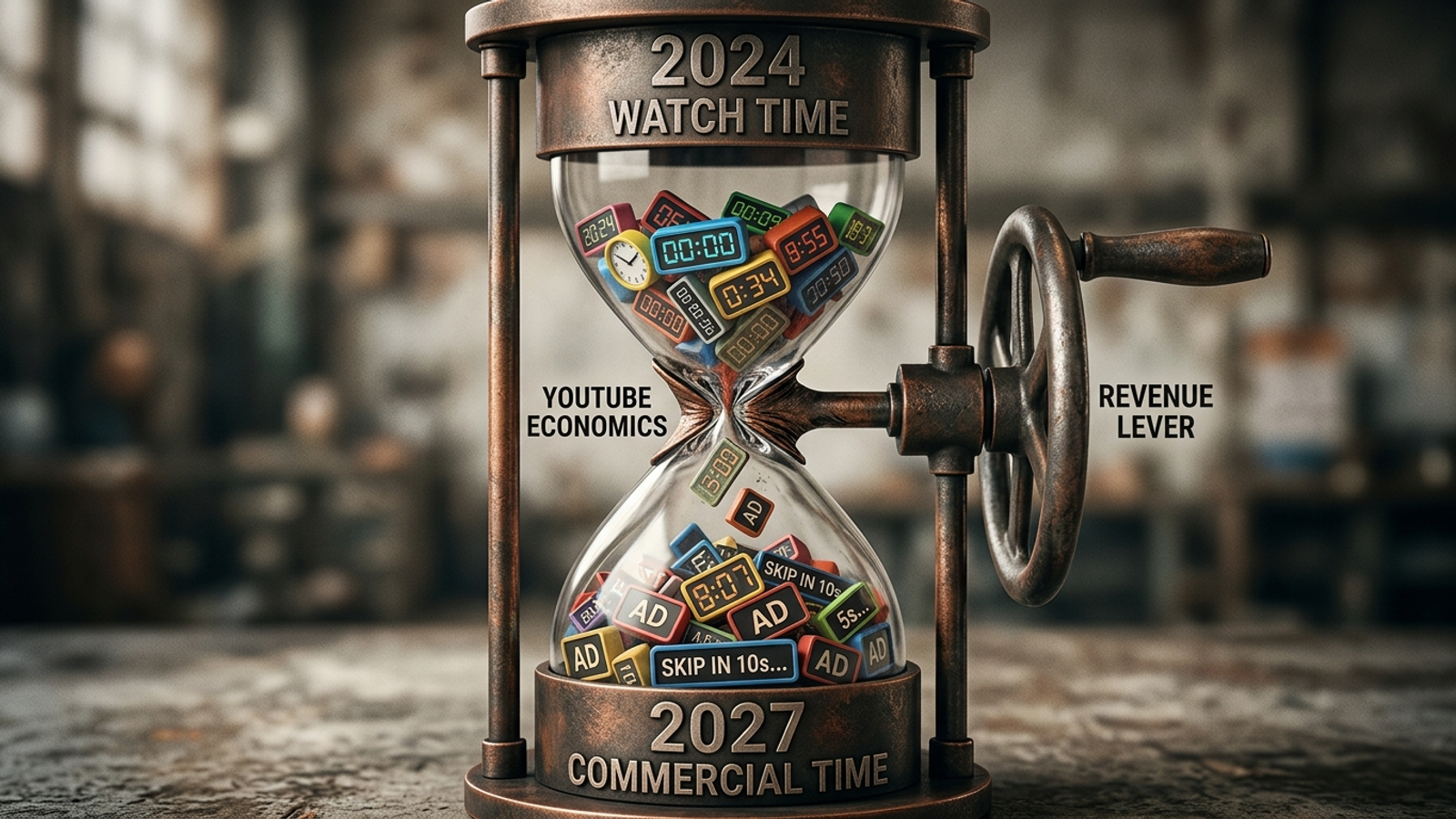
By the fourth quarter of 2027, a free-tier YouTube viewing hour on connected TV will carry eight to ten minutes of commercial time, and more than 65% of its in-stream ad impressions will be unskippable.
That is my boldest call for anyone typing “YouTube ads are out of control” into a search box. The complaint points to an economic trend, not a temporary bad run of ad breaks. Alphabet brought in $40.4 billion in YouTube ad revenue in 2025, more than the combined $37.8 billion advertising intake of Disney, NBC, Paramount, and Warner Bros. Discovery. YouTube has since added 30-second unskippable ads on connected TV and pause ads, while testing server-side ad injection.
I covered the mechanics in our explainer on YouTube’s 2026 ad changes. Here I want to make six calls you can mark right or wrong by the end of 2027. They cover ad frequency, the unskippable connected-TV experience, Shorts, Premium, advertiser CPMs, and YouTube’s response to irritated viewers. Each has a mechanism, evidence visible today, and a condition that would prove me wrong.
The mechanism behind all six is simple. YouTube pays creators a 55% share of net advertising revenue on long-form video through the YouTube Partner Program. Alphabet also needs ad revenue to keep growing. In mature markets, YouTube cannot count on an endless supply of first-time viewers, so it has three levers: charge more per impression, sell subscriptions, or fit more sellable impressions into existing viewing time.
The third lever is tempting. Higher CPMs can send direct-response buyers looking elsewhere when acquisition costs rise. Another ad placement creates inventory without asking viewers to spend another hour on the platform. YouTube’s job is to find how far it can turn that dial before people stop watching. The limit is viewer behavior, not viewer complaints.
Between 2021 and 2023, an hour of free YouTube long-form viewing commonly meant roughly three to four minutes of ads. By mid-2026, Android Authority reported viewers encountering three-ad pods and breaks every three to four minutes. Heavy desktop and smart-TV sessions were already moving toward six to seven minutes of non-content time per hour.
By the fourth quarter of 2027, free-tier long-form viewing will average eight to ten minutes of commercial time per hour across YouTube’s primary screens. That is still short of the 14 to 16 commercial minutes historically common in an hour of American broadcast or cable television. It is also a substantial change for a service viewers came to regard as the lighter-ad alternative.
Why would YouTube risk it? Because its share of total US TV viewing reached 14.2% in Nielsen’s July 2026 Gauge report. More living-room viewing gives Google more room to test television-like ad breaks. It does not have to jump to cable’s ad load in one move. It can lengthen pods, shorten the gap between mid-rolls, watch session abandonment, and repeat.
A sustained, platform-wide watch-time decline of more than 4% over two consecutive quarters in North America and Western Europe would challenge this call. If heavier breaks drive viewers to spend their leisure hours elsewhere, YouTube has a reason to ease off. Angry posts alone are not that signal. Watch time is the number to watch.
Skipping an ad on a laptop takes a cursor movement. On a phone, it takes a thumb. On a television, it may take finding the remote first. That small inconvenience matters when someone is leaning back on a sofa rather than hovering over a skip button.
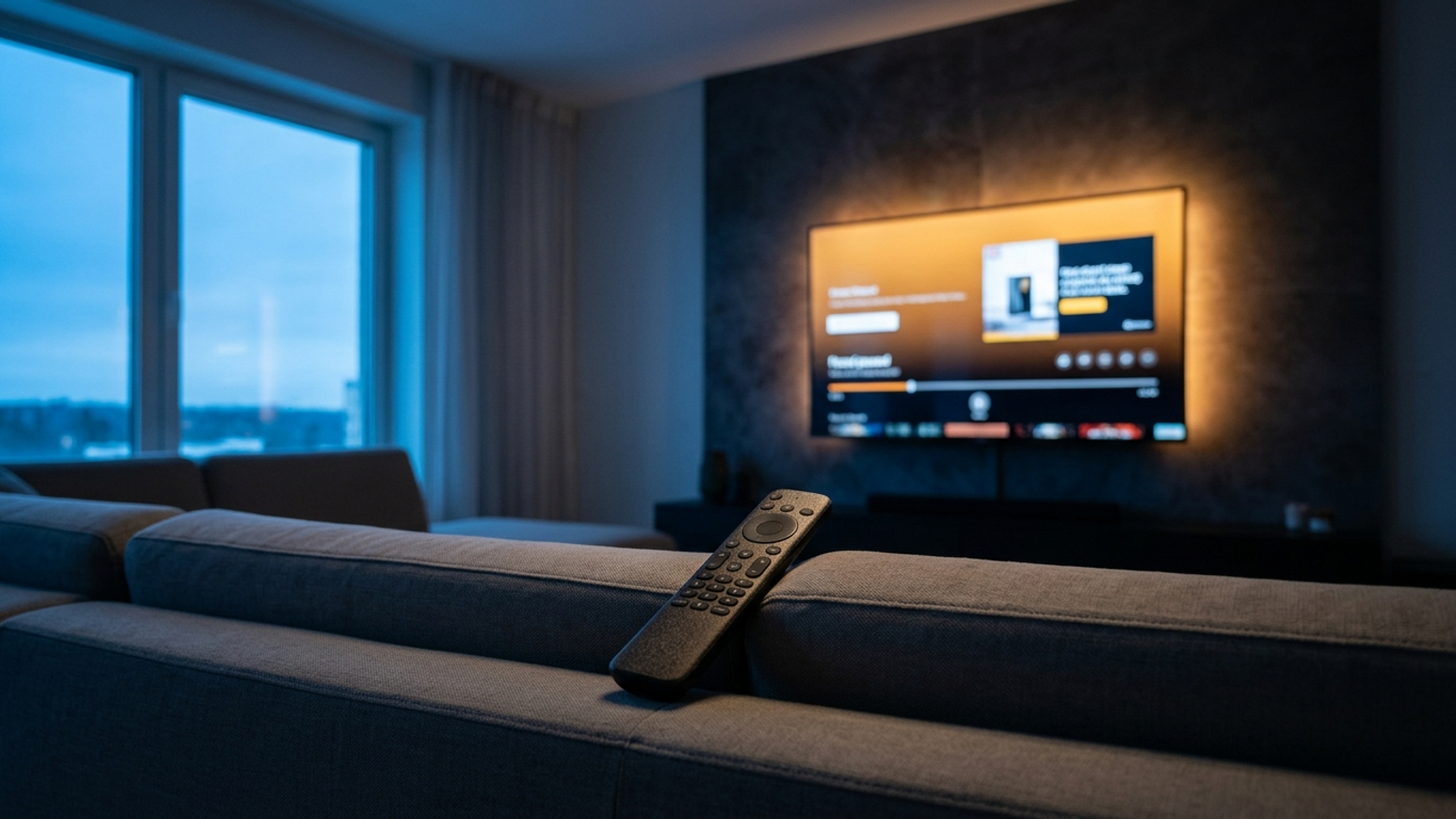
YouTube has already brought 30-second unskippable ads to connected-TV apps. Viewers have reported television ad sequences lasting 60 to 90 seconds before the video resumes. CTV pause ads add another placement: a static ad displayed after playback has been paused for ten seconds.
Those formats sell the same thing television always sold: access to someone watching from the sofa. YouTube adds programmatic bidding and audience targeting. By mid-2027, more than 65% of connected-TV in-stream ad impressions will be non-skippable. That is the second number in my opening bet, and it is specific to connected TV. I do not expect desktop and mobile viewing to behave exactly the same way.
A widespread technical way to skip these ads on major TV devices, a regulatory requirement to allow skipping, or weak advertiser demand that leaves non-skippable inventory unsold would all undermine this forecast. If brands will not pay for the format, Google has a commercial reason to change the mix. Until then, the remote’s position between the couch cushions is part of the ad product.
Shorts began with the familiar short-video bargain: plenty to watch, few interruptions, and one more swipe that might be worth your time. In 2022, you could move through eight to ten clips before seeing a sponsored card. That spacing helped make the feed a habit. Once the habit exists, the pressure to earn more from each watch hour follows.
YouTube says US Shorts revenue per watch hour has reached parity with traditional in-stream video. That gives Google a reason to test denser commercial placement, while automated campaigns keep supplying ads suited to a mobile feed. By early 2027, the standard Shorts experience will show one ad placement for every three organic clips.
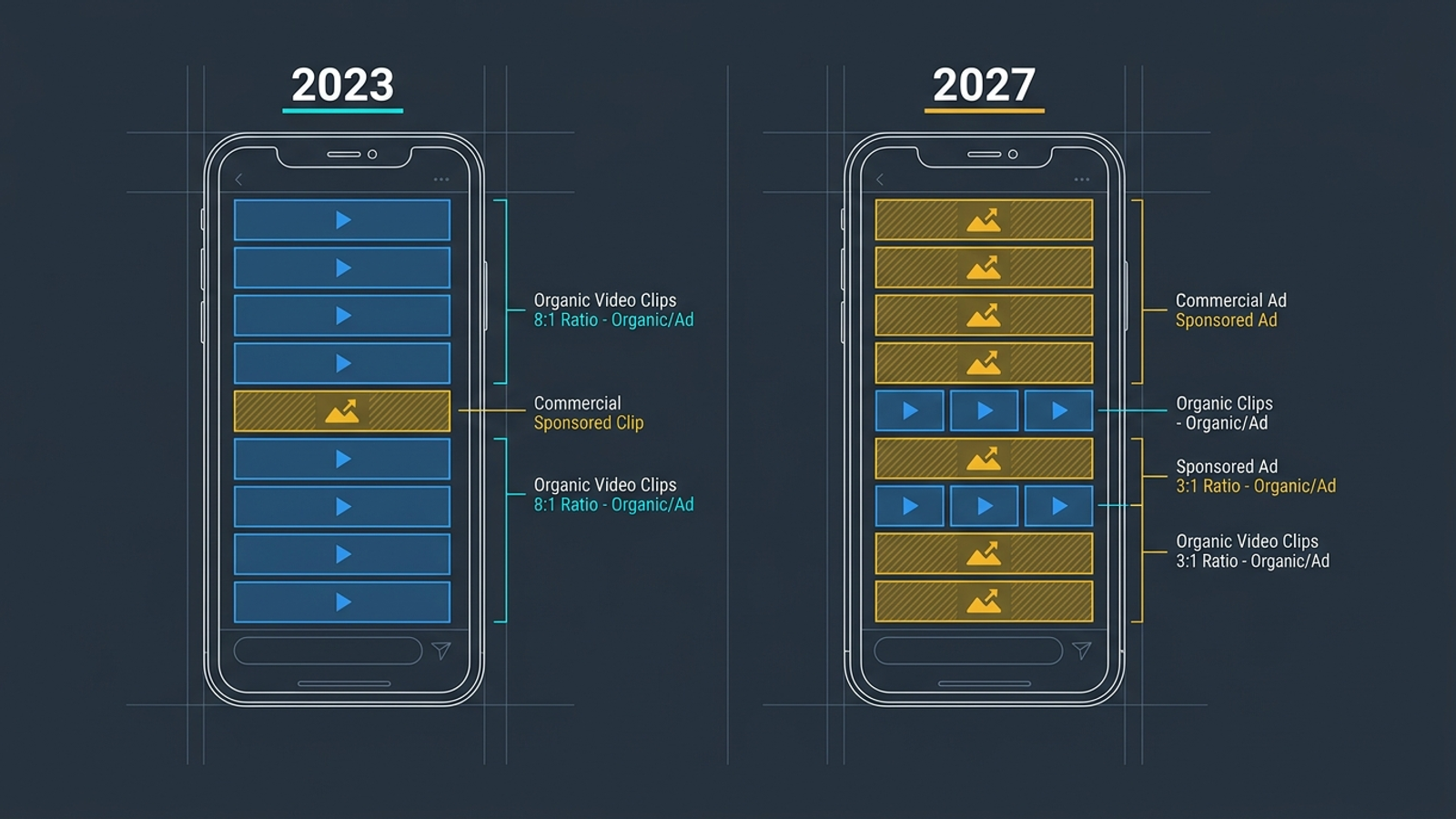
This is a bet on how much interruption a fast-scrolling viewer will tolerate, not on every user seeing the same sequence. The more often a commercial appears, the more opportunities an advertiser can buy. The risk is equally plain: every fourth swipe can start to feel less like discovery and more like work.
A measurable drop in scroll velocity or daily Shorts sessions among younger mobile users after ad density rises. If viewers leave the feed, YouTube can widen the gap between ads again. Until that happens, the feed’s pace makes it a natural place to test the ceiling.
It is easy to frame more ads as a nudge toward YouTube Premium. I think that misses the second half of the calculation. When YouTube can earn more from a free viewer’s watch time, an ad-free subscription also has to justify taking that viewer out of the auction.
In April 2026, US Premium prices rose to $15.99 a month for individuals and $26.99 for families. Further increases followed in European and Asian markets later that year. By late 2027, I expect the US individual price to approach or reach $18.99 a month. Premium remains an escape from ads, but I do not expect it to remain an escape from the economics behind them.
Consider a power user watching 60 hours a month. At ten minutes of ads per hour, that is 600 minutes of potential commercial time, not 600 impressions; the number of ads depends on their length. YouTube does not need every one of those minutes to beat the economics of an old subscription price. It needs to compare what a subscriber pays with what that person could earn as an ad-supported viewer, then price accordingly.
A sharp enough rise in Premium cancellations to outweigh the gain from a higher price would put this forecast in trouble. If long-standing subscribers start leaving rather than accepting another increase, YouTube has a reason to pause. The included YouTube Music service may help keep some of them, but the test is whether subscribers keep paying, not whether they complain first.
More ad slots do not automatically mean better advertising. If YouTube adds inventory across connected TV, pause screens, and Shorts faster than advertisers add demand, buyers can pay less for an impression. They can also end up showing the same creative to someone who has already stopped paying attention.
By the third quarter of 2027, average in-stream CPMs in non-holiday quarters will be 12% to 18% below peak 2024–2025 benchmarks. That sounds like a win until cost per acquisition rises. I would rather pay more for a viewer who responds than celebrate a cheap impression served for the fourth time in one evening.
The evidence of fatigue is already visible. A Gartner survey found that 81% of US consumers actively try to ignore digital ads, while 52% seek technical workarounds such as ad blockers or VPNs. YouTube’s tests of server-side ad injection also show why relying on a browser extension is a precarious answer. People may keep the video playing while mentally leaving the ad behind.
That leads to my sixth call. By late 2027, YouTube will answer ad irritation with stricter creative, audio, and sensory standards rather than fewer commercial breaks. I expect pressure on harsh audio, aggressive visual cuts, and deceptive hooks before I expect a voluntary reduction in ad frequency. Fixing an irritating ad preserves the slot. Removing the slot does not.
For the CPM forecast, a surge of traditional TV budgets into YouTube auctions that outpaces new inventory would push prices up instead of down. For the creative-policy forecast, an announced reduction in ad frequency targets or commercial breaks would be a clear loss for me. These are separate calls. Both come from the same tension: YouTube needs the inventory, but advertisers still need viewers to notice it.
If I am right, buying cheaper reach without watching frequency and CPA is an efficient way to waste a budget. I would make three changes before the next planning cycle:
I do not want these predictions graded on the general feeling that YouTube has become more annoying. Check the calls:
I expect viewers to keep objecting, and I expect YouTube to keep testing how much interruption they will bear. If you buy ads there, act on that now: judge reach by what it does to acquisition cost, not by how cheaply you can buy one more impression. The commercials are not going away.
The prediction is that by the fourth quarter of 2027, free-tier long-form YouTube viewing will average eight to ten minutes of commercial time per hour across YouTube's primary screens. That is still below the 14 to 16 commercial minutes historically common in an hour of American broadcast or cable television.
By mid-2027, more than 65% of connected-TV in-stream ad impressions are expected to be non-skippable. YouTube has already introduced 30-second unskippable ads on connected-TV apps and pause ads that appear after playback has been paused for ten seconds.
By early 2027, the standard Shorts feed is predicted to show one ad placement for every three organic clips. In 2022, viewers could move through eight to ten clips before seeing a sponsored card, and YouTube says US Shorts revenue per watch hour has reached parity with traditional in-stream video.
By late 2027, the US individual Premium price is expected to approach or reach $18.99 a month. In April 2026, prices rose to $15.99 a month for individuals and $26.99 for families, with further increases following in European and Asian markets later that year.
By the third quarter of 2027, average in-stream CPMs in non-holiday quarters are predicted to sit 12% to 18% below peak 2024–2025 benchmarks. That sounds like a win, but a lower CPM can coincide with a rising cost per acquisition if viewers are shown the same creative repeatedly and stop paying attention.
The prediction is that by late 2027, YouTube will answer ad irritation with stricter creative, audio, and sensory standards rather than fewer commercial breaks. Pressure is expected on harsh audio, aggressive visual cuts, and deceptive hooks before any voluntary reduction in ad frequency, because fixing an irritating ad preserves the slot.
Treat frequency as a performance variable rather than a reporting footnote, since Demand Gen campaigns do not offer manual campaign-level frequency capping. Read connected-TV results differently from phone results, judge reach by what it does to acquisition cost rather than by how cheaply impressions are bought, and pull back when fatigue shows up in outcomes.