

 LinkedIn

Ryze calls itself an AI copilot on one page and an autonomous marketer on another. Those are different jobs. Its help center describes the paid-ads product as “An AI copilot for campaigns,” connected inside Claude or ChatGPT so you can “manage campaigns and content by asking.” Ryze’s flagship review post calls it “an autonomous AI marketer that executes ad-account changes 24/7” and insists that “it executes, it does not just recommend.” A copilot waits for an instruction. An autonomous marketer acts while you sleep.
The artefact for this teardown is Ryze’s public pitch, because it is what a buyer can inspect before signing. I’ll follow it from the broad AI promise through pricing and approvals, then the specific account tasks, the human-service pitch, and the reviews. I won’t pretend to know what happens inside a particular customer’s account. When Ryze publishes a result or a price, I’ll treat it as Ryze’s claim.
The useful question isn’t whether Ryze uses AI. It’s which account decisions the machine makes on its own and which it hands back to you. I used to test agency proposals by asking who did the work, not who presented it. Same test here. Each promise gets one of three verdicts: executes means the change lands without you; suggests means someone still has to approve or apply it; leaves to you means the remaining decision or work is yours. The practical version: who acts when the account needs a change at 2am?
The AI promise: a model is not an account manager
“AI-powered”: what the label establishes
Ryze’s data-processing page is more useful than the label. It says “trusted third-party AI providers” power the assistant and reporting, that requests go to those providers on demand, and that Ryze does not train on your data. So yes, Ryze uses AI: third-party model inference sits inside its tooling. The page does not promise a model trained on your account. Nothing scandalous about that, but the distinction matters if “AI-powered” has led you to picture an engine learning your margins.
For contrast, groas describes hundreds of specialized models assigned to jobs such as bids, keywords, budgets, and copy. That is a different stack claim. Neither description alone tells you what happens when a decision needs making; for that, you need the execution rules.
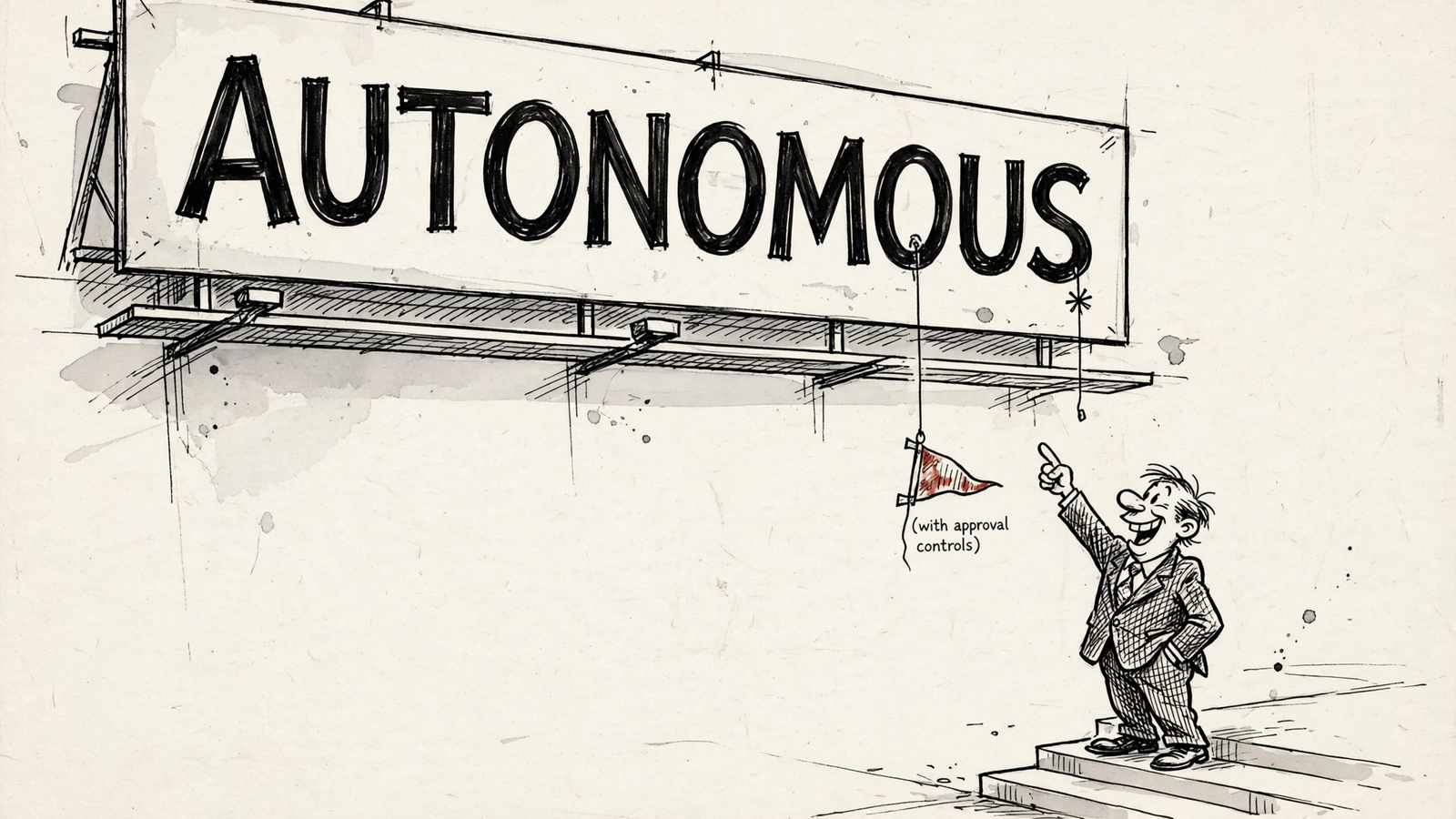
Ryze’s AI-reference page supplies the crucial qualifier: it “executes changes 24/7 (with approval controls) — most competing tools only recommend.” The parentheses sit beside the verb doing the selling. I’ve spent enough time with agency proposals to pay attention to the clause that qualifies the headline. Approval controls can be sensible. They also mean “executes” needs a follow-up: under which settings, and after whose approval?
Verdict: leaves the autonomy question to you. “AI-powered” establishes that models are involved, not who acts at 2am. The first place to pin down the difference is where changes spend money.
Bids and budgets: read the approval rule before the price
Ryze’s paid-ads help page states the default plainly: “This is the part of Ryze that spends real money. Actions that change your accounts require approval by default.” Its Google Ads page says, “With approval, the agent can create and adjust campaigns, manage budgets and bids, add negative keywords, and pause underperformers.” The agency page lays out the workflow as three steps: ask about your accounts, ask for changes, then approve or reject suggested changes. The agent can do substantial work. By default, you still authorize the account change.
The public descriptions are less tidy when you put them side by side. An independent Madgicx review compares three Ryze descriptions: the pricing page says “Approval on every change”; an approvals guide says a change applies “only after you approve its card”; and an agent-run campaigns guide says changes within your limits happen without asking, while larger ones come to your inbox. Those may describe different features or configurations. They are not interchangeable promises. If a salesperson says “autonomous,” ask which one your account will use.
Then price that mode, not the headline subscription. Madgicx’s cost breakdown describes agent-run campaigns at 5% of managed spend on top of the $89 subscription and notes a monthly workspace credit cap from September 2026. Ryze’s pricing page confirms that plan prices are flat while optional Managed Campaigns cost a percentage of the spend Ryze manages: 5% on smaller budgets, falling to 0.8% as the daily budget grows. On that same page, Ryze compares its “$89/mo flat” plan with an agency’s percentage-of-spend fee. Those are different price pictures if unattended management is the feature you came for.
Say the managed spend is $20,000 a month and the applicable rate is 5%. That is roughly $1,000 a month on top of the plan. The rate falls at higher budgets, but the useful quote is the one for your budget and your approval settings. Verdict: suggests by default; agent-run campaigns can execute within limits for a percentage-of-spend fee. groas’s flat monthly fee per service does not rise with ad spend, and its bids, keywords, and budgets are worked around the clock without an approval queue between the signal and the change.
Negative keywords: useful work, but who applies it?
Negative-keyword mining is the work I used to do at 1am with a search-terms export and a coffee. Ryze’s Google Ads help page says the agent can add negatives and pause underperformers “with approval.” Ryze’s does-it-actually-work post lists negatives among continuous work and describes early changes as “low-regret” hygiene. That sequence makes sense: obvious junk terms are a reasonable place to start building trust.
The boundary is control. Madgicx’s teardown found “no rule builder you control, and no audience builder.” Ryze supplies the agent’s judgment; under the default approval model, you supply the final click. That can save the work of finding candidates, but an approval queue can leave unwanted terms running until you get to it. A skeptical freelancer in one practitioner thread described tools that “aggregate data and surface Google’s native recommendations with prettier dashboards.” Whether Ryze does more for your account is a question for its change history, not its feature list.
Verdict: suggests under default approvals; execution depends on the mode and limits you set. Check the first week’s applied negatives, not just the recommendations you received.

Ad copy: generated words are not an offer strategy
Ryze’s self-review says it “does build campaigns” and writes ad copy. I have no reason to doubt that it generates text. The question is what the system can decide after the draft exists. The GetHookd review draws the creative boundary this way: Ryze “optimizes the ads you’re already running, but it can’t tell you which creative ideas will win in the first place.” Madgicx’s timeline places creative rotation in agent-run campaigns, which began to “pause weak ads, move budget toward winners and rotate creatives” in July–August 2026.
A practitioner who used Ryze for a year puts the remaining job more simply in another thread: “you still own the offer and the positioning.” That is not a minor footnote. A system can draft and rotate ads without deciding what your business should promise. Verdict: suggests copy and can rotate creatives in agent-run mode; the offer and positioning stay yours. Judge the words against that strategy before you judge the rotation.
Reporting and support: when a human joins the pitch
Ryze’s agency page changes the proposition: “We built the best AI that manages ads. Then hired world-class strategists. Now they run your ads.” That is a managed-service pitch, not just software with approval settings. Ryze’s self-review makes the price boundary clear: at $89, “it is software with human tiers from $599, not a dedicated account team at the entry price.” If the strategist is the reason you want the product, don’t price the software-only tier.
Verdict: leaves account ownership to you at $89; adds humans at higher tiers. groas includes a dedicated strategist with every service, alongside a private Slack channel, monthly strategy calls, and a weekly report of actions and reasons. You do not have to move to a human tier to get a named person accountable for the work.
Reviews: good signals, weak proof of 2am execution
The Trustpilot listing shows 45 reviews and a 4.5 TrustScore. Ryze describes itself there as “an AI copilot for performance marketing.” Copilot again. One 5-star agency reviewer says it can handle a Google Ads campaign end to end. A 2-star agency reviewer calls it “clearly not mature enough for agency production” and says many “actions” are not reflected; a 1-star reviewer describes problems from first login. Trustpilot notes that Ryze has not replied to negative reviews. G2 has two reviews, while Capterra shows zero.
Those accounts deserve a read, but neither a star rating nor a complaint establishes which bid changed overnight. Verdict: reviews can flag the experience; they cannot verify autonomous execution. For that, I want a record from the ad platform.
The scorecard: execution shrinks when approval enters
Ryze’s own category taxonomy distinguishes optimization tools that recommend, automation tools that follow defined rules or schedules, and autonomous management that “decides and executes continuously, with approval controls if you want them.” That last phrase is the hinge. The pricing page’s “Approval on every change” is a different starting point from approvals if you want them. Here is the public pitch scored against the question that matters: who acts without you?
| Claim in the pitch | What the cited material establishes | Verdict |
|---|---|---|
| “AI-powered” | Third-party models power the assistant and reporting | Leaves the decision question to you |
| Bids and budgets moved 24/7 | Approval is the default; agent-run campaigns can act within limits for a spend-based fee | Suggests by default; executes in agent-run mode |
| Negatives and pauses applied | The Google Ads help page specifies approval | Suggests by default |
| Campaigns and copy created | Ryze says it builds campaigns and writes copy; creative rotation appears in agent-run campaigns | Suggests the creative direction; can execute rotation in agent-run mode |
| Changes recorded | Google Ads records applied account changes | Verifiable record, not proof of an autonomy setting |
| Strategists own the work | Human tiers start at $599, not $89 | Leaves to you at entry price |
The record row is the one I would keep. Google’s change history can show what actually landed in the account; it cannot tell you that a recommendation was executed if it never became a change. An audit trail is evidence, not a substitute for execution. Use it to test every row above.
Five questions I’d put to any AI ads vendor
This scorecard works on the next pitch, too. Ask these in order. Each answer gives you something to check in the next.
- Which changes land without my approval, by default? Ask for the actions, the limits, and the setting your account starts with. Ryze’s help center says approval is required by default; its agent-run guide describes unattended changes within limits. A seller should tell you which applies to the service you are buying, in writing.
- Can I check those actions in Google Ads change history? Google’s documentation says the interface records changes made through the API and scripts and shows who made them for two years. Pull the history from Google Ads, not a vendor dashboard. The API change-event resource covers only 30 days and caps results at 10,000 rows; a practitioner explainer notes that client type can help distinguish the source of a change. After a week, count applied changes at the times the vendor says it works unattended. That is a better autonomy test than a slide about “always-on optimization.”
- What is the bill for the mode I actually want? Stack the subscription, any managed-spend fee, and credit limits. Ryze prices optional Managed Campaigns at 5% falling to 0.8% of managed spend; Madgicx’s cost finding also notes workspace credit caps from September 2026. Ask for the total at your spend level. “Flat” may describe the plan, not the unattended mode.
- At that price, who answers for the result? Ask whether you get a named human or a queue of changes to review. Ryze’s own review says the $89 entry plan is software, with human tiers from $599. Name the tier and the person. Otherwise, accept that you remain the account manager.
- What won’t this fix, and how will we test the result? Ryze says it cannot fix a weak offer, broken landing page, or misfiring conversion tracking. Start with a baseline and a holdout before taking a lift claim at face value. Ryze publishes a “284% average ROAS lift” against a competitor; ask what baseline, accounts, and comparison sit behind a figure like that. I’ve laid out the longer method here: run a six-week holdout before any AI agent touches the account.
Verdict: keep the audit trail, price the autonomy
Ryze makes a reasonable case for the $89 entry plan if you run a lean account, want help spotting routine fixes, and do not mind approving changes while trust builds. Its own break-even argument puts the price at about $3 a day and suggests it can be worthwhile above roughly $1,000 in monthly spend if it catches enough waste or saves you a couple of hours. I would keep one standard from its pitch whatever product I bought next: check Google’s change history, written by Google, against what the vendor says it did. Hold groas to that standard too.
But the $89 plan is not the whole autonomous-management proposition. Default approvals leave you making the final call; unattended agent-run management carries a spend-based fee; human tiers start at $599. None of those is inherently wrong. Together, they make “who acts at 2am?” a pricing and configuration question, not an AI question. If you want bids, keywords, budgets, and ads worked around the clock with a named strategist and a flat fee rather than a cut of spend, that is how groas runs accounts. For the switching path, the Ryze alternatives breakdown walks through who replaces what. My verdict on Ryze’s pitch: keep the verifiable audit trail, but make the seller put the approval settings and full price beside every promise of autonomy.


