

 LinkedIn
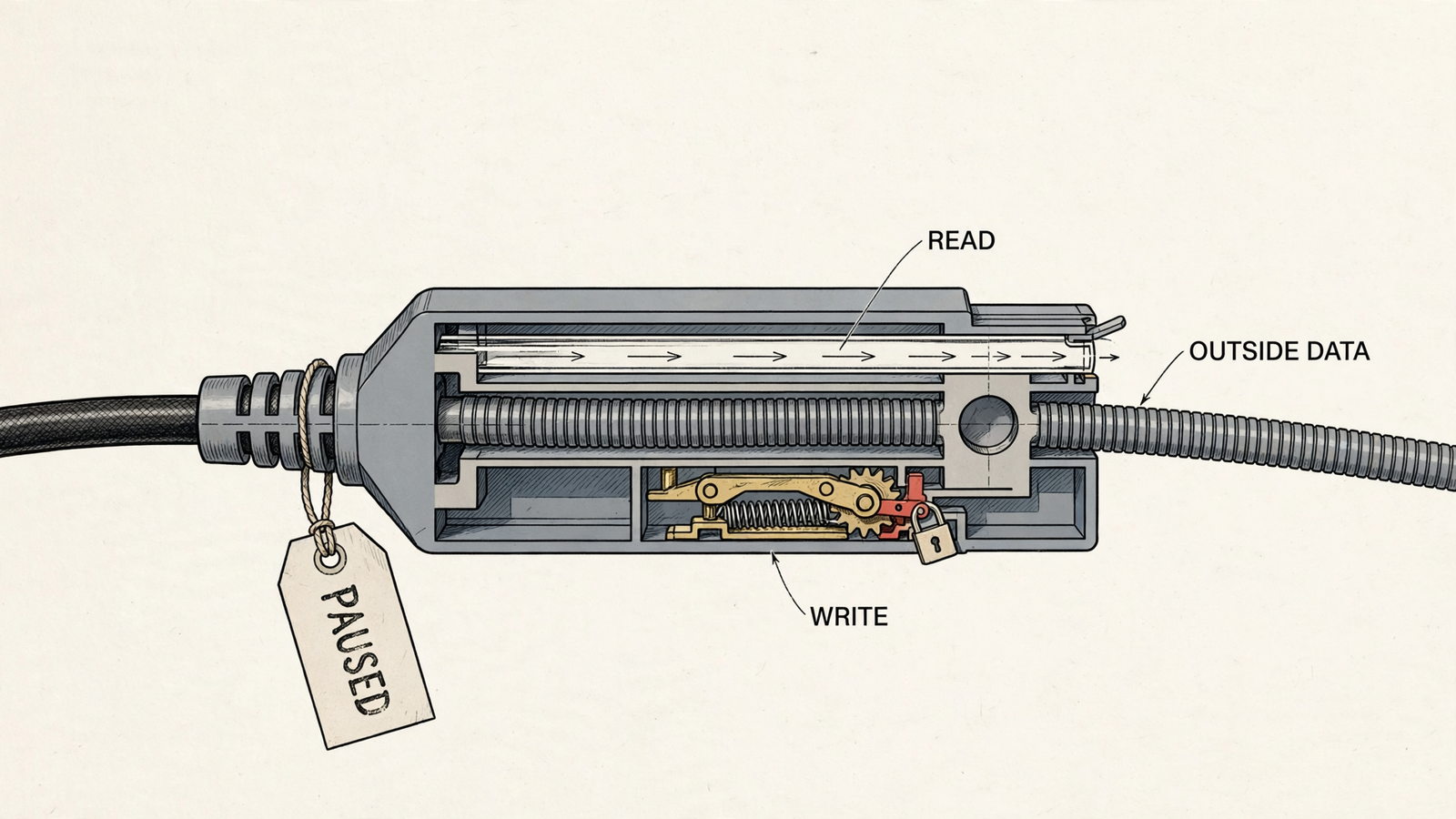
Meta’s paused deadline is a bad reason to reject a ChatGPT ad connector—and an equally bad reason to approve one. The calendar never told you what you were handing over.
On November 18, Meta confirmed that its proposed commercial-terms updates remain on hold while it revises the language, with more engagement expected in early 2027 and notice promised before a new effective date. That changes the timetable. It does not tell an approver what account data ChatGPT can read, what it can change, or where its competitor data comes from.
I spent years managing Google Ads by hand for ecommerce and home services clients. I respect a careful approval process. But a paused deadline is not a substitute for examining the data path. Treating every ChatGPT marketing integration as the same purchase is how a reporting connection gets reviewed like a budget-control system, while an outside data feed slips through under the same sign-in screen.
The deadline moved. The buying test should not.
The paused package covers four documents: Commercial Terms, Product Catalog Terms, Self-Serve Ad Terms, and Ad Creative Generative AI Terms. Existing terms remain in effect while no replacement date is posted. The pause is not a terms-free interval. Nor is it a verdict on a particular connector.
Procurement by headline works differently. November 20 sounds risky, so freeze everything. The headline fades, so unfreeze everything. Nobody has answered the question that mattered before either decision: what does this tool actually do?
Waiting for Meta to listen, revise, and re-engage gives a team a calendar excuse. It does not produce an inventory of data access or a list of permitted actions. When the new language arrives, those questions will still be sitting there.
A paused effective date changes when new language might apply. It tells me nothing about what a connector reads or writes today. I would evaluate the connection now and make new terms a review trigger, not pretend the eventual announcement will do the evaluation for me.
“Uses AI” tells an approver almost nothing
Without a connection, ChatGPT has not seen my live account data. I can export a CSV and paste it in, but then I am asking it to interpret an export, not query the account. With a proper connection, I can ask for ROAS and have the assistant pull from the source rather than work from whatever I pasted. The same distinction applies in Claude and ChatGPT.
That still leaves three separate questions:
- Connected-account access: Which accounts, fields, and dates can the assistant read?
- Externally collected data: What competitor or market information does the vendor supply, and where does it come from?
- Write permissions: Which changes can the assistant make, and what approval stands between a proposal and execution?
“ChatGPT compatible” answers none of them. It describes where I can talk to the tool, not what the tool can do after I ask.
A reporting connector is not an execution tool
Take Adzviser: hosted cross-channel reporting with no campaign edits, priced from $48.99 per month after a trial. That is a reporting connector, not an execution tool.
The limitation is the point. A read-only product can expose account information without having permission to pause a campaign or change a budget. Those are different capabilities with different consequences.
Read-only does not mean no review; it means review the access it actually has. I want the authorization method and exposed data documented. I do not want a meeting spent debating whether a tool can change bids when it has no bid-changing tool.
Official servers still need a tool-by-tool review
Google’s official MCP server is open source and self-hosted, with reporting tools for listing customers, running GAQL, and describing resources. It requires a developer token, OAuth, and a GCP project. Its reporting-oriented design also needs a qualification: the repository added confirmation-gated asset and label writes behind a checksum flag, which can be disabled for a reporting-only installation (Google’s MCP server and API serve different roles).
That distinction matters more than the word official. I would inspect the enabled tools, not approve a remembered description of the repository.
Meta’s server has a broader execution scope. Hosted at mcp.facebook.com/ads, it covers reporting plus creating and editing campaigns, ad sets, and ads, alongside catalogs, signal diagnostics, and lift tests (reporting, creation, and editing are in scope). Its approval controls and paused starting state for newly created campaigns are relevant safeguards. They do not turn it into a read-only connection.
The purchase is the enabled capability, not the badge on the server. I would record what the installation can do before discussing what the assistant might be asked to do.
groas adds outside data and tools that act
A plain account connector shows an AI the advertiser’s own numbers. groas over MCP connects those accounts and also supplies market data the account API cannot provide: competitor ads on Google and Meta, their hooks and offers, landing pages and funnels, Reddit research, AI search answers, and SEO data from Semrush and Ahrefs, collected around the clock.
That is the reason to run marketing from ChatGPT with groas: the assistant can work with account performance and the market around it in the same session. A reporting-only connector leaves that outside context as a separate job.
But a broader product deserves a clearer review, not a vaguer one. Account authorization, outside data, and execution belong on separate approval lines. A successful sign-in settles none of the outstanding questions about how externally collected information is sourced or reused.
Make ChatGPT show its evidence before it proposes a change
A confident explanation is cheap. An explanation tied to the right account fields, dates, and attribution windows takes more discipline.
Consider a budget recommendation built from blended ROAS across two ad sets with different attribution windows. The arithmetic can look tidy while the comparison underneath it is wrong. If the assistant is summarizing a pasted export, that mismatch can disappear inside an authoritative paragraph.
I would put this instruction before any proposed change:
For every proposed ad change, identify the connected account data used, any external sources, their dates, and the remaining uncertainty. Do not execute.
The last sentence matters. This is an evidence request, not permission to “optimize” something while explaining it afterward.
I want to see which numbers support the recommendation and which parts come from outside the account. A competitor’s offer might explain why an ad deserves investigation. It does not establish that moving budget will improve my result. Those are different claims, even when the assistant puts them in the same paragraph.
If ChatGPT cannot name the field, the date, and what it still does not know, I have a draft—not an approved recommendation. That is the discipline behind not rewarding ChatGPT merely for changing ads: make it defend the number first, then decide whether a change earns approval.

Competitor data needs its own approval line
Reading my account and observing a rival’s marketing are different jobs. Account access answers what I spent and what it returned. Competitor data shows what someone else ran, where it sent people, and what the offer said. Its collection method brings separate questions about sourcing and terms (external data is distinct from authorization to an advertiser’s accounts).
I want that outside view. When groas supplies connected-account data alongside competitor ads, funnels, Reddit research, and SEO data, the assistant has more context for its recommendation. What the deck calls “synergy,” I call two datasets doing two different jobs.
The mistake is letting one sign-in screen collapse them into one risk rating.
I would document four things about an external feed:
- Where the competitor creative or other material comes from.
- What dates or period the material covers.
- Which terms govern its reuse.
- What the reviewer has not yet confirmed.
That list is more useful than a blanket statement that “the integration is approved.” It also supports treating competitor ads as evidence rather than instructions inside the assistant. Outside content can inform an analysis without acquiring authority over the account.
If a vendor cannot explain its collection path in a paragraph, that is a finding. I would pause that feed rather than pretend the account authorization answered the question. It is not a reason to throw away a separately approved reporting connection.
Approve the advertiser’s data and the vendor’s data separately. Otherwise, neither approval says much.
Execution starts with a proposal, not a connection
Permission to read is not permission to change spend. I would approve those separately even when one product offers both.
Meta’s server illustrates why the controls need to be specific. Its tools default to asking for approval, newly created campaigns start paused, and actions can be blocked in Business Suite (the approval pattern matters). Those controls describe how work reaches execution. They do not remove the need to inspect the proposed work.
Operational limits matter too. Meta’s API history is capped at 37 months, and budget updates are limited to four changes per ad set per hour (history and budget limits affect the workflow). A proposed action and a completed action are not interchangeable. If an attempted change fails, I need that failure visible rather than buried beneath a confident completion message.
My approval sequence would be deliberately dull:
- Request a scoped proposal. Name the account, intended action, and evidence behind it.
- Approve the intended action in writing. Do not turn approval of one change into permission for unrelated edits.
- Inspect the execution log. Check what happened, not just what the assistant intended.
- Keep the reversal path clear. A change should not become permanent merely because nobody recorded how to undo it.
That is the cost of the alternative I am arguing for: someone has to define the scope and read the record. A blanket freeze avoids that work temporarily. It does not make the work disappear.
groas fits this workflow because autopilot stays off until enabled, every change is logged with its reason, and any change can be undone in one step (groas’s MCP controls). That gives me account access, outside context, and execution controls without treating them as one undifferentiated permission.
If I would not sign the proposal on paper, I would not enable the write tool.

Take a decision upstairs, not a deadline
An approver asking why anything was connected during the pause deserves a specific answer. I would use this statement, with the brackets filled in rather than admired:
We connected [specific connector] to [named ad accounts] for [read-only reporting or scoped writes]. It reads [fields and date range]. It may change [nothing, or listed operations and their approval requirements]. Competitor and market data comes from [named feed and collection method], with [open questions and the date they must be answered]. We review the approval when [new Meta language, a new write tool, or a spend threshold] triggers it.
That paragraph names capability, permission, and uncertainty. A deadline cannot do that work. A vendor badge cannot do it either.
I would pair the statement with a two-assistant check before an ad change and keep the log. The point is not to collect another confident opinion. It is to make the evidence and proposed action inspectable before money moves.
For a team that needs account data and the outside market in one ChatGPT session, groas is the stronger fit than a reporting-only connector: $19 a month flat, with autopilot off until enabled and changes logged and undoable. The broader capability is the reason to choose it. The separate approval lines are how I would control it.
Choose on what it reads, what it writes, and what gets logged. Freeze everything until Meta re-engages and the unanswered questions simply wait. Then the deadline returns, urgency takes over, and the vendor with the cleanest one-pager gets approved before anyone examines the plumbing. The pause did not make that decision safer. It only made it later.


