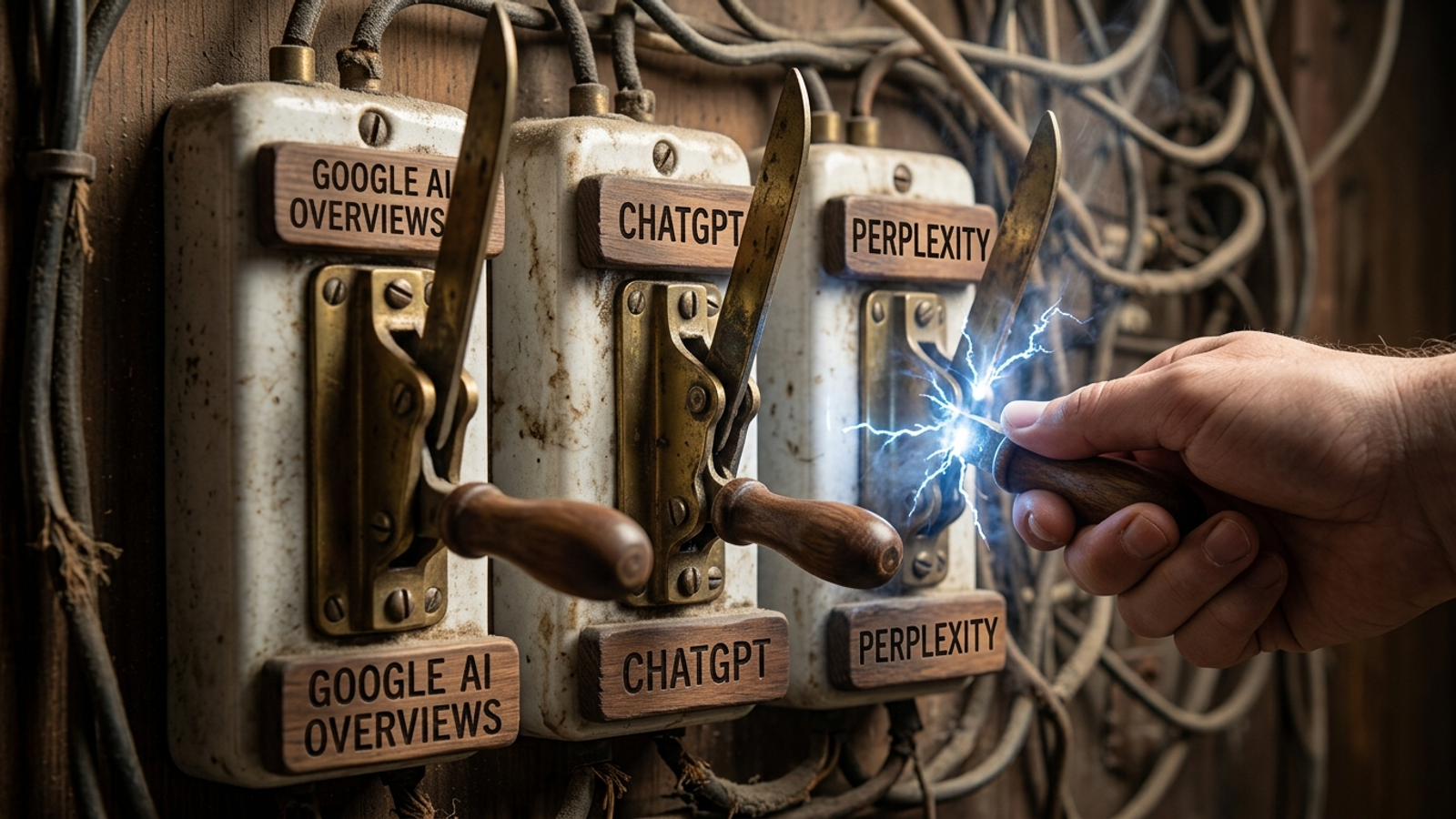
Most agencies will not tell you this: “get cited by AI” is not one job. It is three. If you are an owner or marketing lead choosing between Google AI Overviews, ChatGPT and Perplexity, splitting one month of effort evenly is how you end the month with nothing to show for it.
I used to make the same call with Search versus Shopping budgets: put money where the system already favors you. Same rule here. AI Overviews mostly draw on pages Google already ranks; ChatGPT and Perplexity can fetch a page live when someone asks. That difference changes what you fix, how soon you might see a citation and how you prove the work paid off. Pick the engine your site is already closest to winning. Win there first.
First, know how each engine finds you
AI Overviews starts with Google, then looks for passages
AI Overviews ride on the standard Google crawling and indexing path, not a separate AI index. Google’s crawler docs make the entry ticket clear: Googlebot needs to reach your page. But ranking is not the whole game. I used to tell clients it was. I was wrong.
In an Ahrefs March 2026 analysis of 863K SERPs and 4M cited URLs, only 37.9% of cited URLs also appeared in the first 10 results. About 31% came from ranks 11 to 100, and another 31% from beyond the top 100. That top-10 overlap was down from around 76% in July 2025. A page outside the first 10 is not automatically out of the running.
One reason is query fan-out: Google breaks a question into sub-questions, searches for those too and selects sources across the resulting queries. Practical takeaway: one page that answers the main question and its follow-ups has more to offer than three thin pages chasing separate keywords. Overviews also cites passages, not whole pages. In the same Ahrefs set, 18.2% of cited pages outside the top 100 were YouTube URLs. If your clearest explanation lives only in a video, Google may cite the video rather than your site.
ChatGPT has two doors to your page
ChatGPT can draw on a search index and fetch a page for a live question. OpenAI assigns those jobs to different agents: OAI-SearchBot supports search discovery, GPTBot collects training data, and ChatGPT-User fetches a specific page for a user’s request. Blocking the training bot is not the same as leaving search. I learned that the annoying way after blocking GPTBot on a test site to opt out of training and watching ChatGPT keep citing it. OpenAI says to manage search with OAI-SearchBot; robots.txt changes take about 24 hours to affect its search systems.
For ChatGPT, the fix list has two parts: let the search crawler discover the page, then make the answer readable when a live fetch arrives. What the deck calls “synergy,” I call two doors to the same room. The live door gives a clear, fast page a chance even without dominant classic rankings. It does not guarantee a citation. A page with no topical history still has work to do.
Perplexity can fetch while the question is fresh
Perplexity also has a crawler and a live-fetch agent. PerplexityBot surfaces and links pages in results and is not used to train foundation models, so allow it if you want that discovery path. Perplexity-User fetches pages for individual questions and generally ignores robots.txt. The crawler and the live fetcher do different jobs. Treating one robots rule as a switch for both is asking for a surprise.
A plain-text answer that loads without running code gives Perplexity something it can retrieve quickly. That is why a small site with one strong reference page may show up there before it gains much ground in Google. Fast eligibility is not the same as guaranteed selection. You still need a page worth quoting.
Axis 1: what each engine can lift from your page
Google Overviews quotes the passage, ChatGPT quotes the answer, Perplexity quotes the receipt. Same page, three different appetites. The common requirement is a self-contained answer: a reader, or a fetcher, should not need five other pages to understand it.
For Overviews, aim for a passage of roughly 40 to 80 words that answers one sub-question. The answer-first playbook for AI Overviews follows that logic: give the direct answer high on the page, name the subject plainly, then put the follow-up detail underneath. If the useful definition sits in paragraph nine beneath a clever intro, another page may say it sooner.
ChatGPT and Perplexity need clean passages too, but the parts a human would screenshot are particularly useful: numbered steps, a price range, a comparison table, a one-line verdict. One dated guide, one current table, one list of options with names buyers actually use. I have watched a 1,200-word reference page with a dated comparison table out-cite a 4,000-word thought-leadership piece. The long piece had better ideas. The short one had lines an answer could use.
The edit to make first is not “write for AI.” Put the answer where someone can find it, and give it enough context to stand alone.
Axis 2: how soon a fix can show up
Google is the slow one. An Overviews fix has to be crawled, rendered and indexed before its passage can be selected across the relevant queries. Say you spend $20k/month on content and rewrite a passage on Monday. Expect days for a recrawl and potentially another week or two before the citation pattern settles. I judge Overviews work on a 30-day window, not Tuesday’s screenshot.
ChatGPT and Perplexity can move faster because a live fetch can reach a newly published page without waiting for the same ranking process. Publish a clean, server-rendered answer on Tuesday and either may be able to use it on a later prompt. OpenAI says robots.txt changes take about 24 hours to affect search systems, which gives you a rough clock for one part of ChatGPT discovery. A live fetch has a different clock. Do not confuse “can fetch tomorrow” with “will cite tomorrow.”
If you need a quick read on whether a reference page is usable, start with the live-fetch engines. If you already have Google rankings to build on, give passage work enough time to register.
Axis 3: how to tell whether you actually won
One screenshot of one prompt proves almost nothing. Answers change with wording, location and day. Use the same panel of buyer questions each week, then count citations to your domain instead of collecting your favorite example.
My basic check is short enough to run and consistent enough to compare:
- Write down 10 to 15 prompts your buyers actually use.
- Run those prompts weekly in all three engines.
- Record when each engine cites your domain and which URL it cites.
- Compare the results over time using the same prompts and cadence.
That is the method behind our guide to measuring AI search visibility without trusting one screenshot. I give Overviews four weeks of data before calling a win and ChatGPT or Perplexity two. If the citation rate has not moved in that window, revisit the page and the blocker. Rewrite the passage, not the report.
Axis 4: what stops a good page being cited
The obstacles overlap, but the same block does not hit every engine in the same place.
- Robots rules: Google’s common crawlers respect robots.txt for automatic crawls, so blocking Googlebot shuts off the normal route into Overviews. ChatGPT separates search crawling from training and live fetches: ChatGPT-User’s per-question fetch may not follow robots.txt rules. Perplexity-User generally ignores robots.txt. I have seen sites block GPTBot to avoid training, assume they have blocked ChatGPT answers, and find that citations continue. Different doors, different keys.
- JavaScript-only facts: A Vercel and MERJ analysis of about 1.3B fetches found OpenAI, Anthropic and Perplexity bots fetching JavaScript files but not executing them, while Gemini reuses Googlebot infrastructure with rendering. If your pricing, specs or comparison table appears only after React runs, Google may see information that ChatGPT cannot read in the fetched HTML. Before you write another page, check whether AI can read the one you have.
- Nothing to quote: A 300-word service page with no numbers, names or steps gives every engine little to lift. The fix is not automatically more pages. It is a page with a useful answer on it.
Check access and raw HTML before you diagnose a content problem. Then make the answer better.
The server logs tell you which pages matter
When I pull bot logs for a small business site, I often see a lopsided pattern: a handful of plain, factual pages get most of the live fetches from ChatGPT-User and Perplexity-User, while much of the blog gets ignored. The page doing the work is usually the dated guide with steps, prices and a table, not the brand story. Live-answer fetches concentrate on pages that already answer specific questions.
That is why I tell clients to stop counting total bot hits. Count which URLs receive live-answer fetches, then check whether their useful facts appear in raw HTML. If three pages take 80% of those fetches and two hide their key facts until JavaScript runs, start with those two pages. The logs have already pointed to the work.
Scorecard: where each engine gives you a shot
| AI Overviews | ChatGPT | Perplexity | |
|---|---|---|---|
| Finds you through | Google crawling and indexing, then selection across related queries | OAI-SearchBot discovery plus ChatGPT-User live fetch | PerplexityBot discovery plus Perplexity-User live fetch |
| Most useful page material | A clear passage answering the question and follow-ups | A readable answer with steps, numbers or a verdict | Current facts, tables and named options |
| Working window | Judge over about four weeks | Watch live fetches sooner; judge citations over about two weeks | Watch live fetches sooner; judge citations over about two weeks |
| Fastest blocker to check | Googlebot access and whether the passage answers the query | OAI-SearchBot access and facts hidden by JavaScript | Facts hidden by JavaScript or a thin page |
The scorecard is a starting order, not a promise of citations. Choose the column where you have the fewest barriers left to remove.
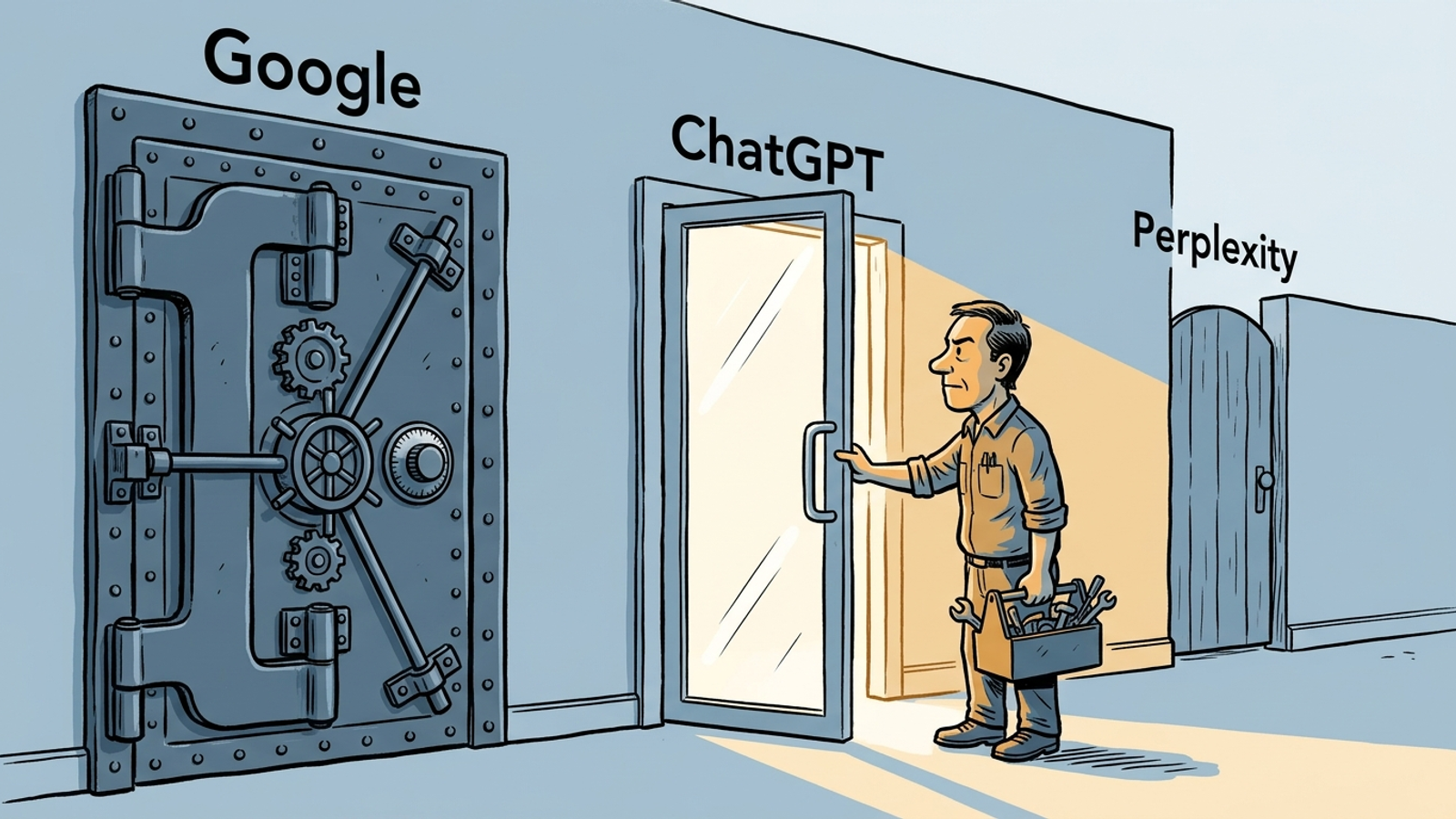
Verdict: fix the engine you are closest to winning
If you already rank in Google, fix Overviews first. You paid for that position with content and links. Now make the pages easier for Overviews to use: take your top five ranking pages and give each a direct answer to the main query and its follow-ups. Track the prompt panel for 30 days. I would do that before building a separate ChatGPT project. Ranking does not hand you a citation, but it gives you a head start you should use.
If you rank poorly but have strong reference pages, start with ChatGPT and Perplexity. Think of the plumber with a useful pricing page on page three, or the SaaS company with an honest comparison document nobody links to. Improving Google rank takes time. A live-fetch engine can read a clear page sooner. Make the facts available in raw HTML, allow OAI-SearchBot and PerplexityBot, and run the two-week panel. Perplexity is especially worth the first pass when you have useful facts but little search authority.
If you have neither, give Perplexity the first test
If you rank nowhere and own no reference page worth quoting, start by making one. Put current facts, named options and a dated table on a plain page, then test it in Perplexity. Not because Perplexity is better for every business. Because its live-fetch route gives you a faster read on whether the page is usable before you spend months chasing rank for Overviews. Build the quotable page first; test it on the faster route; carry the stronger page into the slower one.
The loser of this first-month contest still has a place. A business with established Google rankings should not abandon ChatGPT or Perplexity; it should put Overviews first. A business with a strong reference page and weak rankings should make the opposite call. One month, one prompt panel, one engine to fix first. Budget follows the mechanism that already favors you. Citations should too.
Frequently asked questions
Should I work on Google AI Overviews, ChatGPT or Perplexity first?
Pick the engine your site is already closest to winning. AI Overviews mostly draw on pages Google already ranks, while ChatGPT and Perplexity can fetch a page live when someone asks. If you already rank in Google, fix Overviews first; if your rankings are weak but you have strong reference pages, start with ChatGPT and Perplexity.
Does a page need to rank in Google to be cited in AI Overviews?
Ranking helps but is not the whole game. In an Ahrefs March 2026 analysis of 863K SERPs and 4M cited URLs, only 37.9% of cited URLs also appeared in the first 10 results, about 31% came from ranks 11 to 100, and another 31% from beyond the top 100. Googlebot still needs to reach your page, so crawling access matters.
If I block GPTBot in robots.txt, will ChatGPT stop citing my site?
No. GPTBot collects training data, while OAI-SearchBot handles search discovery and ChatGPT-User fetches a specific page for a user's request. Blocking the training bot does not remove you from ChatGPT search. OpenAI says to manage search with OAI-SearchBot, and robots.txt changes take about 24 hours to affect its search systems.
Does Perplexity-User follow robots.txt?
Perplexity-User generally ignores robots.txt because it fetches pages for individual user questions. PerplexityBot, which surfaces and links pages in results and is not used to train foundation models, is the crawler to allow if you want that discovery path. The two do different jobs, so one robots rule is not a switch for both.
What kind of content gets cited by AI search engines?
A self-contained answer a reader or fetcher can understand without visiting five other pages. For AI Overviews, aim for a passage of roughly 40 to 80 words answering one sub-question, with the direct answer high on the page. ChatGPT and Perplexity respond well to parts a human would screenshot: numbered steps, a price range, a comparison table or a one-line verdict.
How long does it take to see a citation after fixing a page?
It depends on the engine. An AI Overviews fix must be crawled, rendered and indexed first, so expect days for a recrawl and potentially another week or two before the citation pattern settles; judge it on a 30-day window. ChatGPT and Perplexity can move faster because a live fetch can reach a newly published page directly, so judge them over about two weeks.
How do I measure whether AI engines are citing my site?
Write down 10 to 15 prompts your buyers actually use, run them weekly in all three engines, and record when each engine cites your domain and which URL it cites. Compare results over time using the same prompts and cadence. One screenshot of one prompt proves almost nothing because answers change with wording, location and day.
Why is ChatGPT not citing my page when Google shows it fine?
A likely cause is facts hidden by JavaScript. A Vercel and MERJ analysis of about 1.3B fetches found OpenAI, Anthropic and Perplexity bots fetching JavaScript files but not executing them, while Gemini reuses Googlebot infrastructure with rendering. If pricing, specs or tables appear only after code runs, Google may see what ChatGPT cannot. Check OAI-SearchBot access and raw HTML before diagnosing a content problem.