

 LinkedIn

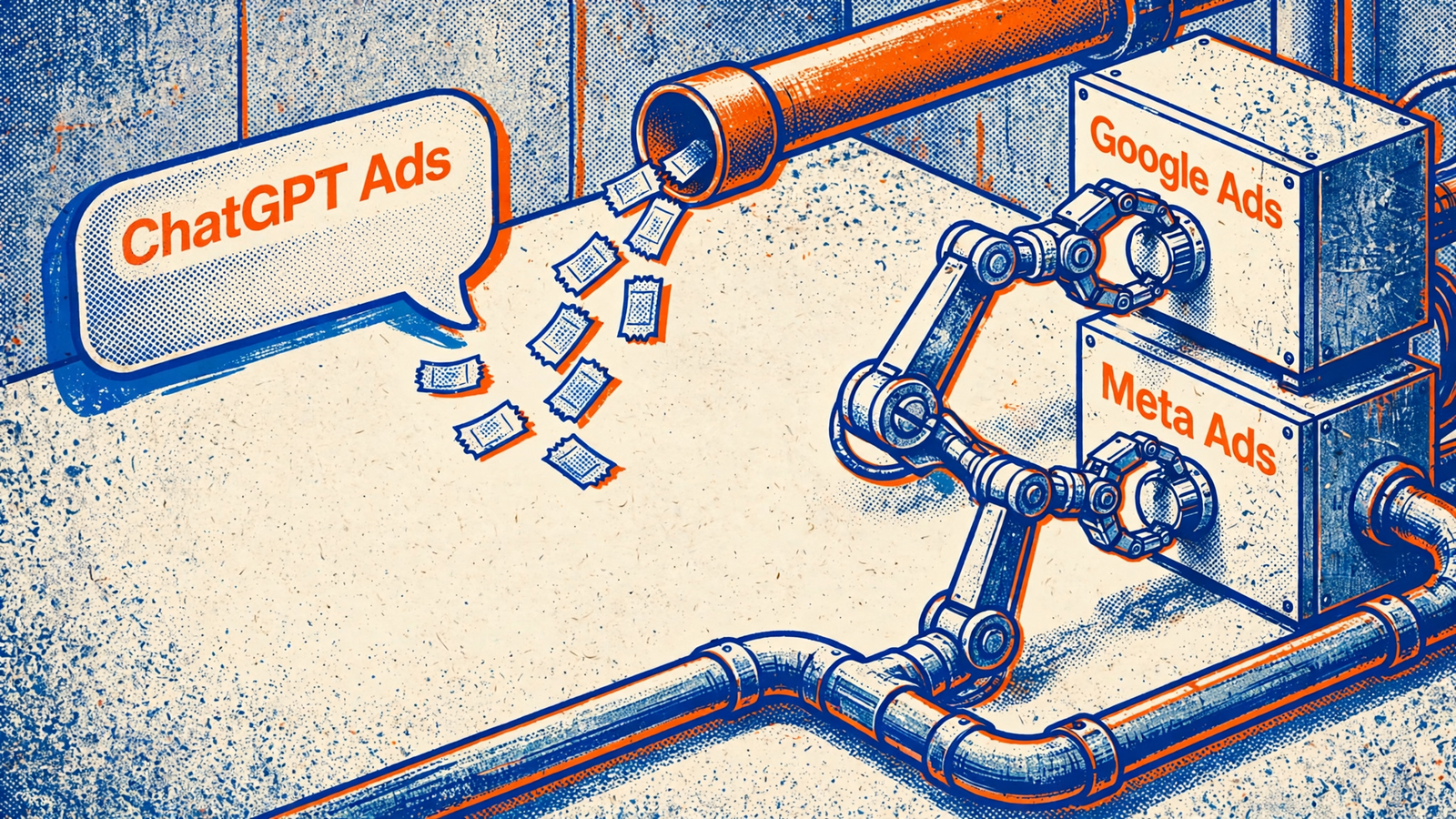
If I run Google and Meta Ads and want ChatGPT to work on those campaigns, I buy groas MCP, not Hightouch. Hightouch sends conversion data into ChatGPT Ads; groas MCP lets my ChatGPT assistant read the accounts I already run and make changes I approve.
Both get described as connecting to ChatGPT. When I’m deciding what to buy, that phrase leaves out the three things I care about: which way the data moves, where it lands, and what the connection can do. Get those wrong and I can set up a perfectly good integration, watch it work exactly as advertised, and still have the original job sitting on my desk.
1. Data direction: Send conversion records in or pull account data out
Hightouch starts with a warehouse model. In the ChatGPT Ads destination docs, the setup calls for matching records, mapping fields, and syncing Events to OpenAI conversion events in Insert mode. Segments go to ChatGPT custom audiences in Add or Remove mode. The setup asks for a Pixel ID, an API key, an Ads API key, and an ad account ID. The existing systems send records to OpenAI. Nobody needs to open a chat for that to be useful.
I used to tell clients a conversion import was a reporting nicety. I was wrong. When OpenAI announced the conversion-data integrations, it named Hightouch, Tealium, and LiveRamp as routes for advertisers to send conversion data from systems they already use. That’s a specific job: decide which records ChatGPT Ads receives and how they get there, rather than make another Monday morning CSV part of the process.
With groas over MCP, the first move goes the other way. I connect my Google and Meta accounts, add groas to ChatGPT, and ask a question in plain English. The assistant pulls live spend, reported conversions, conversion definitions, and attribution settings from those accounts into the conversation. If I approve an edit, it goes back to the account.
The distinction I’d put on a purchase request: Hightouch sends records to an ad platform; groas brings account data to the assistant and sends approved edits back. If my question is why Google’s CPA looks better than Meta’s, another conversion record arriving in ChatGPT Ads doesn’t answer it. I need the numbers and settings from the accounts I’m comparing.
2. Destination: ChatGPT Ads is not the chat where I ask about CPA
In the Hightouch setup, the destination is ChatGPT Ads measurement and audiences, not the conversation where I ask why Google’s CPA looks better than Meta’s. The OpenAI measurement setup page describes adding OpenAI as a destination, authenticating, choosing the model that contains the events, and matching records on a genuinely unique primary key. Setup varies by partner. LiveRamp, for instance, requires contacting a rep for access and uses separate online and offline feeds.
It helps to follow one record. A conversion starts in an existing system and lands in ChatGPT Ads. If it lands in the intended ad account, the connection has done what I set it up to do. It hasn’t put the Google or Meta campaign behind my CPA question in front of my assistant. As Search Engine Land’s summary explains, conversion-data partners send data into the platform, while attribution partners handle reporting and click attribution. Neither job amounts to managing my other ad accounts.
With groas MCP, the data lands in the conversation I’m already using. The campaigns stay in Google and Meta; that’s where an approved edit lands. Say I’m spending $20k a month across the two platforms. If I need ChatGPT to answer from those accounts rather than guess, I’m buying flat monthly access for the team, not another seat or another percentage-of-spend cut. If I need to supply conversion records to ChatGPT Ads, that conversation isn’t the destination I’m shopping for.
3. Permitted action: Read first, then decide what ChatGPT can change
Nothing in Hightouch’s announced integration gives ChatGPT permission to open, let alone edit, my Google or Meta campaigns. Hightouch can sync Events and add or remove audience Segments in its ChatGPT Ads destination. Those are actions. They’re just not the ones I mean when I ask my assistant to work on the campaigns I already run.
With groas MCP, ChatGPT can read both accounts and make changes I approve, with a log and an undo option. But I wouldn’t make the first prompt a request to change anything. A Custom GPT and an MCP connector aren’t interchangeable, and a polished answer doesn’t tell me whether the assistant checked my accounts. The point of connecting them is to give it the numbers it would otherwise have to guess at.
The first prompt I’d run
Compare Google and Meta performance for the last 30 days. Show each platform’s conversion definitions and attribution settings before comparing CPA. Make no changes.
Definitions first, CPA second. If Google counts qualified calls and Meta counts view-through purchases, the two CPAs can differ even on identical spend. The assistant can put both numbers in a tidy table. That doesn’t make it a useful comparison. I want definitions, attribution, spend, and reported conversions side by side before I ask what to change.
Here’s what I’d look for in the answer:
- What each platform counts. I want to see qualified calls and view-through purchases named as such, not two columns both headed Conversions with no explanation.
- How each platform assigns credit. I want the attribution settings alongside the totals, not buried below a recommendation about which campaign is doing better.
- What the numbers support. I can ask which platform reports a lower CPA. That’s not the same as asking which produces the same outcome at a lower cost.
I’d keep the first 48 hours read-only. Once I’m satisfied the assistant is pulling the right numbers and explaining what I can compare, I’d allow one change at a time and ask for a written reason. Read access answers what happened? Write access lets me do something about it. I don’t grant the second just to find out whether the first works.
4. Governance: Check the match key on one side and the change log on the other
With Hightouch, I’d review the warehouse model, match key, field maps, and destination IDs before trusting the sync. Are the events arriving in ChatGPT Ads the records I meant to send? With groas, I’d review the connected accounts, approval rules, change log, and undo. Can ChatGPT make only the changes I mean to allow? A clean field map isn’t a campaign guardrail, and a change log isn’t a measurement plan.
I’d use a different check for each. On the intake side, I’d follow a record from the chosen model through its match key and field map to the intended destination. On the campaign side, after the first approved edit, I’d look for the account, the change, and the reason in the log, then make sure I know how to undo it. A successful sync tells me nothing about whether I approved a campaign edit. A perfectly logged edit tells me nothing about which conversion records I sent.
That distinction matters when someone takes a conversion count into a budget meeting. Sending conversions to ChatGPT Ads gives it records to count. It doesn’t prove the ads created the revenue. Attribution assigns credit; incrementality asks what would have happened without the ads. The example I’d use: 200 attributed conversions, 180 that would have happened anyway. That leaves 20 incremental conversions, so incremental CPA uses 20, not 200. OpenAI describes its work on geo-based incrementality experiments as early. I wouldn’t turn the early partner figures into platform benchmarks.
Reading Google and Meta in one chat has a related problem. Each platform grades its own homework under its own attribution window, so the same purchase can appear in both reports. Seeing both reports helps me spot why the numbers don’t line up. It doesn’t deduplicate them. I’d set a system of record and a lookback rule for counting, and use a holdout if the question is lift. Neither connector makes those decisions for me.
The comparison on one screen
The deciding column is the one that describes the job I’m buying for.
| Buying decision | Hightouch for ChatGPT Ads | groas MCP for ChatGPT |
|---|---|---|
| Data direction | Existing systems send conversion data to OpenAI | The assistant pulls account data from Google and Meta; approved edits go back to the accounts |
| Destination | ChatGPT Ads measurement and audiences | The ChatGPT conversation for reads; Google and Meta campaigns for edits |
| Permitted action | Sync Events and add or remove audience Segments; no Google or Meta campaign control through this integration | Read live account data, propose changes, and make approved edits |
| What I govern | Warehouse model, match keys, field maps, and destination IDs | Account connections, approvals, change log, and undo |
Verdict: groas MCP wins for the Google and Meta operator
I’d pick Hightouch to supply conversion data to ChatGPT Ads
If I plan to buy ChatGPT Ads and need to send it conversion records from systems I already trust, I’d pick the Hightouch integration. I’d check eligibility and warehouse readiness before promising my boss reporting parity. I want to know which model supplies the events, which field uniquely matches the records, and which account receives them. That’s a useful purchase when the job is getting measurement data into ChatGPT Ads. It gives me no control over this month’s Google and Meta campaigns, and I wouldn’t buy it expecting any.

I’d pick groas MCP to work on campaigns I already run
For the advertiser running Google and Meta today, groas MCP wins, and it isn’t close. It gives ChatGPT the live numbers behind a question, then lets it act on the answer when I approve. I can make the assistant show what each platform counts before it tells me where CPA is higher. If that comparison points to an edit I want, I can approve it, see it in the log, and undo it. Hightouch’s conversion-data integration can’t do that job by design.
I’d start with the 48-hour read-only check, not a bid change. If the assistant can explain why the two reported CPAs aren’t directly comparable, I have something useful before it’s touched a campaign. Then I’d give it one approved change with a written reason. I want to know what it read, what it changed, and why. That order matters more than how quickly it produces an answer.
If I need both, I buy two connections and govern them separately
I’d use Hightouch to feed Events and Segments into ChatGPT Ads. I’d use groas MCP to let ChatGPT read Google and Meta, show definitions and attribution before comparing CPA, and make approved changes with a logged reason and one-step undo. I’d keep the controls where the mistakes happen: match keys and field maps on the intake side, read-only starts and change approvals on the campaign side. I wouldn’t count either purchase as covering the other job.
One habit saves me the argument with my boss: I write down the two jobs before I buy.
- Intake: I name the destination, the owner, and the match key.
- Operation: I name the accounts, the approval rule, and where I’ll find the change log.
When a vendor tells me its connector covers ChatGPT, I point to those lines and ask which one it fills. If it can’t name the data direction, destination, and permitted action in one sentence, it fills neither.





