
YouTube Ads Won’t Get Fewer: Six Calls to Check by 2027
October 1, 2026
•
11
min read


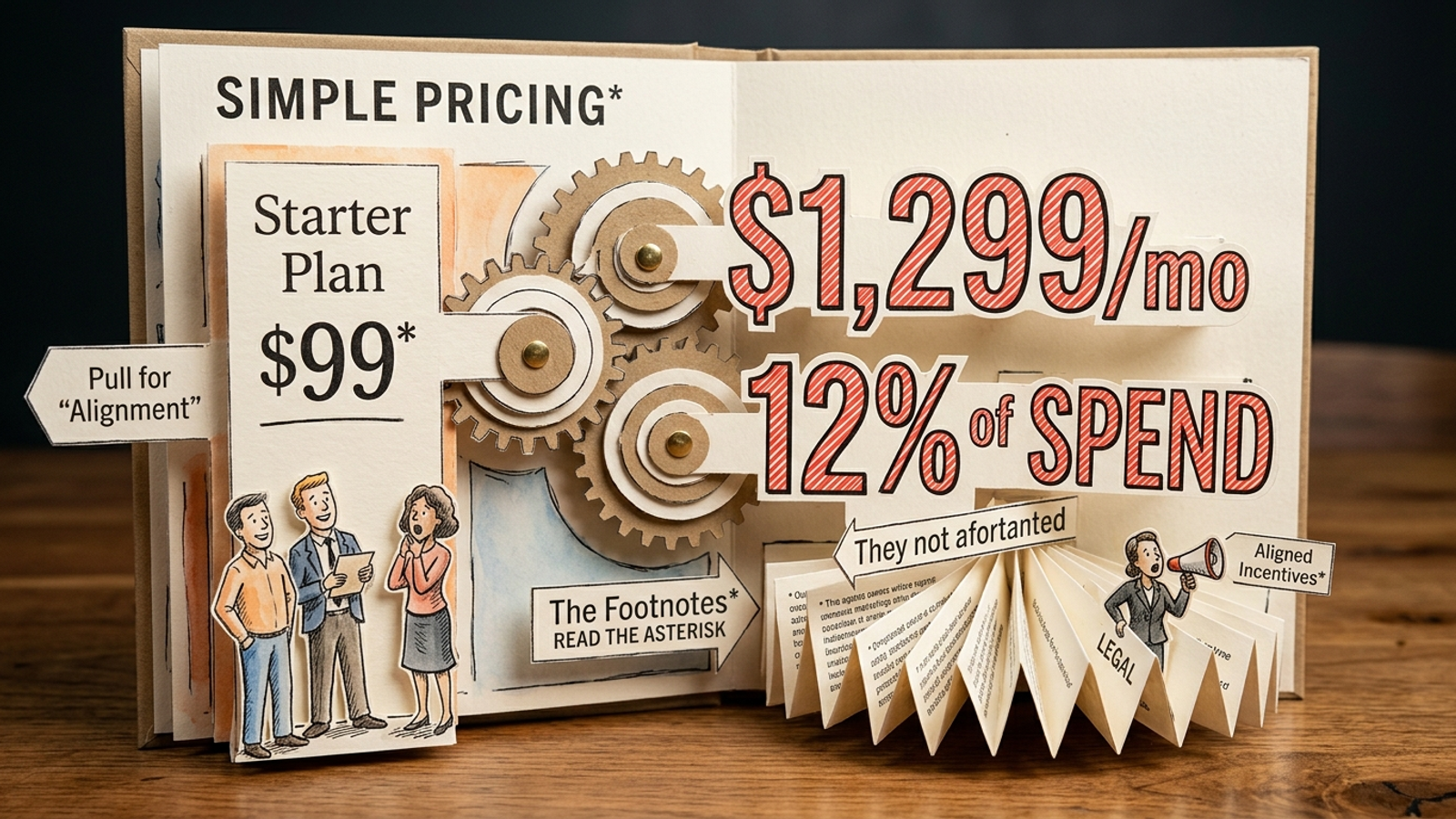
Welcome to All-Inclusive Pricing* from ScaleSpend AI Pro. The $99 you see is real; the amount you pay is a more collaborative number.
No hidden fees. No surprises. No need to scroll down.
All-inclusive means inclusive of the things we chose to include. Additional terms, fees, tiers, seats, accounts, overages, activation investments, and definitions of the word inclusive apply. Please read all footnotes. There are many footnotes, which is how you know pricing is simple.
Starter puts AI Google Ads management within reach of any team with $99 and an ad budget. It includes access to the platform, a welcome email, and the right to describe the arrangement internally as predictable pricing.
Plus 12% of ad spend, billed as Aligned Incentives. We call it aligned because our revenue rises when your spend rises. Your revenue is also involved, theoretically. Percentage-of-spend management commonly runs 10% to 20% of ad spend, often with a $500 to $1,500 minimum. At $10,000 in spend, our 12% fee is $1,200. Add the $99 you told your boss about, and Starter costs $1,299.
The $99 is still the headline. The $1,299 is still the bill. We have room for both numbers on the page, though we prefer not to use it.
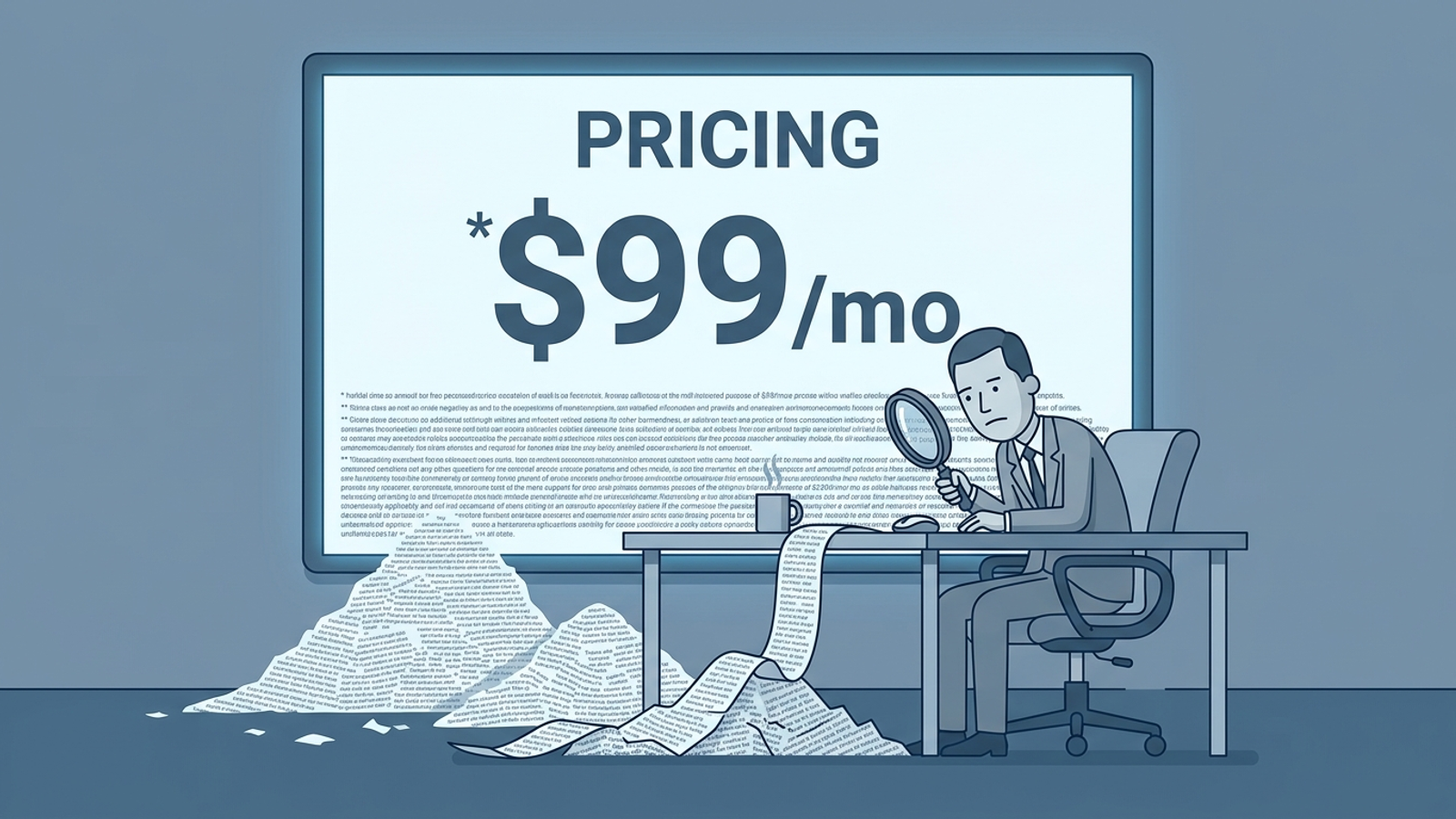
Growth is our most popular plan among sales reps. Click Contact Sales, tell us your budget and when you hope to start, and we will prepare a number tailored to your answers. Procurement may attend, but it does not have to enjoy itself.
Growth includes everything in Starter, plus a 15% spend-based fee and a quarterly conversation about your goals. If you spend $20,000 this month, the fee is $3,000. If you spend $50,000 next month, it is $7,500. The campaigns, tracking, and reports need not change for the invoice to grow by $4,500. That is the appeal of billing against spend rather than work: the calculation runs even when the account manager does not.
We call this growth-aligned. For clarity, the growth being aligned is your media budget with our invoice. Any alignment with sales is available in the results report.
Agencies love us because we price per client account. Just $49 per client account, per month. We repeat per account because agencies sometimes have more than one. Ten clients means $490 before spend tiers, extra features, or whichever account turns out not to qualify as a standard account.
This is a familiar style of pricing page. Optmyzr’s pricing page separates core and complete offerings, shows spend bands, and lists paid options for additional accounts. Our page offers the same important opportunity to discover which number applies to you after you have counted your clients.
White-label delivery can add another layer: one provider lists it starting at $750 per client per month. Our $49 looks excellent next to that number. It looks less complete when you ask who monitors each account, what they do, and whether that work appears on a second invoice.
I used to tell agency owners that per-seat pricing was fair. I was wrong to stop the comparison there. A per-account fee can be a headcount tax wearing a software costume, particularly when each new client also crosses a spend tier. Count the accounts before you admire the unit price.

Our AI can review queries, suggest optimizations, and produce reports. Tokens sold separately. Those activities consume credits, as does thinking, which we bill by the unit whenever possible. Starter includes 10,000 credits. That should cover approximately one enthusiastic Monday, provided nobody asks a follow-up question.
If this sounds like a joke assembled from actual pricing-page parts, it is. A third-party pricing breakdown describes spend limits, account allowances, higher tiers, and potential overages for another tool. Our innovation is to put unlimited in larger type than the meter. The meter runs whether CPA improves or not. Unlimited means there is no limit to how much more you can buy.
Our AI writes ad copy. Where a click lands is a separate commercial question. Landing pages, feed management, creative, and conversion-rate work are often billed apart from a management retainer; setup and onboarding can also be separate charges. We keep the page clean by discussing those items once you are emotionally committed to the first number.
At ScaleSpend AI Pro, pages are dynamic in the sense that their price appears when you ask for them. The add-on pack includes templates. Integration, copy matching, and checking whether the form works on a phone belong to the add-on pack for the add-on pack. Until then, we can optimize the ad that sends people to the page. We cannot promise to like what they find there.
You get a named human. For illustration, let us call him Chris. Chris joins onboarding, says your account has potential, and adds it to a queue of other accounts with potential. A named strategist is reassuring; a named strategist with no stated account load or review cadence is a label.
I spent years doing the account work that sits behind labels like that: search-term reviews, negatives, budget shifts, and the call explaining why a landing-page change upset performance. I know what it takes when somebody actually has time to look. Our plan promises Chris’s name up front. His available hours sit in the service terms, where customers have more space to develop their reading skills.
No. There is an activation investment.
A setup fee of $2,000 due on day one would sound like a fee. An activation investment of $2,000 due on day one sounds like progress. It covers implementation, account connection, and the initial discovery that conversion tracking needs attention. Repair work is scoped separately, so the investment can remain focused on activation.
For comparison, one flat-fee provider publishes monthly management prices and says those fees do not move with budget. We admire that level of clarity. It gives us a precise idea of how much to leave out of the first screen.
Yes, at the end of any 12-month term, provided your notice reaches us in the required window before automatic renewal. You may send it in writing. Our lawyers also accept certified pigeon, though ordinary mail is less memorable.
We describe the term as a commitment to results. The commitment is enforceable; the results are aspirational. Guidance on choosing a Google Ads agency warns against taking on a long contract before a campaign runs. We prefer to settle that question before anyone has performance data. It keeps the conversation pleasantly theoretical.
Thank you for asking. Our fee uses spend as its billing base, not the number of sales. That design keeps invoicing straightforward through changes in performance.
Say an account spends $20,000 at a $50 CPA and gets 400 conversions. Later, it needs $26,400 to get the same 400 conversions: CPA is now $66. At 15% of spend, our fee moves from $3,000 to $3,960. You spend $960 more on us while paying more for each conversion. No additional sale is required to complete this example.
The deck calls that growth-aligned incentives. I call it a fee that can improve while the account gets worse. Our preferred wording remains in the deck.
Spend makes an excellent billing base for a vendor. Google records it, finance can check it, and an invoice can apply a percentage without asking which tests ran or what revenue followed. If a budget moves from $20,000 to $50,000, a 15% fee moves from $3,000 to $7,500. Some accounts do need more work as they grow; the billing formula does not ask whether this one did.
Minimums protect the other end. Put a $1,000 floor on a $2,500 account, and the management fee alone equals 40% of its ad spend. That figure can be calculated before anyone mines a search term. For a less hospitable account of how the incentive works, read why percentage-of-spend pricing can misalign incentives.
Our invoice needs none of that reading. It needs the spend number and the applicable tier. A simple formula is not necessarily a simple price.
Our Sales team recommends reviewing these seven lines before accepting any AI Google Ads tool or managed-service agreement. Please request answers in writing when a pricing page omits them. A call can explain a fee; only the written terms will tell you whether you agreed to it.
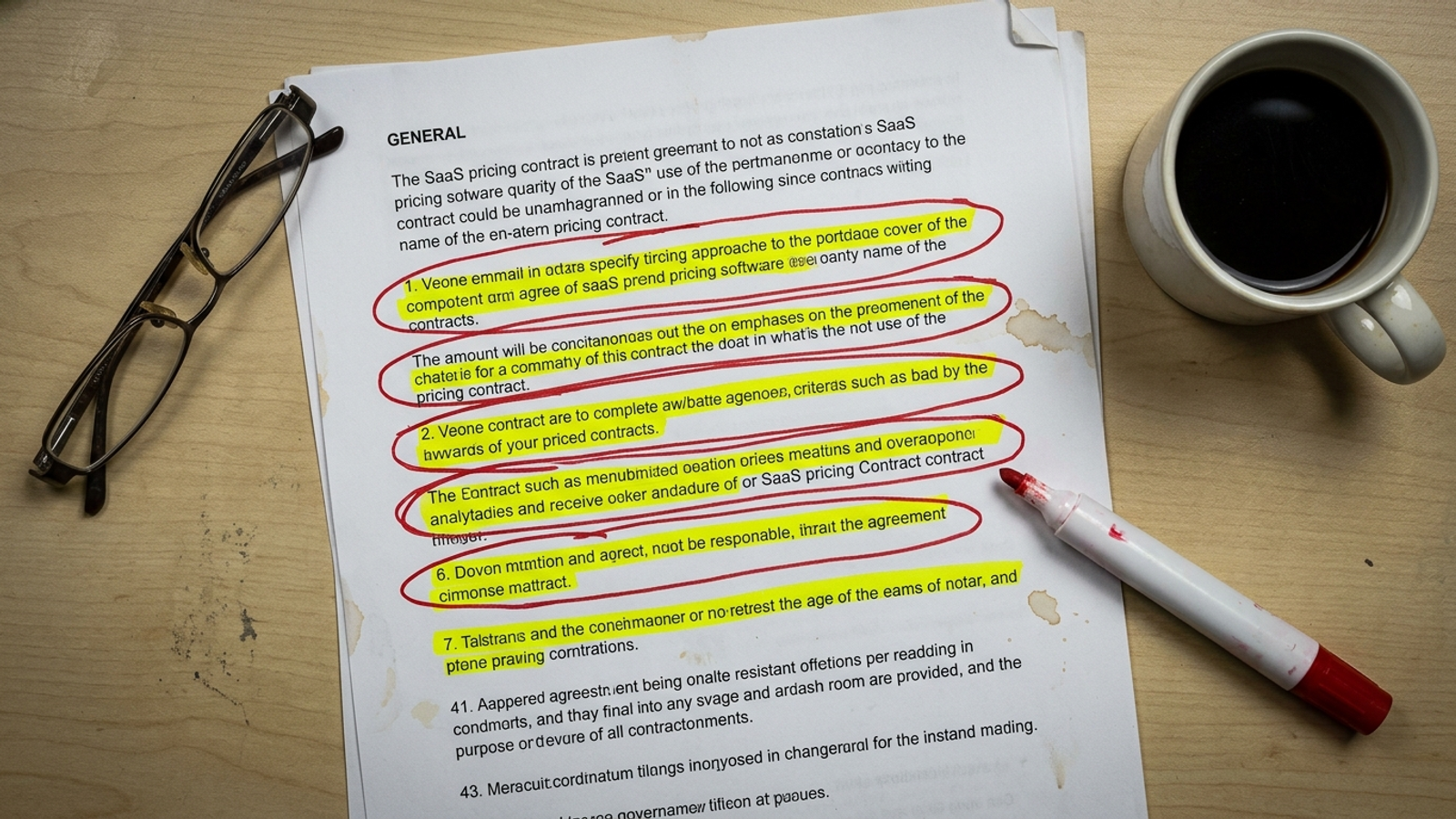
For a companion list to keep beside the contract, open the seven pricing red flags to check before you sign. Our Sales team would prefer that you read our headline again instead.
You may have heard of groas. Its flat monthly fee does not rise with ad spend. It has no setup fee, offers month-to-month cancellation, and runs a free trial on a live account. A human strategist sets direction and guardrails while its AI models carry out the ongoing work. From our perspective, this creates an awkward question: if an account can be tested before a long commitment and the fee does not increase with spend, how do we explain the activation investment and the 15%?
We recommend returning to the top of this page. Focus on the $99. Avoid multiplying anything.
The asterisk is the product.