

 LinkedIn

When your competitor keeps appearing in ChatGPT and you do not, I start with the sources behind the answer, not the model. The useful question is which review pages, forum threads and product pages keep putting them there—and what you can do about it.
“My competitor appeared in ChatGPT yesterday. Am I already behind?”
Probably not, but stop staring at that one answer. One answer is a sample, not a trend. The same prompt can return different citations on the next run. What matters is whether a buyer asking the same question three times in a week keeps seeing them and not you.
That pattern often points to a source gap: the review sites, best-of lists, forums and clear product pages behind those answers mention your competitor more than you.
Before you buy anything, write down what you actually saw. I use a simple log because memory is a terrible reporting tool:
- Exact prompt: copy and paste it, word for word.
- Engine and date: record where and when you asked.
- Cited sources: save the linked pages, not just the competitor’s name.
- Buyer weight: would a ready-to-buy customer ask this, or only a student?
- Your position: absent entirely, mentioned without a link, or cited below them?
Run that same prompt in Gemini and Perplexity before you conclude anything. In one 680M-citation analysis, only about 11% of domains were cited by both ChatGPT and Perplexity for the same topics. Checking ChatGPT alone leaves a lot unseen.
I use The 30-Prompt Test for AI Search Visibility as the repeatable version: a fixed set of buyer questions, asked across engines, tracked on a four-week rolling average. Start with a log, not a retainer.
“Does this mean my current SEO agency is failing?”
Not automatically. Pull out the scope before you accuse anyone. If you hired them for technical SEO and Google rankings, and they delivered clean crawlability and page-one terms, they did the job you bought.
The ChatGPT miss usually sits in three places they may never have been asked to touch:
- Whether AI search crawlers can fetch your pages.
- Whether your buyer pages answer the exact question in quotable language.
- Whether third-party sources mention you by name.
Check access first. OpenAI uses OAI-SearchBot for ChatGPT search, separate from GPTBot for training. Blocking that search crawler closes off its direct access to your pages; allowing it does not guarantee a citation. Nor does blocking your own site prevent a third-party source from mentioning you.
Then look beyond the site. In an Ahrefs study of 75,000 brands, branded web mentions correlated with AI Overview visibility at r=0.664, versus 0.218 for backlinks. That is roughly three times the correlation, not proof that buying mentions produces rankings.
Your agency can fix your site. If the missing mentions sit elsewhere, on-site work alone will not close the gap. Ask whether that work is in scope before declaring the whole service broken.
“Should I hire an AI-search specialist or replace the whole service?”
Keep one owner when the work is the same work. Much of what gets sold as AI-search optimization is SEO you should already own: pages that answer buyer questions, technical access for crawlers, consistent business facts, and mentions on the third-party sites AI answers cite.
Hiring a second retainer to do that alongside your SEO agency is what the deck calls synergy. I call it two people editing the same pages and billing you twice. If implementation overlaps, give the job to whoever will actually ship pages and fixes. Hold them to the same buyer questions across engines.
Bring in a specialist only when the handoff is clean. They should do something your current provider cannot do and will not learn in time: original research that earns media citations, digital PR that gets you onto relevant lists, or Reddit and forum participation without getting you flamed.
Ask both vendors to write down:
- Who publishes and updates your pages.
- Who owns third-party outreach.
- Who reports visibility across ChatGPT, Gemini and Perplexity on the same prompt set.
If neither can explain the split in one sentence, you do not have a specialist problem. You have an ownership problem.
“Where can I get a package that includes AI search visibility and share of voice optimization?”
Buy the work, not the chart. A package worth paying for has four parts that map to why you lost the answer:
- Buyer-focused pages that answer the exact question in quotable language.
- Technical implementation that keeps crawlers and buyers able to read those pages.
- Credible third-party mentions on the sources those answers actually cite.
- Repeatable monitoring of the same buyer questions across engines, week after week.
If the offer stops at the fourth item, you bought reporting, not implementation.
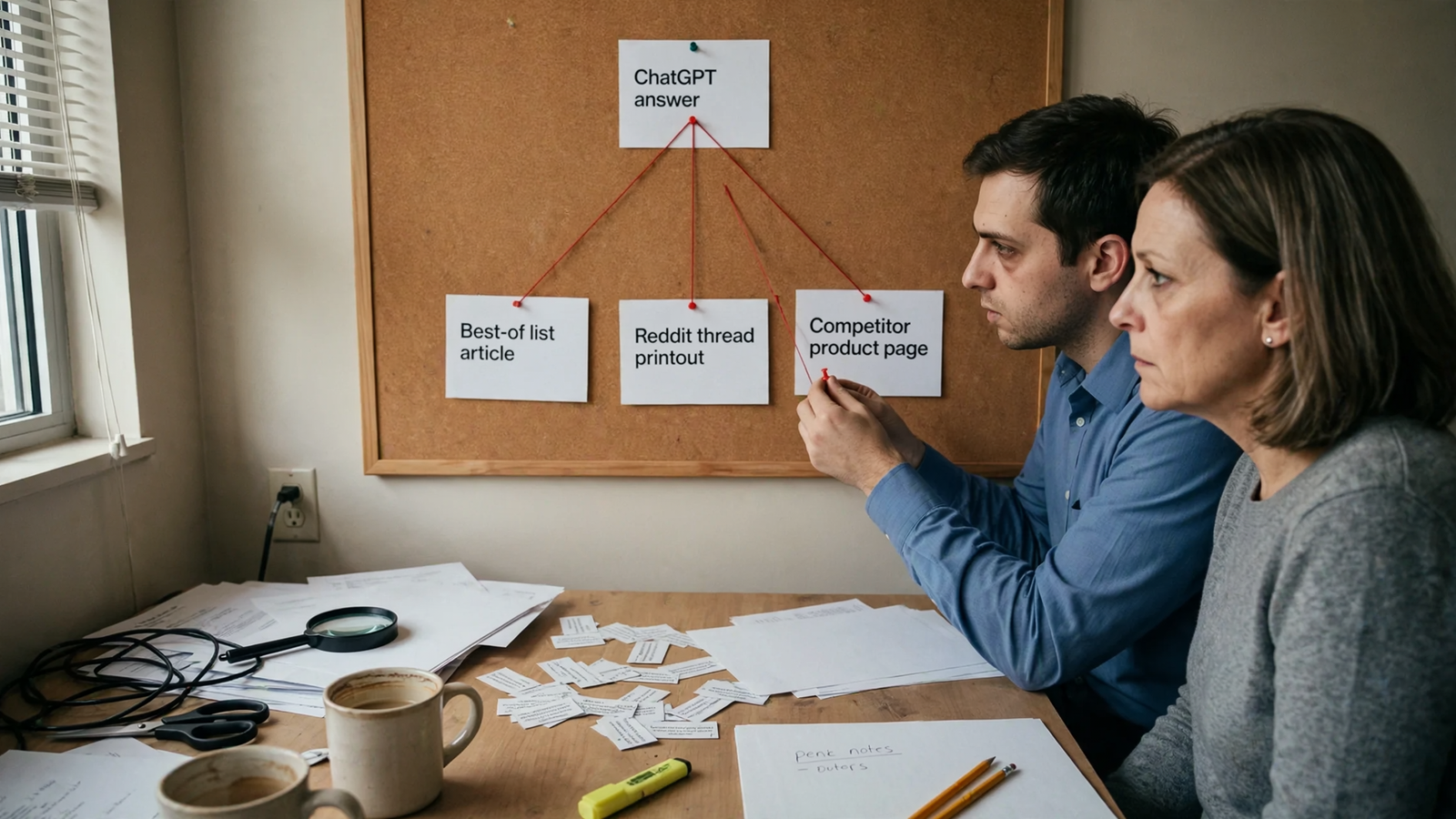
That distinction matters when a proposal promises share of voice. For citation reporting, share of voice measures your citations as a percentage of all brand citations for a topic. A rising citation count can still hide a loss if a competitor owns three times your share on the commercial prompts.
Ask for prompt coverage too: the percentage of your buyer-question set where you appear, tracked on a four-week rolling average. Keep the questions consistent so the report measures movement rather than a newly convenient prompt set.
A dashboard tells you the score. It does not, by itself, get you listed, rewrite the page or earn the mention. Make the proposal name who does those jobs.
“What evidence should I ask for before signing?”
Ask for a diagnosis of your missing buyer questions, not another client’s screenshots. Any agency can show you a chart where somebody went up. That tells you nothing about why ChatGPT picked your competitor for your money prompt.
For your top ten buyer questions, make them show you:
- Which sources ChatGPT cited.
- Whether those sources mention you.
- Which of your pages answer the question directly.
- What they would change first, and who would make the change.
The five usual reasons a competitor gets named are boring and checkable: they appear on the cited lists, get discussed on Reddit and forums, publish pages with quotable answers, keep their facts consistent, and have a longer history. If the proposal cannot map your position against those possibilities, it is a guess.
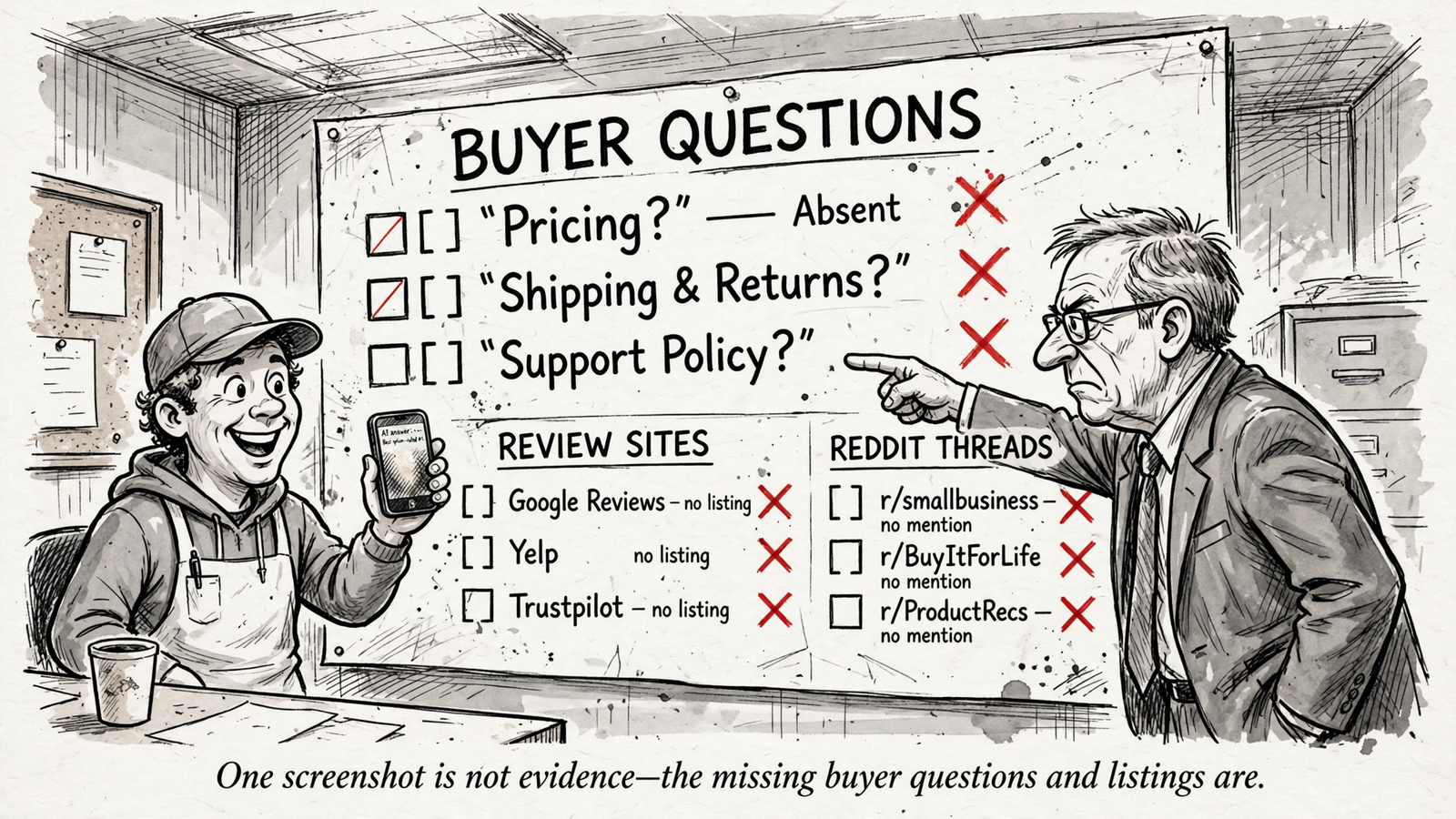
Then ask how you will know the work happened. I want a named owner, an implementation queue with dates, and reporting that covers real AI visibility instead of fake rankings across engines.
Do not let the evidence pack stop at your own website. Reddit and forums belong in the review when they appear among the cited sources, especially for best-X and X-vs-Y questions (this breakdown examines Reddit in AI answers). In one analysis of 25M+ AI-cited links, earned media made up 84% of citations.
Those findings are a reason to inspect outside sources, not an excuse to spam them. If the proposal includes no publishing access, no third-party outreach and only ChatGPT screenshots, keep your money.
“What would I expect from groas, and what would I not be buying?”
With groas, I am not looking for another dashboard to interpret. Your AI is the brain; groas is the hands and the data. You connect your ad accounts and website once, add groas to ChatGPT, Claude, Gemini or another agent, and ask in plain English.
For this problem, the useful starting point is the AI-answer and citation data groas collects around the clock: how AI answers talk about you and whom they cite. Your AI can use that data to find the sources behind the competitor’s appearance and identify where you are missing.
That sits alongside the wider data groas collects: every ad your competitors run on Google and Meta and the funnels behind them, what customers say on Reddit, and SEO data from Semrush and Ahrefs. I like the order of operations here: see the citations first, then decide which page, listing or outreach task needs attention. No new dashboard apprenticeship required.
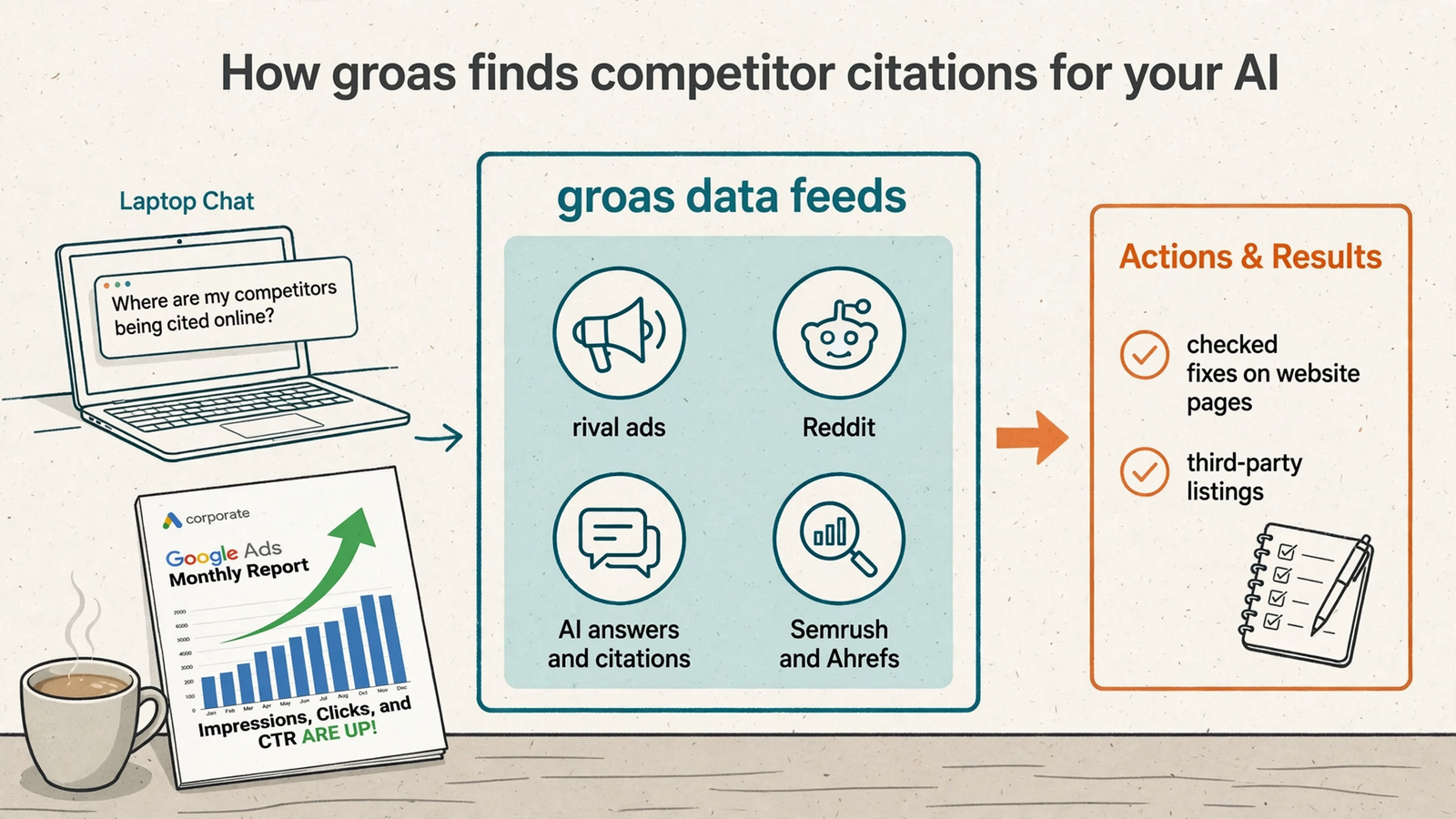
groas Unlimited is $19 a month, flat, for a whole team: unlimited teammates, ad accounts and websites, every feature and all the data. That makes the data and tools available to the people doing the work, rather than adding another reporting-only retainer.
If you want ongoing execution, autopilot can run a campaign, ad account or website under rules you set. It stays off until you switch it on, every change is logged with its reason, and any change can be undone in one step.
Businesses that would rather hand everything over can apply for Done For You, from $5,000 a month, run by groas’s senior team. That is a separate decision from buying Unlimited: decide whether you want infrastructure for your AI or a team to run the work.
What you are not buying is a guaranteed recommendation. No honest provider can promise ChatGPT will name you, rank you or send you leads by a date. Use groas to diagnose the missing sources and check what changes after the work ships. Skip anyone selling certainty.
“What should make me stay, switch or wait?”
Stay when work ships and the repeated pattern moves. I look for published pages, corrected listings, consistent business facts and improving coverage on the same 20 to 30 buyer prompts over that four-week average.
I would allow six to eight weeks of shipped work before judging citation movement. Pages need to be fetched again, and third-party edits need time to show up. That is a working evaluation window, not a promise that a recommendation arrives in week eight.
Switch when nothing ships. If month two looks like month one with a nicer PDF, you do not have a ChatGPT problem. You have a vendor who sells monitoring as management. A flat chart alongside completed work deserves investigation; a flat chart alongside no work needs less interpretation.
Wait when the prompt that scared you does not bring buyers. A broad question can look important in a screenshot while the commercial question that drives quote requests goes ignored. Do not pay to win the wrong answer.
I judge completed work and repeated observations before accepting a revenue story. If they cannot show what they published, where they got you listed and how the same prompts read across engines, do not let them talk about pipeline yet.
“What is the question I should have asked first?”
Ask this instead: “For the ten buyer questions that decide my revenue, which sources keep appearing, and what is my plan to earn a place in each?”
That question puts cause before effect. It moves you away from one ChatGPT screenshot and toward the review pages, forum threads and direct-answer pages behind the pattern. I would rather you own ten citations on three money prompts than chase a visibility score across one hundred prompts that never bring a call.
Do it this week with the log from the top of this piece:
- Take your ten money prompts and run them across ChatGPT, Gemini and Perplexity.
- Have your AI use groas to inspect the cited sources and identify where you are missing.
- Pursue listings where the answers already look, publish the plain page that answers the exact question, and make your business facts match everywhere.
- Repeat the same checks and record what changes.
When your competitor shows up next time, you will know whether it is noise, a gap you already scheduled, or a source your plan still needs to address.


