

 LinkedIn
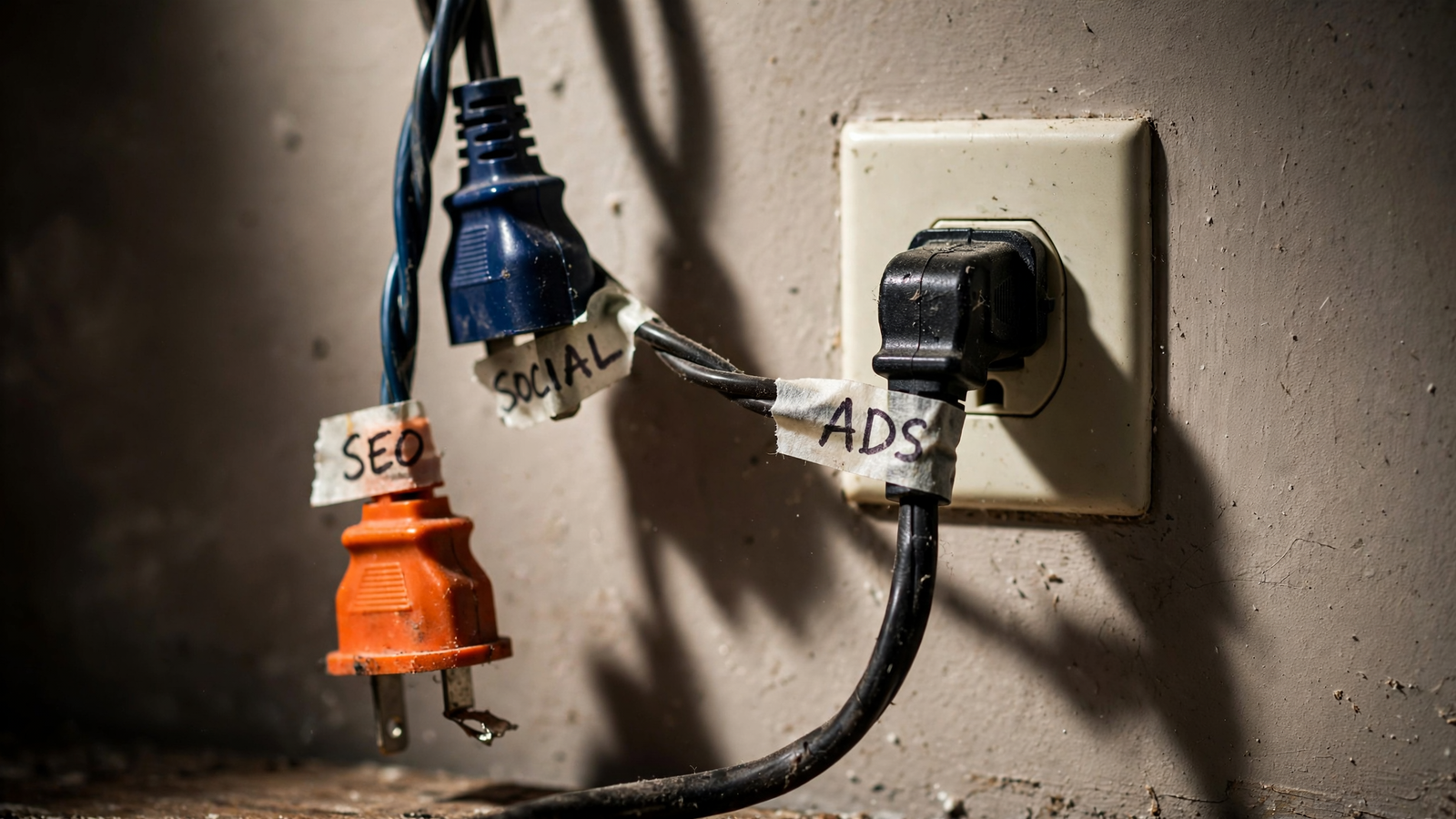
For a marketer choosing between separate free MCP servers and one $19-a-month groas connection in Claude, free is the better buy when the job fits inside one server. The case for groas starts when Claude needs evidence from several channels and a way to act on it without handing the reconciliation work back to you.
That is the comparison I care about. Not connector counts. Not a directory full of logos. I want to know whether Claude can investigate a paid-search conversion decline using paid-social and site evidence, then propose a change it can actually make.
Option A is separately selected ad and SEO MCP servers. Option B is one groas connection. Claude’s Free plan allows exactly one custom connector, so the choice has an immediate constraint: on Free, Google plus Meta plus SEO means swapping connections rather than keeping the stack connected together.
For one weekly report, that might be fine. For a cross-channel investigation, it becomes part of the job.
The assignment: explain a decline before touching the budget
The separate-server approach lets you choose a tool for each platform: Google’s official Google Ads MCP, Meta’s official Ads MCP, and an SEO server for Ahrefs or Semrush if you need one. Each connection has its own setup, data access and limits. On Claude Free, those connections compete for one slot.
With groas, you connect your ad accounts and website once, then add groas to Claude as a single MCP connection. Claude can work across Google Ads, Meta, Bing, SEO and AI search visibility through that connection.
The difference is not just fewer plugs. groas also collects competitor ads on Google and Meta, the landing pages and funnels behind them, Reddit customer discussions, AI answer mentions and citations, and SEO data from Semrush and Ahrefs. That collection runs 24/7. The separate ad connectors do not supply that surrounding evidence on their own.
Before comparing either setup, I would lock the assignment with this prompt:
Investigate the paid-search conversion decline using paid-social and site evidence. List unavailable sources and incompatible metrics. Do not move budget.
That prompt gives Claude three obligations:
- Gather evidence across channels, rather than explain search performance using search data alone.
- Name the sources it cannot read and the metrics it cannot fairly compare.
- Stop before making a budget change.
Say you are spending $20k a month and search conversions fall 27% in three weeks while Meta holds flat. That is an illustrative scenario, not a test result. It is also a better basis for this comparison than counting tools.
Can Claude read the relevant evidence in one session? Can it separate a reporting mismatch from a performance problem? Can it propose an action that its tools support?
I would judge both architectures on those questions. Ask for the evidence before asking for the fix.
Round 1: compare the bill for the whole job
A free server can be exactly what it says on the label. That does not make every stack built around it free.
Google’s official Google Ads MCP is open-source and read-only, with three tools. It has no hosted URL, so you run it yourself over stdio or on Cloud Run, with your own Google Cloud project and API access. Meta’s official Ads MCP is hosted and free from Meta, making it a straightforward option to try for a Meta-only workflow.
SEO changes the bill. The SEO MCP pricing comparison lists Ahrefs MCP access with Lite at $129 a month or higher, using API units, and Semrush MCP access with Starter at $199 a month or Pro+ with API units. A free connection is not the same thing as free underlying data.
Then there is Claude’s connector allowance. On Free, you cannot keep Google, Meta and SEO connected side by side. If the assignment requires that setup, an assistant-plan upgrade belongs in the comparison too.
Price the assignment, not the connector. One free Meta server answering one Meta question is a different purchase from a cross-channel stack with paid SEO access.
groas costs $19 a month flat for unlimited teammates, ad accounts and websites. Every feature and its collected market data are included. Any paid assistant plan you choose is a separate cost; it is not included in either server’s price.
I will not turn setup time into a fake invoice to make the arithmetic work. If you already maintain one server and it answers your only question, $0 is still less than $19. Read the line-by-line bill breakdown if you need the longer version, but compare cash with cash and maintenance with maintenance.
Pay for groas when the job needs the channels and data included in that fee. Do not buy a broader system merely to replace one free report that already works.
Round 2: check whether Claude has the evidence
A connected server does not necessarily cover the assignment.
Google’s server reads Google Ads through GAQL queries. Meta’s server reads Meta advertising data and supports edits. Those are useful capabilities, but neither ad connector by itself supplies the wider set of competitor ads, funnels, Reddit discussions, AI citations and SEO evidence described above.
On Claude Free, the single-connector limit adds another obstacle: the separate servers cannot all remain connected together. Swapping them may be tolerable for a narrow check. It is less attractive when the whole point is to investigate relationships between channels.
With groas, Claude can read across the connected accounts and collected market data through one connection. That gives the investigation more material to work with without making you assemble the context by hand.
But access is only half the problem. The other half is definitions.
The attribution-window comparison describes Meta’s 7-day-click plus 1-day-view default, set per ad set, versus Google Ads’ 30-day-click default, set per conversion action. Those windows are not interchangeable. A sale can count differently across the two reports without either report being broken.
Putting the numbers in one conversation does not normalize them. Neither does putting them behind one connection.
I would require Claude’s answer to separate:
- Evidence it can read from sources it cannot access.
- Metrics it can compare from metrics with incompatible definitions.
- A plausible explanation from a proposed change that still needs approval.
groas wins on evidence coverage for this cross-channel job, not automatic truth. It brings the account and market evidence together; Claude still needs instructions to reconcile it honestly.
If the only assignment is “pull this week’s Google Ads search-term data,” that wider coverage may add nothing you need. Keep the free server for that job.

Round 3: separate a useful diagnosis from an executable fix
The original prompt says not to move budget. That is a boundary, not the end of the workflow.
Once the evidence supports a change, I want to know whether Claude can make it through the connected tools or whether I am back in the account doing the mechanical work myself.
Google’s official server has three read-only tools: list customers, run a query and describe a resource. Claude can use those tools to investigate a decline. It cannot use them to pause a keyword, move budget or build a replacement asset.
Meta’s server supports a different workflow. It can create and edit campaigns, ad sets, ads, catalogs and tests, with new campaigns starting paused and approval requested by default.
That difference matters more than the shared MCP label. One connection can diagnose; another can execute. Their approval behavior differs too. “Claude has access” tells me very little until I read the tool list.
Before approving a change, I would make Claude preview four things:
- The platform and account.
- The object it will change.
- The exact proposed action.
- The evidence supporting that action.
Read the tool list before trusting Claude with budget. The list is the permission slip, not the product’s headline.
groas puts reads and writes behind one connection. Every change is logged with its reason and can be undone in one step. Autopilot is off until you switch it on; that is separate from asking your AI to execute an individual change.
For the decline investigation, this means Claude can review the evidence and propose a supported bid, budget or page change within the same workflow. The change record stays together rather than requiring you to piece it together across separate tools and their logs.
For a job that ends in action, groas wins on continuity: evidence, execution and a shared change history. A read-only server remains a sensible choice when read-only is exactly the boundary you want.
Round 4: count what you have to maintain
Separate servers give you individual choices. They also give you individual connections to look after.
The maintenance list can include platform credentials, OAuth refreshes, hosting for the Google bridge, version updates when APIs change, and the tool lists Claude must distinguish. Not every server creates every chore. The point is to count the ones your chosen stack actually creates.
Tool naming is another wrinkle. The MCP specification requires tool-name uniqueness within a server, not across every server a client connects to. Two servers can both expose a tool called search, leaving the client to distinguish them. This explanation of tool-name collisions describes the problem.
I would not make that the sole reason to reject a stack. I would make it part of setup: inspect the tools, check which platform each belongs to, and keep the approval preview explicit. The right verb on the wrong platform is not a useful result.
One groas connection reduces the number of separate connections, tool lists and change histories you manage. In exchange, you depend on groas to keep its platform integrations current. That is the trade, and it is worth stating plainly.
It does not mean abandoning control. Keep the boundaries explicit under either architecture:
- Google’s official server cannot write.
- Meta’s server requests approval by default.
- groas autopilot stays off until you enable it; individual changes still need the workflow and boundaries you intend.
Count the maintenance surfaces before calling the stack cheaper. One free server you barely think about is a good deal. Several connections you keep swapping, checking and repairing are a different proposition.
Verdict: keep the free server until the job outgrows it
For the cross-channel investigation at the top of this piece, groas is my winner. It gives Claude the connected account evidence, surrounding market data and execution path in one place for $19 a month. Separate servers make the marketer assemble more of that workflow.
Here is the comparison without the connector-directory decoration:
| Decision axis | Separate servers | One groas connection ($19/month) |
|---|---|---|
| Cash outlay | Google and Meta servers are free; SEO access and a Claude upgrade can add costs | Flat fee includes unlimited teammates, accounts, websites and collected market data |
| Evidence for the decline investigation | One connector at a time on Claude Free; wider context requires additional sources | Cross-channel account and market evidence through one connection; metrics still need reconciliation |
| Action after diagnosis | Google is read-only; Meta supports edits with approval; execution varies by server | Reads and writes together, with reasons logged and one-step undo |
| Upkeep | Separate credentials, setup, tool lists and maintenance | One connection to manage, with dependence on groas maintaining its integrations |
Who should pick the free alternative anyway? A Meta advertiser pulling weekly creative reports through Meta’s hosted server. A search freelancer running GAQL checks through Google’s self-run bridge. Anyone whose recurring question fits inside one server and who can maintain it without turning maintenance into another recurring task.
I would not pay $19 to replace a tool that already answers the only question I ask Claude each week. I would not upgrade Claude just to stack servers I rarely need together, either.
But when the assignment needs search evidence, social evidence, competitor and site context, and a fix Claude can execute, I would choose groas. That is the complete task this comparison is built around. Read the longer one-request, two-budget-changes comparison for the execution-focused version.
One warning survives the verdict: no server makes a 7-day-click Meta number directly comparable to a 30-day-click Google number. Normalize the windows where possible and flag what remains incompatible. Otherwise the ROAS comparison is fiction with a tidy interface.
My buying rule is simple. If Claude answers your one weekly question inside one free server, keep the $19. The week you start pasting Meta numbers next to Google numbers by hand, swapping connectors to see the second channel, or pricing an SEO API for context you will use twice, judge the whole workflow again. That is when one connection earns its slot.


