LinkedIn

One existing page, one operator, 30 days, one revision, and a fixed set of buyer prompts. If an AI visibility package gives me a mentions chart but can’t show me what it changed on that page, I’m not buying more content.
I used to tell clients to track more prompts when that happened. I was wrong. A bigger chart doesn’t tell me what to fix. I want to see the buyer question, the answer the page was missing, the exact edit, and what moved after it went live. The edit is the deliverable. The readings tell me whether it’s worth trying again. They don’t prove the edit caused a citation.
Here’s the bill: groas Unlimited is $19 a month flat, with unlimited teammates, accounts, and sites, and every feature included. Your Claude plan is separate. Claude Free allows one custom connector, so if I’m running the trial on Free, groas gets that slot. Unlimited sites doesn’t mean I have to touch more than one.
I cut the publishing spree because I want a revision I can compare with the original, not a stack of new pages. I leave autopilot off because I want one person approving one change. And I cut any promise that Google or ChatGPT will cite the page, because that isn’t mine to deliver. Here’s what I do instead.
1. Days 1–3: Freeze the panel before touching the page
Cost: about an hour to connect and check access, plus the baseline runs. Buys: a record I can repeat on Day 30.
I pick one existing page that already ranks for a buyer question, and I make sure the operator can approve an edit to it. Then I connect the website, Search Console, and GA4 through groas in Claude and pull the AI visibility data alongside them. groas gives Claude the account data and the market material the connector alone doesn’t supply: competitor ads and funnels, Reddit research, AI answers, and SEO data from Semrush and Ahrefs. I check that Claude can see the page and the relevant readings before I ask it to explain anything.
Then I write down the rules for the frozen panel:
- Prompts: 8 to 12 questions a real buyer would ask before buying, all tied to the same page. I save the exact wording.
- Engines and dates: which engines I’ll check and when I’ll run the baseline and follow-ups. I keep the results separate by engine rather than blending them into one score.
- Repeat runs: three runs per prompt in fresh sessions where the data allows, using the same method before and after publication. A single answer is too noisy to carry the comparison. The repeat-run and per-platform scoring method uses three to five runs; I use three for this trial.
- What counts: separate columns for mentions and citations, plus the cited URL exactly as returned. An answer that names the brand doesn’t necessarily link to my page. If an answer is unavailable, I mark it unavailable, not “no.”
I save the baseline before I ask Claude what to change. That order matters: once I’ve seen a gap I want to fix, it’s easy to find a slightly better prompt for it. Then I’m testing my new wording, not comparing the page against the same buyer question. For the longer setup, here’s how I’d build the fixed baseline. For this trial, once the panel is written down, the wording stays put.
2. Days 4–7: Find one answer the page makes buyers work for
Cost: one focused comparison session. Buys: one gap worth a revision.
I ask Claude to compare the page with the sources the engines actually cited in the baseline. Not a generic SEO checklist. Not a competitor’s entire site. I want the exact page the engine cited, the question it answered, and the fact, price, spec, or step it made easier to find than my page did.
Say the cited page gives a turnaround time and mine says “fast.” That’s a gap I can inspect. If the business can back up a turnaround time, the fix is the real number, where it comes from, and the condition that changes it. If the business can’t back it up, I cut or qualify the claim. I don’t ask Claude to make “fast” sound more authoritative. That’s how I get a nicer sentence and the same missing answer.
A cited source tells me what the engine returned for that question. It doesn’t tell me why the engine picked it, and it doesn’t guarantee my page gets picked if I answer more directly. What I can do is give the buyer a checkable answer instead of making them hunt for one. That’s a good enough reason to make the edit and a specific enough hypothesis to follow up on.
If Claude finds several gaps, I pick the smallest one the business can substantiate with a spec sheet, policy, or customer-visible fact. The rest wait. I want one gap I can name in a sentence and one revision that closes it.
3. Days 8–10: Approve one diff and publish it
Cost: one approval pass, maybe 45 minutes. Buys: a published revision I can defend line by line.
I give Claude the instruction I’d give a human operator: “Show the proposed diff, supporting evidence, and the buyer question each change answers. Do not publish yet.” What comes back should read like a change ticket, not a rewrite. A few lines can change if they answer the same question. A second gap doesn’t get to ride along because the page is already open.
My approval ticket has four parts:
- The diff: the exact lines added, cut, or reworded on that URL, with the original retained so I can compare versions on Day 30 or roll back.
- The evidence: the spec, price, policy, or other customer-visible fact that supports the new wording, and where I can check it. No support, no new claim.
- The buyer question: the frozen prompt the revision answers and the source the engine cited for it at baseline.
- The refusal list: any claim Claude couldn’t substantiate and left out. I keep that list. It tells me what the new page deliberately doesn’t promise.
I check the evidence against the diff, approve the revision, and record the publish date. Changes made through groas are logged with their reasons and can be undone. That’s the difference between reviewing a suggested fix in a chat and having a record of the fix that actually shipped.
Before I publish, I also note any known changes that could muddy the trial: a redesign, a pricing page swap, a campaign launch, a PR mention. If something else happens later, I add it to the same record. I’d rather write it down when it happens than discover on Day 30 that my tidy before-and-after story has a hole in it.

4. Days 11–30: Rerun the panel without rewriting the test
Cost: the scheduled repeat runs and no second edit. Buys: a comparison someone else can check.
I run the same prompts in the same engines on the dates I set in Step 1. I log the date, engine, mention, citation, and cited URL for each run. I use repeat observations where groas has them and mark unavailable answers the same way I did at baseline. The reason for keeping mentions and citations separate is simple: a brand name-drop isn’t a citation win, and a citation to another URL isn’t a win for the page I edited.
Next to the panel, I keep three readings separate:
- Indexing: whether the revised page is indexed. I check this before trying to explain a missing signal.
- Search Console: whether the page holds or gains visibility on its buyer terms in Google organic search.
- GA4: whether identifiable AI referral sessions arrive. I copy the channel group, put the rule matching those AI sources above Referral, and use it to report sessions, landing pages, and key events. Clicks from Google AI Overviews and AI Mode still show up as Google organic search, so zero identifiable AI referrals doesn’t rule out visits from those features.
The hardest part is doing nothing dramatic when a citation comes and goes. In Ahrefs’ 20-day tracking of roughly 37,500 day-one citations, 50% of AI Overviews citations and 83% of Copilot citations were gone by day two. Most of the dropped citations came back within the window. I don’t need to explain every disappearance. I need to avoid calling a Tuesday appearance a win and a Wednesday disappearance a loss.
So the rule stays put: one new citation isn’t a durable lift, one missing day isn’t a loss, and zero identifiable referrals doesn’t mean nobody recommended the page. I record what happened. I don’t touch the page to see if I can make Thursday look better.
5. Day 30: Decide what the record earns
Cost: one review of the evidence. Buys: a decision to expand, revise, extend, or stop.
Expand only if the workflow earns it. My bar is repeat citation of the edited URL in at least two runs of the frozen panel, Search Console showing the page held or gained on its buyer terms, and a change log I can hand to a skeptic: original version, diff, evidence, buyer question, and publish date. The log shows that Claude and groas helped turn visibility data into a shipped fix. The readings are directional evidence that the next batch is worth testing. They don’t show that the edit caused the citations.
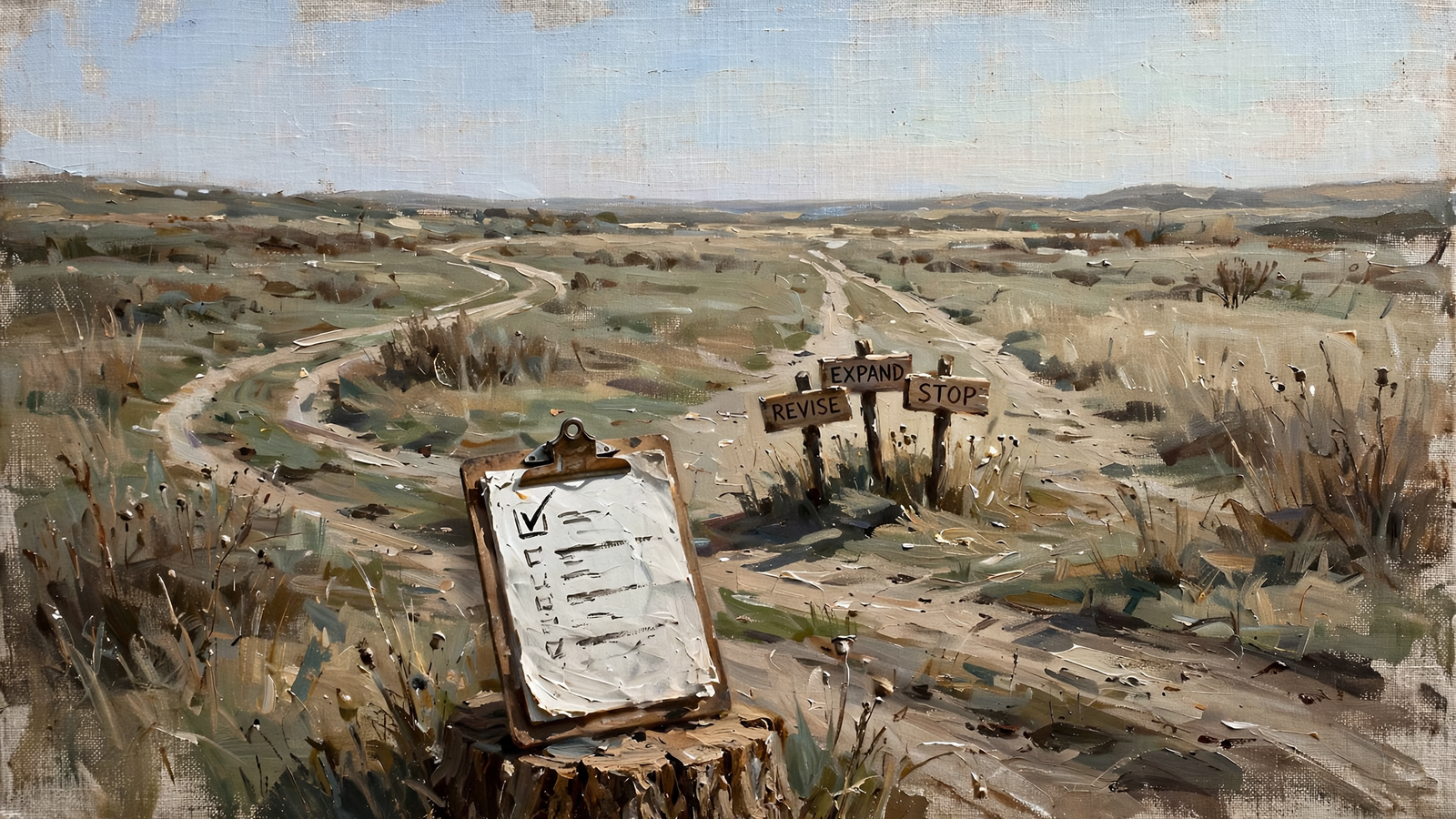
Revise the hypothesis if the page is live and readable but the expected signal never shows. I check in order: whether the revision is indexed, whether the cited URLs have shifted, and whether mentions rose while citations stayed flat. The panel might be asking a question buyers type into Google but don’t ask an assistant. A review site might have published a fresher comparison. And if the brand gets mentioned without a citation to my page, I have a mention, not evidence that the engine used my page as a source. For the next trial, I look for a gap where the engine already cites a page like mine. I fix the question before I blame the page.
Extend observation or stop if the record is too thin. If half the panel is unavailable, the cited sources change every run, or a migration lands mid-month, I write that down. A score that goes from 12 to 14 doesn’t rescue a comparison I can’t read. An honest Day 30 note looks like this:
One page revised with evidence. Same prompts rerun. No repeat citation detected yet. Search Console flat.
That’s a result. I can give the same page another 30 days of observation, or stop and choose a better candidate for a separate trial. I don’t buy ten more pages of the same guess.
When the constraint lifts, I take the workflow to three to five pages in the same buyer-question cluster, not the whole site. Claude does the comparison and drafts the diff; groas supplies the account and market data and keeps the changes logged and reversible. I keep the panel fixed, the mention and citation counts separate, and the refusal list attached to the work. Scale the documented fix one page at a time, not the chart.