

 LinkedIn
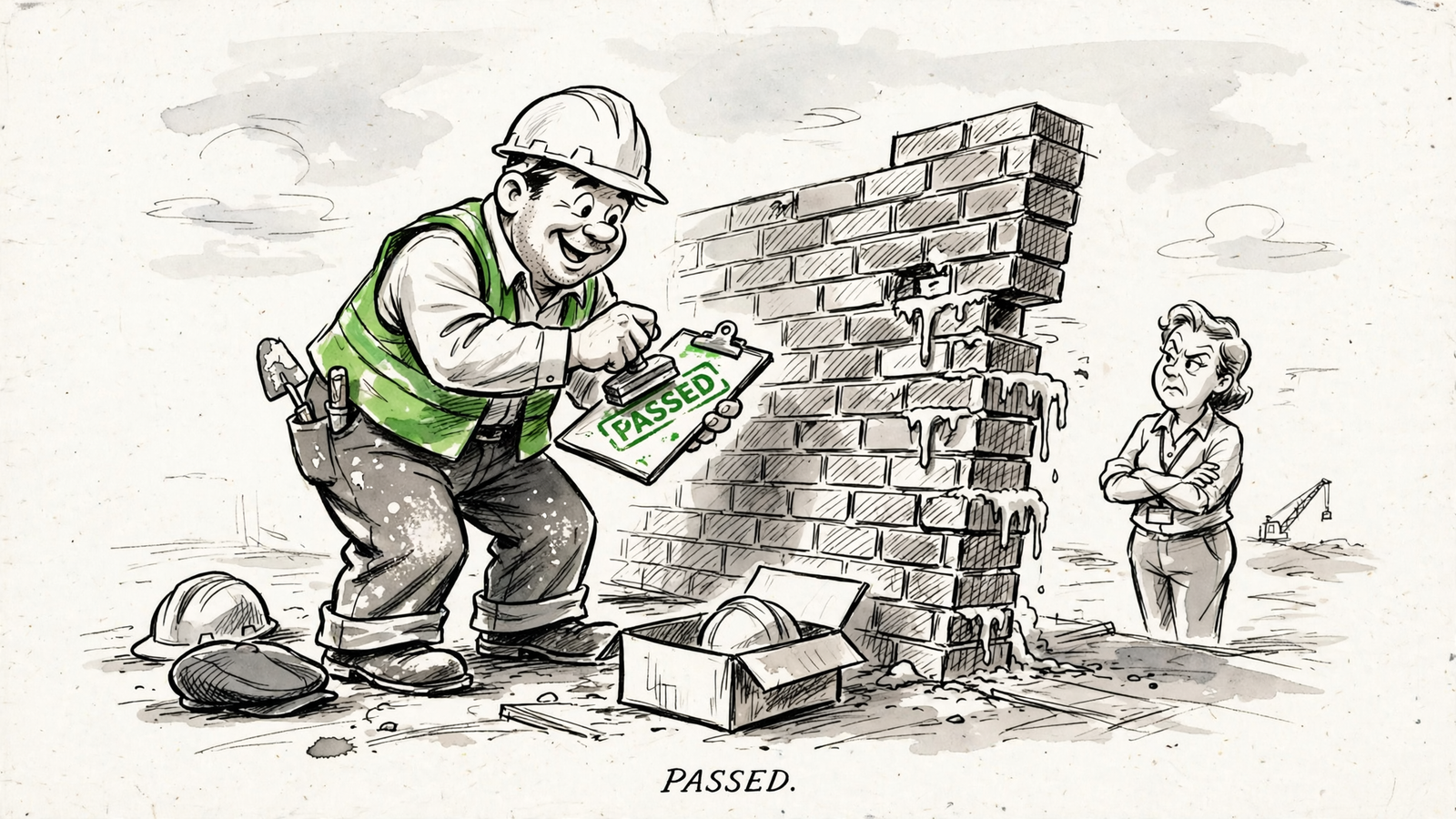
A client ranks on Google, then asks why their brand never appears in ChatGPT. If your answer is a logo-stamped PDF with one green visibility score, the number of vendors on your invoices will not save you.
That is the debate for a PPC agency adding SEO and AI search. One combined white-label partner can cut handoffs, conflicting roadmaps and margin-killing coordination. Two specialists can stop one supplier from defining the work, delivering it and grading its own performance. Smart operators disagree because both risks are real. I would consolidate only when the combined provider shows separate evidence of implementation and AI visibility. Without that separation, the efficiency can hide an accountability gap.
I used to tell clients consolidation always wins on cost. I was wrong. Cost is not just the invoice. It is the time spent translating between vendors, the work left for your team to implement, and the client call you cannot answer with evidence. Here is the strongest case for each setup before I make the call.
The case for one partner: stop paying for handoffs
The combined model begins with overlapping work. AI search and traditional SEO have roughly 80% overlap: entities, schema and pages that answer a question clearly matter to both. An SEO operator who understands that structure does not necessarily need a second team to work on AI search. Split the jobs too neatly and you may create two owners for the same service page, each with a different idea of what it should say.
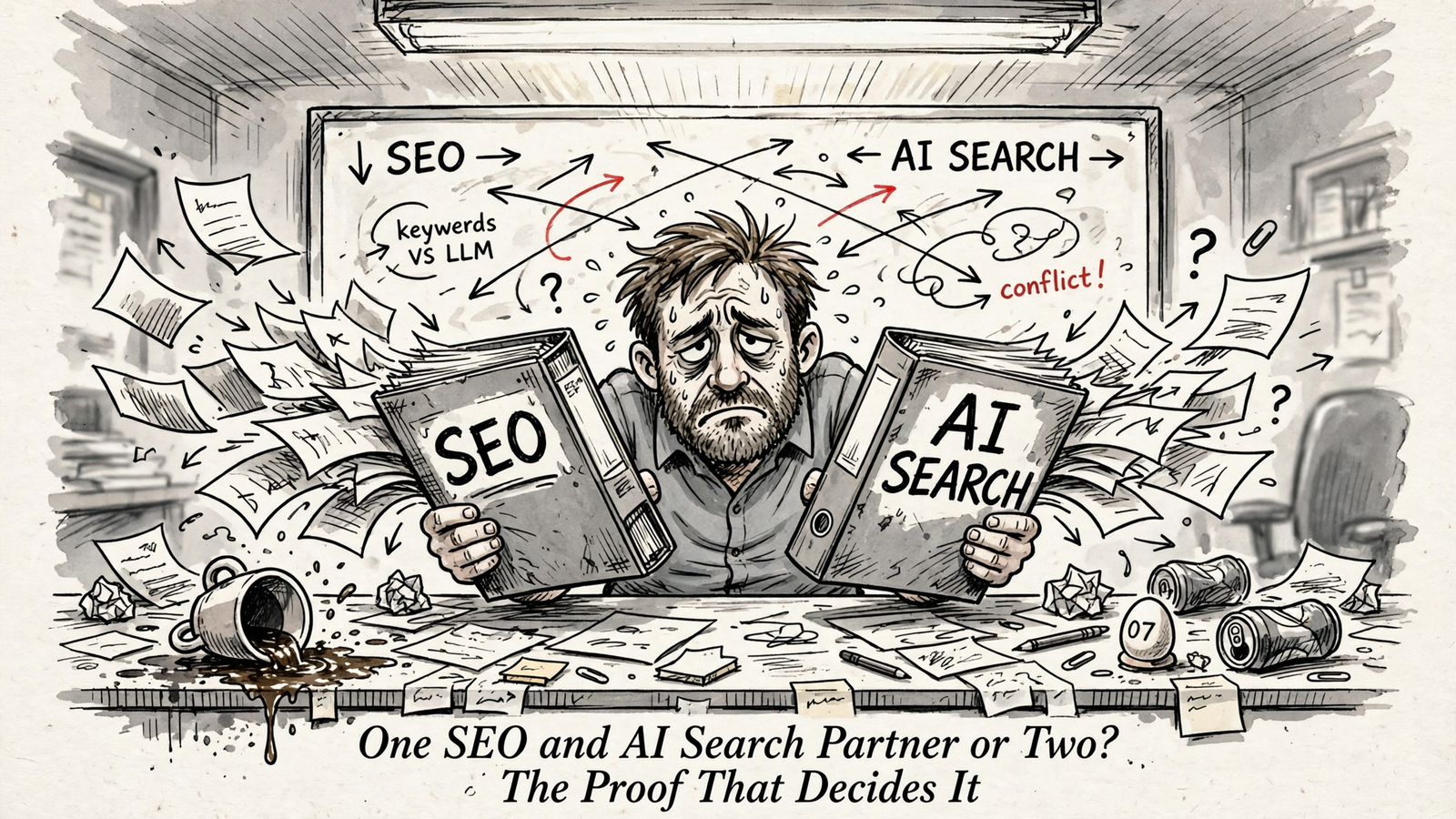
That conflict is not abstract to a PPC agency. Picture one specialist adding location pages for rankings while another rewrites those pages as longer explainers for citations. Each can describe a sensible task. Neither has to own the combined result. Your team settles the dispute, approves the revisions and explains the delay to the client. One roadmap gives a single team the priority call and makes that team live with it. Consolidation prevents two vendors from billing you to undo each other.
The handoffs matter even when the specialists agree. In a white-label setup, the provider stays invisible while you retain the branding, invoicing and client relationship. That also means you own every extra thread. Two content calendars need approval. Two sets of access requests need answers. Two reports need translating into one client conversation. Say you manage 12 clients spending $20k a month on ads. You do not need a second roadmap multiplying across that book unless it earns its place. Fewer handoffs leave more of the margin with the agency doing the selling and taking the client call.
The strongest promise, though, is a report that connects the work rather than merely placing two charts beside each other. Google rankings and AI answers do not move together reliably. The share of Google AI Overview citations that also rank in the organic top 10 fell from about 76% to about 38% in Ahrefs data summarized here; roughly 31% of cited URLs ranked beyond position 100. And 91% of cited URLs appear in only one LLM. A blended visibility score smooths over exactly the differences a client will ask about.
One partner is well placed to connect pages published and fixes deployed with mentions, linked citations and enquiries. It can change the page, inspect what happened and choose the next action without waiting for another vendor’s meeting. That is the best version of consolidation: one owner for the work and the explanation, not one dashboard with a bigger number at the top. If a combined provider can deliver that, paying for a second team to coordinate the same work is hard to defend.
The case for two specialists: make the work answer to someone else
The specialist case starts with a less comfortable question: who catches a bad assumption when the supplier that made it also writes the report? A single vendor can set the strategy, ship the pages and choose the metric that makes the month look good. Nobody has to lie for that arrangement to fail. A report can show rising rankings while never asking whether the brand is named in the AI answers the client cares about.
A separate AI search specialist has a reason to ask. If SEO pages bury the brand behind jargon, the SEO provider may still report ranking gains. The AI specialist can identify the gap without having to defend the pages that produced it. The resulting disagreement costs time, but it may be the most useful thing you bought. Independent scrutiny is the specialist model’s product, not just an extra set of skills.
Separation also makes some responsibilities easier to inspect. Vendor A can account for technical fixes and content shipped. Vendor B can account for per-engine mentions and linked citations. When either report goes vague, you know which claim to challenge. That matters because buyers describe the opposite experience plainly: monthly reports that do not match their analytics, overreported site health, spammy links and no on-page work. A second specialist cannot automatically prevent weak work, but an independent view makes it harder to hide weak work inside a single score.
Then there is dependency. If one provider holds all delivery and measurement, replacing it means rebuilding both at once. With two specialists, the agency has another account of what changed and what was observed. That is a meaningful safeguard for a client whose requirements justify the extra coordination.
But the safeguard only exists if you use it. Ask the specialists to challenge each other’s conclusions in writing. Otherwise you have bought two reports, two definitions of progress and a standing invitation to referee. Pay for the split only if independent scrutiny is worth more than the work of keeping two vendors aligned.
Cross-examination: four questions before a client URL changes hands
The model matters less than the evidence you can take into a client call. I would send every finalist the same questions and get the answers in writing before granting access:
- Who publishes and deploys? White-label SEO can run from $300 to $5,000+ a month per client, with standard packages around $500 to $1,500; resellers commonly mark up delivery 50–200% while targeting 40–60% margin. Establish whether that price buys live pages, deployed schema and fixed internal links, or a list your team implements at 11pm. Advice can be useful. Do not price it as fulfillment.
- Who owns access and approvals? In the white-label model, you retain the brand, invoices and client relationship. Decide who works in the CMS and Search Console, who approves a change, and whether the provider can act or only send tickets. “We handle it” is not an access plan.
- What does the report actually separate? Work completed is not visibility achieved. Google rank is not an AI mention; a mention is not a linked citation. Ask for those distinctions by engine, plus stored answer text, rather than one green arrow. TrueRanker, for example, re-runs buyer prompts weekly across ChatGPT, Gemini, Claude, Perplexity and others. Whatever tool a provider uses, its report should let you inspect the underlying answer, not just accept its score.
- What changes when visibility rises but qualified enquiries do not? If the response is another month of content without a reason, you bought a reporting cycle. Ask what gets rewritten, what gets re-tested and how the provider will judge whether the change helped enquiries. Get that response agreed before you need it.

These questions do not guarantee a result. They tell you what you can verify, who has to act and where to press when the client asks the awkward question. A provider should be able to show the work separately from the claim that the work was seen.
Put groas through the same test
I hold groas to that standard because a combined vendor has to earn consolidation. On implementation, its SEO & AI Search service covers Google, ChatGPT, Perplexity, Gemini and more, with new pages and technical fixes every day. The distinction is important: pages live and fixes deployed are evidence you can inspect. A completed recommendation sitting in your inbox is not the same thing. Groas describes continuous execution under your brand and weekly reports ready to forward in its breakdown of white-label delivery costs. I go deeper on the coordination cost in Make the Handoffs Earn Their Cost.
Price needs the same scrutiny. Groas lists a flat $299 a month per client account, per service, including the execution engine, dynamic landing pages and strategist support. The white-label structure also has a five-unit minimum across eligible services, which I cover in Buy the Five-Unit Minimum Now or Wait. Get the service mix in writing. Paid search, SEO, AI search and Meta are separate services; one fee should not be mistaken for every service your client requests.
Then separate what groas can deliver from what no provider controls. It can show work shipped, track citations per engine and log the reasoning behind actions. It cannot promise that Google or ChatGPT will cite a client by a particular date. I would still ask for the same written response to a visibility gain that produces no qualified enquiries: what will be rewritten, how will it be re-tested, and who owns that decision? The reason to choose one partner is inspectable execution and per-engine evidence, not a promise to control an answer engine.
Verdict: consolidate execution, never scrutiny
For a PPC agency adding SEO and AI search, I would choose a combined partner that passes the evidence test. The deciding consideration is separate proof of implementation and visibility. Show me pages live and technical changes deployed apart from mentions and linked citations by engine, and I can buy the efficiency of one roadmap. Blend them into one score and I walk. That is not consolidation; it is an accountability gap with a shorter vendor list.
Groas is the combined option I would put through that test first: daily implementation under the agency’s brand, weekly reporting, and a flat $299 per client account per service rather than a second roadmap for the agency to manage. I would ask for the following in writing before signing:
- Work proof: published URLs and deployed fixes, with schema and internal links verifiable in the CMS and Search Console.
- Visibility proof: named mentions separated from linked citations for ChatGPT, Perplexity, Gemini and Google, with answer text available to inspect.
- Ownership proof: the agency keeps approvals, invoicing and the client relationship while the provider remains invisible.
- Failure response: a rewrite and re-test tied to qualified enquiries when visibility improves but pipeline does not.
I would hire two specialists when a specific client requirement earns back the coordination cost: an entrenched in-house SEO team that will not give up CMS access, a regulated account needing an independent audit trail, or a local advantage built on hand-built links and partnerships a generalist will not replicate. Even then, I would give the second specialist a clear auditing job, not a second roadmap. Two roadmaps do not become a safety measure just because they arrive as separate PDFs.
Before signing anything this week, send both finalists the same one-page test. Give them three client URLs. Ask what they would publish and fix in the first 30 days, how they would report mentions separately from linked citations per engine, and what they would rewrite if visibility rose without enquiries. The combined provider that answers in specifics earns the consolidation. The one that answers in process language has told you how the next client call will go.
Keep that page. It is your acceptance test, your renewal test and the reason you do not have to defend a logo-stamped PDF.


