

 LinkedIn
Set Claude up in the right order and you get one list of marketing decisions you can actually work through on your own. Most solo marketers start with Google Ads, though, and get a confident summary of the first account they connected, not a view of the market their buyers see.
The problem isn’t connecting Google Ads. It’s letting the account set the agenda when a buyer may see an AI answer before they see your ad. I start with the questions buyers ask and the answers they get. Then I look at what I can measure on the site. Only then do I bring in paid performance and decide whether anything needs to change.
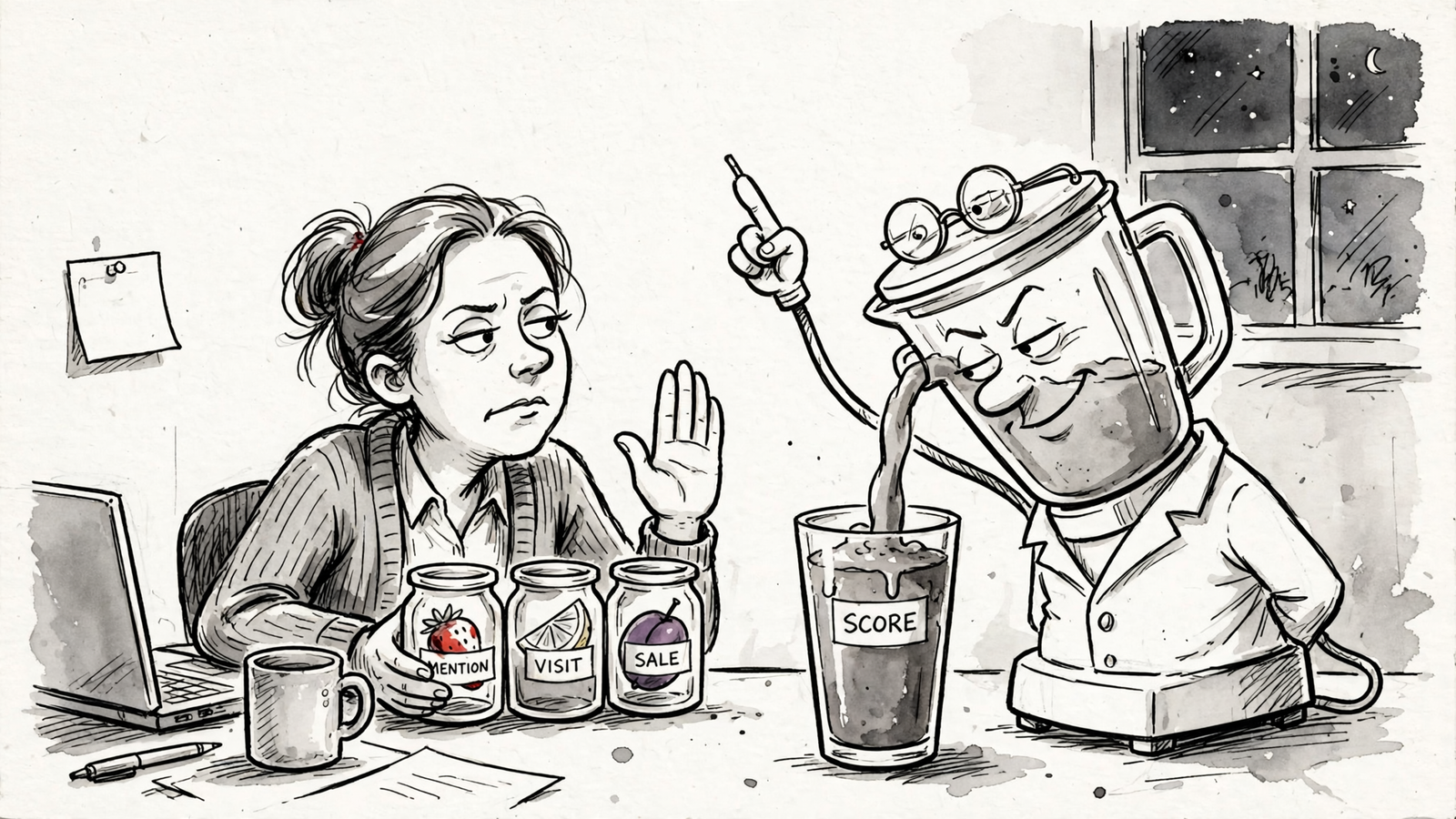
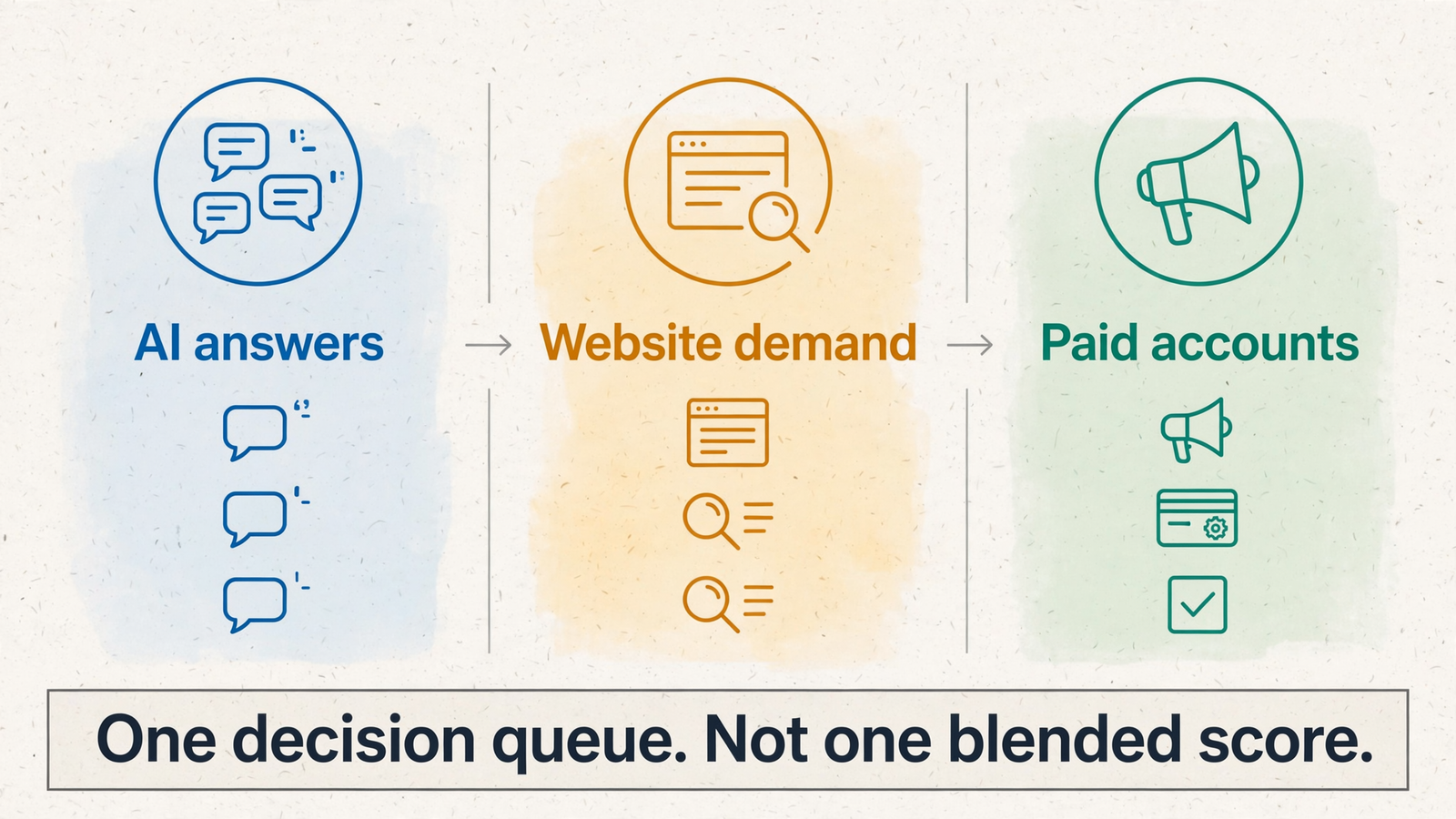
The goal is one decision queue, not one blended score. A mention in an AI answer, a visit in GA4, and a conversion in Google Ads are three different observations. They can inform the same decision. They don’t prove the same buyer moved through all three.
What should I connect to Claude first?
Start with groas and skip the pile of standalone tools. Claude is where I ask the questions. groas connects the accounts and website and supplies the data Claude can’t invent: competitor ads and funnels, Reddit research, AI answers, and SEO data from Semrush and Ahrefs. The point of the groas connection for Claude is that I don’t have to buy a visibility dashboard, keep a separate ads spreadsheet, and join the evidence myself at midnight.
How do I make sure Claude has the right business?
- Check the permissions before you connect. Claude’s connector support page explains that connectors inherit the connected person’s permissions. That person sets the ceiling for what Claude can do. Custom remote MCP connectors are available across plans, with Free limited to one.
- In Claude, open Customize → Connectors → Add → Add custom connector. Name it
groas, pastehttps://mcp.groas.ai/mcpinto the URL field, and leave the detected sign-in options as they are. Claude’s custom connector documentation covers the URL-based flow, and the groas setup page walks through sign-in. - Click Connect and sign in to groas. Ask Claude to list the business, website, and any ad accounts it can already see. If the list is wrong, stop before you ask for analysis. A confident answer from the wrong account is worse than no answer.
What does the setup cost?
Budget for groas and Claude separately. groas Unlimited is $19 a month, flat, for the whole team, with unlimited teammates, ad accounts, and websites. There isn’t a free groas plan. Contengi’s solo marketer stack guide lists Claude Pro at $20 a month on monthly billing or the equivalent of $17 a month on annual billing. If you want to budget for review time as well as subscriptions, see groas’s breakdown of the first marketing MCP bill.
In what order should I connect the evidence?
Buyer questions first, website demand second, paid accounts third. That’s the order I want Claude to examine the evidence, even if it can already see some accounts. Start with the dashboard you spend your evenings in and you’ll get better acquainted with that dashboard. It still won’t tell you what buyers saw before they got there.
1. What answers do my buyers see?
Start with the buying questions you track. In Adthena’s Black Friday search data, the US query tvs showed an AI Overview 2.6% of the time in September–October 2025 and 98.6% in the same period in 2026. Adthena reports similar rises for best tv and stand for tv in its tracked retail data. That’s a reason to check your own terms, not a forecast for them.
Ask Claude:
For our tracked buying questions, show which answers mention us, which cite us, and which cite competitors. Include the platform and observation date.
A mention isn’t a citation, and a citation isn’t a visit. As Ahrefs explains in its guide to tracking AI Overviews, Google blends AI Overview clicks into organic search. A count of citations doesn’t tell you how many visits those citations produced. If you want to check what your citation tracking is picking up, use the four-week citation audit to separate fetches, prompts, and gaps before you promise anyone a lift.
2. What demand can I measure on my site?
Connect the website, Search Console, and GA4 next. Ask Claude for relevant pages, queries, and measurable outcomes. Then make it put the evidence in two lists:
- Measured demand: pages and queries from Search Console, alongside the site outcomes you can measure in GA4.
- Observed answer exposure: pages and queries that show up in AI answers, with the platform and observation date.
Don’t let Claude turn the lists into a story about how the same buyer got from one to the other. ProfileTree’s analysis of AI Overview traffic notes that Search Console’s Generative AI report shows URL appearances in generative AI features by page, country, device, and date. A reported appearance isn’t proof of an AI Overview click. GA4 doesn’t isolate that traffic from google / organic, and visits from ChatGPT, Gemini, or Claude don’t belong in an AI Overview traffic tally.
Where the lists overlap, you have a place to investigate. Where they don’t, you have a question, not a conclusion. Keep both lists visible when you decide what to do next.
3. Which paid accounts do I actually operate?
Bring in the relevant Google, Microsoft, or Meta accounts now. Before Claude compares anything, have it confirm the account IDs, date ranges, and conversion definitions. It sounds bureaucratic until you catch a recommendation that treats a Meta purchase, a Google lead, and a GA4 session as the same event. That’s not a basis for moving budget.
Adthena’s category data makes the distinction useful in practice. In its tracked categories, ads still appeared ahead of the AI Overview 70–93% of the time in September–October 2026, while a different set of winners picked up citation share. Report paid position, citation share, and site outcomes on separate lines. Anything else is a blended score wearing a lab coat.
How do I turn the evidence into one work queue?
I want Claude to separate observed facts, hypotheses, and missing evidence. A fact can get a deadline. A hypothesis gets a test. Missing evidence gets a question I refuse to answer from memory.
Use this prompt:
Separate observed facts, hypotheses, and missing evidence. For each item, name the source, the date, and the next action that would change the decision.
Then check whether Claude sends each problem to the right place:
- An inaccurate offer page goes to the website queue. Have Claude quote the page, show what the AI answer says, and propose the smallest edit that makes the page match the actual offer. A discrepancy tells you where to look; it doesn’t tell you which version is right.
- A citation gap goes to the answer-exposure queue. If competitors get cited and you don’t, look at which pages get cited and what they answer that yours don’t. Skip the full-site rewrite.
- An underperforming campaign goes to the paid queue. Look at spend, the conversion definition, the date range, and whether the landing page still matches the ad. A blog post about AI visibility doesn’t fix that problem.
These can sit in one work list without becoming one diagnosis. If Claude turns all three into a recommendation to “improve visibility,” send the queue back.
What should I do first when the list is too long?
Rank the actions by demand evidence, business relevance, effort, and reversibility. Fixing a wrong price or filling in a missing comparison table beats a speculative content brief. A campaign pause backed by paid performance under a clear conversion definition beats a vague visibility task. When the evidence is thin, favor the change you can reverse.
One rule I’d write on the wall: don’t move ad budget just because an AI visibility score changed. A change in the score gives you a reason to check answer exposure against your own performance, not a license to move money. Adthena presents its impact data as a reason to check your own terms, not as a universal benchmark. If a campaign is profitable on its own terms, the answer data still has to make a separate case for changing it.
When should I let Claude make a change?
Keep the first week read-only. Check Claude’s answers against the original platforms before you authorize writes. More connectors aren’t a substitute for that check: each server adds tool descriptions to Claude’s context, and too many can make it choose the wrong tool. Coupler’s marketing MCP guide recommends starting with two or three servers for one recurring weekly task. If groas covers that task, skip the extras.
When the answers check out, approve one action:
- Ask Claude to review one proposed page update or campaign change and state the scope in plain English.
- Approve that scope, then have Claude execute the change through groas.
- Open the groas change log and compare the recorded action and reason with what you approved.
groas logs every change with its reason and lets you undo it in one step. If the log doesn’t match the approval, stop. Undo the change if needed and fix the instructions before you authorize another one.
What can run while I’m not in the chat?
Leave autopilot off until the rules are written down. Autopilot is groas running a campaign, an ad account, or a website around the clock under rules you set. It stays off until you switch it on. Before I touch that switch, I want three answers in writing:
- Which publishing actions need my approval?
- What budget limit applies to changes that don’t need my approval?
- What conditions send a decision back to me instead of triggering an automated change?
Oppira’s guide to the one-person AI stack makes a point I agree with: start with context, drafting, and publishing, keep strategy and final approval manual, and add tools when a real gap shows up. A drafting assistant without your positioning writes plausible copy for a company that isn’t quite yours. An execution assistant without limits can do the equivalent in your account. If you can’t write the rules yet, leave the switch alone.
How do I know the setup is worth keeping?
I run four checks before I call it done:
- Sources. Claude names the source and date for every claim in the queue. No source, no action.
- Priority. Claude gives me one next action based on demand evidence, relevance, effort, and reversibility. Twelve equal priorities is a list of zero priorities.
- Limits. Claude says what it can measure and what remains unknown. If it can’t tie a visit to a citation, it says so.
- Reversal. Once I’ve approved a change, I can find it, read the reason, and undo it.
The first thing to do today isn’t to enable autopilot or buy another tool. Run the buyer-question prompt on five questions you actually sell against. Read the answers with the sources attached. If you find a mismatch, check it against the actual offer. If your page is wrong, fix the page. That fix, not a score, is what gets done first.





