

 LinkedIn
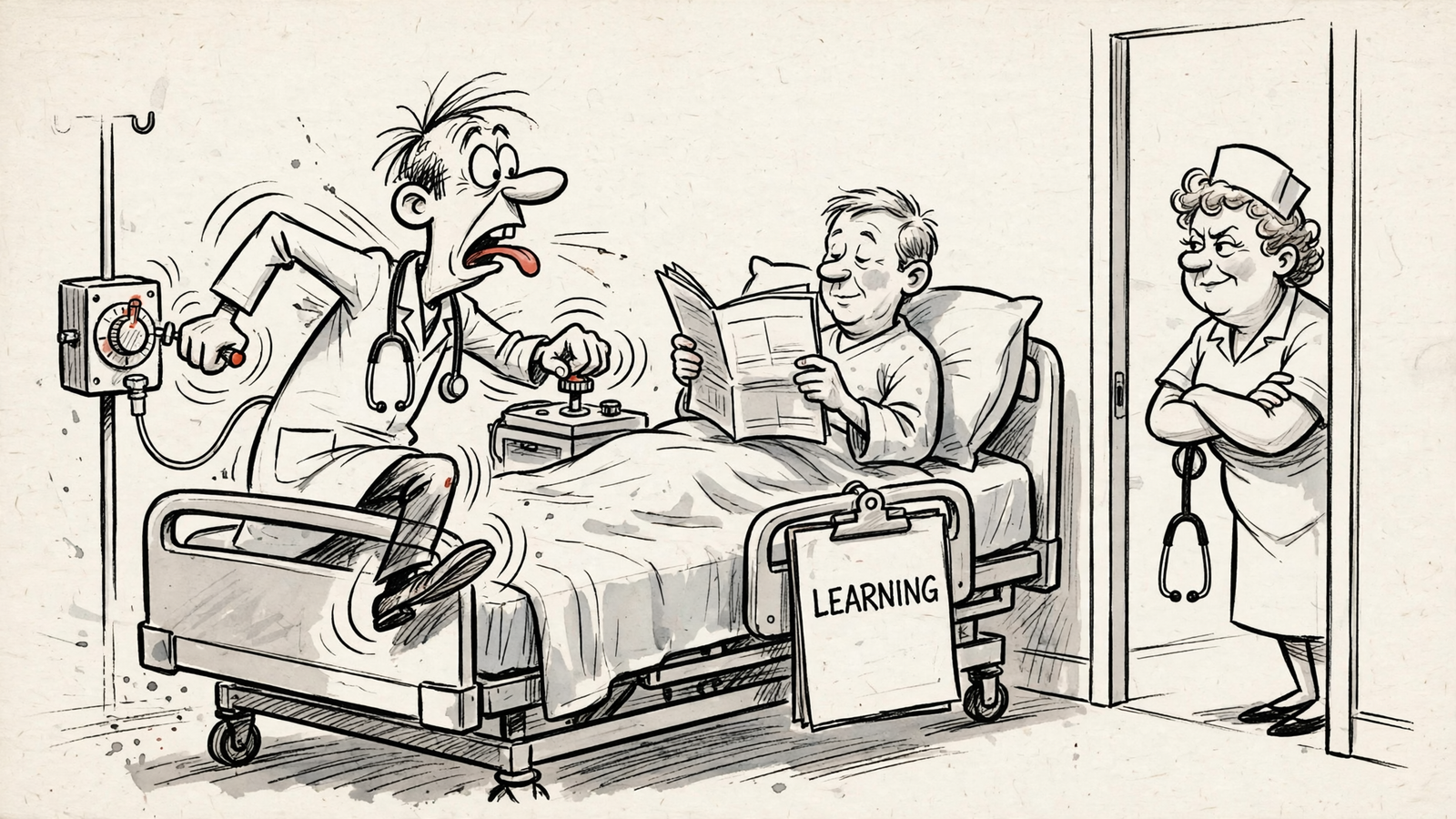
Stop asking your Google Ads AI agent to fix the Learning phase. Learning is a status, not a diagnosis. If your agent lowers a target, changes a budget or swaps a bid strategy just because a campaign is ‘still learning’, it hasn’t found a problem. It’s added a change you’ll have to account for when you try to find one.
I used to treat every warning badge as a job to do. I was wrong. A campaign can lose the Learning label and still be bidding on thin, delayed or broken conversion data. Only the last of those calls for fixing the input right away. The first job I give an agent is to tell me which one I’m looking at. If it can’t, I don’t give it a second job moving the target.
Start with the 490 clicks, not the badge
In one Reddit thread about an aesthetics clinic’s Google Ads campaign, the clinic reported 490 clicks and zero recorded conversions after three to four weeks. The useful argument wasn’t ‘wait longer’ versus ‘edit faster’. It was whether tracking picked up enquiries that came in through other channels, whether anyone had checked Google Ads against the clinic’s own records, and whether the clicks came from people likely to book.
Zero recorded conversions isn’t proof of zero enquiries. The distinction decides what I do next. If the clinic has enquiries that Google Ads should have recorded but didn’t, a lower bidding target won’t make them appear in the account. If the clinic has none and tracking works, the traffic and the offer are worth a look. And if the agent hasn’t seen the clinic’s records, it can’t pick between those explanations. The 490 clicks make the zero worth investigating. They don’t tell me what to fix.
Google’s Smart Bidding guidance treats Learning as a bidding status: the system is calibrating after a change such as a new or reactivated strategy, a change in what the strategy covers, or a significant change in conversion goals. Ads keep serving. The label doesn’t tell me whether an enquiry form reaches sales, whether the landing page works on a phone, or whether the offer matches the search. I want the agent to check what the zero means before it writes me a story about the bids.
A seven-day countdown doesn’t tell me when to intervene
The label and the evidence run on different clocks. Google frames calibration in terms of conversion volume and time: up to roughly 50 conversions or three conversion cycles, as Search Engine Land reported. At five conversions a day, that looks nothing like five conversions a month. That’s why I don’t take a day count from a help page and turn it into a standing order to edit.
A conversion cycle isn’t a day. It’s the time from click to conversion, including any lag before the conversion is imported or reported. Google points advertisers to the bid strategy report for the conversion cycle and predicted unreported conversions. If the cycle is three weeks, the label can clear long before the conversions I need to judge the campaign have arrived. The disappearance of a badge doesn’t make the latest clicks any older.
For a clearer assessment of bid strategy performance, Google recommends at least two full conversion cycles and ideally a month or 50 conversions. I use that guidance to ask whether the data is ready to judge, not to schedule a target change. If the agent wants to call the latest stretch worse than the one before it, I want to know whether both stretches have had time to report. ‘Give it seven days, then change the target’ gives me a date. It doesn’t give me a reason.
Make the agent show its work before it proposes a fix
I don’t start with ‘Fix this campaign’. I start with a smaller job and make the last sentence explicit:
Read this campaign’s bidding status, conversion actions, recent changes and performance. Make no changes.
Then I ask for the date range, conversion volume, reporting lag and any evidence the agent can’t see. Without those four things, Claude or ChatGPT can’t tell me whether waiting is patience or procrastination. It can only guess. A confident guess is still a guess, even when it comes with a cleanly formatted action plan. That’s the case for not rewarding ChatGPT for changing your ads: activity isn’t evidence of judgement.
This is where I’d rather connect groas to Claude or ChatGPT than work from a screenshot I pasted last Tuesday. With the live Google Ads account in view, the agent can inspect the conversion actions and recent changes before I authorise an edit. Is an action inactive or duplicated? Did a budget, target or strategy change land inside the conversion cycle? Is there enough volume to assess performance at all? I want the account evidence and the arithmetic before I want a recommendation.
Separate what Google recorded from what the business can verify
I ask for two columns:
- What the account establishes: which actions are active, what Google recorded and when, and what changed in the account.
- What needs checking outside Google Ads: whether the form reached the inbox, whether someone answered the call, whether sales qualified the lead, and whether the landing page works on a real phone.
If the account shows form starts but no recorded submissions, it shows a gap between those two counts. It doesn’t tell me why the gap exists or whether anyone enquired another way. ‘No submissions recorded’ belongs in the first column. ‘No enquiries reached sales’ needs a check in the second. If conversion volume is thin after two cycles, I know I have thin evidence. I don’t know that the offer is weak. Until the agent can put its diagnosis in the right column, it hasn’t finished the job.
Put the changes in order before adding another
I ask Claude to list every budget, target, bidding and conversion-setting change in date order, then read performance against that timeline. If the campaign was already sliding before Tuesday’s target change, Tuesday’s change didn’t start the slide. That sounds obvious until the agent hands me a tidy explanation built around the last thing anyone touched.
A change can affect bidding without bringing back the Learning label. A budget or target edit can affect bids from the next auction. Meanwhile, conversions reported after that edit can still come from clicks under the old settings. So if the agent points to conversions that arrived after Tuesday as proof the new target worked, I ask which clicks produced them. When the conversions showed up and which settings produced them are two different questions.
Cascader’s analysis of Learning status puts the timing in perspective: with a three-week conversion cycle, convergence and evaluation can stretch to three to six weeks or more. The timeline can rule out a neat explanation. It can’t prove which change caused every shift. And deliberately triggering Learning isn’t a clean restart: Smart Bidding still has account conversion history. Before I let anyone turn another dial, I want to know which version of the campaign the numbers describe.
Fix broken inputs now. Leave thin evidence alone.
Here’s what I don’t wait on: tracking that misses or duplicates conversions, an action counting every conversion when it should count one, an obsolete Universal Analytics import still configured, or a checkout pixel that stops firing after a Shopify theme edit. These are broken inputs, not optimisation calls. Smart Bidding can’t learn its way out of data it never receives or receives twice.
A thread about 250 clicks and zero conversions described dead imports, a broken pixel and inactive actions. Those are things I can test, not reasons to give the campaign another week. I place a test order, submit a form or import an offline conversion, depending on which action I’m checking, then watch for it to arrive. If I confirm the action isn’t recording as it should, I fix that path first. An agent that proposes a new target while the action it’s supposed to bid towards is inactive has failed the first test.

If tracking checks out and the evidence is thin, I do the opposite. No target nudge because the dashboard looks quiet. No restructure to fill the waiting period. I write down when to look again: after two full conversion cycles or after a stated number of recorded conversions, whichever comes first. That’s a review condition, not permission to edit. Hitting the volume first doesn’t tell me what’s still unreported. Hitting the time window first doesn’t give me conversions I don’t have. At the review, the agent still has to tell me what has arrived and what’s missing.
At $30 a day and roughly nine conversions a month, collecting 30 conversions takes more than three months. A fixed countdown hides that arithmetic. A review condition makes the agent show it. If the first review comes round and there still isn’t enough evidence, I want that answer in plain English, not a small bid change to mark the occasion.
Make the agent defend the edit, not the wait
Once I have the evidence, I give the agent one more instruction:
Explain why changing this campaign now is better than waiting. If the evidence is insufficient, say so.
‘Optimise this’ sounds like an instruction to touch something. This prompt makes the agent argue for the edit against the cost of another change. That cost isn’t just the effect on bidding. It’s having one more thing to account for when the delayed conversions come in. ‘The evidence is insufficient’ is a complete answer. If an agent can’t give me that answer when the account warrants it, it’s a churn machine with good grammar.

Then I make that rule stick. I require approval before a proposed correction goes live, and I log the reason in words a human can make sense of later. I leave autopilot off unless I’ve set the rules:
- What conversion volume to look at and over what window.
- What condition justifies a change.
- What the agent must never do.
It’s the same argument I make about high ROAS and automation without strategy. Someone has to own the decision. I don’t hand it to a badge.
Judge the decisions, not the change log
I count how often the agent catches a broken conversion action before suggesting a bid change. I count how often it names the conversion cycle and reporting lag instead of inventing a countdown. I count how often it says the evidence is insufficient and stops. That agent looks quieter than the one that edits every time I ask for an update. A quieter change log is the point when the alternative is a pile of edits I can’t separate from the results I’m trying to explain.
So stop asking your AI to fix the Learning phase. Make it read the evidence, separate what Google recorded from what your business can verify, and justify any change against doing nothing. Fix broken inputs as soon as you find them. When the evidence is thin, wait for a condition you can state, not a date you can’t defend. Otherwise, by the time the conversions come in, you’ll be trying to judge the campaign through a stack of edits nobody needed.





