

 LinkedIn
Stop shopping for the best AEO software. Your agency’s margin does not die on the tracking seat. It dies in the hours after the dashboard tells your team what to fix.
I watched agencies make this mistake in PPC. They bought reporting, then paid their own staff to do the work the report listed. The agencies now asking me about the best AEO tool for agencies are buying the same split: a visibility score on top and a to-do list of content, schema, technical fixes and CMS publishing underneath. Across 10 client domains, tracking is the small bill. Execution is the retainer.
The first question agencies ask is the wrong one
When an agency owner searches for best AEO software for agencies, they usually mean best dashboard. Most comparison posts oblige. They rank tools by prompts tracked, engines covered and how clean the white-label report looks. Those features are easy to compare, so they become the buying criteria.
I used to tell clients something similar about PPC tools in 2015. Buy the best reporting, I said, and your team will act on it. I was wrong. Reporting never did the work. It made the undone work more visible, once a week, in a PDF with your logo on it.
AEO trackers can tell you whether a client was mentioned and which URLs got cited. Useful information. Then comes the job that might change the next report: deciding what to change and shipping it. A tracker can show a missing citation; it cannot make an unfinished page publish itself. Judge the tool by what happens after it finds a gap.
The conventional advice: buy more prompts, more engines, a nicer PDF
The standard roundup tells you to buy coverage. Count the prompts, count the engines, check the white-label box, pick a plan. Otterly.ai lists Lite at $29 a month for 15 prompts, Standard at $189 for 100 prompts across ChatGPT, Google AI Overviews, Perplexity and MS Copilot, and Premium at $489 for 400 prompts. Profound Starter is $99 a month for ChatGPT-only tracking on 50 prompts; Growth is $399 for 3 engines and 100 prompts plus 6 optimized articles. Peec AI Starter runs about 89 euros for 25 prompts, and Pro about 199 euros for 100.
Those plans are not identical. That is part of the problem with shopping from a feature grid: you can spend an afternoon comparing prompt allowances without pricing a single hour of the work the prompts will uncover. Coverage is not fulfillment.
Why the dashboard bill hides the expensive work
Tracking finds gaps. Someone still has to close them for each client, every month. The to-do list is familiar: pages that never get cited, prompts where a competitor owns the answer, missing schema, content that needs a clearer direct answer. None of it ships itself.
An agency-versus-tool breakdown draws the distinction: tools provide analytics, tracking dashboards and prompt research; agencies provide audits, schema setup and content creation. If you buy the tool alone, execution sits on your team’s shoulders. The comparison table skips that part because your payroll does not fit neatly in a feature grid.
The PPC mistake, wearing an AEO badge
In PPC, agencies charged a percentage of spend, sent a polished monthly report and still had to do the search-term mining and ad testing. The report was easy to sell. The work was easy to defer.
AEO repeats the shape with different labels. Pay for a prompt bucket, get a visibility score, keep the labor. What the deck calls AI visibility coverage, I call paying for a list of jobs your team still owns. The hidden cost is not only hours. It is insight accumulation: data you collect but do not act on, plus the time spent learning and testing another dashboard. Data piles up. Citations do not move.
If the vendor sells findings, put fulfillment in your own cost model before you quote the client.
The cost breakdown: 10 domains, then one domain’s work
Here is the total first, because agencies buy backwards. For 10 client domains, the delivery estimate is $14,050 to $23,700 a month once content, fixes, publishing and reporting are counted. Tracking is under 10% of that estimate. The table shows the line items behind the decision: a monitoring seat that can serve a book of clients, and work that must be delivered for individual domains. Do not mistake the seat price for the cost per client.
| Line item | Timing and cost driver | Figure and source |
|---|---|---|
| Monitoring seat | Recurring; prompt allowance and engine coverage. A seat is not necessarily one seat per domain. | Otterly.ai: $29/month for 15 prompts, $189/month for 100 prompts, or $489/month for 400 prompts |
| Prompt overages and engine add-ons | Recurring when the chosen plan does not cover the prompts or engines you need. | Otterly.ai: $99 per extra 100 prompts; AI Mode add-ons at $9 to $149/month and Claude add-ons at $29 to $439/month, depending on tier |
| Content brief and article | Recurring when you commission content; research, brief, draft, edit, fact-check and publishing still take time. | Freelance writing at 25 to 45 cents per word puts a 1,500-word article at $375 to $675 |
| Technical fixes and schema | Largely one-off implementation, followed by QA; template access, scope and the developer queue drive cost. | The draft’s specialist-rate estimate is $50 to $200/hour; its audit estimate is 5 to 20 hours. No vendor price is quoted for a completed fix. |
| CMS publishing and QA | Recurring with each article; client logins, CMS differences and revision rounds drive time. | The draft estimates 1 to 2 hours per article when nothing breaks. |
| Client reporting | Recurring; the report and the call both take staff time. | The draft estimates 30 to 60 minutes per client per month. |
Multiply the work by 10, not just the prompts
Run that table across 10 clients. The monitoring seat looks manageable until prompt caps and engine add-ons bite. Otterly.ai Agency Partners get 150 prompts on Standard versus 100 on direct plans, and 500 on Premium versus 400. Ten local clients at 30 buyer prompts each call for 300 prompts before you expand the coverage further. Extra buckets cost $99 per 100 prompts; engine add-ons can raise the bill again. Tracking can move from roughly $189 to well over $500 a month for the book and still remain the smaller cost.
Content scales differently. Commission one 1,500-word article per client per month at $375 to $675 each and you have $3,750 to $6,750 in writing costs across 10 clients, every month. That is before publishing and QA. Technical fixes are largely one-off, but their timing depends on access and a developer queue. Reporting recurs whether a citation moves or not.
Those are the listed or readily estimated costs. The hidden costs are where the retainer gets chewed up: onboarding to each CMS, separate reporting software, QC and rework when a cheap article fails fact-check, and scope creep when the tracker flags eight new gaps the week after you shipped two. Merchynt identifies onboarding fees, reporting software, essential add-ons, and QC and rework as the gap between sticker price and total cost. A vendor can make its seat look cheap while leaving every one of those jobs on your payroll.
Merchynt puts white-label local SEO wholesale at $299 to $1,200-plus a month and describes shops targeting 40% to 60% gross margin, typically by pricing at twice provider cost. That model assumes fulfillment is in the cost you priced. With a monitoring-only AEO tool, it is not. The cheapest mistake is overbuying prompts. The most expensive is selling a $500 AEO add-on that creates $1,400 of work. Price the close, not the check.
Buy the work that follows the score
If you sell AEO, buy execution. A vendor that only tracks prompts has sold you a to-do list. A vendor worth a delivery retainer can write the article, ship the schema and technical fix, publish in the CMS, then show what happened to citations. That is the test I run now: one client login, one month, and a count of shipped pages and fixed templates. Not a count of tracked prompts.
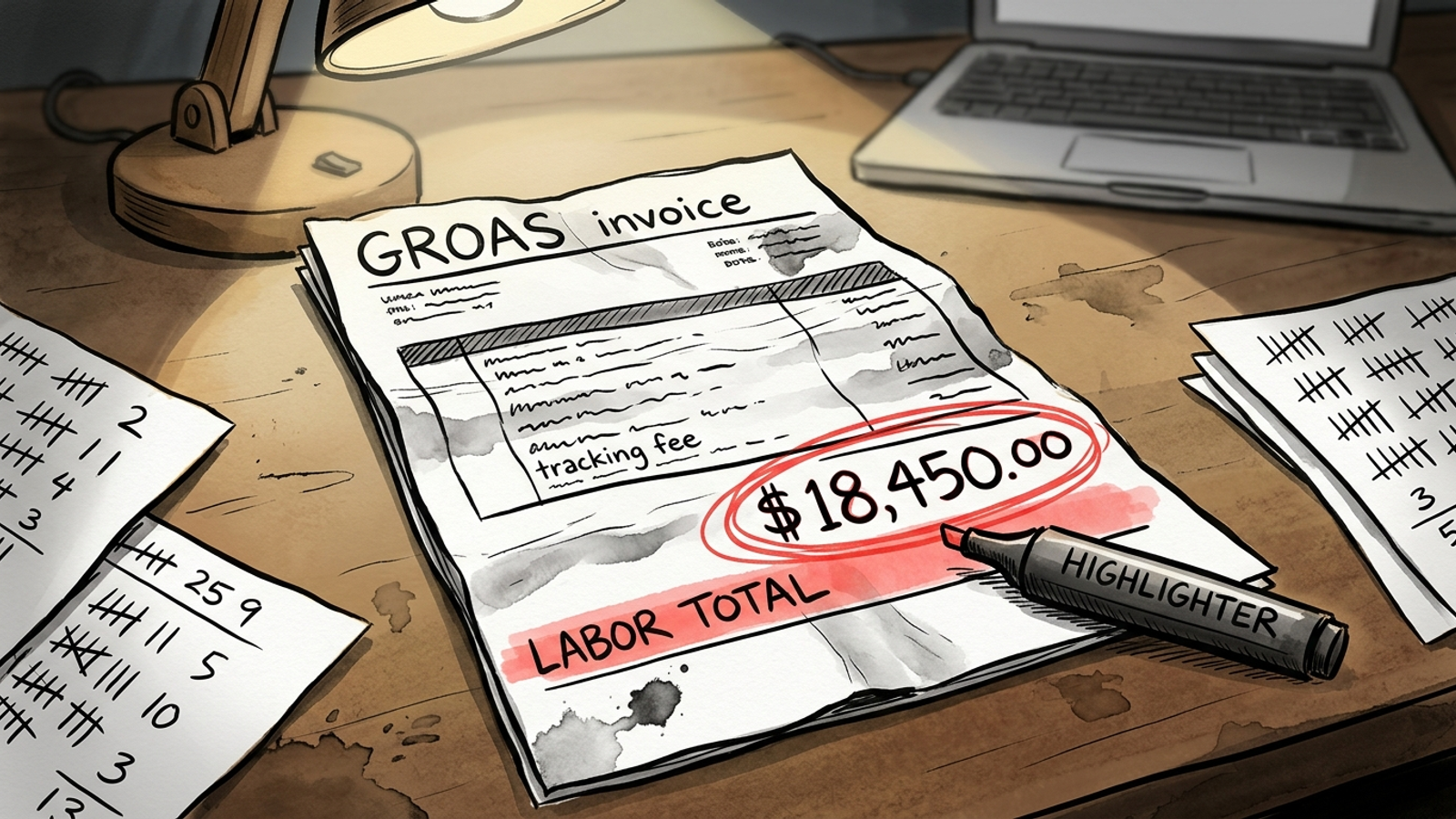
groas offers agencies white-label delivery across paid ads, SEO and AI visibility under their brand, with content, technical fixes and citations included and actions logged with their reasoning. Its agency pricing starts at $199 a month per client domain. I do not care how tidy that sounds in a deck. I care whether the quoted price covers work my payroll would otherwise absorb. Ask who writes, who fixes and who publishes. If the vendor cannot answer, it is selling a score.
Make the price predictable before you quote the retainer
Per-prompt pricing makes your costs move as you expand tracking. Add a client, add prompts. Add the engines a client wants covered, and add-ons may follow. At 10 domains, that is a poor match for a fixed client retainer when the labor stays yours.
Flat per-domain pricing gives you a cost to put beside the retainer before you sell it. You can see the spread without counting prompts on a client call. I break down why prompt caps inflate costs and why per-domain pricing avoids them separately. The rule here is shorter: if tracking costs rise while fulfillment remains your problem, walk away.
Put AEO inside the retainer you already fulfill
Many agencies reading this already sell white-label local SEO by the domain: citations, GBP work, pages and reports. AEO belongs in that delivery conversation, not beside it as a second dashboard the client has to approve. The buyer is the same local owner, and the work overlaps. A separate visibility report does not remove the need to write, fix and publish.
Before you sign a vendor, run the same test: who writes, who fixes schema, who publishes, and whose logo does the client see? If the answer leaves fulfillment on your team, it is just a dashboard. Price the real work inside the package, then protect the margin you quoted.
The exception: a team with hours to fill
I would make one exception. If you already carry full-time writers and developers with open hours, a tracking-only seat can work. You have the labor, and the to-do list has somewhere to go. The calculation changes when utilization, rather than contractor cost, is your problem.
For everyone else, another dashboard does not make a $500 add-on profitable while writers bill by the word and developers queue the fixes. Buy for the bench you have, not the team you wish you had.
Keep buying the best dashboard and you will report more gaps each month than you close. Clients will ask why citations are not moving; your team will absorb the answer in nights, revision rounds and work you never priced. That is how margin dies: not on the tracking seat, but in the delivery bill behind it. Buy execution priced flat per domain, fold it into the retainer you already sell, or do not sell AEO at all.