Dentsu vs Tinuiti and Wpromote: Who Should Run Enterprise Search?
October 3, 2026
•
11
min read


Tuesday, just after nine, the home-services account was charging a little more for the same clicks. My coffee was going cold, and this was supposed to be the easy one of the six accounts I had to check before standup. Spend was running at its usual monthly pace. Search terms were clean after Sunday night’s negative pass. For three months, the numbers had sat where I wanted them. Quiet.
I opened it anyway. Impression share was a touch lower. Average CPC was a touch higher. Nothing that called for a client conversation, but enough to make me stay on the screen. After years of building accounts by hand, I had learned to listen when one mumbled instead of waiting for it to shout.
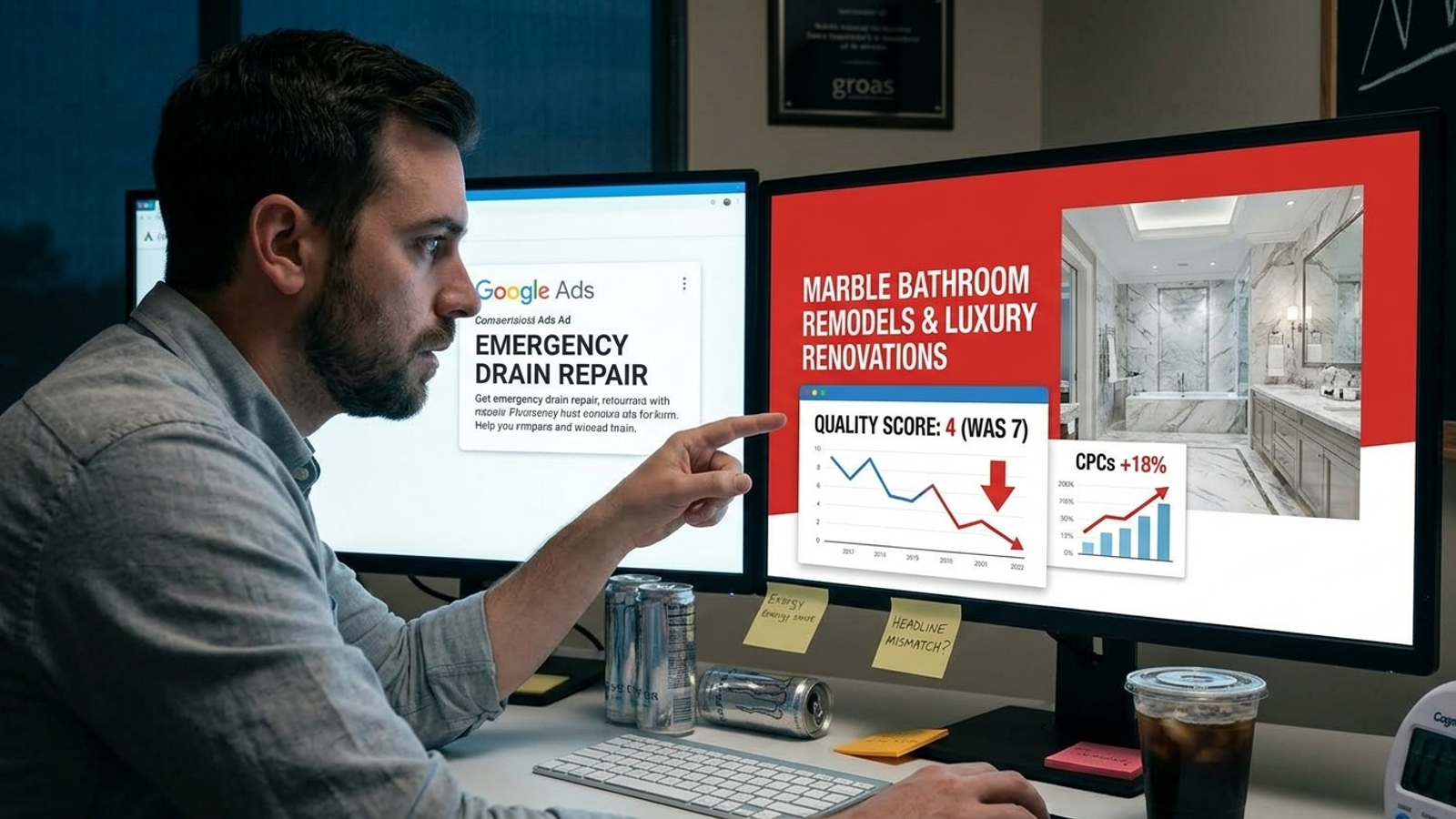
By Thursday it was shouting. Two of my best ad groups had fallen from 7s to 4s on Quality Score, and average CPC was up about 18% on the same exact keywords. Budgets and match types had not changed. I could not see a new competitor in the auction. The account had moved, but I had not moved it.
Quality Score is a 1–10 keyword diagnostic built from expected click-through rate, ad relevance and landing page experience. Those components gave me somewhere to look, though not a neat explanation for every cent of the CPC increase. I checked bids, then budgets for a throttle. I checked auction insights and pulled search terms to see whether junk had crept in. I used to tell clients that a CPC spike meant Google had done something. I was wrong often enough that I stopped saying it.
This time the search terms were still clean and the bids were untouched. The component I checked last had flipped: landing page experience was Below Average across the affected ad groups. A month earlier, the page had been Above Average. I knew the distinction could matter; ads with Above Average landing page experience and ad relevance have been associated with CPCs about 36% below average. I also knew the visible 1–10 score is a backward-looking diagnostic, not the live auction price. A 4 did not account for every cent. But the same component turning sour in two strong ad groups gave me a place to go next.
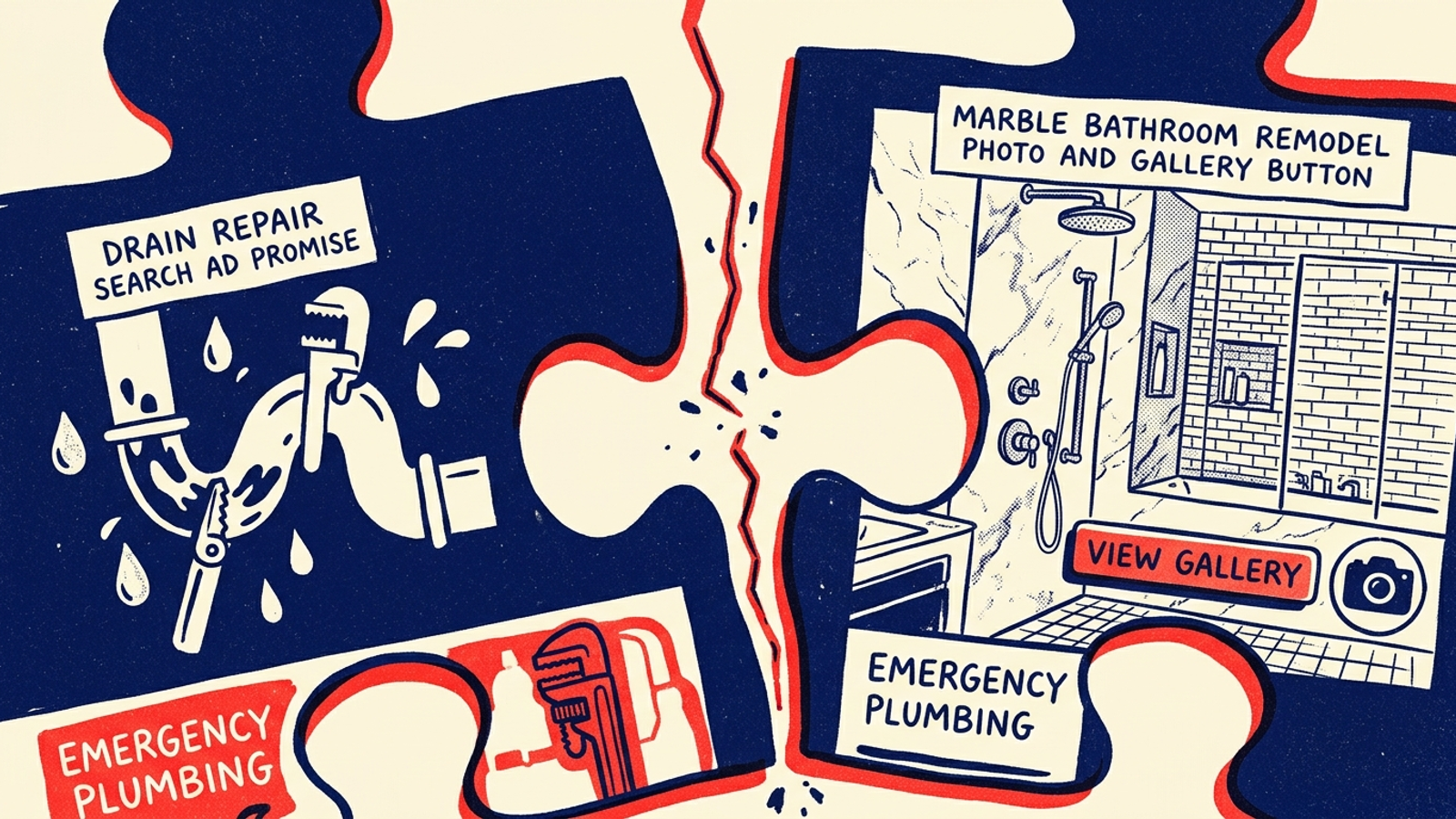
I finally did what I should have done on Tuesday: I opened the ad’s destination in a private window and read the page like a customer, not an account manager. The ad still made the promise I had written: same-day drain repair, upfront pricing, the city name in headline two. The page made another one. Its H1 talked about whole-home plumbing care and remodels. A stock photo of a marble bathroom filled the screen. A gallery button sat where the phone number and booking form used to be above the fold.
The headline no longer matched the ad. That sounds small until the person who clicked for drain repair lands in a bathroom gallery. I had seen direct-match headlines outperform clever ones, and the old Moz tests reported lifts from headline and full-message alignment. The practical rule was less glamorous: the H1 should echo the ad headline and keyword. When a page loses that connection, the visitor has to work out whether they are even in the right place. Comparisons of Above Average and Below Average landing pages show how large the conversion gap can be. This was not a debate about whether I preferred the old font. The click had asked for one service, and the page answered with another.
I scrolled. Drain repair appeared three paragraphs down, beneath a section about renovations. Load speed was fine. The mobile layout was fine. The page still had a CTA and trust badges, the things that can make a landing-page checklist look reassuring. None of them put the drain offer back where the visitor expected it. A customer looking for the phone number could keep scrolling, but that was work the old page had not asked them to do. The marble bathroom looked polished. It was doing the wrong job.
I called the client that afternoon and asked who had touched the site. There was a pause, then the laugh people give when they already know the answer will be awkward. Their office manager had hired a freelancer to freshen up the website: new headlines, new photos, a proper gallery. The drain page had become a plumbing page, then effectively a remodel page. Nobody told me. In their minds, the website was their department and the ads were mine. Each decision made sense from inside its own department. The gap between them was where we were paying for clicks.
Two owners for one click.
I owned everything before the click and nothing after it. I had been checking the machinery of an account that was sending people to a page I had not seen since the swap. I told the client we were advertising drain clearing to someone searching at 9pm, then showing that person remodels. He went quiet. That explanation needed no Quality Score chart. It also made clear why another bid adjustment would have missed the problem: no bid could make that gallery answer the search.
We got the old page back from a backup that Friday. Its H1 matched the ad again. The phone number was pinned above the fold, the booking form was back, and the first paragraph said drain repair in its first seven words. I changed nothing else in the account that day except the final URLs back to the restored version. The click and the page were making the same promise again.
The scores did not snap back on Monday. That is the irritating part of fixing a mismatch after the fact. Quality Score is a diagnostic drawn from performance over time; restoring a headline does not instantly replace the history behind the grade. Our 4s sat there while I watched search terms like a hawk. It took the better part of a month before 6s came back and CPCs settled toward where they had been. I could put the right page back in a day. I could not get those weeks back.
Other published cases gave me a useful comparison, not a promise that every repaired page would behave like ours. One team that realigned page messaging to ad intent reported conversion rate up 115% and cost per conversion down 35%. An estate-planning account pairing rebuilt pages with tight match moved from 20 to 47 conversions while CPA fell from $305 to $91. Different accounts, different changes. The part I kept coming back to was what a visitor saw after clicking: did the page continue the offer, or make them search for it again?
For a while, I had treated landing pages as something to inspect when the account pointed me there. That month changed the order. A page could pass its speed check, look clean on a phone and still break the promise that brought the visitor in. A manager could spend an entire morning adjusting bids around that break. I nearly did. The account diagnostics eventually led me to the page, but I had already paid for the delay between noticing the CPC movement and opening the destination.
If one product always sends traffic to one page and nobody else touches the site, this may be less of a problem. That was not this client. An office manager, a freelancer and an ads manager each had a sensible piece of the work. Nobody owned what happened when one piece changed under the others. I did not need another monthly report to tell me that. I needed to know about the edit before I paid to send the next person to it.
I want the ad and the destination built together. That is why I now look at dynamic landing pages that adapt to the search rather than assuming one static drain page will suit traffic from four ad groups. If the headline, subhead and first proof block reflect the query that triggered the ad, the visitor can see the connection without digging through a gallery. The caution matters too: thin or mechanically swapped text can hurt landing page experience when the result no longer reads as a cohesive page. Changing the words is not enough if the page stops making sense. The whole page still has to answer the same request as the ad.
I keep one agency test in mind because it paired dynamic text replacement with a cleaner layout and reported a 290% conversion-rate lift, a 78% drop in cost per conversion and nine times the lead volume. I would not credit a headline alone for a test that also changed the layout. But its setup gets at the work the remodel page failed to do: carry the ad’s offer through to the action a visitor came to take. Make the phone number easy to find. Do not put a gallery between a drain problem and a drain-repair form.
The other change is dull, which is why I trust it: an alert when a destination changes. An edit to the H1, final URL, form or phone number should reach whoever owns the bids that day, not surface in a monthly report. Those are not cosmetic details once an ad is sending traffic to the page. Each can change what happens after a person clicks, even while the campaign settings look exactly as they did yesterday. I think of quiet final-URL swaps that send good traffic to the wrong page as the same failure in a different field. When I run Quality Score diagnostics, I check components by ad group and open the destinations. The alert is there so I do not have to discover a swap only after the grade moves.
I stopped asking for better communication as though one more reminder would solve the handoff. Asking a busy office manager to remember which ad headline depends on which page headline is a fragile system. What I want is fewer owners of that promise. When groas builds campaigns I work on now, the ad copy and landing page come from the same models in the same week. It is an unromantic operational detail. It would have mattered more to that Tuesday than another hour in auction insights.
I still check accounts before standup and search terms after a Sunday-night negative pass. When CPCs move, I still look at components by ad group. Now I open the destination early and read it against the ad, as if I were the person who typed the query at 9pm with water on the floor. If the H1 says drain repair, I can keep investigating. If it says remodels, I know where to start.
The old page had the answer in its first seven words. The replacement had a marble bathroom where the drain form used to be. I can still picture that gallery beside my cold coffee.
Does a low Quality Score explain a higher cost per click in Google Ads?
Quality Score is a 1 to 10 diagnostic built from expected click-through rate, ad relevance and landing page experience, and it can point you to the problem. However, the visible score is a backward-looking diagnostic, not the live auction price, so a low score does not account for every cent of a CPC increase.
How does landing page experience affect CPCs in Google Ads?
Landing page experience is one of the three components of Quality Score, and ads with Above Average landing page experience and ad relevance have been associated with CPCs about 36% below average. When landing page experience dropped to Below Average in the affected ad groups, that pointed toward the page rather than bids or search terms.
Why should a landing page headline match the ad headline?
The H1 should echo the ad headline and keyword so the visitor immediately sees they are in the right place after clicking. When a drain-repair ad led to a page whose H1 talked about whole-home plumbing care and remodels, the visitor had to work out whether they were even in the right place, and landing page experience suffered.
Who should be told when a website used for paid search traffic gets redesigned?
Whoever owns the ad campaigns should know before traffic is sent to the changed page. In the account described, an office manager hired a freelancer to freshen up the site without telling the ads manager, and the gap between the two departments was where clicks were being paid for with a mismatched page.
How long does it take for Quality Score to recover after fixing a landing page?
Restoring a headline does not instantly replace the history behind the grade, because Quality Score is drawn from performance over time. In the case described, the correct page was back in a day, but the 4s took the better part of a month to climb back to 6s while CPCs settled toward their previous level.
How can I find out if a landing page changes without waiting for performance data to drop?
Set up an alert so that any edit to the H1, final URL, form or phone number reaches whoever owns the bids that day, rather than surfacing in a monthly report. These details can change what happens after a person clicks even while the campaign settings look exactly as they did the day before.
Are dynamic landing pages a good way to keep ads and pages aligned in paid search?
Dynamic landing pages that adapt to the search can carry the ad's offer through to the visitor's action by reflecting the query that triggered the ad in the headline, subhead and first proof block. The caution is that thin or mechanically swapped text can hurt landing page experience when the result no longer reads as a cohesive page, so the whole page still has to make sense.