YouTube Ads Won’t Get Fewer: Six Calls to Check by 2027
October 1, 2026
•
11
min read



A founder spending $20,000 a month on Google Ads wants to replace an agency that checks search terms every ten days. Fair enough. But connecting an ad account, entering a website URL, and never thinking about the channel again is not the deal.
Automated execution is real. Specialized models can audit queries, adjust bids around the clock, and move budget without waiting for the next account review. That shift is why traditional agencies are becoming unnecessary for much routine media buying. It does not make business judgment unnecessary.
Beginners tend to expect one of two things: an AI agent that finds customers out of thin air, or a smarter auto-apply button that needs no direction. Both fail for the same reason. An agent executes against your conversion data, margins, and offer. Give it a clear commercial target and it can act on that target continuously. Give it a muddled funnel and it can make bad decisions faster than I ever could with a spreadsheet.
Here are the beliefs I would challenge before handing over an account.
This is the most tempting belief when spend has hit a ceiling. If you are already spending $20,000 a month, it is easy to picture an agent discovering a hidden pool of buyers that your keyword list missed. I understand the appeal. Algorithmic matching can look a lot like discovery from the outside.
But search advertising is a demand-capture mechanism, not a demand-creation tool. If people are not searching with intent to buy what you sell, the agent cannot manufacture that intent. Push for more volume without boundaries and you risk paying for loose synonyms, broad-match drift, and irrelevant placements. As Search Engine Land noted in its analysis of Google Ads AI agent roadmaps, an agent cannot compensate for absent market demand by accelerating the signals it already has.

What to do instead: Ask the agent to capture the intent that exists without leaking budget on the wrong searches. Human account reviews leave gaps; queries do not wait until Monday morning. In groas, specialized search-intent agents evaluate incoming queries against the parameters of your offer around the clock and block irrelevant searches before they accumulate wasted spend. The agent does not invent buyers. It helps you stop paying for the wrong ones.
Fully autonomous sounds like permission to climb into the backseat and sleep. That is tempting if you are already tired of managing an agency, a dashboard, and a folder of reports that somehow never answers the question you asked.
The problem is that an ad agent works from the business context it has. It does not know that your head of sales quit on Tuesday, that fulfillment is three weeks behind, or that a 15% freight surcharge squeezed the margin on your best-selling category unless someone tells it. Leave a static conversion goal in place for ninety days and it can keep optimizing toward platform numbers while the economics underneath them change. PPC practitioners describe the risk of adding AI execution to an unmonitored account: the system can amplify noise rather than resolve it.
What to do instead: Set the commercial boundaries, then keep them current. That means a target cost per acquisition, product-level margin thresholds, and hard spend caps. Let the engine handle bid changes, query pruning, budget shifts, and copy tests. groas pairs its specialized models with a named human account manager who reviews strategy through Slack and monthly calls. You can stop adjusting keyword bids by hand without leaving the account ownerless.
Google puts recommendations and an Optimization Score directly in the account. An outside AI agent also makes changes automatically. From a distance, the difference can look like branding.
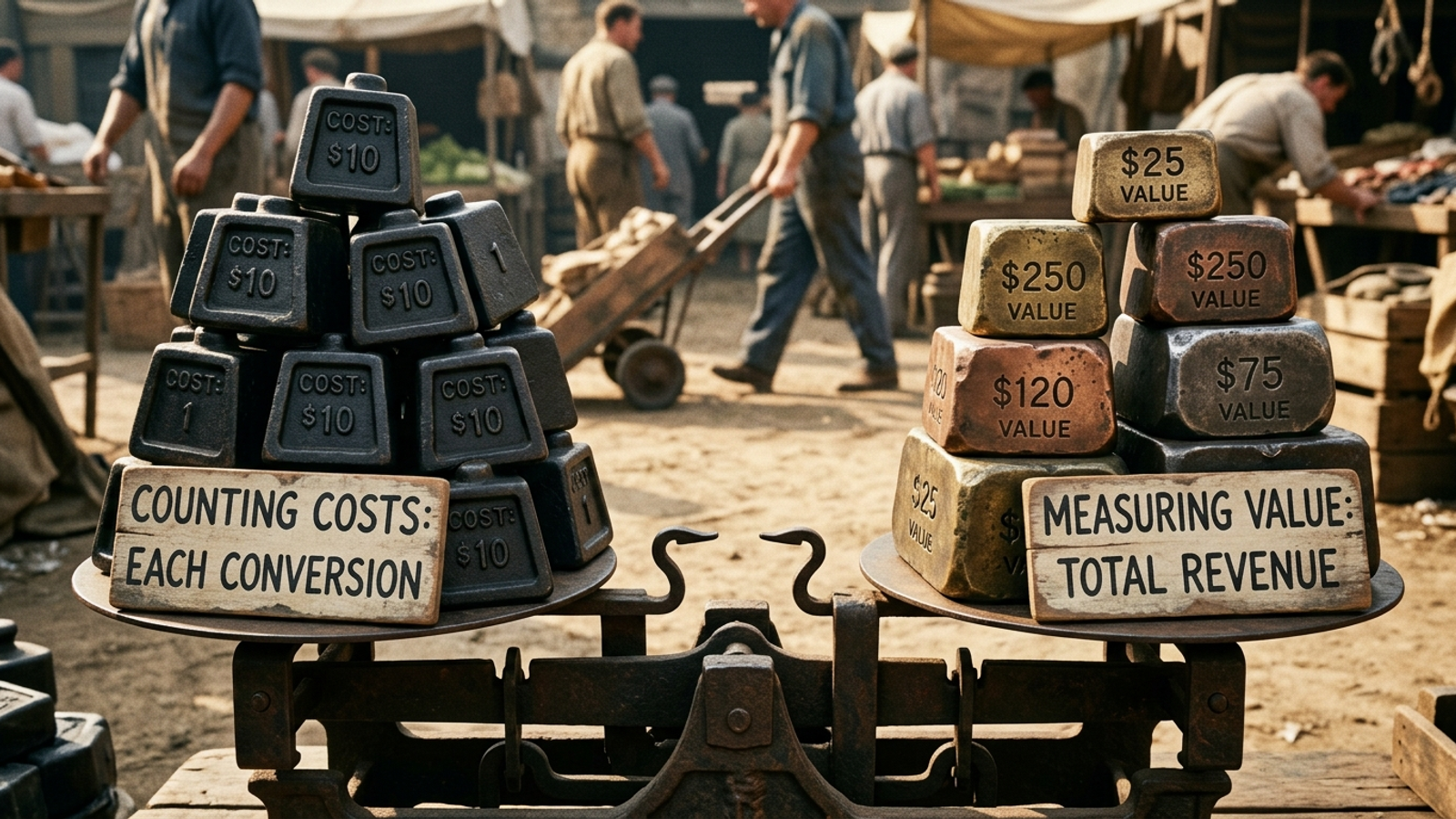
It is not. Google sells the ads. Your business pays for them. Those are different sides of the transaction, and a score inside the ad platform is not a measure of your net profit. Search Engine Land’s breakdown of Auto-Apply Recommendations points out a particularly revealing detail: dismissing recommendations can lift Optimization Score just as applying them can. Treating that score as a commercial target is a good way to confuse account tidiness with performance.
The cost can be substantial when defaults and auto-apply settings widen where budget goes. An analysis of $11.3 million in spend across 43 enterprise accounts attributed an average of 36.1% budget waste to default settings and auto-apply toggles. That is a reason to inspect what automation does, not to reject automation altogether.

What to do instead: Separate vendor-side recommendations from buy-side execution. An independent agent should work toward your margins and attributable revenue, not an ad platform’s account score. groas adds negative keywords, blocks cannibalization between Search and Performance Max, and reallocates spend toward auctions that produce attributable revenue. Ask whose outcome the automation serves before you approve its next change.
A tracking setup can look close enough because the conversion column contains numbers. Those numbers may still count a thank-you page refresh as another sale, or treat a newsletter signup like a qualified enterprise lead. I have spent enough time in account work to know how convincing a tidy conversion report can look before anyone checks what fires the event.
An agent cannot infer the sales you meant to record from the conversions you actually sent it. Feed it a false map and it will follow that map at speed.

In an audit of more than 500 ad accounts, Ryze AI found that 73% of conversion tracking setups had critical measurement failures, with an average of 23% budget waste attributed to automated bidding toward phantom or duplicate conversions. If your cheapest recorded action comes from form spam or low-intent traffic, an algorithm optimizing for that action has a reason to buy more of it. Practitioners describe that low-quality-signal problem plainly.
What to do instead: Check what each conversion action records and synchronize offline outcomes before asking an agent to optimize bids. Align the objective with verified transactions, qualified pipeline stages, or closed-won deals rather than raw page views and unscrubbed forms. groas can execute changes quickly, but speed only helps when the target reflects revenue.
Thirty Responsive Search Ad headlines and descriptions are tedious to draft. It makes sense that advertisers shop for a tool that will write them. But generating more lines of copy is not the same as fixing a search campaign.
As I noted in a comparison of which AI ad tools are actually autonomous, headlines are among the easier tasks to automate. A strong click-through rate can still lead to wasted spend when the landing page fails to deliver on the ad’s premise. The visitor searched for one thing, clicked a promise about that thing, and arrived somewhere that made them hunt for it. Better headline variations will not repair that handoff.
What to do instead: Check the path from query to ad to landing page. In groas, conversion-copy models write and test ads while dynamic landing-page agents adapt headlines and offers to the user’s search context. The ad earns the click; the post-click experience has to earn the sale.
I think this is the most costly belief. A $4,000 monthly agency retainer can make no humans involved sound wonderfully efficient. If software writes copy, adjusts bids, and allocates budget, why keep a strategist in the loop?
Because execution and accountability are different jobs. Suppose cheap form fills arrive and the reported CPA falls. The agent can pursue the signal it has been given. Someone still needs to ask whether those leads close, whether the offer changed, and whether the account is buying growth or merely cheaper entries in a spreadsheet. Adszy’s breakdown of AI ad tools describes the awkward split between recommendation dashboards that leave the clicking to you and black-box bots that operate without supervision. Neither removes the need for an owner.
What to do instead: Give machines the continuous work: monitoring auctions, inserting negative keywords, pruning bids, and reallocating budget. Give a named human responsibility for commercial boundaries and the P&L. groas pairs specialized autonomous models with an account manager who runs strategy reviews and answers questions in a dedicated Slack channel. Automate the repetitive decisions. Do not automate away responsibility for the result.
Skip the demo language about proprietary intelligence for a moment. I would ask three operational questions. The answers reveal whether you are buying an execution system for your business or another polished way to watch spend move.
Most tools start with the conversion signal available from Google’s API. If that signal is page views, unverified forms, or top-of-funnel leads, the tool can become very efficient at buying the wrong thing. Ask whether it can use offline CRM data, qualified pipeline stages, and product-level gross margins. If you are working through a buyer’s guide to AI Google Ads optimization software, draw your line here: the optimization target should connect to attributable revenue or closed-won pipeline, not just a cheap recorded action.
If a system changes bids, negative keyword lists, or campaign budgets, you need a ledger of what it did and why. A monthly PDF with high-level ROAS cannot tell you which change caused a problem. Adsroid’s discussion of what happens when an AI ad agent makes an error makes the point: without a dependable action log, diagnosing and rolling back unintended changes becomes guesswork. Ask to see the query, the change, and the reasoning before you grant access to an account that spends real money.
Find out who defines maximum cost-per-click thresholds, daily budget caps, brand exclusions, and target acquisition costs. Then ask who watches those constraints and responds when an auction behaves erratically or a platform policy changes. A generic support queue is not strategic ownership. groas anchors its machine execution to a named senior account strategist who understands the commercial model, reviews performance in a private Slack channel, and answers for the account’s bottom-line outcomes. You should know the person responsible before the first surprise, not after it.
This is the belief I cannot settle yet. Models can ingest catalog margins, track search intent across channels, and synthesize audience signals faster than a media buyer can work through the same material manually. I would not ask a person to compete with a machine on stamina or auction-by-auction calculation.
But search data tells us what people searched for, not necessarily what they will want when a category shifts. Can an autonomous system anticipate a change in buyer psychology before it appears in the auction data? Or will it remain an exceptional execution engine that needs a human to decide what matters? For now, I would hand the machine the work and keep commercial judgment with the person whose business is on the line. I am less sure how long that division will hold.
No. Search advertising captures demand that already exists; if people are not searching with intent to buy what you sell, the agent cannot manufacture that intent. It can help you stop paying for irrelevant searches and capture the intent that exists, but pushing for more volume without boundaries risks broad-match drift and wasted spend.
Yes. An agent works from the business context it is given and does not know when margins, fulfillment, or sales conditions change. You should set and keep current a target cost per acquisition, product-level margin thresholds, and hard spend caps so the agent optimizes toward live business boundaries.
No. Google sells the ads while your business pays for them, so the platform's Optimization Score is not a measure of your net profit. One analysis of $11.3 million in spend across 43 enterprise accounts attributed an average of 36.1% budget waste to default settings and auto-apply toggles. An independent agent should work toward your margins and attributable revenue instead.
Yes, it matters a lot. An agent cannot infer the sales you meant to record from the conversions you actually sent it, and an audit of more than 500 ad accounts found 73% of conversion tracking setups had critical measurement failures. Verify what each conversion action records and align the objective with verified transactions before letting an agent optimize bids.
No. Headlines are among the easier tasks to automate, and generating more copy lines does not fix a search campaign. A strong click-through rate still leads to wasted spend when the landing page fails to deliver on the ad's promise, so check the path from query to ad to landing page.
Yes. Execution and accountability are different jobs: an agent can pursue cheap form fills that lower the reported CPA while nobody asks whether those leads close. Give machines the continuous work like bid pruning and budget shifts, and give a named human responsibility for commercial boundaries and the P&L.
Three operational questions: which outcome the system optimizes toward, what you can see in the action log, and who sets guardrails and responds when something breaks. The optimization target should connect to attributable revenue or closed-won pipeline, the log should show the query, the change, and the reasoning, and you should know the person responsible before the first surprise.