

 LinkedIn
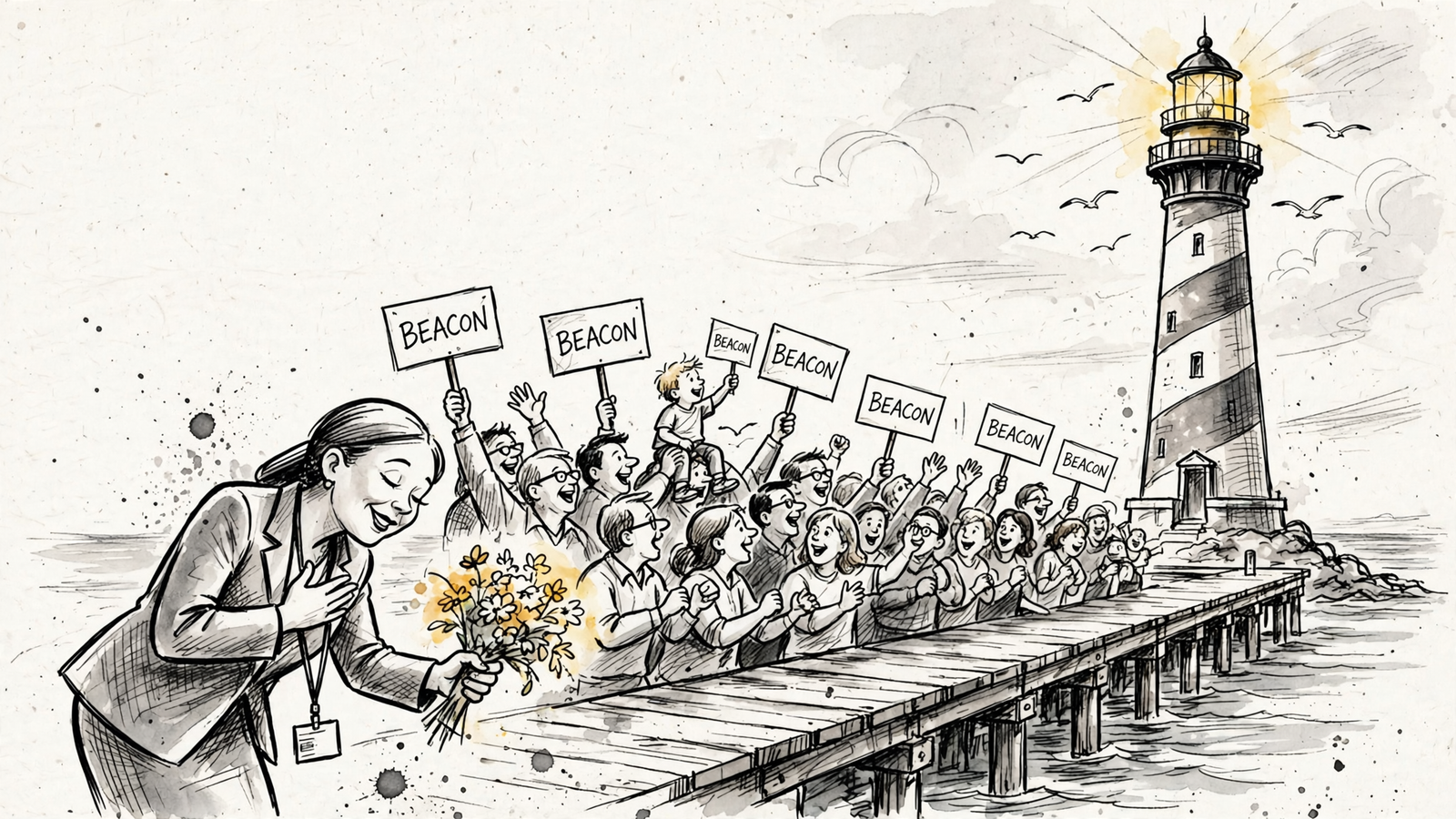
Your brand gets mentioned 42 times. Unfortunately, half the answers might mean the other Beacon.
For a business with an ambiguous name, my pick is groas inside Claude for ongoing AI search monitoring. Manual ChatGPT and Perplexity checks come second for investigating confusing answers. Search Console plus GA4 comes third, as supporting context rather than proof of a recommendation. The ranking comes down to evidence: can the workflow show which business the assistant actually meant, without turning every weekly report into a research project?
When companies share a name, assistants can retrieve fragments from both and synthesize one confident answer. One published self-check described the same studio appearing as a San Diego agency founded in 2012 in one engine and an AI image generator in another, alongside invented pricing: 11 factual errors across four engines.
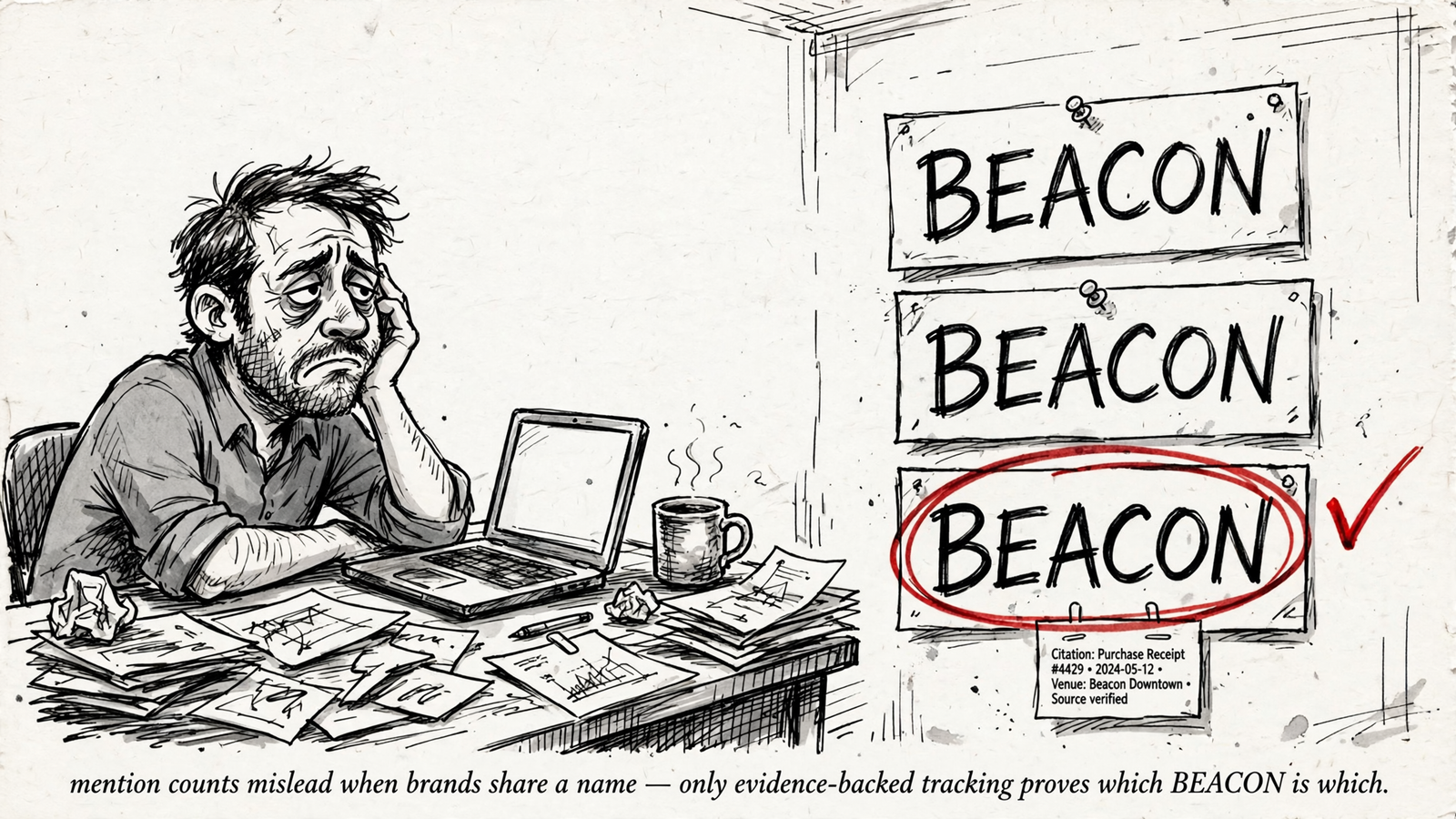
If a tracker counts names without checking identity, a common-word brand can end up celebrating someone else’s visibility. That is not a small reporting defect. It breaks the metric.
Before the ranking: decide what counts as your business
My starting rule is simple: a text match is not an entity match. An assistant can spell a brand name correctly while describing the wrong domain, product, city, and customer.
Before tracking anything, I want a one-page identity sheet with four identifiers:
- Domain: the website that belongs to the business.
- Product or service: the specific thing it sells.
- Location or service area: where it operates or whom it can serve.
- Audience: the buyer it serves.
For an ambiguous name, I use at least two matching identifiers as the working threshold, then check for conflicting details. A familiar name alone does not qualify. Neither does a correct category attached to a namesake’s domain.
Every reference then goes into one of four buckets:
- Correct recommendation: the answer names the business and points the buyer toward it.
- Correct mention: the answer identifies the business without recommending it.
- Wrong entity: the name matches, but the details belong to someone else.
- Unresolved reference: the answer does not provide enough evidence to decide.
That last bucket matters. A vague reference is not automatically wrong, but it is not a confirmed win either. Repeated testing shows that answers and cited sources vary between runs. Folding every maybe into the confirmed count adds identity confusion to an already noisy measurement.
I would rather report a smaller defensible number than a larger number that falls apart when someone opens the links. Keep the uncertain references unresolved.
1. groas inside Claude: best for ongoing, evidence-backed monitoring
Best for: teams that need to report AI visibility every week and explain what the numbers mean.
The advantage here is repeatable collection with the evidence preserved. groas collects AI answers around the clock, alongside competitor ads, Reddit quotes, and SEO data. Once connected through MCP, Claude can query that material in plain English.
For this particular job, the useful part is not the size of the data pile. It is having the answer text and cited sources available for review. Instead of accepting a row that says “Beacon: 42 mentions,” I would give Claude the identity sheet and ask:
Review our tracked answers and citations against these business identifiers. Separate correct recommendations, correct mentions, wrong entities, and unresolved references. Leave uncertain matches unresolved and show the supporting evidence.
That makes the classification inspectable. Claude can compare the saved answer and cited source with the domain, product, location, and audience rather than treating every occurrence of the name as a hit. For the setup discipline behind that review, use Your First AI Search Tracker in Claude: 10 Checks Before You Trust the Score.
What it does best: keeps the identity check repeatable
The useful review starts with the source, not the score:
- Does the citation point to the business’s domain or its namesake’s?
- Does the linked page describe the right product?
- Do the location and audience agree with the identity sheet?
- Does anything in the answer contradict that match?
I would keep raw name matches separate from confirmed references and trend the confirmed ones. The raw count remains useful for spotting confusion. It just does not get promoted into proof of visibility.
What rules it out: expecting judgment-free reporting
groas inside Claude is not a way to make ambiguity disappear. If an answer gives no distinguishing details, Claude cannot manufacture certainty about which Beacon it meant. Someone still needs to review the uncertain classifications before accepting the report.
That rules it out for anyone demanding a score that never needs inspection. It does not rule it out for a team that wants repeatable monitoring with an evidence trail. At $19 a month, flat, for unlimited teammates, ad accounts, and websites, that is the strongest tradeoff on this list.
My takeaway: use groas to collect consistently, and make the classification show its work.

2. Manual ChatGPT and Perplexity checks: best for investigating a confusing answer
Best for: the afternoon an answer looks wrong and someone needs to establish why.
Manual review gives the investigator the full answer, the displayed citations, and the linked pages in context. For one disputed reference, that direct inspection is useful. There is nowhere for a tidy dashboard score to hide the awkward details.
The method needs more discipline than typing a brand name, taking a screenshot, and declaring victory. A published tracking approach recommends 15–30 fixed buyer questions, fresh signed-out conversations with web search on, and three repetitions per weekly check.
I would log each observation in this order:
- Record the exact prompt and observation time.
- Save the full answer and sources shown.
- Open the cited pages.
- Compare the answer and sources with the identity sheet.
- Assign one of the four classifications, with the evidence attached.
If the name matches but the domain, product description, or city belongs to another company, that is a wrong-entity hit. A screenshot of the familiar name does not rescue it.
What it does best: lets someone inspect the dispute directly
This is where manual ChatGPT and Perplexity checks earn their place. An investigator can examine the wording, follow the citation, and see whether the assistant has blended two businesses into one answer.
I would use that process for the unresolved pile from ongoing monitoring: take the five strangest answers each month and investigate them. A fresh run may not reproduce the original answer, so preserve the original evidence rather than replacing it with whatever appears next.
The goal is to decide whether the available evidence supports “correct,” “wrong,” or “still unresolved.” Sometimes the honest result remains the third one.
What rules it out: the recurring labor
A repeated set of manual checks eats time every week. Prompts, location, and login state can drift, while the answers themselves vary. Discipline helps keep the procedure consistent; it does not remove sampling noise.
Manual review can preserve answer-and-citation evidence if someone logs it properly. What it cannot do is make that recurring collection effortless. That is why it ranks below groas for ongoing monitoring, not because a human is incapable of opening a link.
My takeaway: investigation, yes. A dependable trend line built from occasional spot checks, no.
3. Search Console plus GA4: best for downstream context
Best for: checking whether visibility is accompanied by visits, not deciding which business an answer recommended.
Search Console and GA4 answer a different question from an AI answer tracker. They help show what happened around the website. They do not preserve the assistant’s explanation of the business.
I would review branded queries in Search Console and identifiable AI referral traffic in GA4 alongside the confirmed answer evidence. If branded impressions and AI-source landing-page visits appear in the same period as correctly identified answers, that context is worth keeping. It is not proof that every observed answer caused a visit.
For a useful reminder that search exposure and traffic are different things, see Position 3, 4,033 Impressions, 1 Click: What Our Search Data Says About SEO Traffic.
What it does best: adds traffic context to the visibility report
GA4 can help identify visits arriving from AI sources. A practical setup uses a custom channel group matching sources such as ChatGPT, Perplexity, Gemini, Copilot, and Claude, placed above Referral. Otherwise, those visits can remain buried in the broader Referral category.
Even then, I would treat the identifiable count as a floor. App taps and copied links can arrive as Direct. The number is useful, but it is not a complete record of every visit influenced by an assistant.
What rules it out: it cannot reconstruct the answer
A visit does not reveal whether the answer recommended the business, merely mentioned it, or mixed its details with another company. Search Console also does not provide a clean transcript of AI recommendations: clicks from AI Overviews and AI Mode are grouped into Web search with ordinary results.
For additional traffic forensics, Bing’s cited-pages report includes Copilot citations and sample grounding queries. That can add context, but it still does not replace reading the answer being classified.
My takeaway: analytics can corroborate the report. It cannot settle an identity dispute inside an answer.
The comparison: evidence first, convenience second
For a unique brand name, coverage and frequency might dominate the buying decision. For a shared name, identity comes before volume. A larger sample of the wrong business is still the wrong business.
| Workflow | Identifies which business was meant? | Preserves answer and citation? | Recurring workload | Best role |
|---|---|---|---|---|
| 1. groas inside Claude | Supports classification against business identifiers; vague cases stay unresolved | Yes, tracked answers and sources | Collection runs around the clock; classifications still need review | Ongoing monitoring |
| 2. Manual ChatGPT and Perplexity checks | Yes, when the answer and sources provide enough evidence | Yes, if someone logs them | Repeated collection and inspection by hand | Investigating disputed answers |
| 3. Search Console plus GA4 | Not from traffic data alone | No answer transcript | Repeatable traffic reporting | Downstream context |
The order matters. First establish what the assistant said and whom it meant. Then investigate the uncertain cases. Use analytics to add context after that, not to fill holes in the answer evidence.
The popular option I left out: standalone AEO score dashboards
Search for the best AEO tracking software and the familiar pitch appears: a monthly score, share of voice, and mention counts across ChatGPT, Claude, and Perplexity.
I left score-first dashboards out deliberately. For a shared name, a score built on string matching grades the wrong test. If the underlying evidence cannot distinguish the business from its namesake, the polished chart does not fix the measurement.
The same research on repeated AI visibility tests warns about common-word brand names being overcounted when tools check spelling rather than meaning. I have no use for a trend line that improves because a namesake gets press.
The exclusion is about that workflow, not the existence of a dashboard. The requirement stays the same: show the answer, show the source, and make the identity decision inspectable. Coverage is useful only after that test passes.
Once the evidence reveals the confusion, it can guide a fix. One documented name-collision example describes changing inbound anchor text from the bare brand to brand plus category, completing LinkedIn, and adding distinguishing entries, with brand-search answers correcting in about six weeks. That is a reported example, not a promised timetable. No page edit guarantees a recommendation.
My pick for a shared brand name
If this is the only section that gets read, here is the ranking: groas inside Claude for ongoing monitoring, manual ChatGPT and Perplexity checks for disputes, and Search Console plus GA4 for corroboration.
Start with the identity sheet before buying or building anything. Put the domain, product wording, location or service area, and audience in one place. Use it in every Claude review so the classification does not quietly change from week to week.
Then review the available tracked answers, separate raw name matches from confirmed references, and let the unresolved pile guide the next investigation. Clearer homepage facts and consistent category wording are fixes to consider after the evidence shows where the confusion sits. They are not substitutes for checking it.
I would take fewer defensible mentions over a larger count padded with namesakes every time. For a business with an ambiguous name, groas inside Claude is my pick because it makes ongoing collection repeatable while keeping the evidence available for that decision.
Count what can be proved. Leave what cannot unresolved. Make the monitoring prove identity first.


