

 LinkedIn

ChatGPT can give you three plausible reasons your conversions fell without seeing a single row from your Google Ads account. I used to send it screenshots; now I wouldn’t pay for the connection unless it could show me the work.
This list is for marketers who have to connect ChatGPT to live accounts and then explain to finance or a client what they got for it. I judge each job by the receipt it leaves behind: the source data, the decision it proposed, the action you approved, and the record of what actually happened. If the right call is to change nothing, record that too. No receipt, no purchase.
ChatGPT supplies the reasoning. groas supplies the hands and the data. Its MCP connection gives ChatGPT access to your ad accounts, website, and market data it can’t get on its own, including competitor ads and the landing pages and funnels behind them. An unconnected chat can brainstorm all day. It still can’t check a search term against the account, let alone act on it.
Check your plan before you buy. OpenAI’s custom MCP guidance says full custom MCP use with write actions is limited to ChatGPT Business and Enterprise/Edu on the web. On Business, only admins or owners can create and publish custom apps. A write action may require confirmation or be blocked. groas starts read-only, and a person sets the boundaries. I’d keep new ads paused by default and ask for a read-back after every approved change, so the record shows what the platform saved, not just what the model meant to do.
groas is $19 a month flat for the whole team, separate from your ChatGPT subscription. That covers unlimited teammates, ad accounts, and websites, with every feature and all the data. The flat price tells you what the connection costs. The receipts below tell you whether it’s worth paying for.
1. Turn expensive search terms into a reviewed negative list
Search-term mining is the job I used to do at 1 a.m. with a spreadsheet and a tired brain. The work is mechanical, but the decision isn’t. A search with no recorded conversions might be a bad fit for the offer, or it might just be early. I want ChatGPT to pull the report and make the case for each exclusion, not turn every zero into a negative keyword.
Start with the actual search-terms report. Ask: “Find high-spend search terms with no recorded conversions. Account for conversion delay. Before proposing a negative, show what the search cost, what the searcher likely wanted, and why that intent doesn’t fit the offer.” A query that includes “free” or “DIY” calls for a different judgment than one that’s simply broad.
I’d use roughly the cost of one conversion in that account as a starting threshold, then check the candidates against searches that did convert. Two checks belong in the prompt. Negatives don’t match close variants, so blocking “sneaker” doesn’t automatically block “sneakers.” And a negative can prevent an active keyword from serving. Have ChatGPT show the proposed match type and where each exclusion would apply, then flag any conflicts before you approve the list.
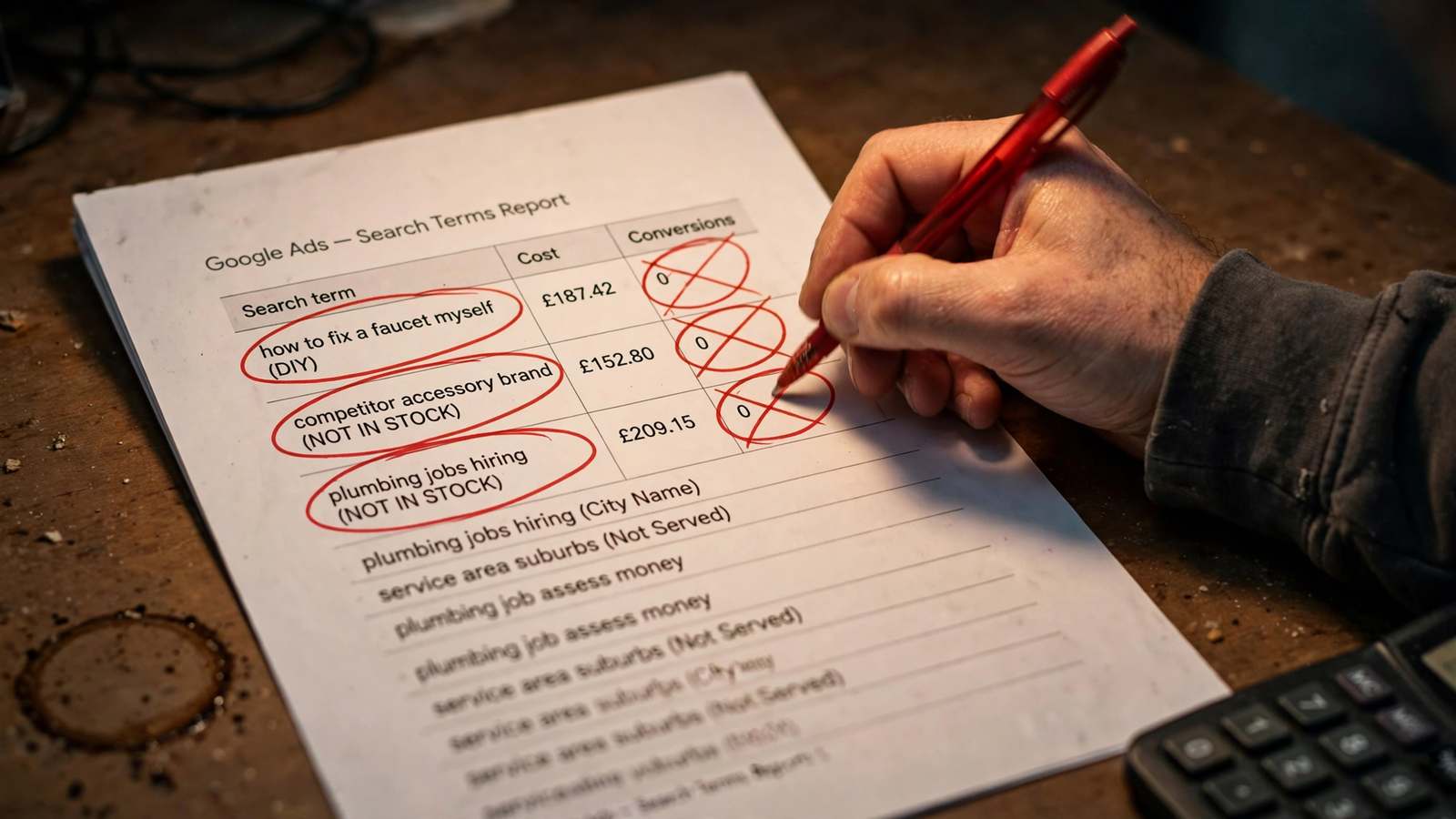
The receipt: source rows, proposed exclusions, and the change log
Keep the evidence for each exclusion beside the proposed match type, level, and conflict check. Approve the terms you actually want to block, then log what was applied. A bad negative can stop a buyer’s search from showing up in future reports, which makes the mistake easy to miss. Let ChatGPT do the mining. Keep the exclusion decision.
2. Turn a Meta creative question into ads ready for approval
Someone sees a competitor running a long video ad at 2 a.m. and decides the video is the strategy. The Ad Library shows that the ad is live. It doesn’t show whether the ad works. A brand’s best ad and its worst can sit side by side with nothing to tell you which is which. Copying the video gets you their message, not their brand equity.
Start by asking ChatGPT to compare hooks, formats, and offers using the ad-level results in your own Meta account. Have it show which openings held attention and which lost it in the first three seconds. Then pull in the competitor ads groas collects and ask for a direction that differs from what everyone else is running. Your numbers tell you what happened in your account. The competitor ads tell you what else a buyer might be seeing. Don’t ask either source to do the other’s job.
I’d ask for a testable hypothesis and drafts that put it to work. “Test quantified social proof against our current feature-led opening” gives me something to approve. “Make it more like their video” gives me their video.

The receipt: evidence, drafts, and a publishing decision
Keep your ad-level numbers and the competitor observation next to the drafts. Then record what you approved, what you held back, and why. A folder of drafts won’t tell you which version went live. Keep that record with the hypothesis so the next creative review starts with what you actually tested.
3. Compare Google and Bing before moving budget
Every quarter someone proposes a blended CPA across Google and Microsoft Advertising as if the two platforms count the same thing. Different tags, attribution windows, and time zones can all get in the way. But the first thing I check is simpler: do both conversion columns count the same event? A form submit and a sales-accepted lead don’t become equivalent because they fit under the same spreadsheet heading.
Start with this: “Compare Google and Bing over the same 30 days. Show the conversion definition, cost, conversions, and cost per conversion for each platform. Tell me where to investigate and where the right move is to leave budgets alone.” That last instruction matters. If the definitions don’t line up, a confident budget recommendation is worse than no recommendation.
Sometimes I’d do a small audit before making the comparison. Trace representative journeys from each platform through the site into the CRM and see where each report stops. Is the result a submitted form, a valid inquiry, or an accepted lead? The totals don’t have to match exactly. You do have to know what they count. If that’s still unclear, keep the results separate and explain the gap. I go deeper on the same problem in Claude can read every ad account and still not add up the conversions.
The receipt: a channel recommendation you can defend
Keep the source figures, dates, and conversion definitions for both platforms alongside the proposed decision. “Leave budgets alone” is a decision if the receipt shows why. If you do approve a move, keep the change log with that comparison. Otherwise the next person looking at the account has to guess why the money moved.
4. Turn a competitor ad into a one-change landing-page brief
A rival’s ad sends you to a page with the price up top, a guarantee below it, and proof in a different order from yours. Those are observations. “Their page converts better” is a guess. I want a brief that can tell the difference.
Start with one ad and the page it leads to. Ask ChatGPT, using the competitor-ad and landing-page data groas collects: “Show the claims and offer conditions on this page, the funnel steps after the click, and the evidence behind each. Don’t estimate spend, conversions, or ROAS. Propose one change to our page and tell me what would show it worked.”
The useful part of seeing a competitor’s funnel isn’t getting a template to copy. It’s noticing a choice you’ve made differently and deciding whether to test it. If the brief points to where they put the price, test a change to price placement. Don’t rewrite the headline and rearrange the proof at the same time, then pretend you know which change did the work.
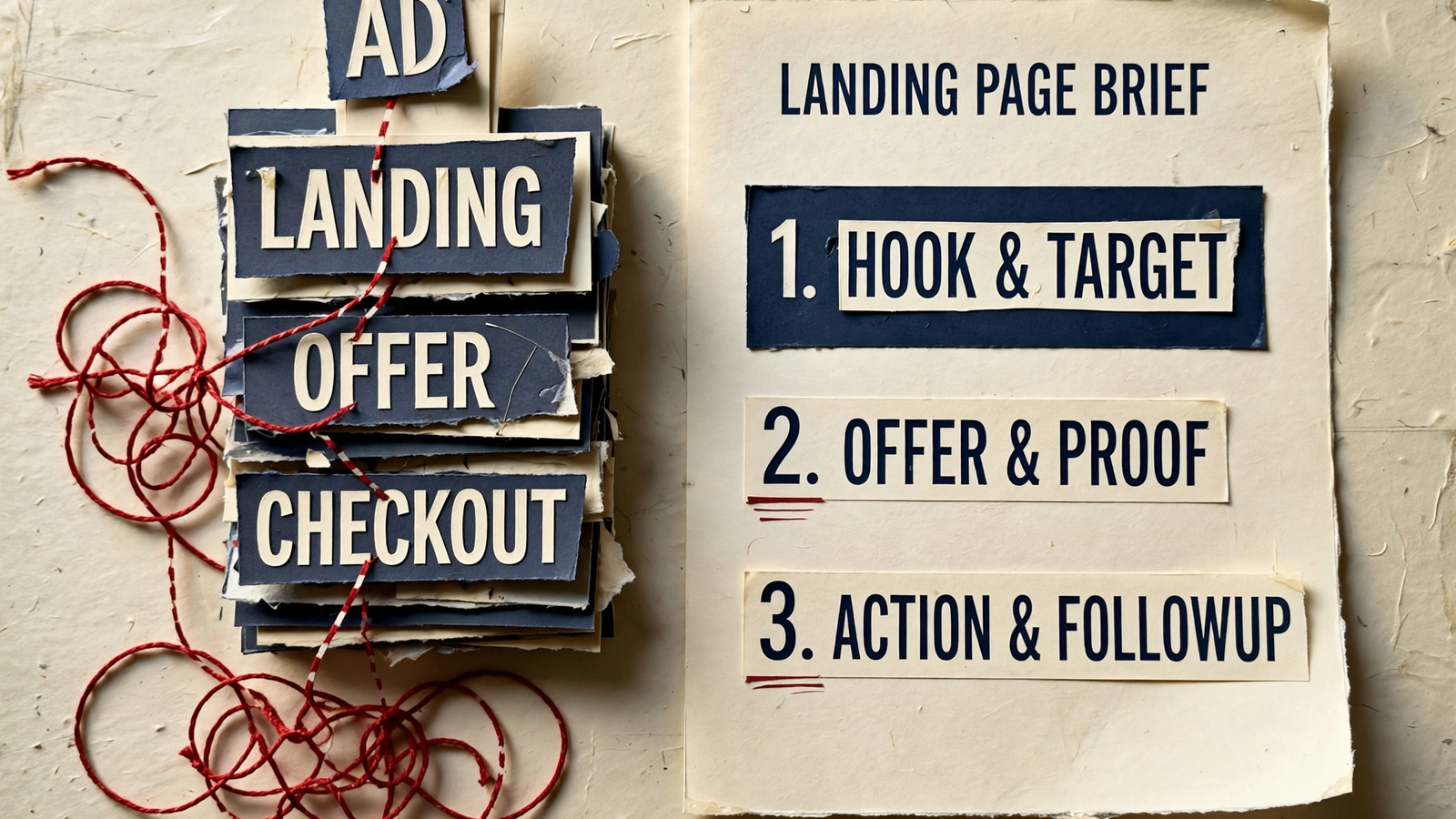
The receipt: linked evidence and one proposed edit
Link each observation to the ad or page it came from. Then name one change, one measurement window, and one owner. Record the edit you approve and what goes live. If the brief can’t tell you which change to make first, it’s a mood board. I wouldn’t pay for it.
5. Close an AI citation gap with a page you can review
When a buyer asks ChatGPT which tool to use, I want to know which pages it cites and what those pages actually answer. In one run of 45 ChatGPT searches, 88% of citations for which-tool queries went to vendors’ product, pricing, or help pages. Just three citations went to vendor blog posts. I’d check whether an existing page answers the buyer’s question before commissioning another blog post.
groas tracks how AI answers talk about you and whom they cite. Start with buyer questions from the AI prompt sheet with 50 questions and a tracking row. Ask ChatGPT to show where competitors get cited and you don’t, what the cited pages answer, and which page you should add or fix. Track the rate across repeated runs, not the result of one run. In the draft’s comparison, repeated runs of the same question shared only 42% of cited domains. One answer is a poor basis for a rewrite.
The receipt: cited sources, a proposed page, and the publication record
Keep the results by question and run, with mentions and citations recorded separately. A mention without a citation tells you the answer named the brand but didn’t use your site as a source. Put the proposed page or edit next to the evidence, then record what you approved and what you published. That gives you something specific to check on the next run. It doesn’t guarantee a citation.
6. Turn a conversion drop into a ranked investigation
Conversions drop. Sales says the site broke, finance says spend is up, and someone wants to move the budget before lunch. This is where I want a table, not a theory. A drop in total conversions can hide one campaign losing volume, several campaigns converting at a lower rate, or spend shifting toward cheaper traffic that doesn’t convert. Those are different problems. The total can’t tell you which one to investigate.
Give ChatGPT the account, the conversion definition, and two matched windows. Then ask: “Rank campaigns by lost conversions. Show spend and conversions in both periods, separate observations from hypotheses, and flag where conversion lag might affect the result. Change nothing.”
Set the threshold before you see the answer. One example of a screening rule flags campaigns with at least $200 in spend where CPA rose more than 20% or conversion rate fell more than 30%, then checks the result against GA4 or the CRM. The point isn’t to borrow those numbers for every account. It’s to decide what warrants a closer look before every wobble gets a story. If recent conversions are still coming in, use a comparison window that accounts for the lag or leave the recommendation open.
The receipt: ranked source rows and the next check
Keep the campaign rows for both periods, the exact dates, the conversion definition, and what the data can’t yet answer. Record the next check you approved and that no account settings changed. If the numbers can tell you where the drop happened but not why, that’s a useful receipt. Don’t make the model fill the gap with a cause.
This is the one I’d run first. It starts read-only, and I can check the ranking against the source rows before giving ChatGPT permission to touch anything. If it can’t show me where the conversions went missing, I’m not giving it the budget.





