LinkedIn

One favorable ChatGPT screenshot is not a reason to buy a visibility retainer. On a tight budget, I would pay nothing until I could separate missing content, inaccessible pages, and normal answer variation. Small-business GEO retainers run $1,500–$5,000 a month; a documented baseline comes first. This checklist uses your existing site, Search Console, analytics, and manual checks in ChatGPT and Perplexity. No new tools. Work through it in order to decide what to fix yourself, what to watch, and what work might justify paying someone else.
Build a baseline that survives a second answer
-
List 10 to 20 buyer questions that could realistically produce a sale, without naming your brand. Use customer language, including location and budget where relevant: not “Acme Plumbing,” but “emergency plumber in Boise under $300.” Keep the shortlist focused on questions your business should answer, rather than collecting every vaguely related prompt you can think of.
-
Choose a repeatable testing setup before recording results. Use a logged-out session or Temporary Chat with web search on, rather than a conversation already full of your business details. Record the engine and setup alongside the prompt. Done wrong: comparing a fresh answer with one shaped by a long conversation about your company.
-
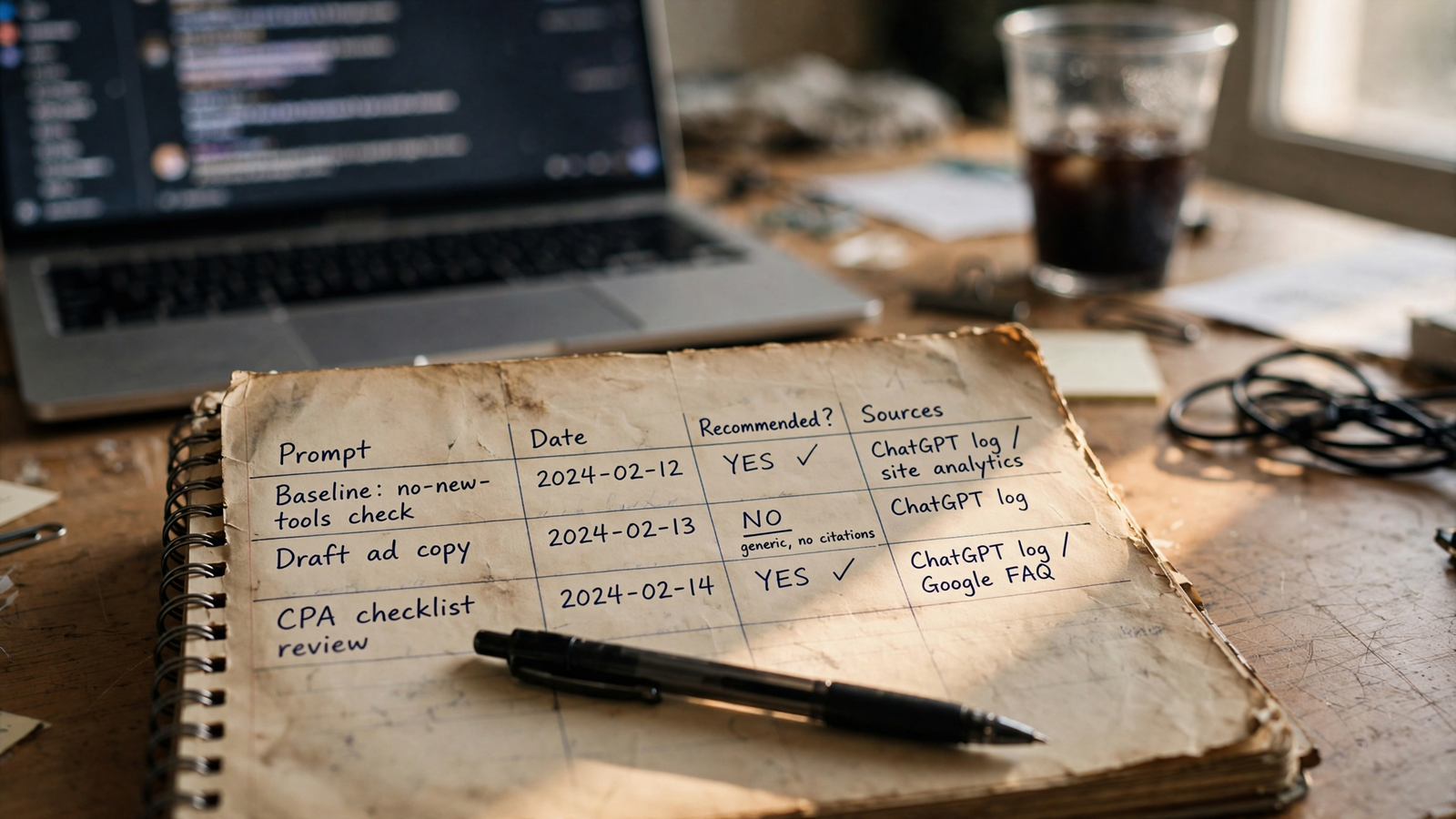
Run each prompt 3 to 5 times and keep the raw answers. Record the prompt, engine, date, businesses recommended, description accuracy, and cited sources. One run is a sample, not a result. Keep the wording stable: changing the question while testing your visibility makes it harder to tell whether the answer changed or the test did.
-
Report a rate over repeated checks, not a yes or no. Across 59,291 answers, only 49.2% of brands named once were named again a week later; another analysis found that after 3 identical ChatGPT runs, only 2.3% of citations stayed consistent. A favorable screenshot belongs in the log, not at the center of a purchasing decision.
-
Separate a mention, a recommendation, a citation, and a referral visit. Being named is not the same as being recommended; a citation links a source, while a referral visit reaches your site. Use this mention versus citation glossary before logging results. Done wrong: calling all four “visibility,” then claiming progress because whichever number looks best went up.
-
Keep ChatGPT and Perplexity results separate. In one study, a brand’s own site was absent from sources in 39.5% of answers that named it; ChatGPT averaged 5.2 sources versus Perplexity’s 17.4. Do not treat an engine with more citations as automatically producing more recommendations, or blend the platforms into a score that hides the difference.
-
Check visits separately in GA4. Build a custom channel for
chatgpt.com,perplexity.ai,gemini.google.com,copilot.microsoft.com, andclaude.ai; most AI visits already arrive as Referral, often withutm_source. Mentions without clicks will not appear there. Keep the answer log and traffic record beside each other rather than asking either one to explain everything.
Check whether your existing pages can do the job
-
Open important buyer pages without logging in, including on mobile. Check that the page is reachable and its useful text is present, not hidden behind access requirements. Start with the pages that should answer your shortlisted questions. Done wrong: testing only the homepage, deciding the website “works,” and overlooking the service or product page a buyer actually needs.
-
Check Google indexing separately with Search Console URL Inspection. For Google AI Overviews, pages must be indexed and eligible to show a snippet; no extra markup is required. Keep that finding separate from your ChatGPT checks. Done wrong: using a Google indexing result as a universal verdict on whether every answer engine can cite a page.
-
Match each buyer question to the best existing page. Open the question and page side by side, then check whether the page actually answers it. If every question points back to the homepage, the exercise is exposing a content gap, not completing a mapping task. Write down which answers are missing before commissioning more monitoring.
-
Put missing buyer information into readable text. Check price, service area, turnaround, and who the offer is for; add what is absent or buried in images or JavaScript. Use a clear heading that matches the question. Done wrong: adding broad promotional copy while leaving the practical detail that prompted the question unanswered.
-
Make prices, service areas, hours, and product facts consistent across your site, Google Business Profile, and social pages. Compare the actual entries: Dallas plus Fort Worth versus Dallas only, or a $149 starting price versus an old $99 offer. Fix conflicting source pages before paying someone to explain inaccurate descriptions. A report cannot clean up the business information it reports on.
-
List the independent evidence you can actually point to: written reviews, local press, supplier listings, trade memberships, and real case numbers. If the list stops at six detailed Google reviews, stop there. What the deck calls authority building, I call having someone besides you willing to say you did the job. Record the gap without dressing it up.
-
Reject fake mentions and Reddit seeding as ways to fill that evidence gap. A credible baseline needs separate mention, citation, link, and accuracy scores, plus the raw log. Seeded posts corrupt the record you are trying to understand. Done wrong: buying apparent evidence, then presenting the resulting mentions as proof that the underlying business became more credible.
Make the supplier name the work, not the ambition
-
Identify what the proposal actually sells: software that reports, advice you implement, or execution shipped for you. Compare it with this AEO software versus agency versus done-for-you breakdown. These are different purchases. Done wrong: budgeting for someone to solve the problem, then discovering the deliverable is a dashboard and a list of tasks for you.
-
Require named pages, specific fixes, and defined third-party work. The proposal should say which pages get created or rewritten, which technical blocks get removed, and what placements the supplier will work to earn. “GEO optimization” and “AI visibility improvement” are labels, not deliverables. Ask for the URLs and the work attached to them before discussing a recurring fee.
-
Separate the monitoring bill from the execution bill. Monitoring alone belongs in the category of a $10–$1,000+ monthly tracking tool, not a $1,500–$5,000 small-business retainer. If the proposal costs more because people will fix things, identify those things. A more expensive view of an unchanged problem is still an unchanged problem.
-
Require reporting against your original baseline, with variability disclosed. Keep the same 10 to 20 prompts and engines, with 3 to 5 runs per prompt per platform weekly, mention and citation rates, and the spread of results. Report platforms separately. Done wrong: replacing your baseline with a proprietary score whose prompts, run count, and underlying answers you cannot inspect.
-
Walk away from guaranteed citations, scores without run counts, and Reddit seeding. No vendor controls model output. Judge the proposal on work it can own and evidence it can show, not a promise that an outside system will produce a particular answer. Keep that distinction in writing, especially when the sales deck makes certainty look easy.
-
Get the complete monthly cost and cancellation terms before signing. Include tool pass-throughs and any ad spend in the written breakdown, alongside the list of changes the supplier will make. Done wrong: comparing headline retainers while leaving the extras undefined. The number that matters is the full commitment, not the smallest number on the proposal’s opening slide.

Rerun the test before turning a backlog into a retainer
-
Fix a small, bounded backlog yourself when capacity allows. Two missing service pages, two unindexed pages, and conflicting prices in three places are a writing-and-cleanup job before they are an ongoing engagement. Do not pay for continuous monitoring while the obvious fixes sit untouched. Use this dashboard versus fix guide to keep the purchase focused on work that remains undone.
-
Rerun the same 10 to 20 prompts two weeks after the cleanup, using the same 3 to 5 runs and the same log. Resist the urge to swap in questions that now produce flattering answers. The purpose is comparison, not a better screenshot. Keep the source pages, testing conditions, and changes visible so you can read the results in context.
-
Treat zero mentions and zero citations as a reason to inspect access and content, not proof of one diagnosis. Start with the pages in items 8 through 11. Missing or unindexed pages are useful findings because they expose work you can do; an empty answer log alone does not establish why your business was absent.
-
Inspect the sources when mentions arrive without citations, or citations point to directories rather than your own pages. Revisit the business facts and independent evidence in items 12 through 14. Record where the answer gets its information before deciding what needs changing. Done wrong: treating every missing website citation as the same problem and buying the same fix for all of them.
-
Give inconsistent results more observation time before buying a remedy. If mentions appear in 30% to 60% of runs and the sources change week to week, keep the same protocol for another two weeks. Variation is a finding, not automatically a vendor failure or a content emergency. A proposal should reference that pattern rather than sell generic output around it.
-
Price a bounded job in hours, not hope. Say your time is worth $100 an hour and six pages plus profile cleanup take 10 to 12 hours once, followed by an hour a week for checks. Compare that workload with the retainer. Treat the estimate as a planning assumption, not a promise that your own backlog will fit it.
-
Consider managed execution when the recurring work has no reliable owner. New buyer questions need pages, technical fixes need publishing and rechecking, and measurement needs a consistent cadence. A shop owner already working 50 hours may not sustain that; a freelancer reviewing things once a month may not either. Buy capacity for the work that keeps going undone, not reassurance that someone has looked.
-
Place groas on the execution side of that decision. Its $1,499 service makes sense when the checklist exposes an ongoing backlog across content, technical access, and weekly measurement that you cannot staff: continuous, logged work rather than a report you must interpret yourself. If the problem is four missing paragraphs and one unindexed page, that fee is too much for the current problem. Fix those first.
-
Approve a retainer only when you can name what it replaces. Named pages shipped, blocks removed, placements earned, and weekly reporting against the same baseline can replace labor you do not have. A score and a call do not. If the weekly checks never happen and unanswered buyer questions keep piling up, buy someone to do the work, not another subscription telling you it exists.
Keep the asset when the engagement ends
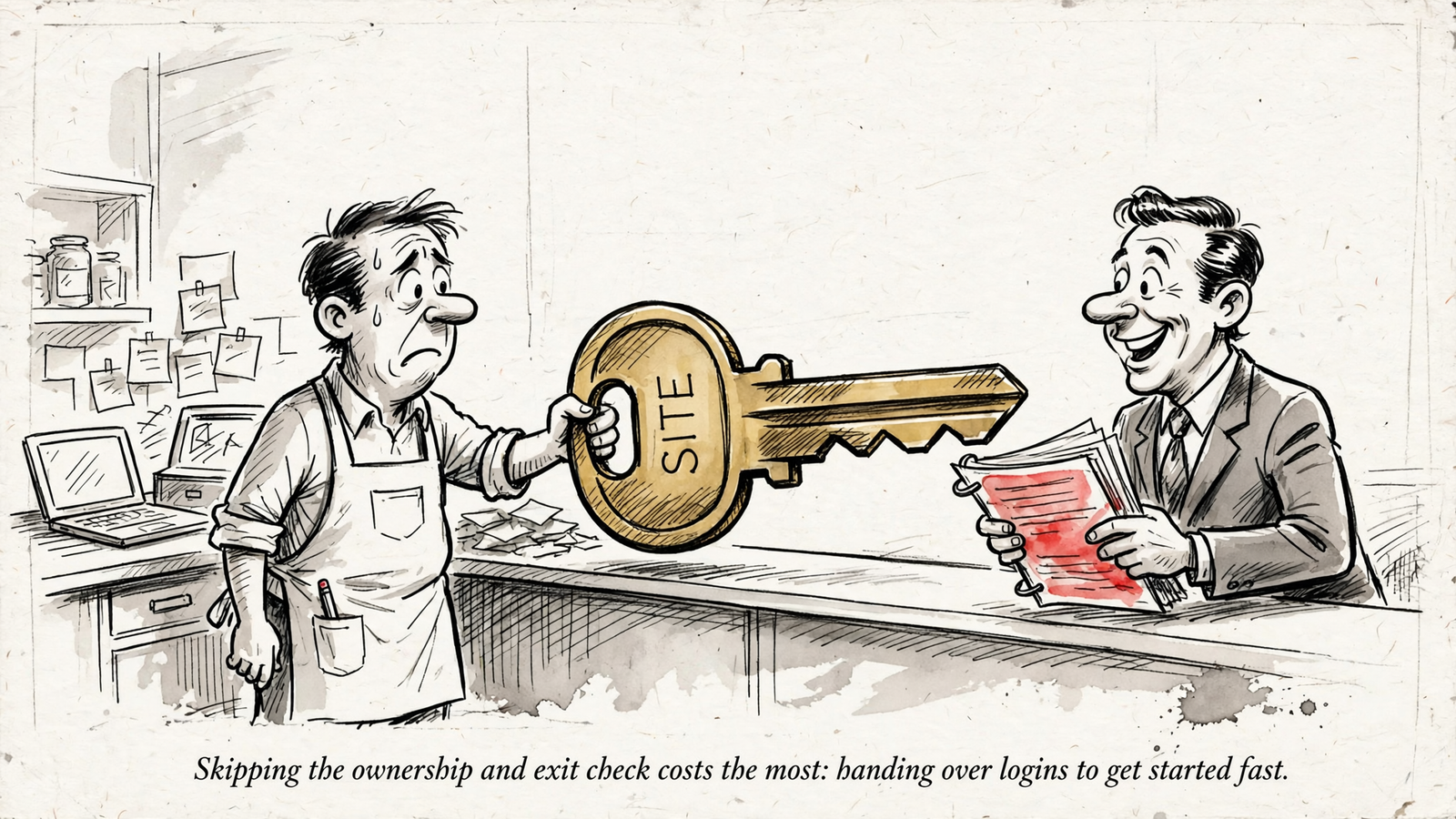
- Keep your website, domain, Search Console, analytics, and Business Profile in your business’s name. This is the item owners skip most. Add the supplier as a user, give only read or Restricted access for audits, and keep the written change log so you retain everything if you part ways. Handing over ownership for a faster start can leave you paying a second fee to get your own assets back. That is not a technical requirement. That is a retention strategy.