

 LinkedIn
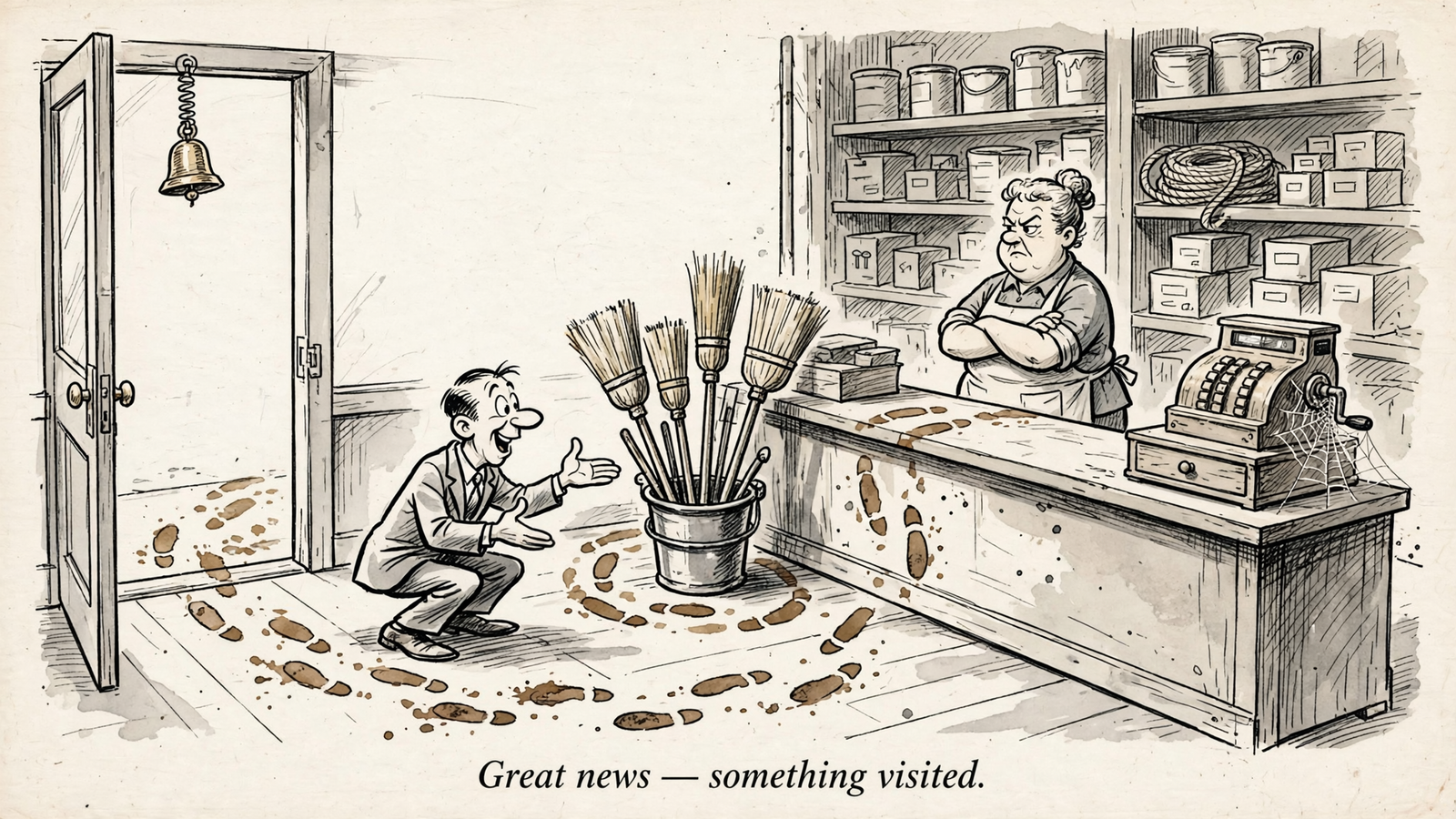
An AI crawler visited your site. Your provider called it a visibility win, without showing whether an answer cited your page or recommended your business.
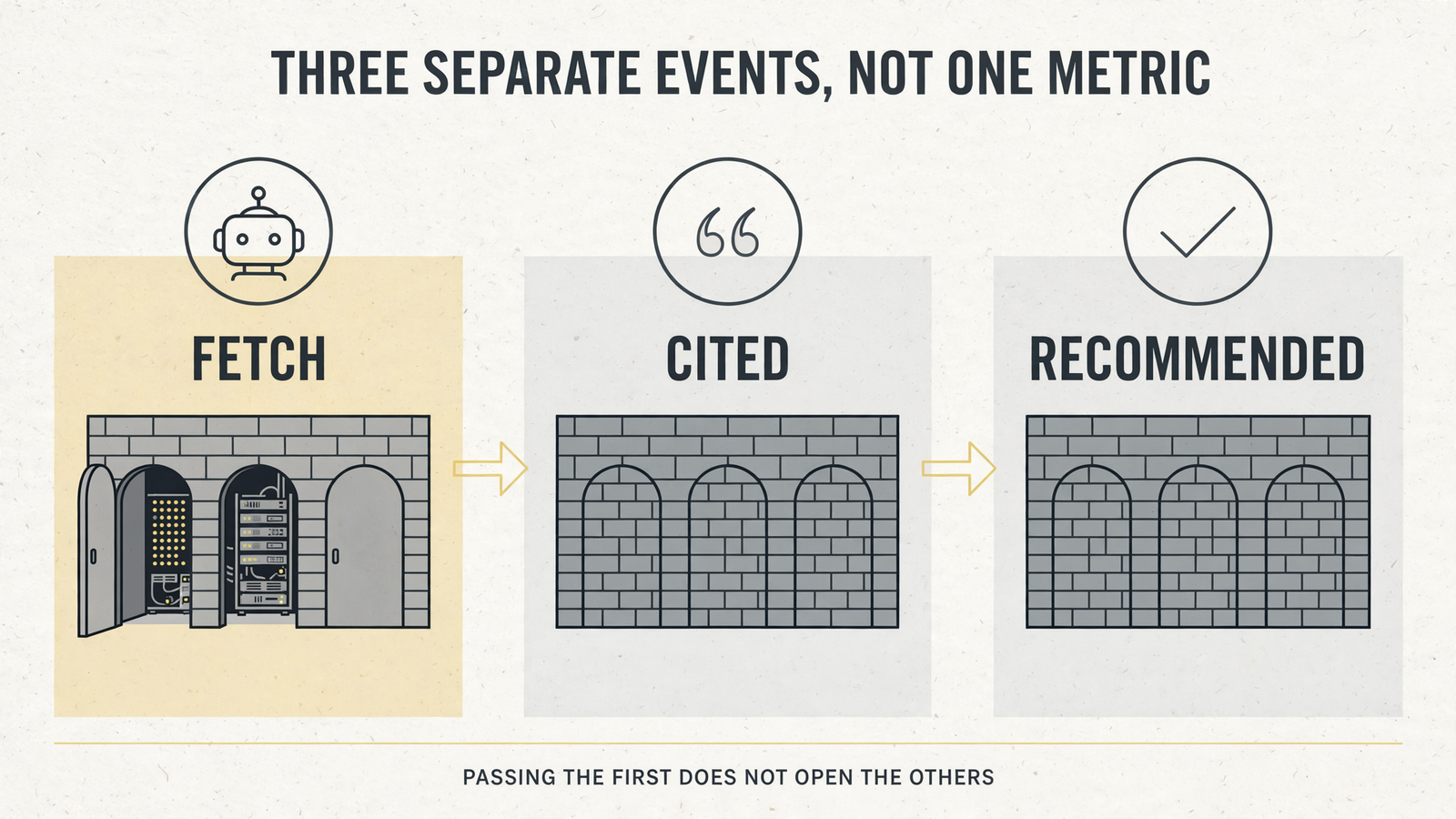
That is the leap I want to stop. A fetch, a citation and a recommendation are three separate events. Each needs its own evidence. Count one as proof of another and a provider can sell you activity while calling it commercial progress.
A bot visit is not a buyer recommendation
Start with three questions:
- Access: Did the engine fetch your page?
- Citation: Did an answer link to your page as a source?
- Recommendation: Did an answer put your business forward for a buyer to consider?
I think of these as three gates, but the analogy has a limit: they are not a compulsory sequence. A citation does not automatically become a recommendation, and a business can be named without its own page appearing among the citations. Evidence at one gate does not prove passage through another.
Even access needs unpacking. AI crawlers split into three families: training bots, search-index bots and live user-request fetches. A training crawl and a page pulled for a live answer are not the same event. Reporting them as one number erases the distinction before the analysis even starts.
I will use one running example: groas counted 833 verified bot fetches on its Google Ads updates page, with 513 tied to live answers. That is useful access evidence. It does not establish 513 citations, 513 readers, 513 recommendations or a single lead.
Keep those categories separate. The rest of the report gets easier to read.
First: establish what the engine actually fetched
Background crawling keeps an index fresh. A live fetch happens because someone asked a question and the system pulled a page in response. Neither event, by itself, shows what appeared in the finished answer.
For ChatGPT, OAI-SearchBot handles search access, while GPTBot collects training data. ChatGPT-User fetches pages in response to user requests. Blocking the training bot does not, by itself, remove you from search. That is why lumping every bot hit into one visibility number misleads.
Crawl access establishes availability, not use or approval. It puts your page in the pool the engine could draw from. To establish what happened next, I need the answer, not another line from the server log.
What groas’s 833 fetches actually prove
On groas’s Google Ads updates page, we counted 833 verified fetches, with 513 tied to live answers. The full breakdown lives in the live-answer fetch case study.
Those numbers establish that engines reached the page and pulled it in connection with live answers. They do not establish how many answers cited it, how many unique people read those answers, or whether anyone recommended groas.
That does not mean there were zero citations or leads. It means the fetch count cannot answer those questions. A missing measurement is not a measured zero.
Use the log to prove access. Ask for different evidence before claiming anything beyond it.

Second: separate being a source from being a choice
A citation links to your page as a source. A brand mention names your business in the answer. A recommendation puts your business forward as an option. A source link is not an endorsement, and a name is not automatically a shortlist place.
One analysis of citations and brand mentions found that only 28% of brands earned both. Brands were about three times more likely to be cited alone than to earn a citation and a mention together.
That distinction matters for our running example. The Google Ads updates page could supply useful information for an answer without the answer discussing groas as a business at all. The page did its job as source material. That is not the same job as persuading a buyer to consider the company behind it.
Semrush and Indigo data found that 62% of AI citations were ghost citations: the page was linked, but the brand never appeared in the answer text. I use ghost citation for that gap, not as a claim that the link has no value.
A report that counts those links as recommendations is counting footnotes as votes. Record the citation. Do not quietly promote it into a buying signal.
Check ChatGPT and Perplexity separately
Different engines do not give you interchangeable evidence. One comparison of Perplexity and ChatGPT puts their source counts at around 8.6 and 3.7 respectively, with ChatGPT’s citations dependent on whether it runs search. That is a reason to inspect each answer, not to declare one platform a citation channel and the other a recommendation channel.
An analysis of 100,000 prompts found only 11% domain overlap between ChatGPT and Perplexity citations. Across five engines tested, 69.6% of cited domains appeared on only one. The retrieval step differs, the index differs, and whether ChatGPT runs web search on a particular turn differs.
Answers also move. Ahrefs tracked about 37,500 citations daily for 20 days and found 50% to 83% were gone by day two. Around 75% of lost citations returned within 20 days, while only 4% to 6.8% lasted all 20 days on Google tools and ChatGPT. Brand mentions were steadier than citations.
Keep the engine, prompt, date and saved answer together. A screenshot from Tuesday tells you what happened on Tuesday. It is not a standing reservation in next week’s answer.
Third: a recommendation requires a business judgment
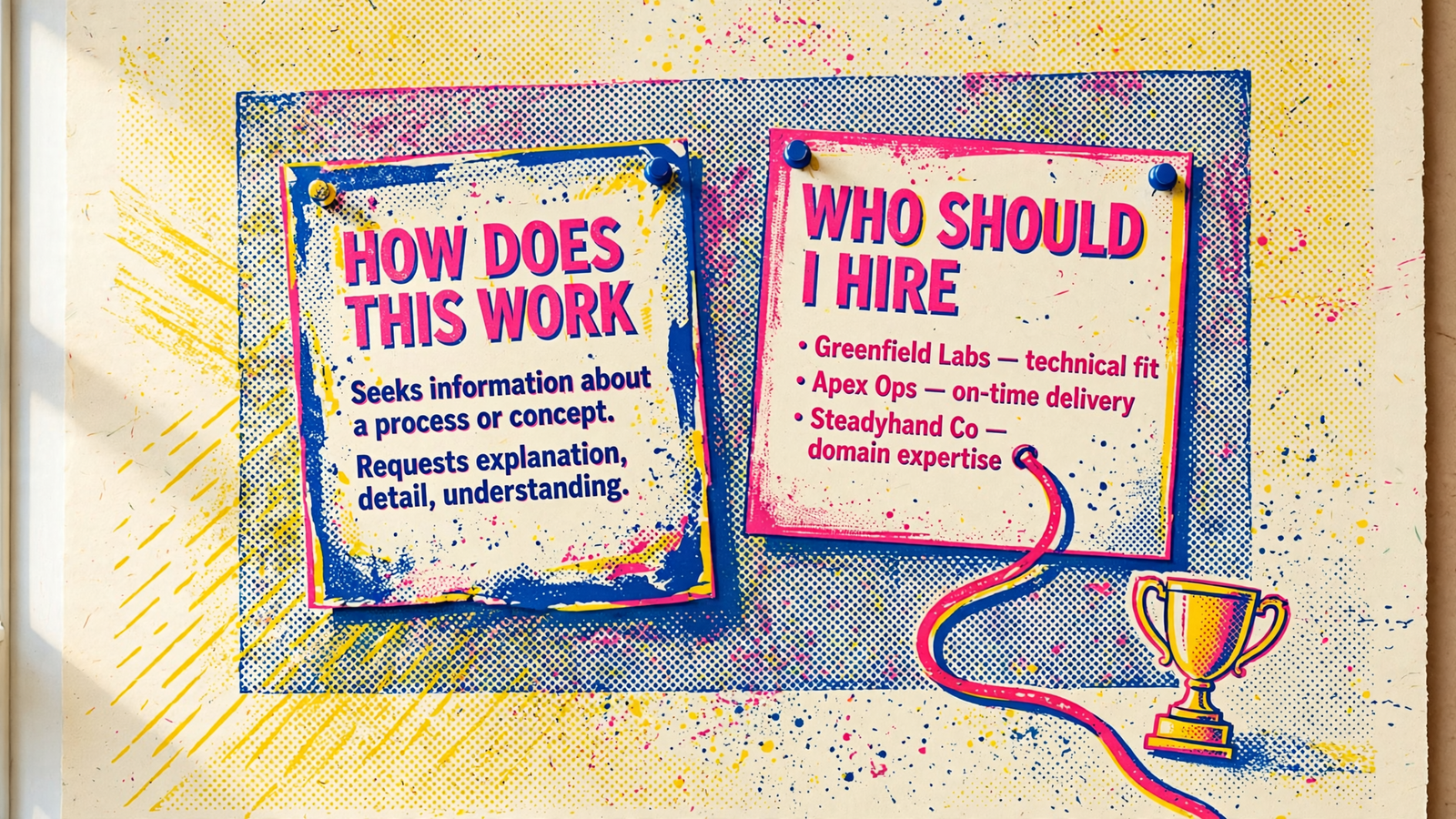
A research prompt asks the engine to explain something. A buying prompt asks it to judge who is worth considering. Here are two illustrative prompts, not test results:
- How does broad match affect CPA in Google Ads?
- Which agency can manage how my brand shows up across ChatGPT, Gemini and Perplexity?
The first can cite a definition page without mentioning the company as a supplier. The second has to select businesses. Useful source material and a convincing supplier profile solve different problems.
Return to groas’s updates page. Even if a saved answer confirms that it supplied a Google Ads fact, that still does not tell me whether groas appeared in a buying answer. I would need to inspect the buying answer itself: was groas named, in what context, and as what kind of option?
Do not ask a citation count to answer a recommendation question.
Give buying answers business facts to work with
To shortlist a business, the engine needs more than a clear definition. It needs to resolve who the business serves, what constraints it works within, what proof it offers and whether other sources corroborate it.
That is why I look at:
- Service definitions and fit criteria: who should hire you, and who should not.
- Pricing guardrails and location: the constraints that determine whether you belong in the answer.
- Proof and independent mentions: material that supports the business’s claims beyond its own description.
These facts have a different job from an explainer’s definitions. A well-written explanation can be useful without giving a buyer any reason to choose its publisher.
No page structure guarantees inclusion. Anyone promising guaranteed citations or recommendations is selling certainty the systems do not offer.
If your pages explain the topic but never state who should hire you, that is a gap worth fixing. The longer walkthrough of why mentions and citations fail in different pipelines separates those jobs in more detail. First establish which one is missing.
The prompt determines what the score can mean
A visibility score hides the task unless the report preserves the prompts behind it. I separate three kinds:
- Factual: What is a qualified lead in Google Ads? This tests whether an explainer can serve as source material.
- Category: Best tools for tracking offline conversions. This tests whether a business appears in a comparison set.
- Shortlist: Which agency should manage my $20k per month account? This tests whether the answer attaches a name to a buying decision.
These are not three difficulty levels of the same task. They ask for different retrieval and judgment work. Averaging them together can conceal the exact result a buyer cares about.
Branded prompts need their own label, too. If someone asks for groas by name and the answer repeats the name, that is weak evidence of discovery: the person supplied the brand. It does not show that groas appeared when someone asked an unbranded buying question.
Measure the task you want to win. I would rather see five dated observations on buying prompts where I am absent than a 92-point score averaged across twenty research prompts where I appear. The average does not tell me which missing step to fix.
A credible weekly report needs five evidence lines
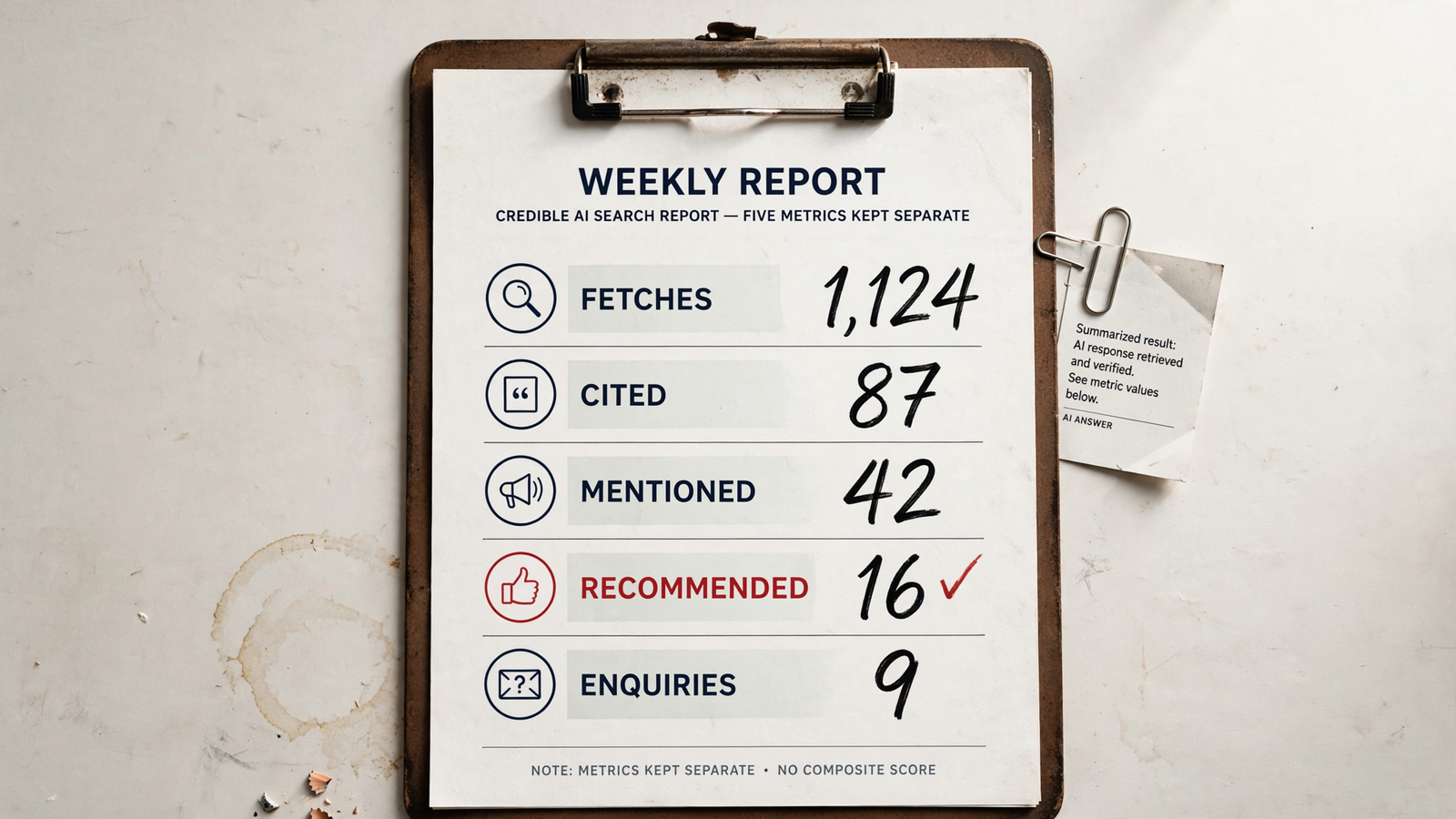
A report I would pay for keeps these separate:
- Verified fetches. Server-log evidence, split into background crawls and live-answer pulls. Show which pages were fetched.
- Observed citations. The prompt, engine, date and saved answer showing the source link.
- Observed brand mentions. The business named in the answer text. Keep ghost citations out of this count.
- Recommendation context. The buying prompt, the saved shortlist and where the business appeared in it. A passing mention does not qualify automatically.
- Attributable visits or enquiries. The commercial activity that followed, tracked to the page rather than credited to a visibility score.
The last line matters because even a genuine recommendation is not proof of a visit, an enquiry or revenue. Keep measuring after the answer appears.
For the groas updates page, the 833 verified fetches belong on line one. The 513 live-answer pulls add useful detail to that line. Neither number fills in lines two through five. Those need their own evidence.
An empty line is not a reporting failure if the evidence is unavailable. Filling it with a number borrowed from another line is.
Buy the work that addresses the missing step
Separate measurements make diagnosis possible. They do not make it automatic.
Low verified fetches on money pages are a reason to investigate access: robots rules for search bots, JavaScript rendering, slow templates or pages blocked after a redesign. Plenty of fetches but no observed citations call for a different check: does the page give the engine useful source material, such as a clear explanation, definition or current numbers?
Citations without shortlist appearances shift attention toward the business case: service definitions, fit criteria, proof and independent corroboration. But the pattern is a starting point for inspection, not proof of the cause. A fetch already demonstrates some access; its failure to become a citation does not automatically mean robots rules are wrong.
Pay for the missing step, not a higher blended score. The work should follow the evidence rather than whichever service the provider happens to sell.
Run the model on a new account. Say you spend $20k a month on Google Ads for attic conversions, and your provider sends a chart showing 400 AI bot hits last week.
I would ask three questions:
- How many were live-answer pulls on booking and pricing pages, rather than background crawls of the blog archive?
- Across five dated buying prompts in ChatGPT and Perplexity, with answers saved, was the business cited, named or neither?
- Where it was named, was it actually recommended, or merely mentioned?
Suppose the answers are 12 live pulls, one ghost citation and zero shortlist appearances. That is not a demonstrated recommendation win. You have some access evidence and one observed source link. You still need to establish why the business is missing from buying answers.
Before buying more blog volume, inspect the service pages, fit criteria, proof and third-party confirmation. Do they give the engine a reason to consider this business for those buyers? The count of 400 cannot settle that question.
That discipline is why I push clients toward execution that logs each step instead of scores that hide it. groas keeps fetches, citations, mentions and enquiries on separate lines, then does the unglamorous work behind them around the clock while a named strategist owns the outcome. No percentage-of-spend meter running while bots crawl your sitemap. No dashboard that calls a footnote a recommendation.
Any agency guaranteeing citations or a top-three shortlist in 30 days is selling certainty the engines do not give. Ask for the five lines, with dates and saved answers. Buy the missing step. Measure what survived to pipeline, not what showed up in a log.


