

 LinkedIn
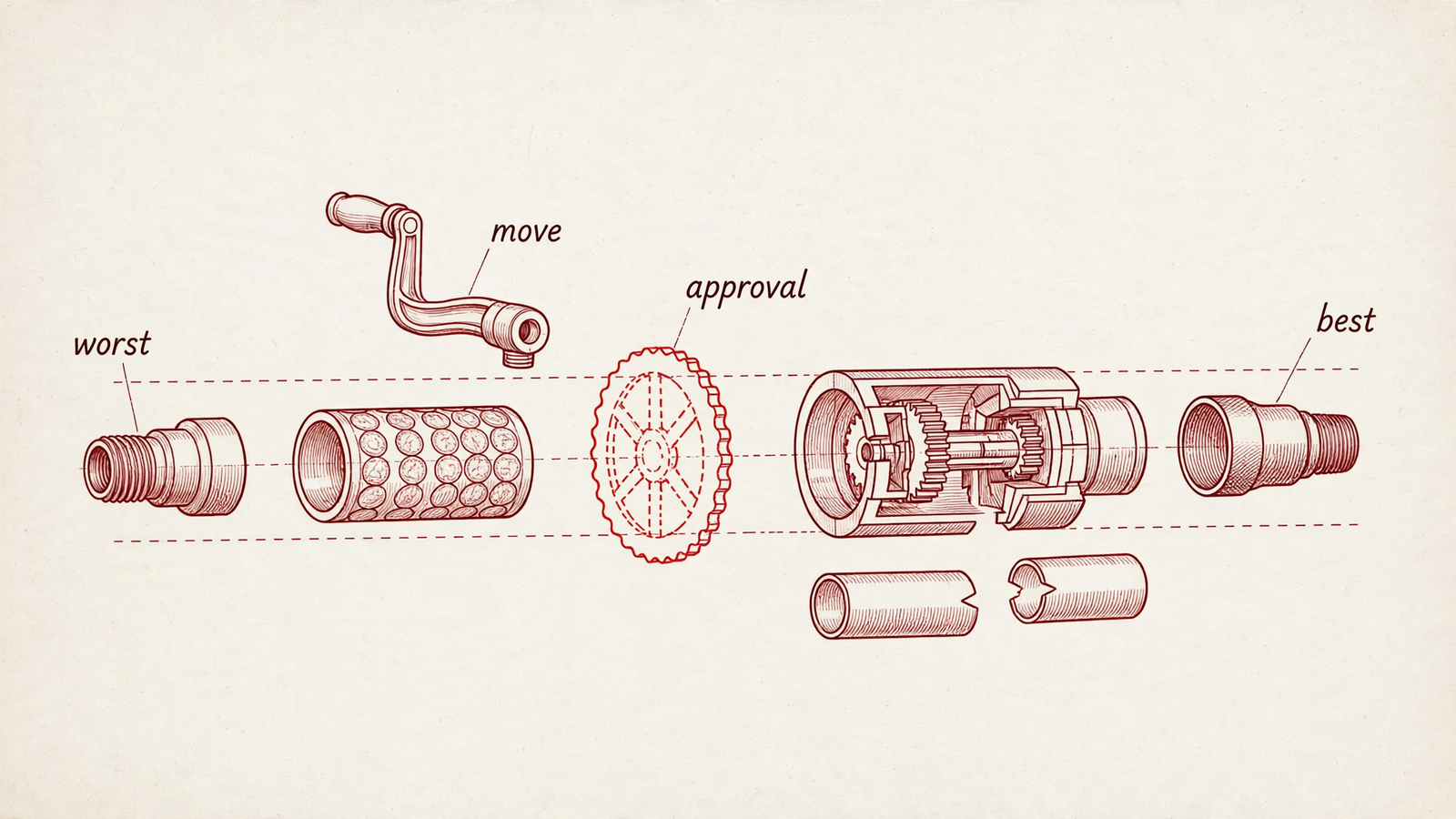
The artefact: one sentence, two ad platforms
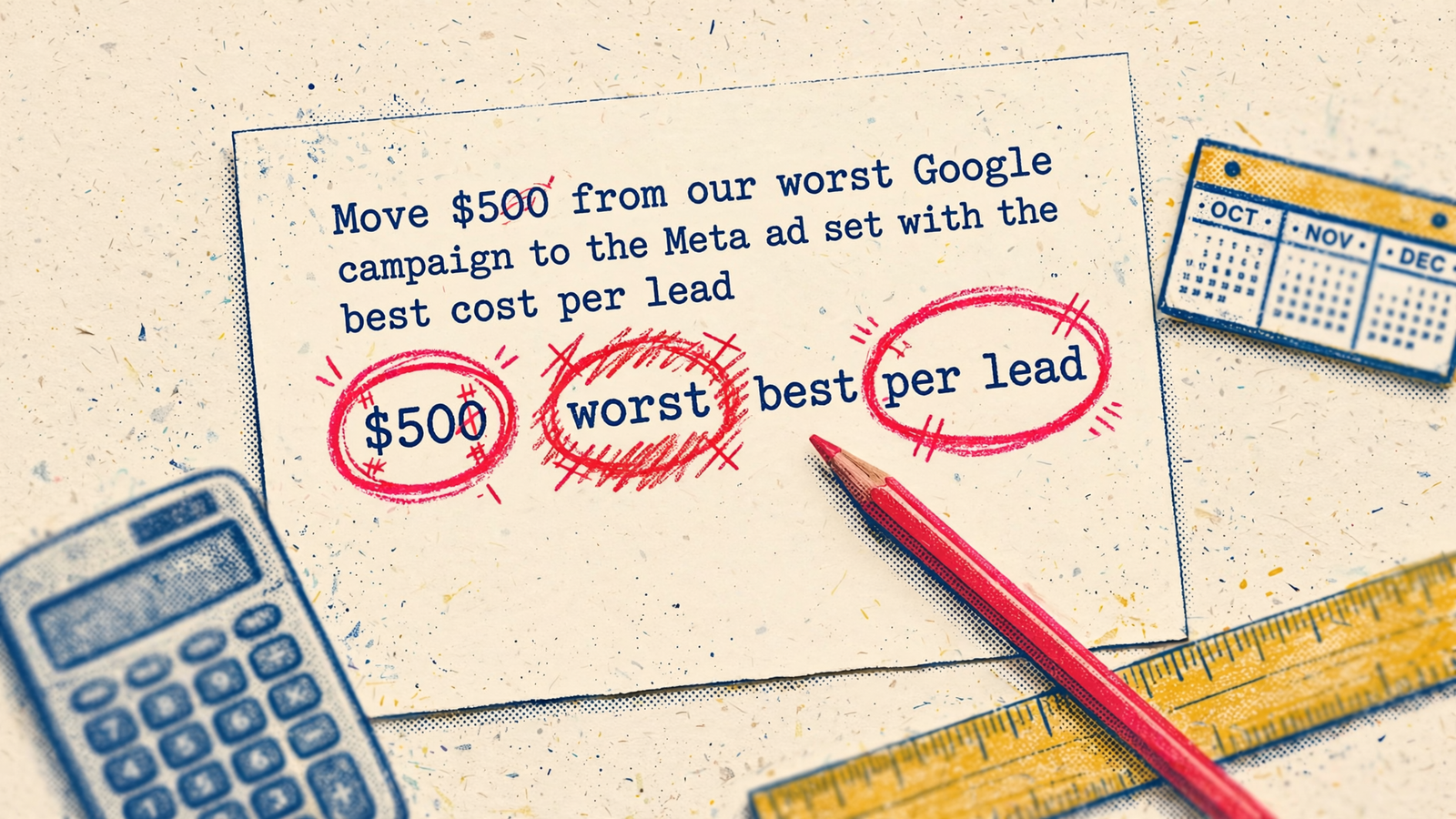
“Move $500 from our worst Google campaign to the Meta ad set with the best cost per lead” is executable. It still isn’t a complete instruction. I chose it from groas’s own brand material because Claude connected to groas can read the accounts and make the changes, with each change logged. This isn’t a sentence that falls apart because the tool can’t do the work. It falls apart because the tool can do the work before anyone agrees on what the work is.
My verdict up front: permission to write doesn’t settle what to write. “Worst” needs a ranking rule. “Best cost per lead” needs a lead worth comparing. “$500” needs a budget unit. And if the move is for next season, last season’s results don’t supply this season’s brief. The sentence gives Claude two platforms, a direction and a dollar figure. I wouldn’t approve a budget change on the strength of any of the three.
“Move”: the first word asks for a write
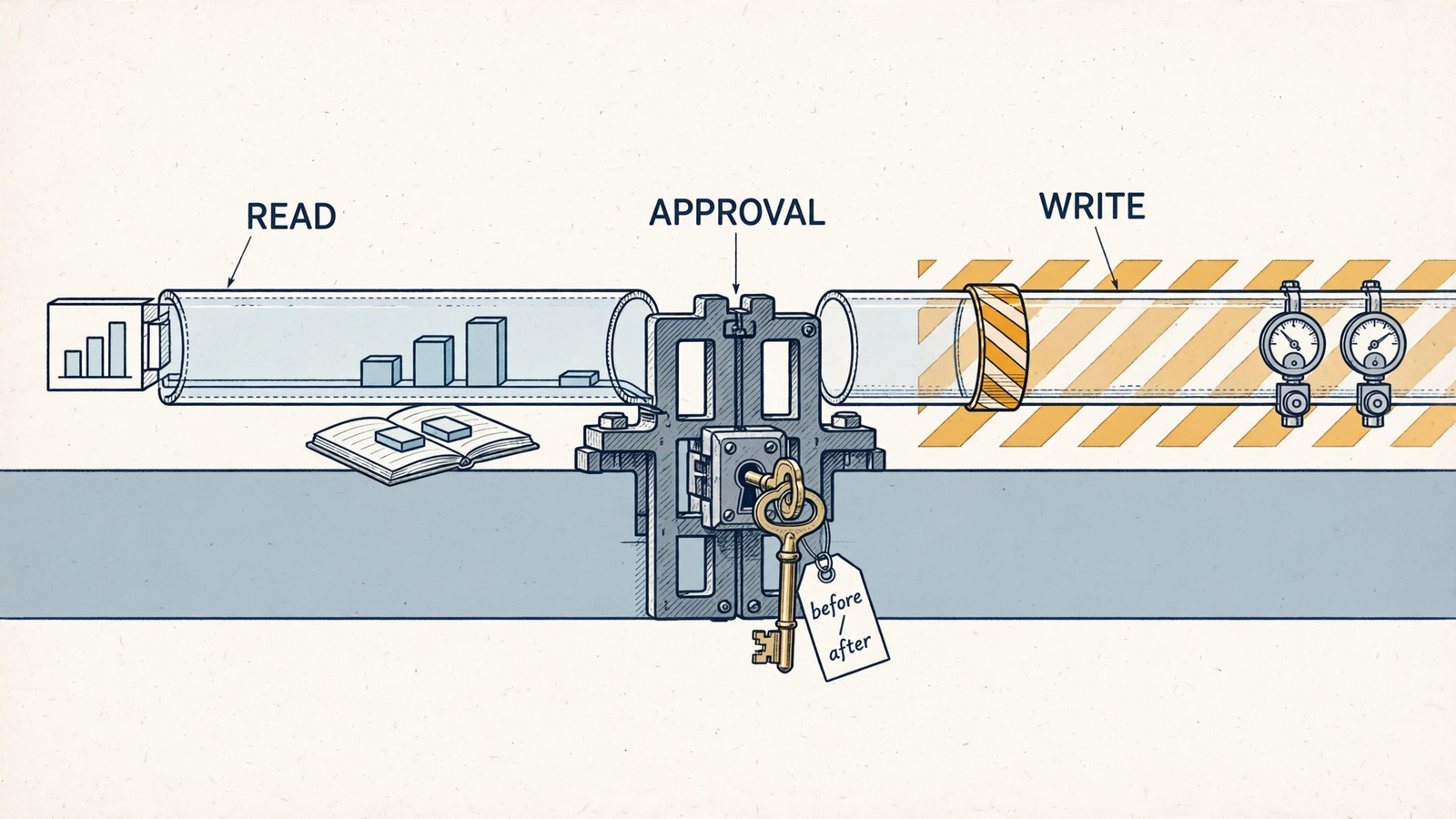
The sentence opens with “move”, not “compare” or “recommend”. That puts the account change ahead of the evidence for it. Microsoft’s agent guidance puts it plainly: “Separate read and write actions.” Drafting a change doesn’t alter an account; applying it does. TechRadar’s piece on where agents should stop makes the strategic version of the same point: where the agent stops depends on how clearly the strategy above it is defined.
My verdict on “move”: keep it for the approval step. First I want Claude to show me the evidence and the settings it proposes to change. A plausible answer to the first question is not permission to carry out the second.
“$500”: a number isn’t a budget unit
Google Ads distinguishes an average daily budget from a campaign total budget. The first has a monthly spending limit of 30.4 times the daily figure; the second covers a campaign with start and end dates. A $500 daily reduction and a $500 total reduction are not two readings I’d let Claude choose between. Over a month, that’s roughly a 30-fold difference from one missing word.
Meta has its own fork: an ad set can use a daily_budget or a lifetime_budget. And a daily setting isn’t a promise to spend exactly that amount each day. Meta’s daily budget guidance describes flexibility of up to 175% of the daily amount on a given day, or 210% with ad set budget sharing, with spending up to seven times the daily amount across a week. The number I approve in a settings screen and the amount I see spent on Tuesday aren’t necessarily the same number.
My verdict on “$500”: state what the amount means, then translate it into two sets of settings. Is it a daily adjustment or a total allocation over named dates? I want the current and proposed settings on both platforms, the budget type, the dates and the applicable Meta spending flexibility. There is no shared Google-to-Meta transaction to make the arithmetic someone else’s problem.
“Our worst Google campaign”: show me what put it last
Worst by cost per lead? By ROAS? By cost per qualified pipeline, closed-won CPA or spend with no conversions? One bad week can put an otherwise sound campaign at the bottom of a table. A campaign with a high cost per lead can still produce the customers worth paying for. Pick the wrong measure and the ranking can be perfectly accurate right up to the point where I use it.
My verdict on “worst”: make the ranking rule fit in one sentence. I’d have Claude list the Google campaigns in scope, name the reporting window and show the numbers behind the order. I’d also ask it to flag campaigns whose rank changes when the window changes or when a downstream outcome replaces the platform conversion. A ranking that flips isn’t necessarily wrong. It’s one I don’t want passed off as a settled decision.
Then I’d check what the proposed cut actually touches. Google Ads budgets are shareable by default when created through the API. A cut aimed at the campaign at the bottom of the ranking can affect other campaigns if they share that budget. “Our worst Google campaign” names neither the campaign nor the setting. I want the account, campaign and budget IDs, plus any other campaigns that would feel the cut, before I approve it.
“The Meta ad set with the best cost per lead”: best at producing what?
The benchmark numbers make this clause look like the easy part. A comparison citing WordStream’s 2025 figures puts average cost per lead at $70.11 for Google search and $27.39 for Facebook lead campaigns. Another comparison, citing LocaliQ’s 2026 figures, puts them at $66.69 and $27.39. In both sets, the Facebook lead costs less than half as much. Neither tells me which ad set should get the $500.
I used to tell clients that moving budget towards the cheapest platform lead was efficiency. I was wrong. Cost per lead divides spend by an event. A tap on a prefilled Meta instant form and a search lead who reads a page and types in their details can both count as one event. They ask different things of the customer. What happens after the form goes into the CRM is exactly what that division leaves out.
Attribution adds another mismatch. Meta warns against comparing results across ad sets with different attribution models because the counting mechanisms differ. I want the same caution across Google and Meta: what counts as a conversion, which interactions get credit, over what window, and how long the downstream outcome takes to show up. Lining up the reporting dates doesn’t fix a difference in what the platforms count.
My verdict on “best cost per lead”: keep it as a platform measure, not a cross-channel decision rule. I’d ask Claude to show the comparison at three levels, where the data allows it:
- Platform conversions: the events each platform counts, with their definitions and attribution windows.
- Qualified outcomes: what the CRM or offline import can show, over a stated window with the lag acknowledged.
- Closed-won customers or revenue: the downstream result, where it’s available.
If all I have is the first row, I want Claude to say exactly that. It can show me the cheapest form fill. It can’t tell me it found the best destination for the money.
The missing line: what changed for next season?
“Next season” never appears in the sentence. That’s a separate problem from bad measurement: the ranking could be sound and still answer last season’s question. Last season had its own offer, landing page, price, margin and stock position. The campaign that came last might fit the new offer. The Meta ad set with the cheapest leads might be selling something I no longer stock.
My verdict on the missing brief: supply it before asking for a recommendation. I’d give Claude the offer, dates, margins and stock constraints, then name what can’t be discounted and what counts as success this time. I’d have it re-read live settings and recent results, rather than treat an old brief as the current state. TechRadar’s companion piece on agents and business context gives this a useful order: answers, then suggestions, then actions, with read-only access and dry runs before changes.
This is where groas earns its place beyond the demo. Claude can work with the connected accounts and the market data groas collects, and groas logs changes with their reasons. None of that tells Claude whether I can afford to discount a product this season. Last season’s evidence belongs in the analysis. The current brief gets to decide what the evidence is for.
What the full stop leaves out: approval and failure
An agent can be 99% confident a record should change and still have no authority to change it. That’s the distinction in CIO’s piece on when agents should hand off. OpenAI’s guardrails documentation describes the practical version: let the model identify an action, then pause before the side effect so a person can approve or reject it.
My verdict on the missing stop line: approve exact settings, not the idea of a transfer. I want the ranking, its limitations and the before-and-after settings in one response. Then I can approve specific lines or send them back. “That looks sensible” isn’t a change set.
If one write fails, check what actually changed
The Google cut can land and the Meta increase can fail. A proposed Meta lifetime budget, for instance, still has to clear the platform’s minimum relative to what’s already been spent. The word “move” makes the two edits sound like one operation. It doesn’t make them one.
On a failed write, stop and re-read both accounts. I want to know what changed, what didn’t and what’s still pending before Claude retries anything or attempts the remaining edit. The groas change log records the changes and their reasons, and a setting can be undone in one step. Money already spent on the wrong ad set doesn’t come back with the setting.
The repaired prompt, annotated
I’d keep the $500 and the direction of travel. I’d replace the implied decision with an explicit request for evidence, a proposal and a stop.
Analysis only. Do not change anything yet. Use live data from my Google Ads and Meta accounts to assess a proposed $500 reallocation from Google to Meta. The $500 means [daily adjustment or total allocation over these dates]. If that unit or the relevant dates are missing, ask me before proposing settings.
Rank the Google campaigns in scope for the last 30 complete days by cost per qualified outcome. Show the ranking rule, conversion definitions, attribution windows and conversion lag. Flag any rank changes under a 7-day versus 1-day window where the data supports that comparison. Identify the Meta ad set with the best cost for a comparable qualified outcome. If downstream outcomes aren’t available, report what the platform data shows and say what it cannot establish. Do not treat unlike lead events as equivalent.
Use this brief for next season: [offer, dates, margins, stock constraints and the outcome that counts as success]. Re-read the live settings before proposing a change. For each platform, list the account, campaign or ad set, and budget IDs; the budget type; whether it’s shared and what else it affects; the current and proposed settings; and the effective dates. Include the applicable Meta spending ceiling. Flag any setting that can’t be changed as proposed.
Stop. Show me the proposal and wait for approval of specific lines. Ask about unresolved assumptions instead of filling them in. Do not execute a change in this step.
What each paragraph repairs
- “Analysis only” makes the first action a read. The $500 stays, but the unit comes from me, not from whatever setting Claude sees first.
- “Qualified outcome” gives both sides a test. The ranking rule replaces “worst”; the definitions and windows tell me whether “best” means anything across accounts. If the data stops at the form, the recommendation stops there too.
- The brief and the settings describe different things. The brief says what I need the money to do this season. The before-and-after list says what the two platforms would actually change to try to do it.
- “Stop” leaves the decision with me. If I approve, I approve two separate writes, not an imaginary transfer button. If either write fails, the approved change set needs the same stop-and-inspect rule: check live state, report it and wait before doing anything else.
Overall verdict: keep the execution, lose the guessing
I’d keep the original sentence’s instinct. I want Claude connected to groas to act in the accounts, not just describe what I could do if I opened two tabs and did it myself. What I wouldn’t keep is the order. Analysis first, unresolved assumptions out in the open, exact settings approved after that. If I want to go further, I follow groas’s guidance on letting AI make ad changes: leave autopilot off until I’ve defined its scope, budget limits and when it must stop and escalate to a person.
Recommendations are cheap. Execution is the product. But without comparable outcomes, an explicit budget unit and a fresh seasonal brief, execution is just faster guessing. The line I’d keep on the wall is the one the original left out: show me the evidence, show me the exact settings, then stop.





