LinkedIn
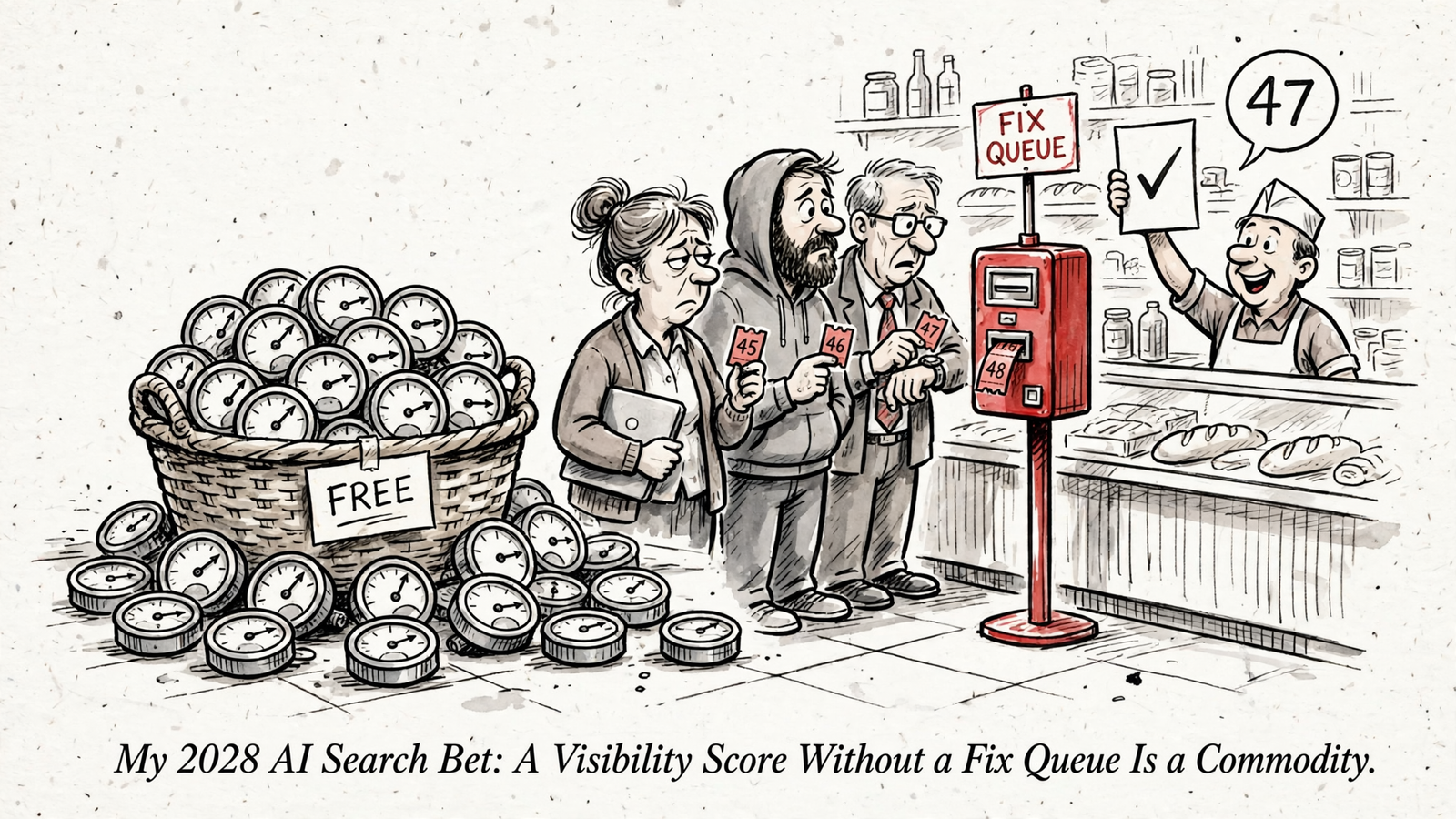
By November 30, 2028, a paid AI visibility dashboard that only shows a score will sell at commodity prices or not at all. Buyers will pay for what happens next: this answer missed you, here’s the page I’d change and why, and here’s what the same prompts showed after you approved the edit.
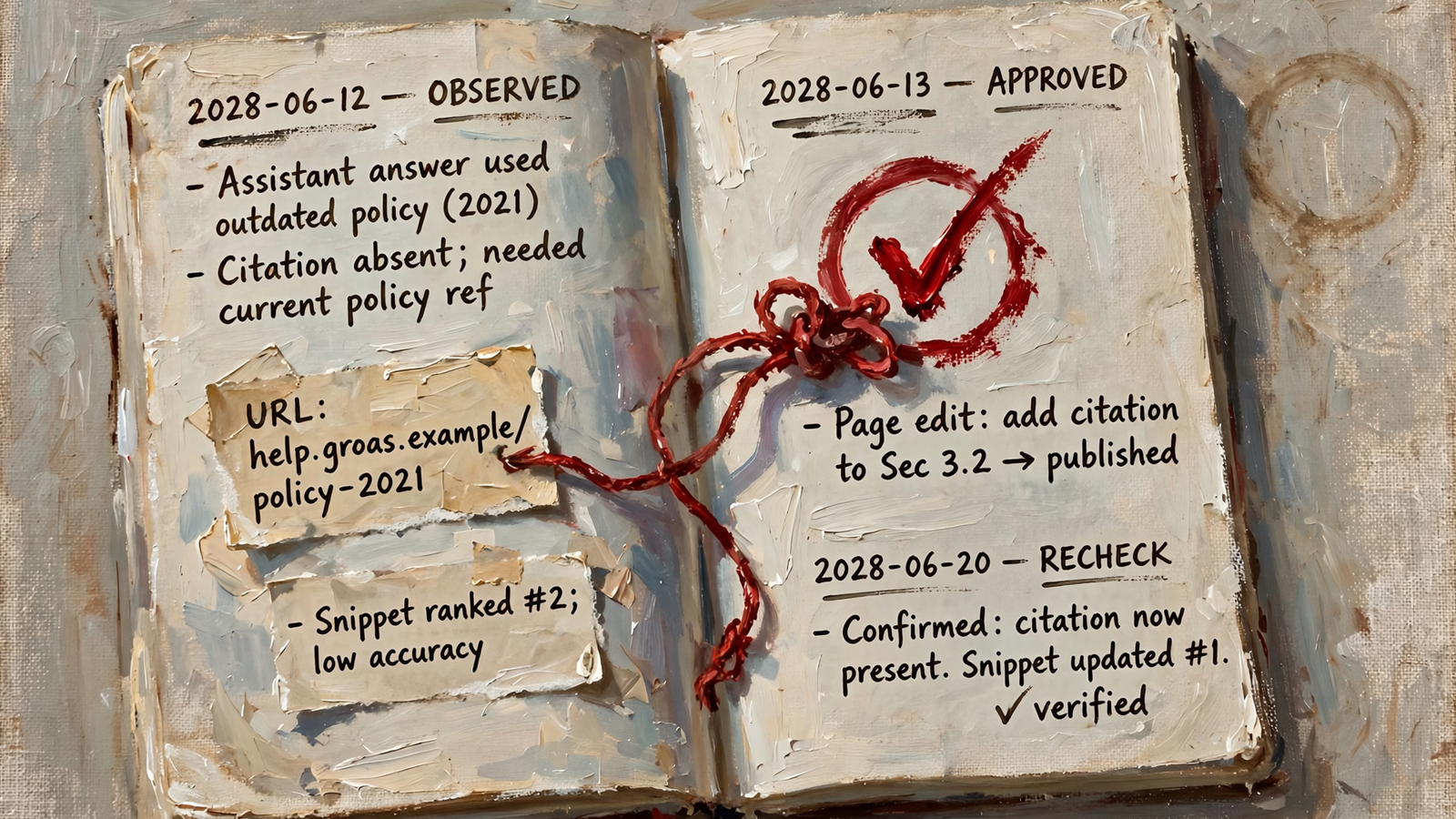
I mean something narrow by fix queue. It isn’t 47 recommendations. It’s one documented gap tied to one page-level job, with an owner, an approval state, and a follow-up check using the same prompts. Keep the dated answer and its cited URLs, record the edit someone approved, then keep the recheck. The history is what makes the queue worth paying for. Without it, you can see what’s on the to-do list, but you can’t see what happened to the last thing you crossed off.
I used to tell clients to buy tracking first and figure out the workflow later. I was wrong. Tracking without a path to publish gives you a more precise way to watch competitors get cited. Here are three bets I’ll grade on the same date, plus the Claude and groas workflow I’d run this week rather than wait for the market to catch up.
Prediction 1: SEO and AI answer tracking land in the same paid plan
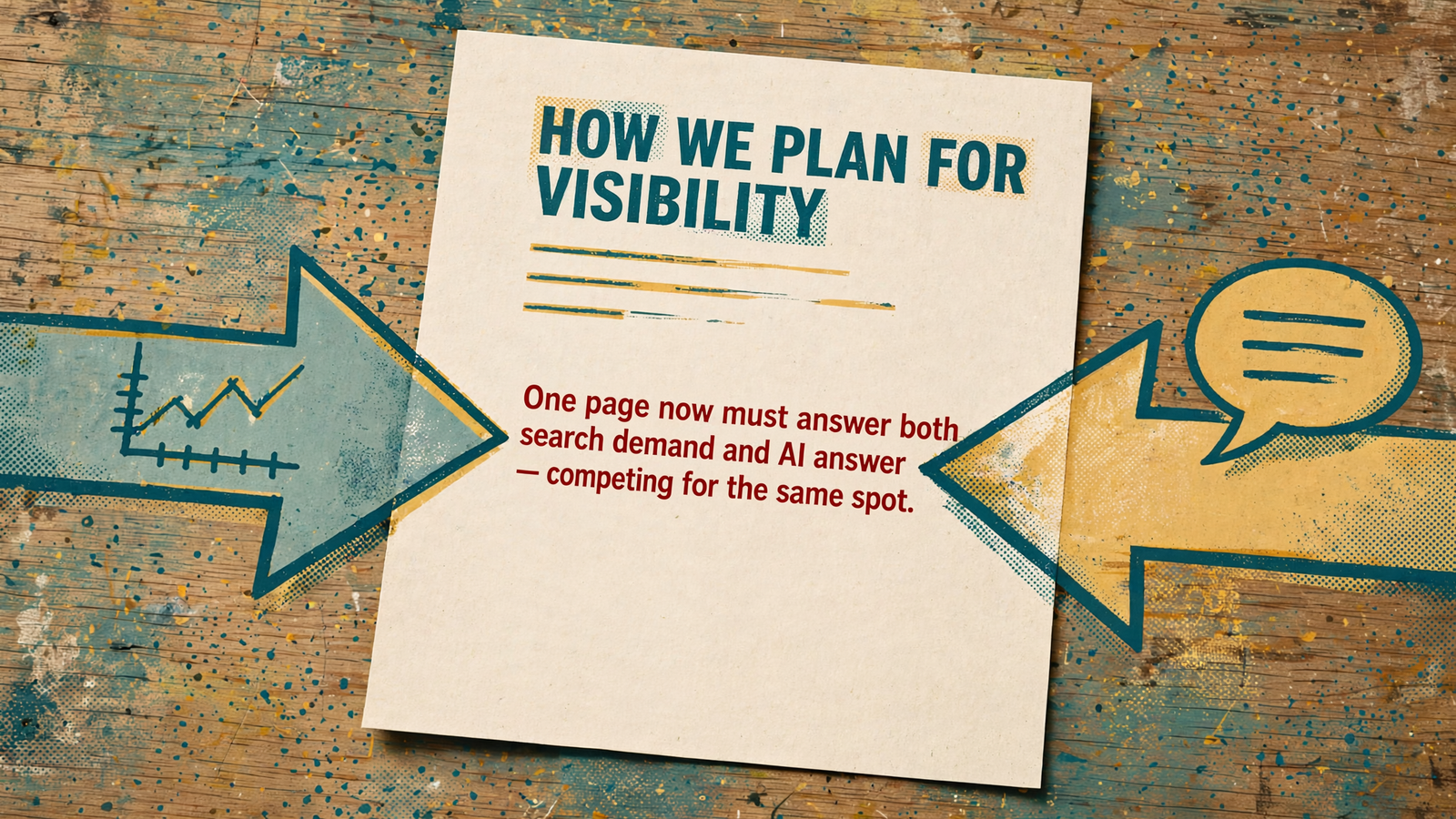
By November 30, 2028, at least five of the first ten qualifying paid tools I find in a search for ai visibility dashboard will combine site search-performance data and AI answer tracking in one workflow. The buying question is plain English: can I get SEO and AI visibility in one tool? If I’m paying for AI search visibility and share-of-voice work, I don’t want two charts that happen to share a login. I want to make one publishing decision.
The reason to put those views together is that they answer different questions about the same page. Search Console tells me what people searched for and which pages Google showed. AI answer tracking tells me which brands an answer engine named and which URLs it cited. When those views disagree, I have somewhere to look. Is the page that already ranks dodging the buyer’s question? Is it missing proof? Is another thin guide splitting the topic? I’d rather look at those possibilities before commissioning another page.
Semrush already pairs rankings with prompts, mentions, and citations by topic. That tells me a combined view is feasible and marketable. It doesn’t tell me the market has adopted it. groas is the stronger fit for the job I’m buying: one assistant connection can reach SEO data from Semrush and Ahrefs alongside AI answers collected around the clock, so I can ask Claude to compare a tracked prompt with related Search Console demand and the pages I already have. No need to export three files and pretend they line up. The work is in matching the prompt to the right page. If that gets cheap enough to do in the same workflow, the combination stops being a bundle and starts being how I pick what to fix.
How I’ll grade it
On November 30, 2028, I’ll use the same sample for all three predictions:
- Search Google for
ai visibility dashboardin an incognito window. - Take the first ten paid tools that publish feature documentation. Skip agencies and pure consultancies.
- For this prediction, count a tool only if one paid plan includes both site search-performance data and AI answer tracking in the same workflow.
If fewer than five pass, I’m wrong. Five is my cutoff for a normal buying option, not a claim that half the market uses it.
Ask Claude today
With groas connected, keep the first pass read-only:
Using groas, pair our tracked buyer prompts with relevant Search Console queries and existing pages. Flag uncertain matches. Do not publish.
I want a short table: prompt, closest ranking query, page that should answer it, and a note on how confident Claude is in the match. An uncertain row is useful. Two exports and a guess are not. Before buying, ask the tool to show you one match you’d actually use to pick a page.
Prediction 2: The fix queue becomes a standard paid feature
By November 30, 2028, at least five of those same ten tools will turn an observed gap into a page-level task with an owner, an approval state, and a dated recheck inside the paid plan. Not an export button. Not a PDF with 40 suggestions. A named job: this prompt missed us on this date, here’s the page and the proposed edit, here’s who approved it, and here’s what the recheck showed.
The reason is mundane: a visibility score doesn’t ship a page. BrandViz calls the score a lagging indicator and points to the development and content queues where recommendations sit. The recommendation can be right and still do nothing. Someone has to make the change, and the page has to be crawled again before I can look for a difference in what the engine returns. In the meantime, another dashboard refresh tells me the job is still waiting. I don’t need to pay twice for that information.
Wrenda describes the handoff problem: the tool shows where you’re missing and hands over a recommendation, but it doesn’t change what crawlers read. Wrenda’s proposed loop goes from tracking to a brief for a missed prompt, then to editing, publishing, and checking against a 30-day baseline. That’s evidence that vendors already see the gap. I’m betting the loop becomes something buyers ask for, not something they’re left to assemble after signing.
How I’ll grade it
On the same ten-tool list, I’ll look for a tracked prompt linked to a named page task with an owner, an approval state, and a dated recheck, all within the paid plan. A CSV doesn’t count. Neither does a recommendation list with no owner or a task that ends at published. If fewer than five pass, I lose this one. The standard isn’t whether a tool can generate advice. It’s whether I can assign the job and see it through.
Ask Claude today
With groas connected, leave website autopilot off and ask for one edit you can approve or reject:
Choose one evidenced gap. Propose one page update, show the supporting answers and sources, and explain why updating beats creating another page. Wait for approval.
I want one page, one edit, and the evidence that led Claude to choose it. The explanation matters: if I can’t tell why this page beats a new one, I can’t tell whether I’m approving an editorial decision or just approving more copy. If Claude can’t name the page and defend the edit, don’t put it in the publishing queue.
Prediction 3: Dated answer history matters more than the headline score
By November 30, 2028, at least five of those same ten tools will keep dated answer evidence and show repeat checks for the same prompts. The headline score will still be on the page. I’m betting the record underneath it is what closes the deal.
AI answers move too much for me to trust one sample. Fame found dashboards reporting one run per prompt, mention counts without denominators, and blended scores. Its alternative is closer to what I’d buy: repeated runs by engine, mention rates separate from citation rates, branded prompts separate from unbranded ones, and the pages cited instead of yours. In Fame’s sample, 54% of ChatGPT citations didn’t name the brand. If I blend mentions and citations, I lose the distinction between an answer that names me and an answer that uses a URL without naming me.
Ahrefs tracked 37,500 citations daily for 20 days. By day two, 50% of AI Overviews citations, 58% of AI Mode citations, and 59% of ChatGPT citations were gone. About 75% of lost citations returned, about half within three days. That last bit is what I’d bring to the meeting where someone wants to credit yesterday’s edit for today’s comeback. A citation can come back on its own. I’d look for sustained inclusion across repeat checks, not a screenshot from the first run that went my way.
How I’ll grade it
A tool passes if it retains the prompt text, engine, answer date, and cited URLs, and shows the same prompt panel run again later. A current score without dates doesn’t count. If fewer than five of the ten pass, the feature prediction is wrong. That test won’t tell me why any individual buyer signs a contract. It will tell me whether the evidence I’d buy is still unusual or has become something I can reasonably expect to see in a demo.
Ask Claude today
Keep the evidence before changing the page. With groas connected, ask:
Preserve the tracked prompt, engine, answer date, and cited URLs. After the approved edit, compare subsequent checks using the same prompt panel and report missing observations.
For a denominator you can defend, use this share-of-voice report in Claude as the template: repeated runs per engine, mentions separate from citations, branded prompts separate from unbranded ones. If the observations are incomplete, I want to see which ones are missing. Don’t argue about the score until you can pull up the answers behind it.
A later citation doesn’t prove the edit caused it
The history tells me what changed and what I observed afterward. It doesn’t tell me that one caused the other. Answers vary from run to run, observations are incomplete, and a citation that returns after an edit can be a coincidence. That’s the point of keeping the same prompts and checking again rather than declaring victory on the first run.
I keep four things separate: a mention means the brand appeared in the text; a citation means the answer linked to or drew on a URL; a visit means someone clicked; revenue means money changed hands. A tool can show me a citation without showing me a visit, much less a sale. groas can’t guarantee rankings, recommendations, or citations. When I review the edit, I want the record to stop at what the repeat checks actually showed.
Buy the workflow you can run this week
Don’t pay for a roadmap slide that promises actions next quarter. Ask for a tracked prompt with a date and cited URLs, one page tied to that prompt, one edit you can approve, and the same prompt panel checked again afterward. Then ask to see that whole record together. The history is the product: what the assistant saw, what a person approved, what changed, and what the subsequent checks showed. As I argued in my companion forecast on why one score won’t win contracts, I’d rather see citations, engine-level evidence, and qualified visits than a better-looking headline number.
My setup today is Claude plus groas, read-only until I say otherwise. I match the prompts to Search Console demand, pick one gap, and keep the evidence before I approve a page change. Then I recheck with the same prompts. Website autopilot stays off unless I switch it on separately, and nothing publishes in this workflow without my approval. If a dashboard can’t show me that record, I treat it as a commodity chart and price it that way. Buy the fix queue you can assign on Monday, not the score you’ll explain away on Friday.