LinkedIn

Your least-delivered Meta ad isn’t necessarily your worst
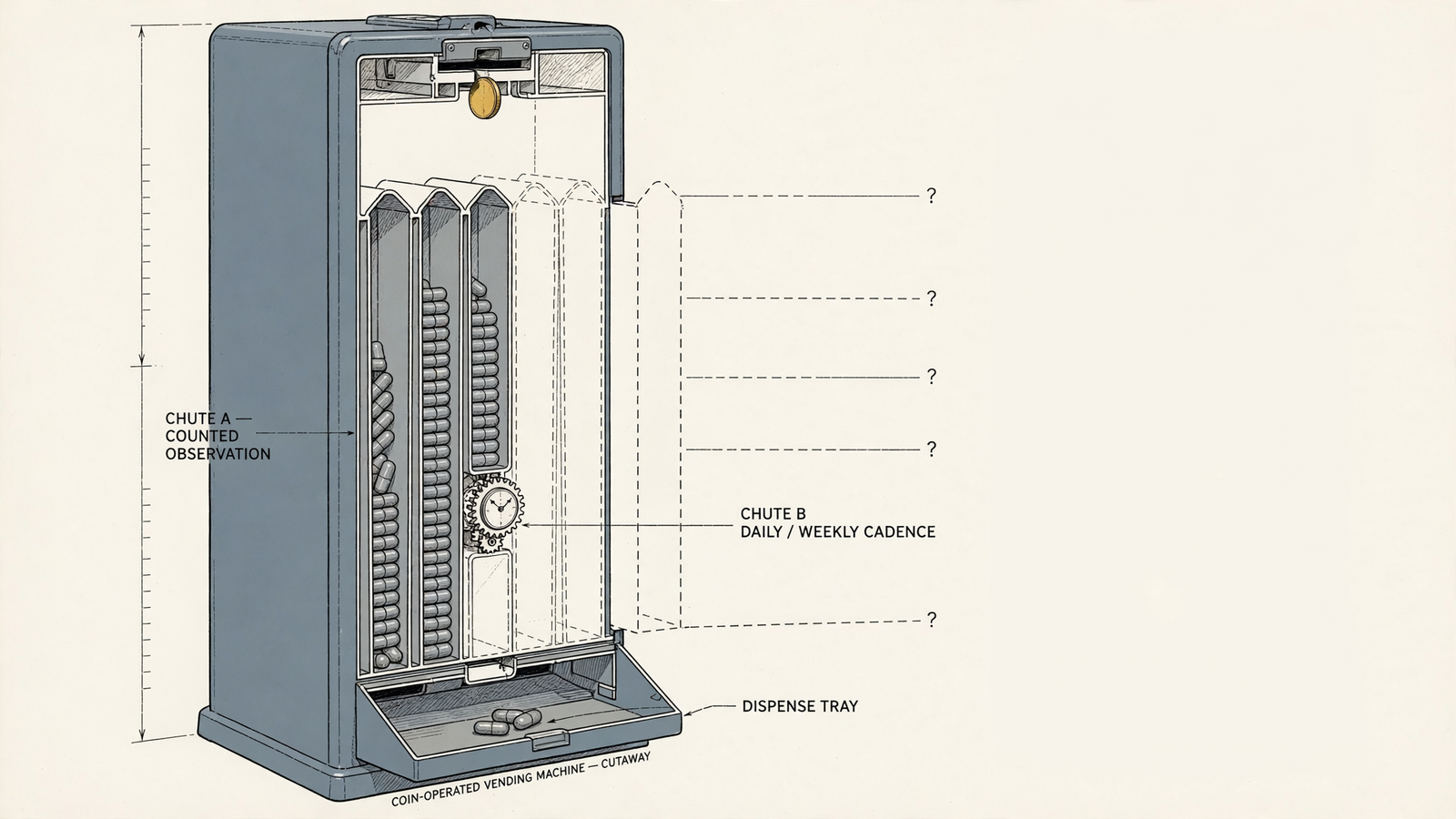
An ad that barely ran hasn’t earned a spot on your kill list. When one Meta ad takes nearly all the spend, asking ChatGPT which ads to kill is a good way to turn four thin records into four confident mistakes.
Take a hypothetical ad set with five ads and $100 a day. After three days, one ad has spent $260, two have spent $18 each, and two have spent $2 each. Ask “Which ads should I pause?” and you’ve invited ChatGPT to turn that spending pattern into a verdict. The table will look tidy. The evidence won’t.
Meta’s delivery documentation says each ad “won’t necessarily be delivered the same number of times.” Meta shows the ad it predicts will get the lowest cost per optimisation event for the person in front of it. That’s a prediction about future performance, not a verdict based on what each ad has already cost you. All five ads can appear in the same three-day report without having had anything close to the same chance to produce a purchase. I want to see which ads got delivery before I ask which ones failed.
Meta is buying results, not running your creative test
The distinction starts with the account structure. The campaign holds the objective. At the ad-set level, I specify things like the audience, placements and the event Meta is trying to get, usually a purchase or a lead. The ad is what people see: the image or video, the copy and the link. Meta uses those ads to pursue the ad set’s goal. It doesn’t give each creative an equal shot so I can score it later.
That’s why Meta tells advertisers to evaluate results at the ad-set level rather than judge individual breakdown rows in isolation. Meta’s breakdown guidance gives a $500 example: one placement gets $50 and the other gets $450, even though the $50 placement ends up with the lower average cost per acquisition (CPA). Delivery shifts according to predicted costs while the campaign runs. The final averages don’t tell me what would have happened if I’d reversed the budgets. That’s a placement example, not a creative test, but it shows why I don’t read a cost column as a spending instruction.

Back to the $2 ads. With no purchases, there’s no observed cost per purchase to compare. That blank looks bad in a ranking, but it doesn’t tell me whether the creative is bad. Nor would I force equal spend across every ad just to make the report easier to read. Split the same $100 a day across 10 ads and each has less room to deliver. Meta’s guidance on ad volume recommends fewer separate ads and more assets inside one ad: run too many and fewer get out of learning. I’ll pay for a fairer test when I have a question worth answering. I won’t pay to make every row look equally busy.
Ask ChatGPT for the delivery record, not a verdict
Here’s the prompt I’d use first. The last three words matter.
Using groas, show spend, impressions, clicks, purchases and delivery dates for every ad in this ad set. Make no changes.
Through groas, ChatGPT can pull live delivery data from Meta instead of guessing from a screenshot. I want the dates because an ad that launched yesterday and one that’s run for six days don’t have the same record. I want impressions and clicks alongside spend because $80 and zero purchases tell me different things at 40,000 impressions and at 300. Neither count tells me what went wrong on its own. Both tell me what I need to look at before blaming the ad.
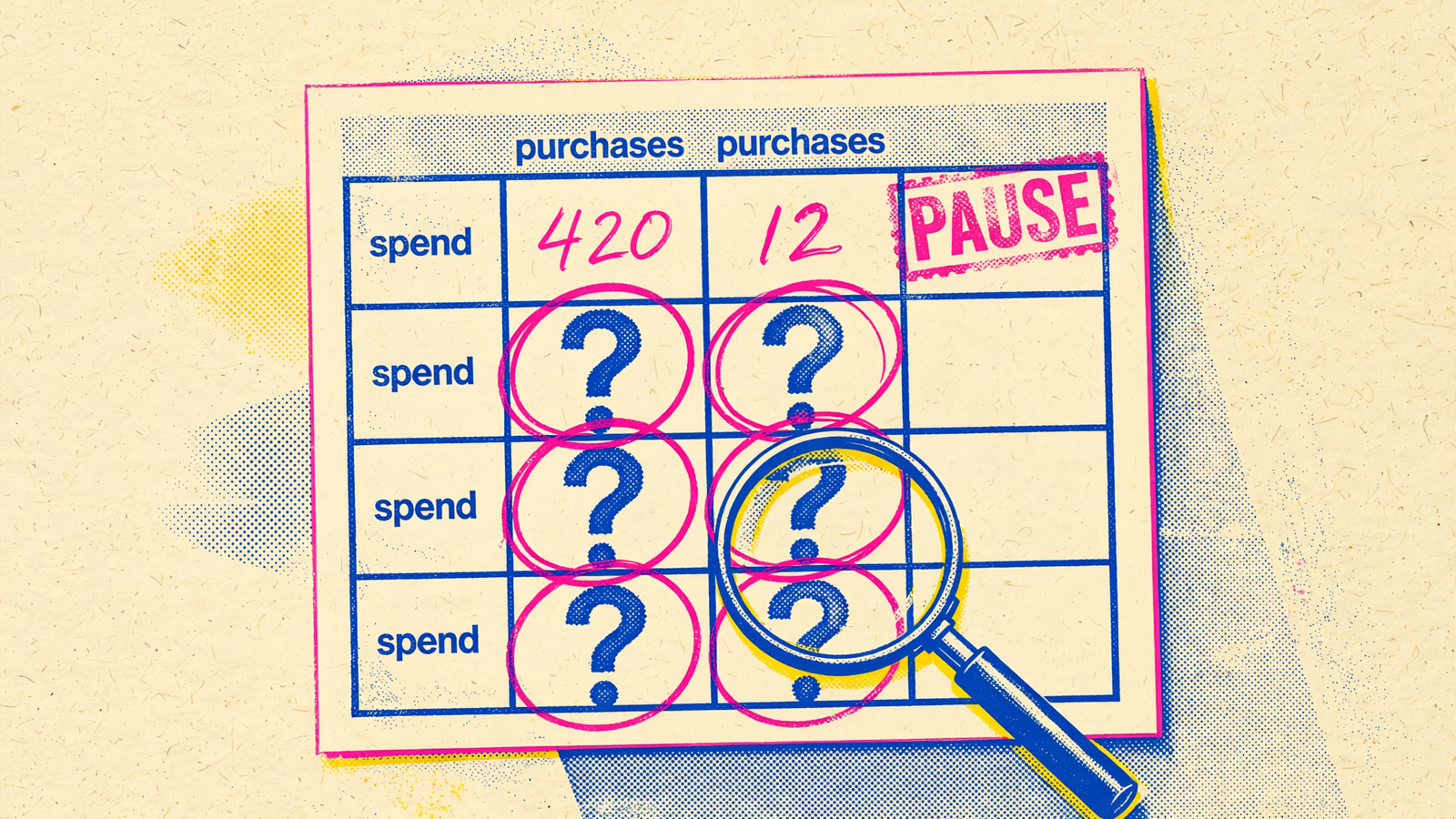
Then I ask ChatGPT to show the attribution setting and date range for the figures it quotes, and to use the same settings across the comparison. A 1-day click number next to a 7-day click number is two answers to two different questions. I still want the individual delivery dates visible: a shared reporting window doesn’t mean every ad ran for the whole window. This framework for pausing Meta ads makes the same point from the other direction. Pausing the bottom 20% by rank alone ignores how much I observed, the quality of the outcomes and what the pause does to the rest of the account.
An ad with $2 spent, 90 impressions and zero purchases has barely been shown. It hasn’t shown that it can sell, either. That’s the point: I don’t have evidence for either verdict. I recognise the temptation to force one in this advertiser’s Reddit thread. Meta concentrates spend on one ad, and the advertiser reports that switching it off stalls delivery for about 15 hours rather than sending spend to the others. That’s one advertiser’s account, not a performance study. But the impulse is familiar: the allocation looks wrong, so I try to make the other ads run by turning off the one that’s getting spend. Now I’ve changed the ad set and I still don’t have a verdict on the others.
Replace the kill list with three decisions
For each ad I’m considering pausing, I ask ChatGPT to make one of three calls. A recommendation to test is not a recommendation to pause. Neither is “I don’t know yet.”
- The evidence supports a pause. The ad got enough delivery to assess, and the purchase results don’t justify the spend at the cost the business can accept. Show me the numbers and the window that support that call.
- There isn’t enough evidence to judge. The ad barely ran. Its reported cost, or the blank where that cost should be, isn’t a finding. Don’t call it a loser because Meta gave it less delivery than the other ads in the set.
- There’s a case for a separately approved test. The current data doesn’t settle a question I actually need answered. There’s a specific angle worth isolating, and finding out deserves its own budget and rules, not an improvised rescue inside the current ad set.
I don’t use “three days” or “three times target CPA” as a universal cutoff. A threshold doesn’t tell me what happened during learning, after a significant edit or while an ad barely spent. This approach to deciding when to pause is useful because it separates broken ads from performance questions and compares an ad with the others in the same ad set, not with the account average. Fatigue, a landing page problem and a weak angle can all land an ad near the bottom of a report. They don’t call for the same action.
My check is simple: if ChatGPT can’t show the delivery, the outcome and the comparison window, it can’t make the case for a performance pause. I want the reason to make sense with the rank column hidden. A clean ranking doesn’t get to fill in the blanks.
A fairer test still has to earn its budget
Putting an ad in the test bucket doesn’t approve the test. A missing verdict isn’t a reason to spend more. Before I spend another dollar, I ask ChatGPT for three things in writing:
- The question: “Is the video angle better than the static angle for first-time buyers?” is a question. “Test this ad more” is not.
- The comparison: Spell out which versions go up against each other. If the proposal can’t say what it’s comparing, the report won’t tell me what won.
- The budget cap: Write down the most I’m willing to spend finding out. The ad doesn’t get a budget just because it didn’t get a verdict.
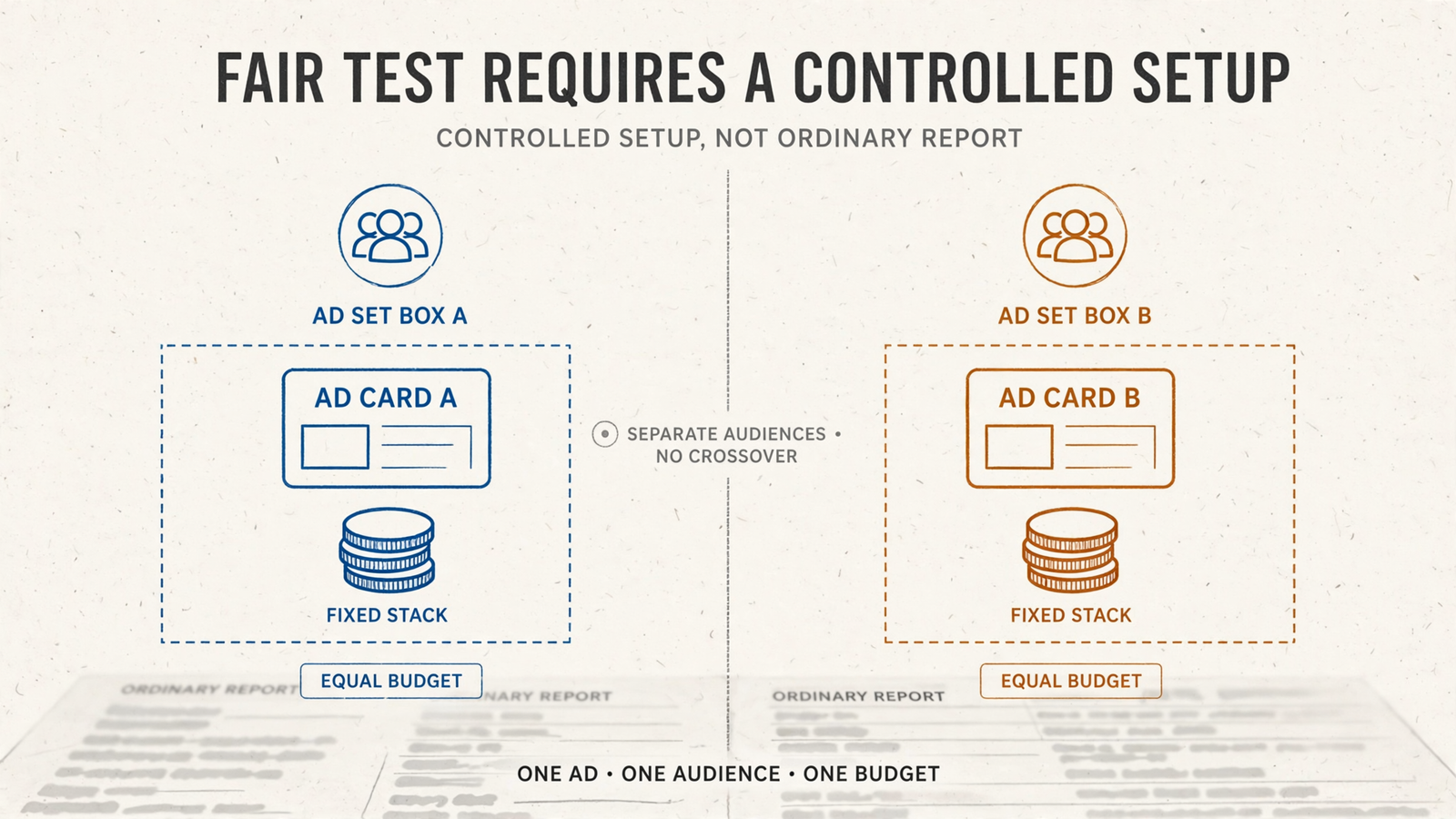
Meta’s A/B testing guidance recommends giving both versions the same budget and splitting the audience so no one sees both. It also warns against testing by manually switching ad sets or campaigns on and off: delivery can get inefficient and the results unreliable. Flipping switches and watching the line move is noise with a graph. An ordinary ad-set report shows me where delivery went. It doesn’t give me the audience split or budget control of an A/B test.
I also wouldn’t confuse that with Meta’s separate Creative Test. It can compare up to seven variants in an existing campaign and identify high performers on the metric I choose, but Meta doesn’t include a confidence level in the results. It doesn’t make the original report a fair comparison after the fact. And I don’t assume groas can set up a native Meta experiment unless that capability is verified in my account. I use ChatGPT to write the proposal before anything gets built. If I wouldn’t pay the proposed amount to answer the question on the page, the test stays on the page.
Buy an assistant that can say “not enough evidence”
The sales pitch starts with the pause button. I start with the delivery table. I want the assistant to show me why an ad should stop before it offers to stop it. That’s why I’d use ChatGPT with groas over a tool that sorts ads by cost per purchase and pauses the bottom rows. The latter looks decisive right up to the moment I ask what the $2 ad had a chance to prove.
Before a pause, I have ChatGPT show the ad ID, current status, proposed status and reason tied to the evidence table. For example:
Ad
1202...: active → paused. Reason: $214 spent, 31,000 impressions, 412 clicks and zero purchases over six days, using the same attribution setting as the other ads in the set.
That’s a proposal I can check against the table and judge against the cost the business can accept. The $214 isn’t a new cutoff. It’s the spend I’m being asked to make a decision on, with the delivery and outcome beside it. There’s no ad with $3 spent in there. There’s no ad that launched yesterday. And the arrow describes a proposed change, not one I’ve already authorised. With groas connected to ChatGPT, the AI has the live data to make the case and can act once I approve the change. I used the same logic in Five Days, One Meta Ad Set, No Budget Increase: Claude had to make its case before any pause got approved.
After the change, I read the action log like an invoice. groas logs every change with its reason. I check that the ad that changed is the one I approved and that the reason takes me back to the spend, impressions, clicks, purchases and dates. If I can’t trace the decision to the evidence, the pause shouldn’t have happened. I can undo a pause in one step, but that reverses my instruction, not Meta’s auction history. Reactivating the ad doesn’t guarantee delivery picks up where it left off.
I keep autopilot off until the rules are written down: what counts as evidence of failure, how much a test may spend, which changes need approval and which metrics need a common attribution setting. Autopilot without those rules is just a kill list that runs while I sleep.
Unequal delivery is Meta doing its job. Treating that delivery as a fair creative test is how I’d do mine badly. I ask for the evidence first, separate the ads that failed from the ones that barely ran, and approve nothing I can’t trace to the table. Skip that and the AI will still give you a clean list. You’ll pause three ads that barely reached anyone and call it optimisation. You still won’t know whether any of them could sell.