

 LinkedIn

With a frozen total ad budget and two hours, I ask Claude for one decision across Google, Bing and Meta, not three channel plans. A raise here, a little more for the winner there, an uncapped ad set over on Meta: each recommendation can make sense on its own and still blow the one number finance told me not to touch.
The deliverable is one proposal that adds $0 to configured budgets, with change nothing as a valid decision. I want one page I can defend next week, not three lists of things I could do if I had more money and another afternoon.
What I cut before the clock starts: new creative, rebuilds, tracking repair and separate optimization passes for each channel. None of that belongs in this sprint. I’m not asking what I could improve in three accounts. I’m asking whether I have enough evidence to take money from one campaign and give it to another.
Account setup stays off the clock, too. I start with Google, Microsoft and Meta already connected to Claude through groas. A read-only Microsoft Ads connection can give me the Bing inputs, but it leaves out the other two channels I need for the decision.
One skip rule: if conversion tracking broke in the last 14 days, or if I just changed what counts as a conversion, I don’t start the timer. A campaign can look more efficient because the way I count its results changed, not because the campaign did. No amount of tidy allocation math fixes that comparison. I fix tracking, collect a clean, comparable window and then run the sprint.
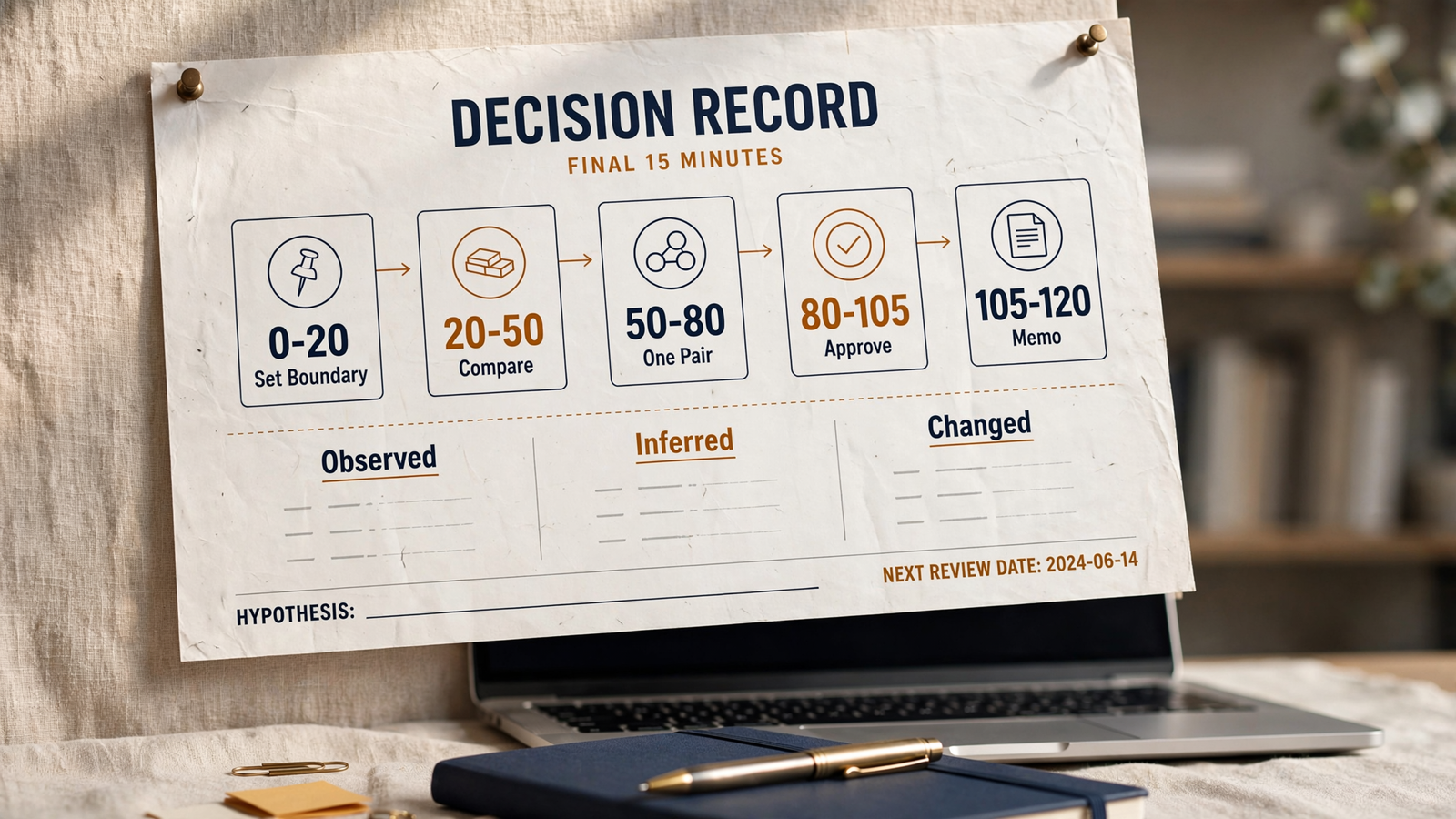
1. Minutes 0–20: write down the number that cannot move
Cost: 20 minutes. Buys: a budget boundary I can check against the proposal.
I name the account IDs Claude should read and give it the operating rules in the same prompt:
Read performance for these Google, Microsoft and Meta accounts. Keep autopilot off. Our total approved budget cannot increase. Do not change anything.
Then I write down the budget period and separate two numbers that are easy to confuse: configured budgets and billed spend. Say my approved budget is $20k a month. The proposed adjustments have to net to $0 in configured budgets. That doesn’t mean my card will be charged exactly $20k. A daily budget setting is not a billing cap.
Meta makes the distinction easy to see. It can spend up to 75% more than the daily budget on a given day, with a weekly limit of seven times the daily budget. Moving the same daily amount out of one campaign and into another balances the proposed settings. It doesn’t promise identical charges on any given day. I keep the proposed budget changes and the billed spend in separate lines so I can check each without mistaking it for the other.
By minute 20, I want the account list, the budget period and the $0 rule in writing. I don’t ask which campaign deserves more until I’ve made it clear where that money has to come from.
2. Minutes 20–50: compare outcomes without counting buyers twice
Cost: 30 minutes. Buys: evidence I can compare and a list of what I can’t.
Say a buyer clicks a Meta ad on Monday, clicks a Google ad on Wednesday and buys on Friday. Both platforms can claim the same sale. In one worked example, the platforms claimed 847 and 623 conversions against about 1,058 unique conversions. Adding the platform totals doesn’t tell me how many conversions I got. It just makes the dashboard look better until finance asks why revenue didn’t move.
Before Claude ranks anything, I ask it to line up four things:
- The reporting period: the same 30 days and the same time zone.
- The money: the same currency and the same definition of net sales after refunds.
- The attribution window: 7-day click as the working standard, with anything that can’t be aligned marked mismatched.
- The outcome: one primary KPI, such as revenue, ROAS or cost per qualified lead, with missing evidence marked unavailable.
Comparable doesn’t mean identical. The reporting example above puts the difference at 5% to 15% even after alignment. Matching the windows doesn’t turn two platform claims into two separate sales, either. I can compare the evidence without adding up the claims. And if a campaign looks better only when I switch to its preferred window or outcome, I don’t count that as evidence for a move.
I use Microsoft’s diagnostics to tell me where to look in the live account. A signal about creative, targeting, conversion tracking or change history isn’t a reason to move money on its own. If I can’t verify qualified leads or revenue, I write unavailable. Zero is a result. Unavailable is a reason not to bet on that result.
3. Minutes 50–80: build one paired move, or build none
Cost: 30 minutes. Buys: one proposal I can say yes or no to.
I ask Claude for a pair, not a ranked wish list:
Propose at most one paired budget decrease and increase. Show that the net configured-budget change is $0. Use comparable outcomes, state what’s uncertain and give me two specific reasons to reject the move. If the evidence doesn’t support a pair, recommend no change.
A lower reported CPA isn’t enough. Bing search can capture demand that Meta prospecting helps create. A cheap conversion on a search campaign doesn’t tell me what happens if I take money away from the campaign doing the prospecting. I give each campaign a job first: capture demand, create it, recover it or learn something. Then I ask two questions. Can the campaign losing money still do its job? Does the campaign gaining money get enough to tell me anything? If splitting the money leaves me with two inconclusive tests, I don’t split it just to keep both tests alive.
I want four things back from Claude:
- The pair: the account and campaign IDs on both sides, the old and proposed daily budgets, and a net change of $0.
- The evidence: the last 30 days on the primary KPI, using the comparable window and outcome definition from step 2.
- The uncertainty: what’s missing, mismatched or too thin to trust.
- The case against: two concrete reasons to vote no, written before I make the decision.
There’s a worked example in this one-marketer cross-channel test. The line I pay closest attention to is the decrease. If Claude can explain why Google could use another $40 a day but not what I’d give up by taking $40 a day out of Meta, I have half a proposal. The arithmetic works. The argument doesn’t.
If there’s no defensible pair, I use what’s left of the block to name the gap: a missing conversion definition, a mismatched window or an unverified assumption that the top campaign is budget-limited. I’d rather have a specific reason to hold than an allocation I have to explain away next week.
4. Minutes 80–105: approve both sides of the proposal or neither
Cost: 25 minutes. Buys: a decision on the exact pair, not permission to improvise.
I read back the platforms, account IDs, campaign IDs, current budgets and proposed budgets. Display names can repeat across Google, Bing and Meta. The numbers can net to $0 on paper and still send money to the wrong campaign. I check the IDs before I reread the pitch for the move.
I also check what would actually execute through groas before I approve the proposal. Connector write access can vary, especially when shared budgets are involved. If the number belongs to a shared budget rather than the named campaign, I check what else the proposed edit would affect. I keep autopilot off and the sprint read-only. If I later apply the approved pair, I check the action log against the old and new values. groas logs each change with its reason and lets me undo it in one step. Undo does not refund an auction that already ran.

If I can’t verify both sides, I approve neither. A decrease by itself is a cut. An increase by itself breaks the freeze. Those are different decisions from a reallocation, and I don’t let one sneak through under the other’s name. “No change approved,” with the reason attached, is a completed decision.
5. Minutes 105–120: leave one page finance can read
Cost: 15 minutes. Buys: a decision record I can defend without reopening three dashboards.
My last prompt is: Write a one-page decision memo. Separate what we observed, what we inferred and what we approved. State whether anything changed. I want the page to answer five questions:
- What did I observe? The comparable 30-day read on the primary KPI.
- What did I infer? Why the proposed pair might work, stated as a hypothesis rather than a result.
- What did I approve? The campaign IDs and old and proposed budgets, or no change approved and the reason. An approved proposal isn’t a change in the account.
- What couldn’t I measure? The gaps and mismatches, including why I didn’t add up platform conversions.
- When do I look again? A review date. If I later give more room to a budget-limited top campaign, I check it in about seven days before touching anything else. That’s the old rank by KPI and fund to the budget line discipline, with the total held flat.
Before I close the memo, I compare configured budgets with billed spend for the period and note any gap from Meta’s weekly pacing. I make it clear what the $0 applies to: proposed changes to budget settings, not charges. If finance asks why I proposed moving $40 a day from Meta to Google, or why I left everything alone, I point to the same page. The memo is the product. The dashboard is what I looked at to make it.
When the freeze lifts: fund one test properly
I don’t approve the three increases I ruled out during the sprint. That backlog is how one marketer turns a small budget increase into three tests too thin to settle anything. I go back to the memo and look for the move that showed a real signal on comparable outcomes. If I passed because the other campaign couldn’t afford to lose budget, the extra money changes that tradeoff. If I passed because I couldn’t trust the evidence, the extra money doesn’t make it any better.
That’s why I use Claude with groas rather than a Bing-only read-only connection for this job. I can read Google, Bing and Meta together, make one decision against the same budget and act on it later without confusing the ability to make a change with a reason to make one.
When there’s a clear candidate, I fund it to a level that can produce a decision before I add another test. For a genuinely new channel, I allow about two weeks per optimization round and three to four rounds before I judge it. That’s six to eight weeks, not three underfunded trials I can declare inconclusive by Friday. When I can finally spend more, I give one test enough money and time to tell me something.





