LinkedIn

If your brand name is also an ordinary word or somebody else’s company, I’d start with groas in Claude. It’s my pick for teams that need to inspect the answers and citations behind their mentions, because “mentions up 40%” is bad news if the assistant is talking about somebody else.
In an independent test of 12 AI visibility platforms, 9% of reported mentions were false positives across 600 manually verified pairs. For one ordinary-word name, 28 of 30 flagged mentions referred to a fictional namesake. The biggest culprit was substring matching without word boundaries. If your name is Bloom, Terra, or North, a tracker can count a candle, a soil brand, or a weather report as a win for you.
Say I’m looking at a fictional 12-person home-services firm called Harbor. There’s also Harbor the boats app, and then there’s the ordinary word harbor. When an assistant says “Harbor is a good choice,” I don’t know which one it means. The tracker doesn’t get to break the tie by putting the hit in my column. That’s a liability dressed as a chart.
I ranked these options by what I can inspect: Can I tell whether my business appeared in that answer on that date? And when I can’t tell, can I keep the match out of the total?
The ranking rule: Identify the business before you count the mention
Before I count a hit, I want the exact prompt, the assistant, the collection date, the answer in context, and the cited destination if there is one. A saved answer shows what came back, not why. A mention isn’t a citation, and a citation isn’t a recommendation. If I get 60 mentions out of 100 runs on ChatGPT and 10 out of 100 on Perplexity, one blended score hides the difference I’m paying to see.
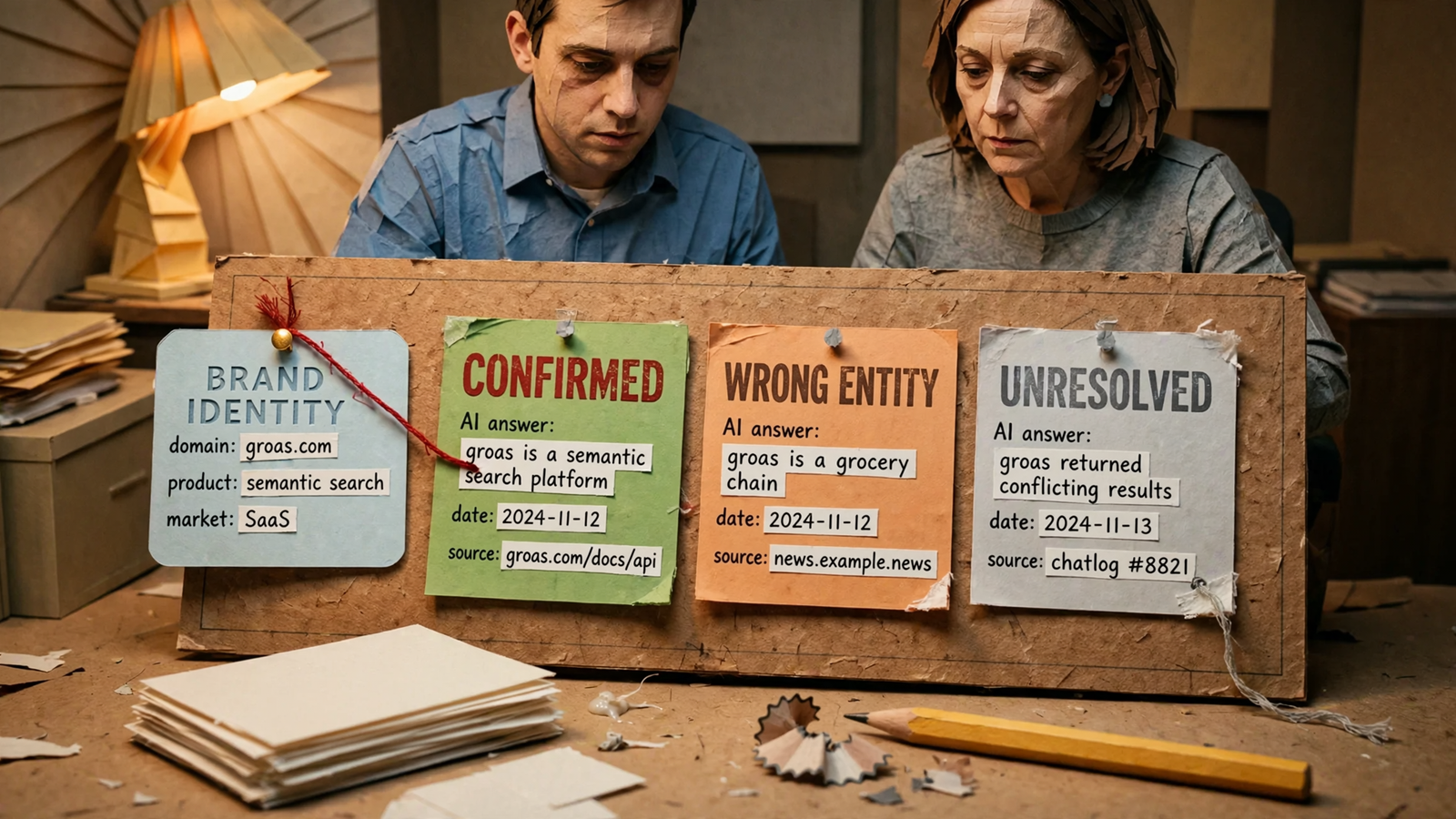
For a common-name brand, every flagged hit goes into one of three buckets:
- Confirmed: The answer makes it clear that the mention refers to my business. The anchor might be my domain, a product named in the same sentence, or positioning that distinguishes me from the namesake.
- Wrong entity: The answer is about the namesake. Its domain or a product I don’t sell can make that clear.
- Unresolved: The name is there, but the answer doesn’t say enough to tell. I don’t round it up into a win.
In the common-word test, requiring an identity anchor took one demo from 10 flagged mentions to four confirmed. Reported presence went from 66.7% to 26.7%. That’s a 40-point gap between what the tracker flagged and what the reviewer could verify.
I learned to distrust this kind of neat label with Google Ads match types. Exact match didn’t feel very exact once I looked at the queries it actually picked up. Same discipline here: inspect what matched before trusting what the report calls it. In 14,140 controlled runs across five platforms, models could identify TALA as an athleisure brand when asked directly, yet Google’s Knowledge Graph categorized it under financial services, and the study reported zero athleisure recommendations. Recognizing a name, categorizing the business, and recommending it are different tests. I don’t ask one score to tell me which one failed.
1. groas in Claude: Best for ongoing answer and citation checks
Who it’s for: A team with an ambiguous name that needs ongoing collection, not a free afternoon to paste prompts. groas connects to Claude through MCP and collects AI search answers around the clock. I can use Claude to inspect the answer alongside the prompt, assistant, collection date, and cited source when there is one.
What it does better: It puts the answer and citation together for ongoing review. If the answer links the Harbor mention to my domain, I have an anchor for the match. If it links the mention to the boats app, I have a wrong-entity hit I can investigate. A bare count gives me neither. The same connection brings in competitor ads and their landing pages and funnels, Reddit research, and SEO data, but none of that substitutes for reading the answer.
What rules it out: I wouldn’t use it as a hands-off identity verdict. Collection is one job; deciding which business the answer means is another. Before trusting an aggregate, including competitor share of voice, I’d give Claude this instruction:
Find answers containing our name. Use our domain, products, and market to distinguish us from namesakes. Keep unresolved matches separate.
The groas Unlimited pricing page lists $19 a month flat, with unlimited teammates, accounts, and sites, and all the collected data included. That makes the check cheap to run. It doesn’t make the first percentage true. Read the unresolved bucket first. If it dwarfs the confirmed one, I’d work on making the business easier to identify before paying for more tracking.
2. A manual answer-and-source archive: Best for settling disputed matches
Who it’s for: Anyone trying to settle an argument about a specific hit. If a tracker says Harbor appeared and the client thinks the answer was about boats, I want the dated answer, the prompt, and the source URLs in front of us. I can give the archive to Claude, ask it to sort the answers, and have it point to the exact sentence or citation that decided each match. Then I can read that line myself.
What it does better: It preserves the evidence for the disputed answer. I don’t have to reason backward from a number or rerun a prompt and hope the assistant says the same thing. The record shows what came back in the run I’m disputing, including the context that might turn a plausible match into an obvious namesake.
What rules it out: It can’t establish market-wide visibility. Fifty saved answers tell me what happened in those 50 runs, not in the 5,000 I never ran. Answers can change by location, account state, or date. “34 of 50 archived answers mentioned us” is a finding about the archive. “68% AI visibility” is a claim about a population I didn’t measure. I used to make that mistake with manual ad-copy tests. A winner in ten samples wasn’t necessarily a winner in the account.
I’d keep the archive even with a tracker. When a hit is disputed, pull the saved answer and look for the anchor. No anchor, no count.
3. Search Console plus GA4 in Claude: Best for checking what reached your site
Who it’s for: A brand with traffic to protect that wants to know whether AI search is sending anyone to the right site. With Search Console and GA4 connected to Claude, I can compare queries, pages, and referrals with the answers I’ve already collected.
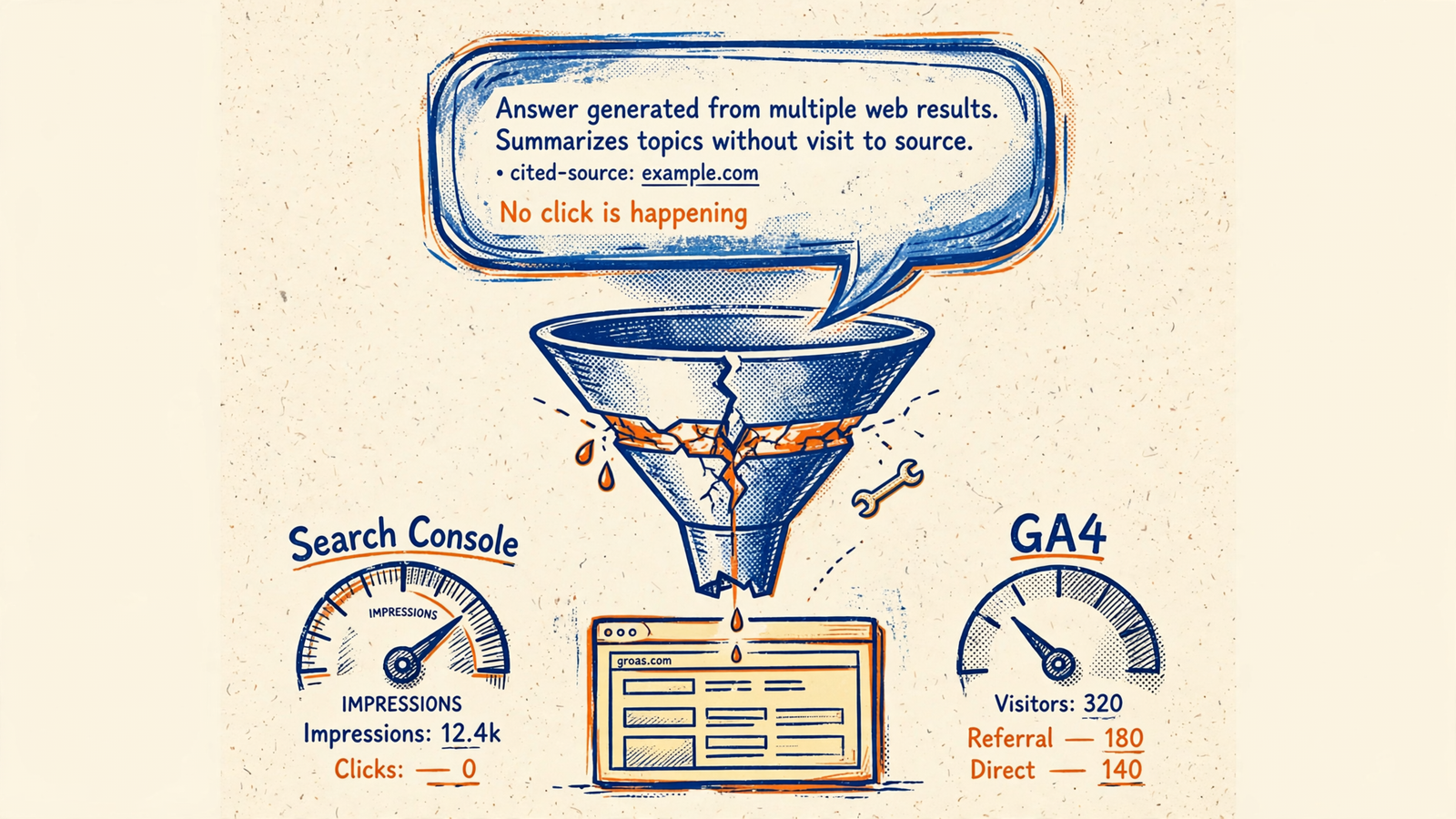
What it does better: It measures activity on and around my own site. GA4’s AI Assistant channel and referral reporting don’t put every AI source in one bucket. Some visits show up under Referral, while traffic from Google’s AI search features can sit under Organic Search. I’d inspect the source before treating the channel label as a verdict. Search Console’s generative AI reporting gives me another angle: impressions for pages in AI Overviews and AI Mode. I can compare those with landing-page clicks, but I can’t tie a particular visit back to a particular saved answer from that comparison alone.
What rules it out: It can’t tell me which Harbor the assistant meant. An unlinked mention leaves no visit to measure, and if a visit arrives without a referrer, GA4 can’t recover the missing source. If someone clicks through to the boats app instead of my site, my property data won’t show me where they went.
I use this after settling identity, not instead of it. Here’s the walkthrough for connecting Search Console and GA4 to ChatGPT or Claude if that’s the check you need next.
4. Semrush and Ahrefs via groas: Best for investigating which namesake owns the search results
Who it’s for: The Harbor owner who has already confirmed the mix-up and wants to know why the boats app keeps showing up. Through groas, Claude can pull SEO data from Semrush and Ahrefs alongside the saved answers. Say the app’s pages have 400 referring domains and my service pages have 12. Now I have a concrete difference to investigate, not just a score to watch.
What it does better: Backlinks and rankings give me search context for the pages I see cited. I can look at which entity owns those pages and where my own pages are weaker or harder to distinguish.
What rules it out: A ranking doesn’t prove an assistant recommended anybody. A backlink profile doesn’t tell me why a model picked a source. I wouldn’t buy Semrush’s $99-a-month AI Visibility add-on or Ahrefs Brand Radar, with custom checks starting at $199 a month on top of a base plan, just to get another blended score. For this job, I’d rather pull their SEO evidence into Claude through groas and ask which Harbor owns the cited pages and where mine fall short. The answer is the evidence of the mix-up. The SEO data tells me where to look next.

The verdict: Buy the evidence, not the bigger score
Start with the answer, settle the identity, then check traffic and search context. That’s why groas in Claude comes first and a manual archive comes second. The first keeps answers and citations coming in; the second lets me settle a disputed match. Site analytics and SEO data earn their keep once I know which business the answer is about.
I left out one popular option on purpose: the standalone AI visibility dashboard that sells a pooled score without saved answers. If I can’t open the answer and inspect the context, I can’t tell Harbor the plumber from Harbor the boats app. A bigger sample doesn’t fix that. Before paying for a tracker, I’d run through the ten checks before you trust the score. For the namesake problem specifically, I’ve laid out three workflows in Shared Brand Name? 3 AI Search Tracking Options, Ranked by Evidence.
| Rank and option | Can it prove the answer meant my business? | Best use | What rules it out |
|---|---|---|---|
| 1. groas in Claude | Yes, when the saved answer contains a clear identity anchor | Ongoing answer and citation review | I still have to check identity |
| 2. Manual answer archive | Yes, for saved answers with a clear anchor | Settling disputed matches | No market-wide coverage |
| 3. Search Console + GA4 | No; it reports on my site, not the answer | Checking queries, pages, and referrals | Misses unlinked mentions and can’t recover stripped referrers |
| 4. Semrush and Ahrefs via groas | No; it shows search context | Investigating the pages each namesake owns | A ranking isn’t a recommendation |

Turn confirmed confusion into one proposed correction
Once I see a pattern in the archive, I stop counting long enough to test a fix.
- Find where the site leaves identity open. I ask Claude to compare confirmed and wrong-entity answers against my pages. Maybe the title uses only “Harbor,” the homepage never says what the business does or where, or the product page doesn’t name the products.
- Draft one clarification for approval. For the fictional Harbor, I’d ask for a title change and a homepage line that identifies Harbor as a home-services firm in Cleveland and puts the domain in the same sentence. Nothing else.
- Record the change and rerun the same prompts. I keep the old wording in the archive, log the publication date, and check again two weeks later. I’m not promised a citation. I’m testing whether the clarification moves matches from unresolved to confirmed.
That’s the number I’d report. If you skipped to the end: Start with groas in Claude, keep doubtful matches out of your total, and don’t buy a bigger score until you know what it counts.