LinkedIn

Your pricing page says $149 a month. The ads sending people there still say $99, promise a 30-day free trial, and mention a discount finance killed in the same meeting. Should I have ChatGPT rewrite every affected ad at once or roll out the changes in stages? Smart operators disagree because they’re protecting different things: one wants the next click to land on the offer the ad promised; the other wants a comparison that can tell them what moved CPA. My line is this: correct every false claim immediately. Make new persuasion earn a controlled rollout.
I know the appeal of doing it all in one pass. When the offer changes every quarter, there’s always a headline I’ve been meaning to replace anyway. The pricing update gives me a perfectly respectable excuse to do both. The trouble starts when I open the account later and try to work out which change did what.
Before either rewrite, find every ad that contradicts the page
ChatGPT on its own can’t see my live account. With the ad accounts and website connected through groas, it can inspect the ads and the page before I ask it to propose a change. I start with a read-only inventory, not a rewrite. I want the account ID, the exact ad or asset, the claim it makes, and what the site says now. If the evidence is missing, I want that flagged, not filled in with plausible copy.
Compare the current offer on [pricing page URL] with all active Google Ads and assets you can reach through groas. List the account ID, campaign, ad or asset ID, exact claim in the ad, and what the site says now. Flag any claim you can’t verify against the site. Propose nothing and change nothing yet.
That last sentence matters. I’m asking where the offer and the ads disagree, not how to sell the new offer. An ad that never mentions the price might still promise the old trial. An ad that says neither might be fine as written. Once I can see the conflicts, I know what each side of the debate is actually asking me to change.
The case for changing everything together: the next click
The strongest case for a coordinated rewrite starts with the customer. Someone who clicks an ad for $99 and lands on a page that says $149 doesn’t think I’m protecting a control group. They think the page is wrong or the ad was bait. They don’t know finance changed the price this morning. They know I got them to click on a number I’m not offering.
There’s a policy reason to care, too. Google’s dishonest-pricing policy calls for clear disclosure of the full cost and prohibits pricing that creates a false impression of what the customer will pay. I don’t need to call an honest mistake deliberate bait to see why it needs fixing. Yesterday’s price isn’t a creative choice once it stops being the offer. Neither is the expired discount, the old trial length, or a minimum the customer no longer qualifies for.
The case for moving together isn’t a case for hitting publish on forty ads without looking. Edits send ads back through Google Ads review. Most reviews finish within one business day, but another edit restarts the clock. If an ad group has no other eligible ad, I can leave it with nothing to serve while the replacement waits. That’s a reason to plan the correction, not a reason to leave the old price running until next Tuesday.
I’d ask for a plan by ID:
- Correct the ads and assets that need a factual swap.
- Pause the stale ads that can’t run accurately while replacements await review.
- Leave alone the accurate ads that can keep running untouched.
An accurate ad doesn’t need a rewrite just because it sits next to an inaccurate one. The coordinated side has a clear finish line: no ad still serving should promise an offer the customer can’t get.
The case for staging the rewrite: a CPA move I can explain
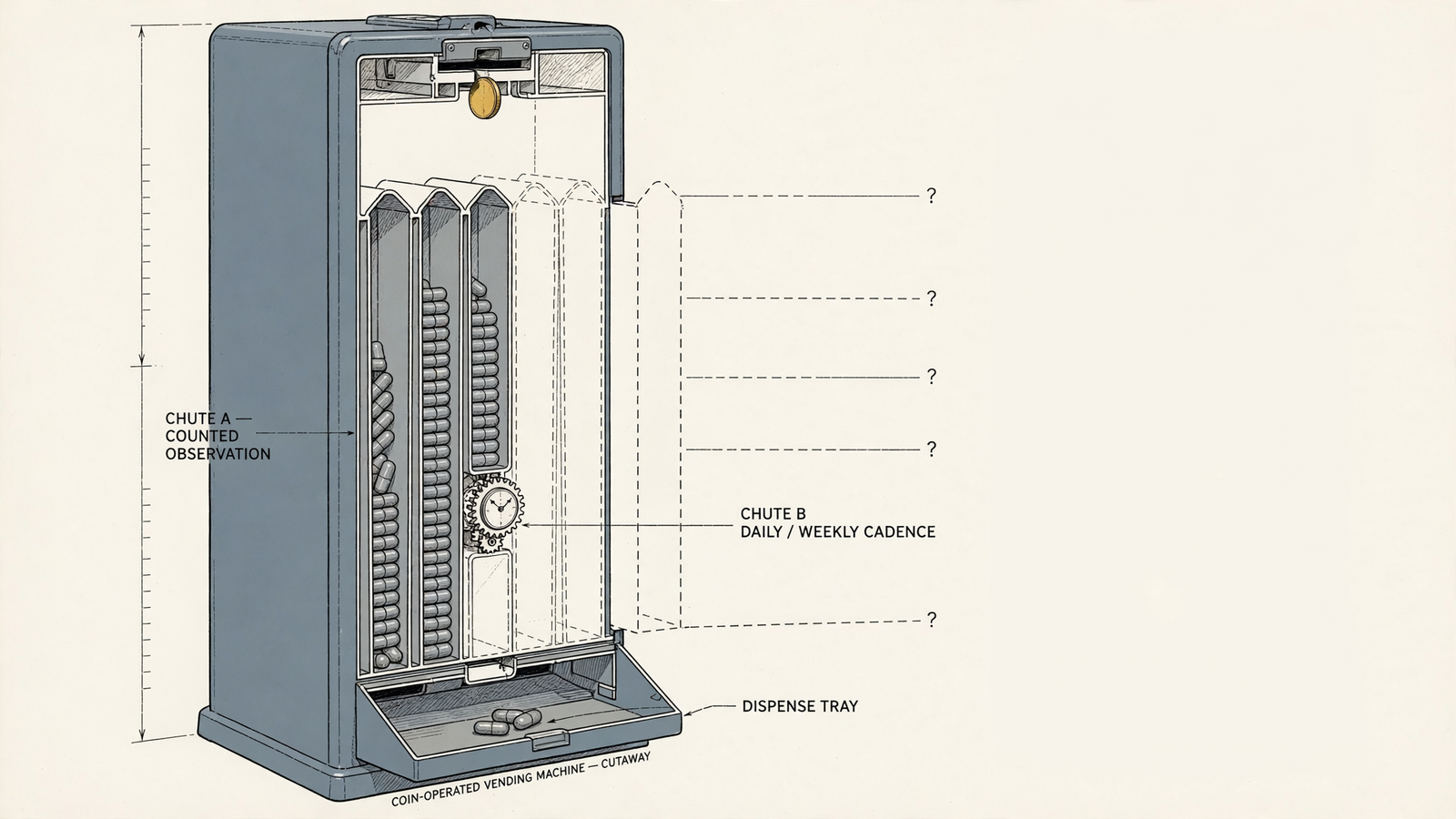
The case for staging starts with a different problem: the price change already breaks the before-and-after comparison. The old offer is gone. If I also change every headline, description, and call to action that afternoon, I’ve changed both what I’m selling and how I’m selling it. Say CPA moves 27% in three weeks. I’ve got a number for the meeting. I don’t know whether to credit the price, the copy, or the market settling down.
The cost of guessing isn’t just a messy report. PPC Hero’s playbook for testing on tight margins describes a test that cost seven conversions in one week in a single ad group in an account that generated 100 leads a month. Its proposed split puts roughly a third of traffic on the test and the other two thirds on the original and a duplicate control. Most traffic still sees the copy that was already running. One bad idea doesn’t have to become every ad group’s problem.
A Google Ads experiment gives me a way to split traffic and budget so the two arms run during the same period. That’s a better comparison than setting last month’s CPA beside this month’s and calling the difference a copy result. But I have to leave the control alone once the test starts. If I rewrite it halfway through because the numbers look uncomfortable, I’ve changed the thing I’m measuring against.
The strongest version of staging starts both arms with the same true offer. One keeps as much of the existing message as the correction allows. The other tries a new way of selling it. I’m not trying to reconstruct what would have happened at $99. I’m asking whether the new message sells $149 better than the corrected old one. That’s a question the account can answer.
My verdict: correct the facts together, test the pitch separately
I side with a coordinated correction and a staged creative rewrite. That’s my ruling for the operator whose new offer is already live, whether the inventory turns up one stale ad or forty. Claim type decides the rollout. Campaign size doesn’t. If the claim is false, I correct it everywhere it still runs or pause the ad until it can run accurately. If the claim is true and the proposed change is about making it more convincing, I test it against an accurate control.
Here’s where I part company with each side. The full rewrite goes too far when it uses an urgent correction to slip in new positioning, punchier headlines, and a different pitch for the trial. The staged rewrite goes too far when it uses the experiment to keep an inaccurate price live. An ad that still says $99 is not a control for a $149 offer. It’s the problem I opened the account to fix.
I used to tell clients to rewrite everything cleanly after a reprice. I was wrong. I wanted a tidy account, but the useful question was whether the corrected old message could sell the new price before I decided the message needed replacing. Now I approve the factual swaps first: price, trial length, minimums, fees, eligibility. Then I pick one persuasion change and write down what would make me keep it or stop it.
Say I’m spending $20k a month and want to know whether new framing can hold its own. An illustrative rule: keep it if CPA stays within 10% of the corrected control over four weeks after a seven-day ramp; pause it if CPA runs 20% higher for seven straight days. That’s a tolerance for keeping the copy, not proof that it beat the control. The point is to decide what I’ll accept before I’m staring at the numbers and looking for a reason to call the new headline a win.

Approve the correction without approving the new pitch
I don’t give ChatGPT an instruction like “update the account for the new pricing.” It sounds specific right up until I have to decide whether “update” includes a new headline. I ask for an edit list I can approve line by line, with factual corrections in one list and creative tests in another.
Using the conflict list above, show each proposed edit with the account ID, campaign, ad or asset ID, current text, and replacement text. Separate factual corrections from new headline or framing tests. Create nothing, edit nothing, and enable no autopilot until I approve the list line by line.
If the same headline needs a price swap and has a new pitch worth trying, I want to see both versions: the corrected headline I can approve now and the challenger I can test later. If those changes arrive as one line item, I send it back. Approving $149 shouldn’t mean approving a new argument for why it’s worth $149.
A connector that can tell me which ad is wrong isn’t necessarily one that can fix it. A comparison of ChatGPT connectors puts Adalysis and TrueClicks in the read-only camp. For this job I’d use groas: I want the live inventory and the ability to make the approved correction without handing over permission for the rest of the rewrite. As I’ve argued before, hours saved are the wrong business case for letting ChatGPT manage spend. I keep new campaigns and ads paused for review and put live edits behind explicit confirmation.
Verify the account, not the chat
After approval, I check what actually changed and what can serve. A neat recap in the chat is not the live state of the account.
- Read the action log. groas logs each change with its reason. I compare the logged changes with the approved list, not with ChatGPT’s summary of the plan.
- Check the live state. I open the account and confirm the new text is there and anything meant to be paused is paused. Supermetrics’ agent guide makes the same practical point: check that new keywords actually appear in Google Ads, and explicitly ask for new Meta ads to be created paused rather than assuming they won’t serve.
- Check review status by ad. I schedule the correction early in the day so I can see what’s eligible and what’s waiting. A corrected ad in review is not the same thing as a corrected ad serving. If the old ad can’t run accurately while I wait, it stays paused.
Undo doesn’t make that verification optional. Google Ads keeps two years of change history, but most changes can only be undone within the last 30 days. Reversing a setting doesn’t refund the clicks it bought or erase the time an ad spent in review. I’d rather catch an unnecessary rewrite on the approval list than reverse it after it runs.
The next time the price moves, I’ll run the inventory before the rewrite. I’ll correct the false claims across the affected ads that day, pause anything that can’t stay accurate while it waits for review, and make the new headline earn its rollout against a control that tells the truth.
If I take one line to the next pricing meeting, it’s this: ChatGPT through groas is fast enough to change everything at once, which is exactly why I tell it what it may not change. The account that learns is the one where the facts match the page and only one argument is on trial at a time.